Kirjojen hintavertailu. Mukana 12 175 005 kirjaa ja 12 kauppaa.

Kirjailija

Jason Brownlee

Kirjat ja teokset yhdessä paikassa: 12 kirjaa, julkaisuja vuosilta 2007-2026, suosituimpien joukossa Python Benchmarking. Vertaile teosten hintoja ja tarkista saatavuus suomalaisista kirjakaupoista.

12 kirjaa

Kirjojen julkaisuhaarukka 2007-2026.

Force Without Authority

Force Without Authority

Jason Brownlee

OXFORD UNIVERSITY PRESS INC
2026
nidottu
Force Without Authority explores why the United States' costliest military operations since Vietnam came up short and pushed Republican and Democratic leaders toward withdrawal and retrenchment. Covering the sweep of US armed interventions since the end of the Cold War, Jason Brownlee sets America's post-9/11 invasions in a thirty-five-year foreign-policy arc--from caution to bravado--and back. The al-Qaeda attacks suspended America's traditional aversion to high-risk military missions abroad. For the better part of a decade, presidents from both parties poured US troops into nation-building in Afghanistan and Iraq, only to return, in the 2010s, to a less hazardous and less ambitious program of eliminating enemies from a distance without reshaping politics on the ground. This same calculus pushed successive administrations toward diplomacy with America's most formidable foes. Critical and wide-sweeping, the book delivers a bracing audit of America's unipolar moment and a compelling case for statecraft over bluster.

Force Without Authority

Force Without Authority

Jason Brownlee

OXFORD UNIVERSITY PRESS INC
2025
sidottu
Force Without Authority explores why the United States' costliest military operations since Vietnam came up short and pushed Republican and Democratic leaders toward withdrawal and retrenchment. Covering the sweep of US armed interventions since the end of the Cold War, Jason Brownlee sets America's post-9/11 invasions in a thirty-five-year foreign-policy arc--from caution to bravado--and back. The al-Qaeda attacks suspended America's traditional aversion to high-risk military missions abroad. For the better part of a decade, presidents from both parties poured US troops into nation-building in Afghanistan and Iraq, only to return, in the 2010s, to a less hazardous and less ambitious program of eliminating enemies from a distance without reshaping politics on the ground. This same calculus pushed successive administrations toward diplomacy with America's most formidable foes. Critical and wide-sweeping, the book delivers a bracing audit of America's unipolar moment and a compelling case for statecraft over bluster.
The Arab Spring

The Arab Spring

Jason Brownlee; Tarek Masoud; Andrew Reynolds

Oxford University Press
2015
sidottu
Several years after the Arab Spring began, democracy remains elusive in the Middle East. The Arab Spring that resides in the popular imagination is one in which a wave of mass mobilization swept the broader Middle East, toppled dictators, and cleared the way for democracy. The reality is that few Arab countries have experienced anything of the sort. While Tunisia made progress towards some type of constitutionally entrenched participatory rule, the other countries that overthrew their rulersEgypt, Yemen, and Libyaremain mired in authoritarianism and instability. Elsewhere in the Arab world uprisings were suppressed, subsided or never materialized. The Arab Springs modest harvest cries out for explanation. Why did regime change take place in only four Arab countries and why has democratic change proved so elusive in the countries that made attempts? This book attempts to answer those questions. First, by accounting for the full range of variance: from the absence or failure of uprisings in such places as Algeria and Saudi Arabia at one end to Tunisias rocky but hopeful transition at the other. Second, by examining the deep historical and structure variables that determined the balance of power between incumbents and opposition. Brownlee, Masoud, and Reynolds find that the success of domestic uprisings depended on the absence of a hereditary executive and a dearth of oil rents. Structural factors also cast a shadow over the transition process. Even when opposition forces toppled dictators, prior levels of socioeconomic development and state strength shaped whether nascent democracy, resurgent authoritarianism, or unbridled civil war would follow.
The Arab Spring

The Arab Spring

Jason Brownlee; Tarek Masoud; Andrew Reynolds

Oxford University Press
2015
nidottu
Several years after the Arab Spring began, democracy remains elusive in the Middle East. The Arab Spring that resides in the popular imagination is one in which a wave of mass mobilization swept the broader Middle East, toppled dictators, and cleared the way for democracy. The reality is that few Arab countries have experienced anything of the sort. While Tunisia made progress towards some type of constitutionally entrenched participatory rule, the other countries that overthrew their rulersEgypt, Yemen, and Libyaremain mired in authoritarianism and instability. Elsewhere in the Arab world uprisings were suppressed, subsided or never materialized. The Arab Springs modest harvest cries out for explanation. Why did regime change take place in only four Arab countries and why has democratic change proved so elusive in the countries that made attempts? This book attempts to answer those questions. First, by accounting for the full range of variance: from the absence or failure of uprisings in such places as Algeria and Saudi Arabia at one end to Tunisias rocky but hopeful transition at the other. Second, by examining the deep historical and structure variables that determined the balance of power between incumbents and opposition. Brownlee, Masoud, and Reynolds find that the success of domestic uprisings depended on the absence of a hereditary executive and a dearth of oil rents. Structural factors also cast a shadow over the transition process. Even when opposition forces toppled dictators, prior levels of socioeconomic development and state strength shaped whether nascent democracy, resurgent authoritarianism, or unbridled civil war would follow.
Democracy Prevention

Democracy Prevention

Jason Brownlee

Cambridge University Press
2012
pokkari
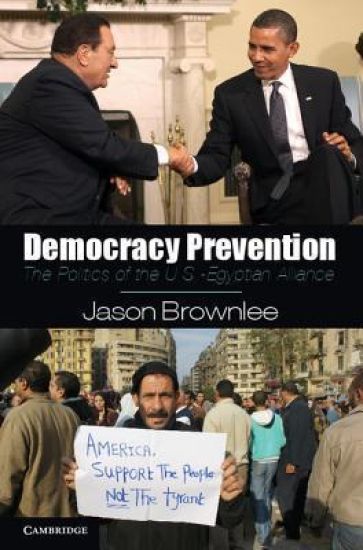
When a popular revolt forced long-ruling Egyptian President Hosni Mubarak to resign on February 11, 2011, US President Barack Obama hailed the victory of peaceful demonstrators in the heart of the Arab World. But Washington was late to endorse democracy - for decades the United States favored Egypt's rulers over its people. Since 1979, the United States had provided the Egyptian regime with more than $60 billion in aid and immeasurable political support to secure its main interests in the region: Israeli security and strong relations with Persian Gulf oil producers. During the Egyptian uprising, the White House did not promote popular sovereignty but instead backed an 'orderly transition' to one of Mubarak's cronies. Even after protesters derailed that plan, the anti-democratic US-Egyptian alliance continued. Using untapped primary materials, this book helps explain why authoritarianism has persisted in Egypt with American support, even as policy makers claim to encourage democratic change.
Democracy Prevention

Democracy Prevention

Jason Brownlee

Cambridge University Press
2012
sidottu
When a popular revolt forced long-ruling Egyptian President Hosni Mubarak to resign on February 11, 2011, US President Barack Obama hailed the victory of peaceful demonstrators in the heart of the Arab World. But Washington was late to endorse democracy - for decades the United States favored Egypt's rulers over its people. Since 1979, the United States had provided the Egyptian regime with more than $60 billion in aid and immeasurable political support to secure its main interests in the region: Israeli security and strong relations with Persian Gulf oil producers. During the Egyptian uprising, the White House did not promote popular sovereignty but instead backed an 'orderly transition' to one of Mubarak's cronies. Even after protesters derailed that plan, the anti-democratic US-Egyptian alliance continued. Using untapped primary materials, this book helps explain why authoritarianism has persisted in Egypt with American support, even as policy makers claim to encourage democratic change.
Clever Algorithms

Clever Algorithms

Jason Brownlee

Lulu.com
2011
pokkari
This book provides a handbook of algorithmic recipes from the fields of Metaheuristics, Biologically Inspired Computation and Computational Intelligence that have been described in a complete, consistent, and centralized manner. These standardized descriptions were carefully designed to be accessible, usable, and understandable. Most of the algorithms described in this book were originally inspired by biological and natural systems, such as the adaptive capabilities of genetic evolution and the acquired immune system, and the foraging behaviors of birds, bees, ants and bacteria. An encyclopedic algorithm reference, this book is intended for research scientists, engineers, students, and interested amateurs. Each algorithm description provides a working code example in the Ruby Programming Language.
Authoritarianism in an Age of Democratization

Authoritarianism in an Age of Democratization

Jason Brownlee

Cambridge University Press
2007
pokkari
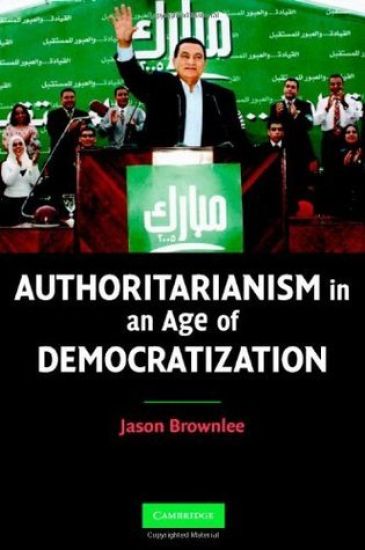
Far from sweeping the globe uniformly, the 'third wave of democratization' left burgeoning republics and resilient dictatorships in its wake. Applying more than a year of original fieldwork in Egypt, Iran, Malaysia, and the Philippines, in this book Jason Brownlee shows that the mixed record of recent democratization is best deciphered through a historical and institutional approach to authoritarian rule. Exposing the internal organizations that structure elite conflict, Brownlee demonstrates why the critical soft-liners needed for democratic transitions have been dormant in Egypt and Malaysia but outspoken in Iran and the Philippines. By establishing how ruling parties originated and why they impede change, Brownlee illuminates the problem of contemporary authoritarianism and informs the promotion of durable democracy.
Authoritarianism in an Age of Democratization

Authoritarianism in an Age of Democratization

Jason Brownlee

Cambridge University Press
2007
sidottu
Far from sweeping the globe uniformly, the 'third wave of democratization' left burgeoning republics and resilient dictatorships in its wake. Applying more than a year of original fieldwork in Egypt, Iran, Malaysia, and the Philippines, in this book Jason Brownlee shows that the mixed record of recent democratization is best deciphered through a historical and institutional approach to authoritarian rule. Exposing the internal organizations that structure elite conflict, Brownlee demonstrates why the critical soft-liners needed for democratic transitions have been dormant in Egypt and Malaysia but outspoken in Iran and the Philippines. By establishing how ruling parties originated and why they impede change, Brownlee illuminates the problem of contemporary authoritarianism and informs the promotion of durable democracy.