Kirjojen hintavertailu. Mukana 12 290 640 kirjaa ja 12 kauppaa.

Kirjailija

Jason Camlot

Kirjat ja teokset yhdessä paikassa: 4 kirjaa, julkaisuja vuosilta 2018-2021, suosituimpien joukossa Vlarf. Vertaile teosten hintoja ja tarkista saatavuus suomalaisista kirjakaupoista.

4 kirjaa

Kirjojen julkaisuhaarukka 2018-2021.

Vlarf

Vlarf

Jason Camlot

McGill-Queen's University Press
2021
nidottu
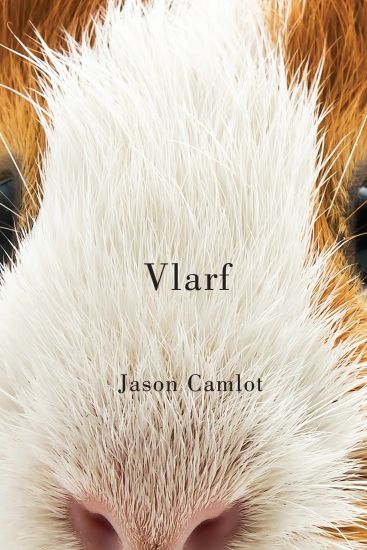
Holmes entered the cabinet / of the respectable reverend / (who was in fact a closet naturalist) / and found so many Victorian things.In the early 2000s flarf poetry emerged as an avant-garde movement that generated disturbing and amusing texts from the results of odd internet searches. In Vlarf Jason Camlot plumbs the canon of Victorian literature, as one would search the internet, to fashion strange, sad, and funny forms and feelings in poetry.Vlarf pursues expressions of sentiment that may have become unfamiliar, unacceptable, or uncool since the advent of modernism by mining Victorian texts and generic forms with odd inclinations, using techniques that include erasure, bout-rimé, emulation, adaptation, reboot, mimicry, abhorrence, cringe, and love. Erasures of massive volumes of prose by John Stuart Mill and John Ruskin become concise poems of condensed sadness; a reboot of Christina Rossetti’s “Goblin Market” is told from the perspective of a ten-year-old boy with an imaginary albatross pal; recovered fragments from an apocryphal book of Victorian nonsense verse are pieced together; a Leonard Cohen song about Queen Victoria is offered in a steampunk rendering; and a meditative guinea pig delivers a dramatic monologue in the vein of Robert Browning.Camlot moves through Victorian literature as a collector in a curiosity shop, seeking the oddest forms of feeling in language to shape them into peculiarly affective poems.
Style and the Nineteenth-Century British Critic
In analyzing the nonfiction works of writers such as John Wilson, J. S. Mill, De Quincy, Ruskin, Arnold, Pater, and Wilde, Jason Camlot provides an important context for the nineteenth-century critic's changing ideas about style, rhetoric, and technologies of communication. In particular, Camlot contributes to our understanding of how new print media affected the Romantic and Victorian critic's sense of self, as he elaborates the ways nineteenth-century critics used their own essays on rhetoric and stylistics to speculate about the changing conditions for the production and reception of ideas and the formulation of authorial character. Camlot argues that the early 1830s mark the moment when a previously coherent tradition of pragmatic rhetoric was fragmented and redistributed into the diverse, localized sites of an emerging periodicals market. Publishing venues for writers multiplied at midcentury, establishing a new stylistic norm for criticism-one that affirmed style as the manifestation of English discipline and objectivity. The figure of the professional critic soon subsumed the authority of the polyglot intellectual, and the later decades of the nineteenth century brought about a debate on aesthetics and criticism that set ideals of Saxon-rooted 'virile' style against more culturally inclusive theories of expression.
Phonopoetics

Phonopoetics

Jason Camlot

Stanford University Press
2019
sidottu
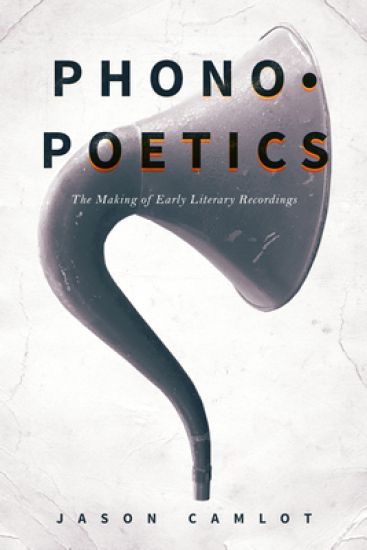
Phonopoetics tells the neglected story of early "talking records" and their significance for literature, from the 1877 invention of the phonograph to some of the first recorded performances of modernist works. The book challenges assumptions of much contemporary criticism by taking the recorded, oral performance as its primary object of analysis and by exploring the historically specific convergences between audio recording technologies, media formats, generic forms, and the institutions and practices surrounding the literary. Opening with an argument that the earliest spoken recordings were a mediated extension of Victorian reading and elocutionary culture, Jason Camlot explains the literary significance of these pre-tape era voice artifacts by analyzing early promotional fantasies about the phonograph as a new kind of speaker and detailing initiatives to deploy it as a pedagogical tool to heighten literary experience. Through historically-grounded interpretations of Dickens impersonators to recitations of Tennyson to T.S. Eliot's experimental readings of "The Waste Land" and of a great variety of voices and media in between, this first critical history of the earliest literary sound recordings offers an unusual perspective on the transition from the Victorian to modern periods and sheds new light on our own digitally mediated relationship to the past.
Style and the Nineteenth-Century British Critic
In analyzing the nonfiction works of writers such as John Wilson, J. S. Mill, De Quincy, Ruskin, Arnold, Pater, and Wilde, Jason Camlot provides an important context for the nineteenth-century critic's changing ideas about style, rhetoric, and technologies of communication. In particular, Camlot contributes to our understanding of how new print media affected the Romantic and Victorian critic's sense of self, as he elaborates the ways nineteenth-century critics used their own essays on rhetoric and stylistics to speculate about the changing conditions for the production and reception of ideas and the formulation of authorial character. Camlot argues that the early 1830s mark the moment when a previously coherent tradition of pragmatic rhetoric was fragmented and redistributed into the diverse, localized sites of an emerging periodicals market. Publishing venues for writers multiplied at midcentury, establishing a new stylistic norm for criticism-one that affirmed style as the manifestation of English discipline and objectivity. The figure of the professional critic soon subsumed the authority of the polyglot intellectual, and the later decades of the nineteenth century brought about a debate on aesthetics and criticism that set ideals of Saxon-rooted 'virile' style against more culturally inclusive theories of expression.