Kirjojen hintavertailu. Mukana 12 595 353 kirjaa ja 12 kauppaa.

Kirjailija

Jason Crawford

Kirjat ja teokset yhdessä paikassa: 5 kirjaa, julkaisuja vuosilta 2017-2026, suosituimpien joukossa Digitalisering och styrning. Vertaile teosten hintoja ja tarkista saatavuus suomalaisista kirjakaupoista.

5 kirjaa

Kirjojen julkaisuhaarukka 2017-2026.

Digitalisering och styrning

Digitalisering och styrning

Einar Iveroth; Jan Lindvall; Johan Magnusson; Jason Crawford; Jonathan Crusoe; Daniel Curto-Millet; Mathias Cöster; Marie Eneman; Owen Eriksson; Thomas Falk; Elisabeth Frisk; Jacob Hallencreutz; Therese Hedman Monstad; Kristina Jonäll; Charlotta Kronblad; Tomas Lindroth; Jan Ljungberg; Andreas Nilsson; Kristian Norling; Daniel Nylén; Nils-Göran Olve; Dariusz Osowski; Bertil Rolandsson; Magnus Strand; Per Thilander; Alf Westelius; Love Westin

Studentlitteratur AB
2025
nidottu
Digital teknik förändrar förutsättningarna för verksamheter och för samhället i stort. Det finns därför ett omfattande utvecklingsbehov på samhälls-, organisations- och individnivå. Den här boken tar upp hur digitalisering påverkar såväl strategi som struktur och system, samt ger ett historiskt perspektiv på hur teknikutveckling formar dagens arbete.Givet teknikens snabba utveckling innehåller denna andra upplaga av boken nio nya kapitel och delvis helt omskrivna grunder. Författarna lyfter upp nya fenomen, såsom artificiell intelligens, twin transition och digital inkludering, och visar hur dessa bör integreras för att säkerställa en ändamålsenlig digitalisering och styrning. Boken ger ett betydande kunskapsbidrag, som hjälper läsaren att hitta nya vägar i en tid när teknikens utveckling fortsätter att accelerera.
Strategic Risk Management and Sustainable Banking

Strategic Risk Management and Sustainable Banking

Jason Crawford; Fredrik Nilsson

TAYLOR FRANCIS LTD
2026
sidottu
This book examines the role of strategic risk management (SRM) in the transformation of banks and their customers towards more sustainable business practices. Banks play a particularly important role in this transformation because they have been tasked with redirecting capital flows to sustainable investments. This book has two inter-related aims: to provide the reader with an analysis of the challenges associated with implementing strategic risk management as discussed in the existing literature, as well as to conduct an empirical investigation into SRM implementation in a large European Bank headquartered in the Nordic region. The book consists of 7 chapters. Chapters 1-3 introduce the main concepts, research question and theoretical framework. Chapters 4-6 describe the integration challenges associated with SRM in an empirical context, i.e., Nordbank. Finally, Chapter 7 presents key insights and avenues for future research. The book will benefit readers in a variety of ways, including providing an overview of the existing literature, the latest developments in ESG regulation, and in-depth empirical insights into an organisation and its management who are currently implementing SRM as part of their sustainable transformation. It is intended for scholars and students in the business and management disciplines, as well as the sub-fields of accounting, finance, and strategic management.
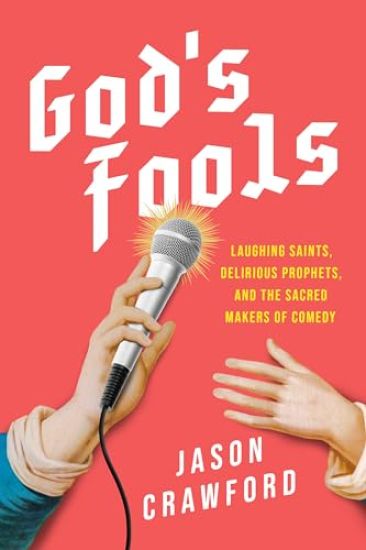
God's Fools

God's Fools

Jason Crawford

GLOBE PEQUOT PRESS
2025
sidottu
From the self-abasements of Charlie Chaplin and Lenny Bruce’s provocations to the present-day culture warring over figures like Dave Chappelle and Hannah Gadsby, comedians have always been not simply entertainers, but charismatic observers of (and participants in) social anxieties and pathologies. Performers as varied as Mort Sahl, Richard Pryor, Margaret Cho, and Louis CK have courted both devotion and outrage at various points in their careers, as they cavort at the outer extremities of taboo, good taste, and received opinion.In God’s Fools:Laughing Saints, Delirious Prophets, and the Sacred Makers of Comedy religion and literature scholar Jason Crawford gives a penetrating and surprising look at the social role that comedians play by placing them in their proper historical lineage—one that begins not with vaudeville and minstrelry but with the mystics, martyrs, and misfits of the premodern Judeo-Christian world. In Crawford’s expansive account, comedians like Chaplin and Chappelle mingle with such motley historical figures as St. Francis of Assisi, the first-century rabbi Akiba, and the Shakespearean collaborator Robert Armin. In lively and memorable character sketches, Crawford reveals the compelling through-lines that connect these figures to modern comedians, showing how, they attract devotion as exemplars of bad behavior—of a shabbiness transfigured by mystical insight—and act as lightning rods for rejection and punishment during times of deep cultural division.
Enterprise Risk Management

Enterprise Risk Management

Mirna Jabbour; Jason Crawford

TAYLOR FRANCIS LTD
2024
sidottu
ERM is considered a dynamic capability that is critical to companies’ success from strategic and performance perspectives and is increasingly implemented in response to growing pressure from external stakeholders to enact and add legitimacy to existing management control systems. However, implementing ERM is a challenging process where success is dependent on balancing technical and social factors. This book explores the challenges of implementing ERM from technical, cognitive, and social perspectives to enhance the organisation’s capacity to generate and integrate information and knowledge about risk and uncertainty.In existing publications, ERM implementation is mainly viewed from technical or educational perspectives and treated as formal, technical, linear processes. This book takes a different stance by recognising that implementation depends on formal and informal mechanisms that require a balanced combination of technical and social approaches. It changes the paradigm to demonstrate that the implementation of ERM is not a linear process that is similar across industries and organisations, but relies on multiple dependencies such as leadership, corporate governance, and the culture of the organisation.This book will be a valuable resource for scholars, as well as upper-level students, across disciplines related to risk management, including accounting and finance, business and management, leadership, and organisational studies.
Allegory and Enchantment

Allegory and Enchantment

Jason Crawford

Oxford University Press
2017
sidottu
What is modernity? Where are modernitys points of origin? Where are its boundaries? And what lies beyond those boundaries? Allegory and Enchantment explores these broad questions by considering the work of English writers at the threshold of modernity, and by considering,in particular, the cultural forms these writers want to leave behind. From the fourteenth to the seventeenth centuries, many English writers fashion themselves as engaged in breaking away from an array of old idols: magic, superstition, tradition, the sacramental, the medieval. Many of these writers persistently use metaphors of disenchantment, of awakening from a broken spell, to describe their self-consciously modern orientation toward a medieval past. And many of them associate that repudiated past with the dynamics and conventions of allegory. In the hands of the major English practitioners of allegorical narrativeWilliam Langland, John Skelton, Edmund Spenser, and John Bunyanallegory shows signs of strain and disintegration. The work of these writers seems to suggest a story of modern emergence in which medieval allegory, with its search for divine order in the material world, breaks down under the pressure of modern disenchantment. But these four early modern writers also make possible other understandings of modernity. Each of them turns to allegory as a central organizing principle for his most ambitious poetic projects. Each discovers in the ancient forms of allegory a vital, powerful instrument of disenchantment. Each of them, therefore, opens up surprising possibilities: that allegory and modernity are inescapably linked; that the story of modern emergence is much older than the early modern period; and that the things modernity has tried to repudiatethe old enchantmentsare not as alien, or as absent, as they seem.