Kirjojen hintavertailu. Mukana 12 459 402 kirjaa ja 12 kauppaa.

Kirjailija

Jason E. Harlacher

Kirjat ja teokset yhdessä paikassa: 5 kirjaa, julkaisuja vuosilta 2013-2022, suosituimpien joukossa Practitioner’s Guide to Curriculum-Based Evaluation in Reading. Vertaile teosten hintoja ja tarkista saatavuus suomalaisista kirjakaupoista.

5 kirjaa

Kirjojen julkaisuhaarukka 2013-2022.

Practitioner’s Guide to Curriculum-Based Evaluation in Reading

Practitioner’s Guide to Curriculum-Based Evaluation in Reading

Jason E. Harlacher; Tami L. Sakelaris; Nicole M. Kattelman

Springer-Verlag New York Inc.
2013
sidottu
The educators are dedicated and concerned. The curriculum is successful. Yet some students aren't reading at grade level, and meetings air problems without making progress. Many students continue to flounder, leading to more meetings with the same lack of meaningful results. The Practitioner’s Guide to Curriculum-Based Evaluation in Reading gives researchers and professionals the means to break this frustrating cycle, crafted by authors who have not only been there and done that, but can explain in depth how to replicate the method. Focusing on reading but applicable across subject areas, this highly accessible guide defines curriculum-based evaluation (CBE), provides conceptual background, and analyzes its component steps. Assessment and intervention are given equal attention within a problem-solving model featuring tools for skill assessment, progress monitoring, goal setting, and other bedrock tasks. Chapters build to lead readers beyond classroom strategies to guidelines for problem solving and decision making to effectively address individual student needs. Included in the coverage: The curriculum-based evaluation process.Relating CBE to the Multi-Tier System of Support model.Using CBE in daily practice, both in classwork and schoolwide.Decoding, early literacy, and reading comprehension.Progress monitoring and decision making.Plus FAQs, handouts, and other supplemental materials. This level of educational insight and pedagogical detail make the Practitioner’s Guide to Curriculum-Based Evaluation in Reading a clarion call for researchers, graduate students, and professionals in school and clinical childpsychology; assessment, testing, and evaluation; applied linguistics; language education; special education and allied education; educational psychology; and social work.
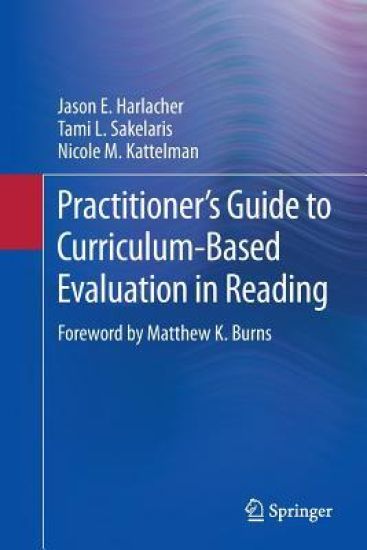
Practitioner’s Guide to Curriculum-Based Evaluation in Reading

Practitioner’s Guide to Curriculum-Based Evaluation in Reading

Jason E. Harlacher; Tami L. Sakelaris; Nicole M. Kattelman

Springer-Verlag New York Inc.
2016
nidottu
The educators are dedicated and concerned. The curriculum is successful. Yet some students aren't reading at grade level, and meetings air problems without making progress. Many students continue to flounder, leading to more meetings with the same lack of meaningful results. The Practitioner’s Guide to Curriculum-Based Evaluation in Reading gives researchers and professionals the means to break this frustrating cycle, crafted by authors who have not only been there and done that, but can explain in depth how to replicate the method. Focusing on reading but applicable across subject areas, this highly accessible guide defines curriculum-based evaluation (CBE), provides conceptual background, and analyzes its component steps. Assessment and intervention are given equal attention within a problem-solving model featuring tools for skill assessment, progress monitoring, goal setting, and other bedrock tasks. Chapters build to lead readers beyond classroom strategies to guidelines for problem solving and decision making to effectively address individual student needs. Included in the coverage: The curriculum-based evaluation process.Relating CBE to the Multi-Tier System of Support model.Using CBE in daily practice, both in classwork and schoolwide.Decoding, early literacy, and reading comprehension.Progress monitoring and decision making.Plus FAQs, handouts, and other supplemental materials. This level of educational insight and pedagogical detail make the Practitioner’s Guide to Curriculum-Based Evaluation in Reading a clarion call for researchers, graduate students, and professionals in school and clinical childpsychology; assessment, testing, and evaluation; applied linguistics; language education; special education and allied education; educational psychology; and social work.
Bolstering Student Resilience: Creating a Classroom with Consistency, Connection, and Compassion
Consistency, connection, and compassion are the cornerstones to helping students choose and practice successful behaviors and coping skills. Bolstering Student Resilience illustrates what this looks like in action. Drawing from classroom experience, the authors demystify the buzzwords to keep you focused on the right work. Explore research that supports the why behind this work, then dive into specific strategies you can use immediately. Create predictable, safe classrooms by establishing clear structures for routines, acknowledgment, and discipline. Set limits and boundaries in the classroom while building skills through relationships. Allow flexibility and emotional space for students--particularly those with pronounced social, emotional, or behavioral needs. Discover an approach to SEL that works across all frameworks and initiatives. Study the supportive discipline framework to replace detrimental behaviors with prosocial skills. Give feedback that supports consistency and builds connections. Provide support that matches a behavior's function. Contents: Introduction Chapter 1: Understanding Student Risk Factors Chapter 2: Using Universal Practices to Promote Consistency Chapter 3: Giving Feedback to Support Consistency and Build Connection Chapter 4: Creating Classrooms That Support Connection Chapter 5: Employing Discipline That Ensures Consistency Chapter 6: Adjusting Discipline for Compassion Chapter 7: Using Data Effectively to Tie It All Together Chapter 8: Helping Students With Ongoing Needs Epilogue References and Resources Index
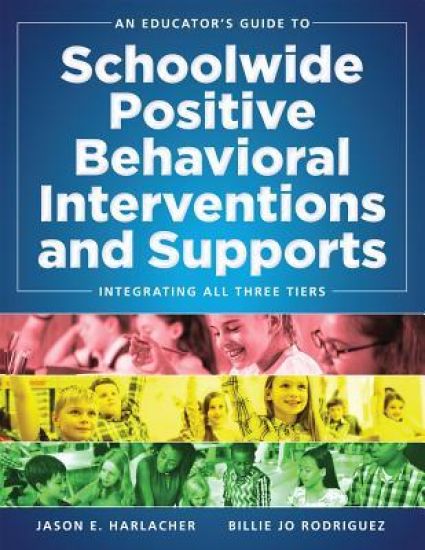
An Educator's Guide to Schoolwide Positive Behavioral Inteventions and Supports: Integrating All Three Tiers (Swpbis Strategies)
By implementing schoolwide positive behavioral interventions and supports (SWPBIS), K-12 educators can create an encouraging, productive school culture. This title introduces readers to the comprehensive SWPBIS framework and explores the key elements of its three tiers of support. Learn about the authors' personal experiences in applying positive behavior support strategies and explore practical examples of what the elements and tiers of this model look like in practice. Learn how to implement PBIS strategies in schools: Understand the structure of the SWPBIS framework and its four key elements. Read testimonials from principals and teachers whose schools have created positive school climates using a positive behavior support plan. Learn why decision making in an SWPBIS framework relies on data and how school teams can ensure they use their data accurately to target suitable solutions. Gain specific steps and a general timeline you can use to start implementing SWPBIS. Examine example scenarios and two thorough case examples of how elementary and secondary schools have adopted and maintained SWPBIS structures. Contents: Chapter 1: An Introduction to Schoolwide Positive Behavioral Interventions and Supports Chapter 2: Tier One Chapter 3: Tier Two Chapter 4: Tier Three Chapter 5: SWPBIS Into Action Chapter 6: Case Examples of Schools Using SWPBIS Epilogue Appendix A Appendix B References and Resources
Designing Effective Classroom Management

Designing Effective Classroom Management

Jason E. Harlacher

Marzano Resources
2015
nidottu
Designing Effective Classroom Management by Jason E. Harlacher gives teachers and school administrators a research-based look at instructional strategies that can improve student behavior and achievement in the classroom. Harlacher presents a step-by-step, practical guide to proactive classroom management, specifying five components to help enhance student achievement and decrease classroom problems. Each chapter details a different necessary component of the proactive approach to classroom management.
 Part of The Classroom Strategies Series, this clear, highly practical guide follows the series format, first summarizing key research and then translating it into recommendations for classroom practice.