Kirjojen hintavertailu. Mukana 12 290 406 kirjaa ja 12 kauppaa.

Kirjailija

Jason F. Brennan

Kirjat ja teokset yhdessä paikassa: 5 kirjaa, julkaisuja vuosilta 2015-2024, suosituimpien joukossa Markets without Limits. Vertaile teosten hintoja ja tarkista saatavuus suomalaisista kirjakaupoista.

5 kirjaa

Kirjojen julkaisuhaarukka 2015-2024.

Markets without Limits

Markets without Limits

Jason F. Brennan; Peter Jaworski

TAYLOR FRANCIS LTD
2022
sidottu
May you sell your spare kidney? May gay men pay surrogates to bear them children? Should we allow betting markets on terrorist attacks and natural disasters? May spouses pay each other to do the dishes, watch the kids, or have sex? Should we allow the rich to genetically engineer gifted, beautiful children? May you ever sell your vote?Most people—and many philosophers—shudder at these questions. To put some goods and services for sale offends human dignity. If everything is commodified, then nothing is sacred. The market corrodes our character.In this expanded second edition of Markets without Limits, Jason Brennan and Peter M. Jaworski say it is now past time to give markets a fair hearing. The market does not, the authors claim, introduce wrongness where there was not any previously. Thus, the question of what rightfully may be bought and sold has a simple answer: if you may do it for free, you may do it for money. Contrary to the conservative consensus, Brennan and Jaworski claim there are no inherent limits to what can be bought and sold, but only restrictions on how we buy and sell.Key Updates and Revisions to the Second Edition:Includes revised introductory chapters to further clarify what’s at stake in the commodification debate.Provides easier-to-follow chapters on semiotic objections, stronger analyses of these objections, and more evidence of these objections’ widespread pervasiveness. Offers cogent responses to several recent papers that have raised counterexamples to the authors’ thesis.Includes new empirical evidence on the ways markets sometimes crowd in virtue and altruism.Analyzes the topics of blackmail and "associative" objections to markets.Includes new material on issues surrounding exploitation and coercion, selling citizenship, residency rights, and arguments about "dignity" as objections to markets.
Markets without Limits

Markets without Limits

Jason F. Brennan; Peter Jaworski

TAYLOR FRANCIS LTD
2022
nidottu
May you sell your spare kidney? May gay men pay surrogates to bear them children? Should we allow betting markets on terrorist attacks and natural disasters? May spouses pay each other to do the dishes, watch the kids, or have sex? Should we allow the rich to genetically engineer gifted, beautiful children? May you ever sell your vote?Most people—and many philosophers—shudder at these questions. To put some goods and services for sale offends human dignity. If everything is commodified, then nothing is sacred. The market corrodes our character.In this expanded second edition of Markets without Limits, Jason Brennan and Peter M. Jaworski say it is now past time to give markets a fair hearing. The market does not, the authors claim, introduce wrongness where there was not any previously. Thus, the question of what rightfully may be bought and sold has a simple answer: if you may do it for free, you may do it for money. Contrary to the conservative consensus, Brennan and Jaworski claim there are no inherent limits to what can be bought and sold, but only restrictions on how we buy and sell.Key Updates and Revisions to the Second Edition:Includes revised introductory chapters to further clarify what’s at stake in the commodification debate.Provides easier-to-follow chapters on semiotic objections, stronger analyses of these objections, and more evidence of these objections’ widespread pervasiveness. Offers cogent responses to several recent papers that have raised counterexamples to the authors’ thesis.Includes new empirical evidence on the ways markets sometimes crowd in virtue and altruism.Analyzes the topics of blackmail and "associative" objections to markets.Includes new material on issues surrounding exploitation and coercion, selling citizenship, residency rights, and arguments about "dignity" as objections to markets.
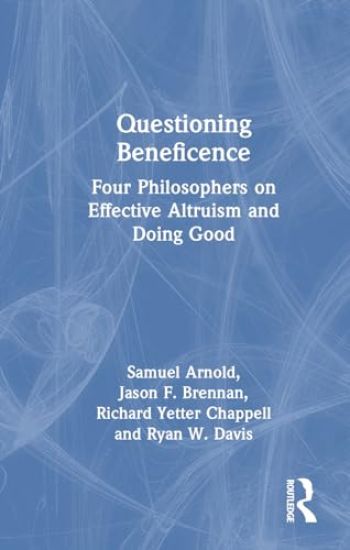
Questioning Beneficence

Questioning Beneficence

Samuel Arnold; Jason F. Brennan; Richard Yetter Chappell; Ryan W. Davis

TAYLOR FRANCIS LTD
2024
sidottu
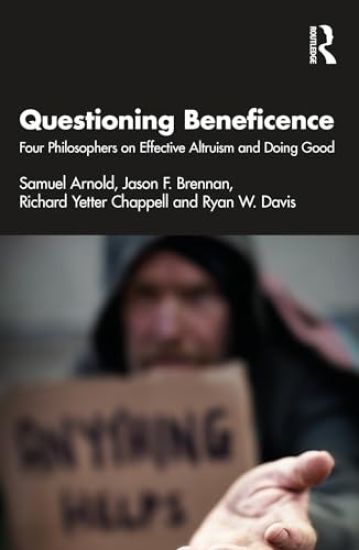
Effective Altruism is a movement and a philosophy that has reinvigorated the debate about the nature of beneficence. At base, it is the consistent application of microeconomic principles to beneficent action. The movement has exposed that many forms of giving do little good (or do active harm), but others do tremendous good.Questioning Beneficence uses Effective Altruism as a launch pad to ask hard questions about beneficence more generally. Must we be Effective Altruists, or are Effective Altruism and the ideas driving the movement a mistake? How much should we give—if anything— and how should we give it? What are the respective roles of different kinds of institutions? Is charity anti-democratic and do billionaire philanthropists have too much power? Is Effective Altruism just utilitarianism in disguise?Questioning Beneficence is written by four philosophers, each with distinct points of view. It introduces a new standard for debating ideas in philosophy as each author poses and answers three questions and each of his three co-authors responds to those questions in turn. Finally, the first author replies to his co-authors’ responses. Throughout the book, there is a spirit of curiosity, intellectual risk taking, and truth-seeking, rather than point-scoring and one-upmanship. This book demonstrates what open-minded, real dialogue on an important issue can be at its very best.Key Features:Introduces a new roundtable format for philosophical debates: each of four authors takes the lead in constructing and answering three questions, each co-author then responds, and the first author then replies to the others’ responses.Explores salient philosophical questions raised by beneficence, likeCan philanthropy be undemocratic?Why are people so bad at charity and what can we do about it?How important is beneficence compared to other values?Can Effective Altruism be part of a meaningful moral life? Consistently written in a clear and engaging style, suitable for both undergraduate students and curious general readers
Questioning Beneficence

Questioning Beneficence

Samuel Arnold; Jason F. Brennan; Richard Yetter Chappell; Ryan W. Davis

TAYLOR FRANCIS LTD
2024
nidottu
Effective Altruism is a movement and a philosophy that has reinvigorated the debate about the nature of beneficence. At base, it is the consistent application of microeconomic principles to beneficent action. The movement has exposed that many forms of giving do little good (or do active harm), but others do tremendous good.Questioning Beneficence uses Effective Altruism as a launch pad to ask hard questions about beneficence more generally. Must we be Effective Altruists, or are Effective Altruism and the ideas driving the movement a mistake? How much should we give—if anything— and how should we give it? What are the respective roles of different kinds of institutions? Is charity anti-democratic and do billionaire philanthropists have too much power? Is Effective Altruism just utilitarianism in disguise?Questioning Beneficence is written by four philosophers, each with distinct points of view. It introduces a new standard for debating ideas in philosophy as each author poses and answers three questions and each of his three co-authors responds to those questions in turn. Finally, the first author replies to his co-authors’ responses. Throughout the book, there is a spirit of curiosity, intellectual risk taking, and truth-seeking, rather than point-scoring and one-upmanship. This book demonstrates what open-minded, real dialogue on an important issue can be at its very best.Key Features:Introduces a new roundtable format for philosophical debates: each of four authors takes the lead in constructing and answering three questions, each co-author then responds, and the first author then replies to the others’ responses.Explores salient philosophical questions raised by beneficence, likeCan philanthropy be undemocratic?Why are people so bad at charity and what can we do about it?How important is beneficence compared to other values?Can Effective Altruism be part of a meaningful moral life? Consistently written in a clear and engaging style, suitable for both undergraduate students and curious general readers
Markets without Limits

Markets without Limits

Jason F. Brennan; Peter Jaworski

Routledge
2015
nidottu
May you sell your vote? May you sell your kidney? May gay men pay surrogates to bear them children? May spouses pay each other to watch the kids, do the dishes, or have sex? Should we allow the rich to genetically engineer gifted, beautiful children? Should we allow betting markets on terrorist attacks and natural disasters?Most people shudder at the thought. To put some goods and services for sale offends human dignity. If everything is commodified, then nothing is sacred. The market corrodes our character. Or so most people say.In Markets without Limits, Jason Brennan and Peter Jaworski give markets a fair hearing. The market does not introduce wrongness where there was not any previously. Thus, the authors claim, the question of what rightfully may be bought and sold has a simple answer: if you may do it for free, you may do it for money. Contrary to the conservative consensus, they claim there are no inherent limits to what can be bought and sold, but only restrictions on how we buy and sell.