Kirjojen hintavertailu. Mukana 12 595 353 kirjaa ja 12 kauppaa.

Kirjailija

Jason Glynos

Kirjat ja teokset yhdessä paikassa: 4 kirjaa, julkaisuja vuosilta 2007-2017, suosituimpien joukossa Logics of Critical Explanation in Social and Political Theory. Vertaile teosten hintoja ja tarkista saatavuus suomalaisista kirjakaupoista.

4 kirjaa

Kirjojen julkaisuhaarukka 2007-2017.

Traversing the Fantasy

Traversing the Fantasy

Jason Glynos

CRC Press Inc
2017
sidottu
Slavoj Zizek is one of the most provocative and important thinkers writing in contemporary philosophy. This book is an engaged debate with Zizek. It contains a series of specially commissioned critical essays from an impressive collection of contributors covering the full extent of his oeuvre. Essays examine Zizek on cultural theory, film studies, ethics, political theory, social theory, Kant and Lacanian psychoanalysis. In the spirit of Zizek‘s own interventions, these essays critically interrogate his ideas, challenging him to respond directly which he does in an extended polemical reply that concludes the collection. This volume represents an exciting and important contribution to contemporary theoretical debate and adds significantly to the growing literature on Zizek.
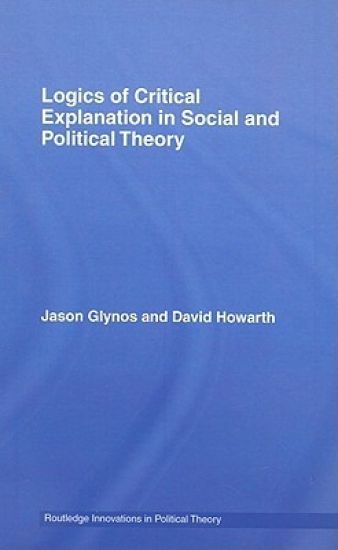
Logics of Critical Explanation in Social and Political Theory
The Social Science Wars have precipitated a renewed interest in the character, purpose and methods of social science. Positivists and naturalists are criticized by interpretivists and critical theorists, while quantitative researchers are challenged by those who favour qualitative and ethnographic techniques. In turn, mainstream social scientists have responded with a vigorous defence and restatement of their commitments. Logics of Critical Explanation in Social and Political Theory proposes a novel approach to practising social and political analysis based on the role of logics. The authors articulate a distinctive perspective on social science explanation that avoids the problems of scientism and subjectivism by steering a careful course between lawlike explanations and thick descriptions. Drawing upon hermeneutics, poststructuralism, psychoanalysis, and post-analytical philosophy, this new approach offers a particular set of logics – social, political and fantasmatic – with which to construct critical explanations of practices and regimes.While the first part of the book critically engages with lawlike, interpretivist and causal approaches to critical explanation, the second part elaborates an alternative grammar of concepts informed by an ontological stance rooted in poststructuralist theory. In developing this approach, a number of empirical cases are included to illustrate its basic concepts and logics, ranging from the apartheid regime in South Africa to recent changes in higher education. The book will be a valuable tool for scholars and researchers in a variety of related fields of study in the social sciences, especially the disciplines of political science and political theory, international relations, social theory, cultural studies, anthropology and philosophy.
Logics of Critical Explanation in Social and Political Theory
This book proposes a novel approach to practising social and political analysis based on the role of logics. The authors articulate a distinctive perspective on social science explanation that avoids the problems of scientism and subjectivism by steering a careful course between lawlike explanations and thick descriptions. Drawing upon hermeneutics, poststructuralism, psychoanalysis, and post-analytical philosophy, this new approach offers a particular set of logics – social, political and fantasmatic – with which to construct critical explanations of practices and regimes. While the first part of the book critically engages with lawlike, interpretivist and causal approaches to critical explanation, the second part elaborates an alternative grammar of concepts informed by an ontological stance rooted in poststructuralist theory. In developing this approach, a number of empirical cases are included to illustrate its basic concepts and logics, ranging from the apartheid regime in South Africa to recent changes in higher education. The book will be a valuable tool for scholars and researchers in a variety of related fields of study in the social sciences, especially the disciplines of political science and political theory, international relations, social theory, cultural studies, anthropology and philosophy.