Kirjojen hintavertailu. Mukana 12 595 353 kirjaa ja 12 kauppaa.

Kirjailija

Jason Hickel

Kirjat ja teokset yhdessä paikassa: 9 kirjaa, julkaisuja vuosilta 2015-2025, suosituimpien joukossa Vähem on rohkem. Vertaile teosten hintoja ja tarkista saatavuus suomalaisista kirjakaupoista.

9 kirjaa

Kirjojen julkaisuhaarukka 2015-2025.

Vähem on rohkem

Vähem on rohkem

Jason Hickel

Aegraja kirjastus oü
2025
nidottu
Kas lõputu kasv piiratud planeedil on võimalik? Miks me usume, et majanduskasv on ainus tee õnneni? Käesolev raamat ei ole pelgalt praeguse maailmakorra kriitika - see on radikaalne ja praktiline teekaart uue maailma ehitamiseks. Hickel viib lugeja teekonnale läbi ajaloo, näidates, kuidas kolonialismi ja ekspluateerimise pärand elab tänases majandussüsteemis edasi. Selle asemele pakub ta välja alternatiivsed viisid, kuidas korraldada majandust nii, et see teeniks inimeste ja planeedi heaolu, mitte kasumiahnust. Ajal, mil Eesti poliitikud räägivad rohepöördest ja "puhtast tööstusest", rajades samal ajal uusi tselluloosi- ja põlevkiviõlitehaseid, esitab see raamat ebamugava tõe: meie praegune lõputule kasvule orienteeritud majandusmudel on ummiktee. Kasvujärgne lahendus - tasaareng - pole vaesuse õilistamine, vaid teekond tõelise rikkuse ja tähendusrikka elamise juurde. Astu välja mugavustsoonist ja julge mõelda teisiti. See raamat muudab su arusaama majandusest, progressist ja inimkonna tulevikust.
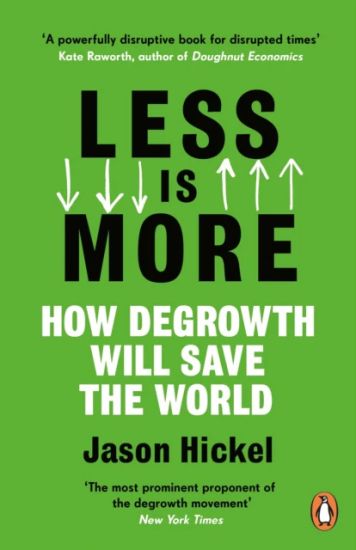
Less is More

Less is More

Jason Hickel

Windmill Books
2021
pokkari
'A powerfully disruptive book for disrupted times ... If you're looking for transformative ideas, this book is for you.' KATE RAWORTH, economist and author of Doughnut EconomicsA Financial Times Book of the Year______________________________________Our planet is in trouble. But how can we reverse the current crisis and create a sustainable future? The answer is: DEGROWTH.Less is More is the wake-up call we need. By shining a light on ecological breakdown and the system that's causing it, Hickel shows how we can bring our economy back into balance with the living world and build a thriving society for all. This is our chance to change course, but we must act now.______________________________________'A masterpiece... Less is More covers centuries and continents, spans academic disciplines, and connects contemporary and ancient events in a way which cannot be put down until it's finished.' DANNY DORLING, Professor of Geography, University of Oxford'Jason is able to personalise the global and swarm the mind in the way that insects used to in abundance but soon shan't unless we are able to heed his beautifully rendered warning.' RUSSELL BRAND'Jason Hickel shows that recovering the commons and decolonizing nature, cultures, and humanity are necessary conditions for hope of a common future in our common home.' VANDANA SHIVA, author of Making Peace With the Earth'This is a book we have all been waiting for. Jason Hickel dispels ecomodernist fantasies of "green growth". Only degrowth can avoid climate breakdown. The facts are indisputable and they are in this book.' GIORGIS KALLIS, author of Degrowth'Capitalism has robbed us of our ability to even imagine something different; Less is More gives us the ability to not only dream of another world, but also the tools by which we can make that vision real.' ASAD REHMAN, director of War on Want'One of the most important books I have read ... does something extremely rare: it outlines a clear path to a sustainable future for all.' RAOUL MARTINEZ, author of Creating Freedom'Jason Hickel takes us on a profound journey through the last 500 years of capitalism and into the current crisis of ecological collapse. Less is More is required reading for anyone interested in what it means to live in the Anthropocene, and what we can do about it.' ALNOOR LADHA, co-founder of The Rules'Excellent analysis...This book explores not only the systemic flaws but the deeply cultural beliefs that need to be uprooted and replaced.' ADELE WALTON
Exploring Degrowth

Exploring Degrowth

Vincent Liegey; Anitra Nelson; Jason Hickel

Pluto Press
2020
pokkari
A sense of urgency pervades global environmentalism, and the degrowth movement is bursting into the mainstream. As climate catastrophe looms closer, people are eager to learn what degrowth is about, and whether we can save the planet by changing how we live. This book is an introduction to the movement. As politicians and corporations obsess over growth objectives, the degrowth movement demands that we must slow down the economy by transforming our economies, our politics and our cultures to live within the Earth's limits. This book navigates the practice and strategies of the movement, looking at its strengths and weaknesses. Covering horizontal democracy, local economies and the reduction of work, it shows us why degrowth is a compelling and realistic project.
Exploring Degrowth

Exploring Degrowth

Vincent Liegey; Anitra Nelson; Jason Hickel

Pluto Press
2020
sidottu
A sense of urgency pervades global environmentalism, and the degrowth movement is bursting into the mainstream. As climate catastrophe looms closer, people are eager to learn what degrowth is about, and whether we can save the planet by changing how we live. This book is an introduction to the movement. As politicians and corporations obsess over growth objectives, the degrowth movement demands that we must slow down the economy by transforming our economies, our politics and our cultures to live within the Earth's limits. This book navigates the practice and strategies of the movement, looking at its strengths and weaknesses. Covering horizontal democracy, local economies and the reduction of work, it shows us why degrowth is a compelling and realistic project.
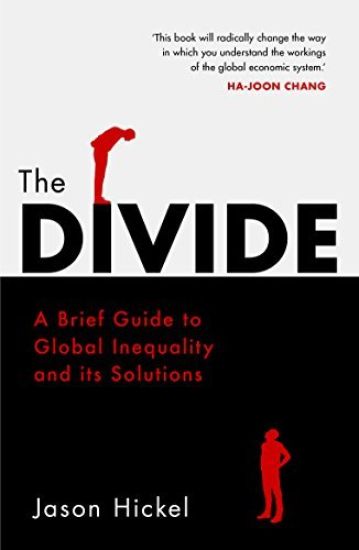
Divide

Divide

Jason Hickel

Cornerstone
2018
pokkari
In The Divide, Jason Hickel brilliantly lays it out, layer upon layer, until you are left reeling with the outrage of it all.' - Kate Raworth, author of Doughnut Economics* The richest eight people control more wealth than the poorest half of the world combined.
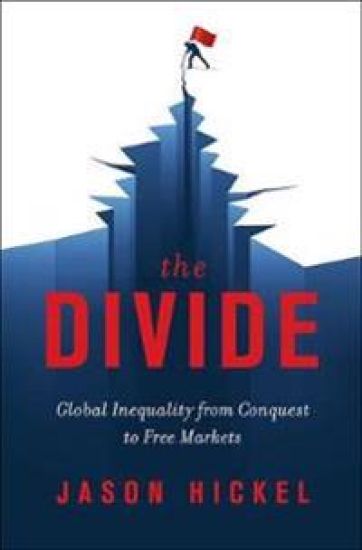
The Divide

The Divide

Jason Hickel

WW Norton Co
2018
sidottu
More than four billion people--some 60 percent of humanity--live in debilitating poverty, on less than $5 per day. The standard narrative tells us this crisis is a natural phenomenon, having to do with things like climate and geography and culture. It tells us that all we have to do is give a bit of aid here and there to help poor countries up the development ladder. It insists that if poor countries would only adopt the right institutions and economic policies, they could overcome their disadvantages and join the ranks of the rich world.Anthropologist Jason Hickel argues that this story ignores the broader political forces at play. Global poverty--and the growing inequality between the rich countries of Europe and North America and the poor ones of Africa, Asia, and South America--has come about because the global economy has been designed over the course of five hundred years of conquest, colonialism, regime change, and globalization to favor the interests of the richest and most powerful nations. Global inequality is not natural or inevitable, and it is certainly not accidental. To close the divide, Hickel proposes dramatic action rooted in real justice: abolishing debt burdens in the global South, democratizing the institutions of global governance, and rolling out an international minimum wage, among many other vital steps. Only then will we have a chance at a world where all begin on more equal footing.
Democracy as Death

Democracy as Death

Jason Hickel

University of California Press
2015
pokkari
The revolution that brought the African National Congress (ANC) to power in South Africa was fractured by internal conflict. Migrant workers from rural Zululand rejected many of the egalitarian values and policies fundamental to the ANC's liberal democratic platform and organized themselves in an attempt to sabotage the movement. This anti-democracy stance, which persists today as a direct critique of freedom" in neoliberal South Africa, hinges on an idealized vision of the rural home and a hierarchical social order crafted in part by the technologies of colonial governance over the past century. In analyzing this conflict, Jason Hickel contributes to broad theoretical debates about liberalism and democratization in the postcolonial world. Democracy as Death interrogates the Western ideals of individual freedom and agency from the perspective of those who oppose such ideals, and questions the assumptions underpinning theories of anti-liberal movements. The book argues that both democracy and the political science that attempts to explain resistance to it presuppose a model of personhood native to Western capitalism, which may not operate cross-culturally.
Democracy as Death

Democracy as Death

Jason Hickel

University of California Press
2015
sidottu
The revolution that brought the African National Congress (ANC) to power in South Africa was fractured by internal conflict. Migrant workers from rural Zululand rejected many of the egalitarian values and policies fundamental to the ANC's liberal democratic platform and organized themselves in an attempt to sabotage the movement. This anti-democracy stance, which persists today as a direct critique of freedom" in neoliberal South Africa, hinges on an idealized vision of the rural home and a hierarchical social order crafted in part by the technologies of colonial governance over the past century. In analyzing this conflict, Jason Hickel contributes to broad theoretical debates about liberalism and democratization in the postcolonial world. Democracy as Death interrogates the Western ideals of individual freedom and agency from the perspective of those who oppose such ideals, and questions the assumptions underpinning theories of anti-liberal movements. The book argues that both democracy and the political science that attempts to explain resistance to it presuppose a model of personhood native to Western capitalism, which may not operate cross-culturally.