Kirjojen hintavertailu. Mukana 12 390 323 kirjaa ja 12 kauppaa.

Kirjailija

Jason Turowetz

Kirjat ja teokset yhdessä paikassa: 3 kirjaa, julkaisuja vuosilta 2022-2024, suosituimpien joukossa Morality in the Making of Sense and Self. Vertaile teosten hintoja ja tarkista saatavuus suomalaisista kirjakaupoista.

3 kirjaa

Kirjojen julkaisuhaarukka 2022-2024.

Morality in the Making of Sense and Self

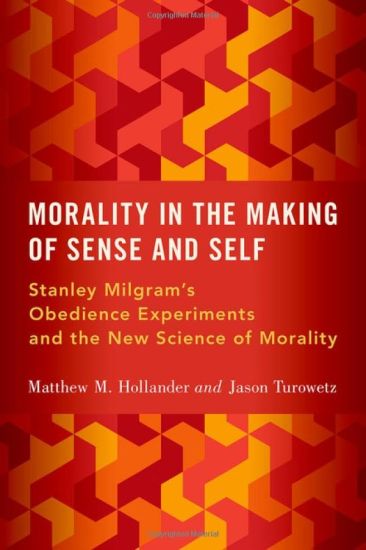
Morality in the Making of Sense and Self

Matthew M. Hollander; Jason Turowetz

OXFORD UNIVERSITY PRESS INC
2024
sidottu
For over half a century, Stanley Milgram's classic and controversial obedience experiments have been a touchstone in the social and behavioral sciences, introducing generations of students to the concept of destructive obedience to authority and the Holocaust. In the last decade, the interdisciplinary Milgram renaissance has led to widespread interest in rethinking and challenging the context and nature of his Obedience Experiment. In Morality in the Making of Sense and Self, Matthew M. Hollander and Jason Turowetz offer a new explanation of obedience and defiance in Milgram's lab. Examining one of the largest collections of Milgram's original audiotapes, they scrutinize participant behavior in not only the experiments themselves, but also recordings of the subsequent debriefing interviews in which participants were asked to reflect on their actions. Introducing an original theoretical framework in the sociology of morality, they show that, contrary to traditional understandings of Milgram's experiments that highlight obedience, virtually all subjects, both compliant and defiant, mobilized practices to resist the authority's commands, such that all were obedient and disobedient to varying degrees. As Hollander and Turowetz show, the precise ways subjects worked out a definition of the situation shaped the choices open to them, how they responded to the authority's demands, and ultimately whether they would be classified as "obedient" or "defiant." By illuminating the relationship between concrete moral dilemmas and social interaction, Hollander and Turowetz tell a new, empirically-grounded story about Milgram: one about morality--and immorality--in the making of sense and self.
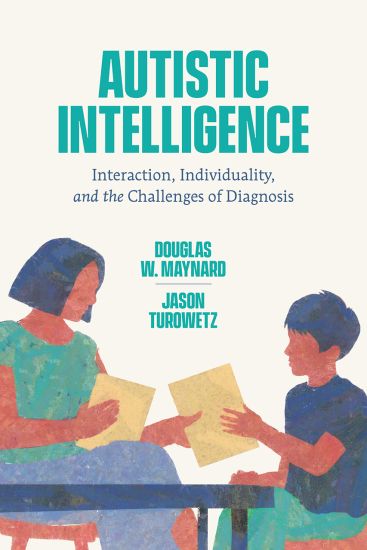
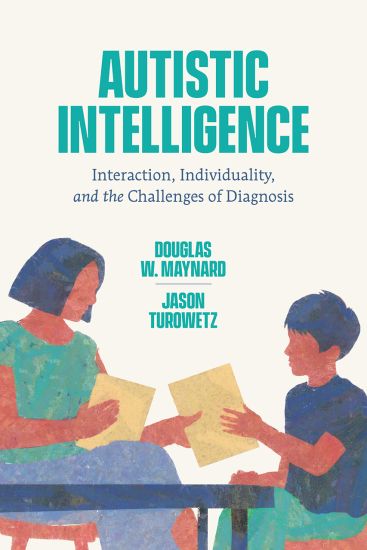
Autistic Intelligence

Autistic Intelligence

Douglas W. Maynard; Jason Turowetz

University of Chicago Press
2022
sidottu
Winner 2024 Outstanding Recent Contribution in Social Psychology Award, Social Psychology Section, American Sociological AssociationWinner 2024 Melvin Pollner Prize, Ethnomethodology and Conversation Analysis Section, American Sociological Association As autism has grown in prevalence, so too have our attempts to make sense of it. From placing unfounded blame on vaccines to seeking a genetic cause, Americans have struggled to understand what autism is and where it comes from. Amidst these efforts, however, a key aspect of autism has been largely overlooked: the diagnostic process itself. That process is the central focus of Autistic Intelligence. The authors ask us to question the norms by which we measure autistic behavior, to probe how that behavior can be considered sensible rather than disordered, and to explore how we can better appreciate the individuality of those who receive the diagnosis. Drawing on hundreds of hours of video recordings and ethnographic observations at a clinic where professionals evaluated children for autism, the authors’ analysis of interactions among clinicians, parents, and children demystifies the categories, tools, and practices involved in the diagnostic process. Autistic Intelligence shows that autism is not a stable category; it is the outcome of complex interactional processes involving professionals, children, families, and facets of the social and clinical environments they inhabit. The authors suggest that diagnosis, in addition to carefully classifying children, also can highlight or include unique and particular contributions those with autism potentially can make to the world around us.
Autistic Intelligence

Autistic Intelligence

Douglas W. Maynard; Jason Turowetz

University of Chicago Press
2022
nidottu
Winner 2024 Outstanding Recent Contribution in Social Psychology Award, Social Psychology Section, American Sociological AssociationWinner 2024 Melvin Pollner Prize, Ethnomethodology and Conversation Analysis Section, American Sociological Association As autism has grown in prevalence, so too have our attempts to make sense of it. From placing unfounded blame on vaccines to seeking a genetic cause, Americans have struggled to understand what autism is and where it comes from. Amidst these efforts, however, a key aspect of autism has been largely overlooked: the diagnostic process itself. That process is the central focus of Autistic Intelligence. The authors ask us to question the norms by which we measure autistic behavior, to probe how that behavior can be considered sensible rather than disordered, and to explore how we can better appreciate the individuality of those who receive the diagnosis. Drawing on hundreds of hours of video recordings and ethnographic observations at a clinic where professionals evaluated children for autism, the authors’ analysis of interactions among clinicians, parents, and children demystifies the categories, tools, and practices involved in the diagnostic process. Autistic Intelligence shows that autism is not a stable category; it is the outcome of complex interactional processes involving professionals, children, families, and facets of the social and clinical environments they inhabit. The authors suggest that diagnosis, in addition to carefully classifying children, also can highlight or include unique and particular contributions those with autism potentially can make to the world around us.