Kirjojen hintavertailu. Mukana 12 390 323 kirjaa ja 12 kauppaa.

Kirjailija

Jay A. Gertzman

Kirjat ja teokset yhdessä paikassa: 5 kirjaa, julkaisuja vuosilta 1990-2022, suosituimpien joukossa Pulp According to David Goodis. Vertaile teosten hintoja ja tarkista saatavuus suomalaisista kirjakaupoista.

Mukana myös kirjoitusasut: Jay A Gertzman

5 kirjaa

Kirjojen julkaisuhaarukka 1990-2022.

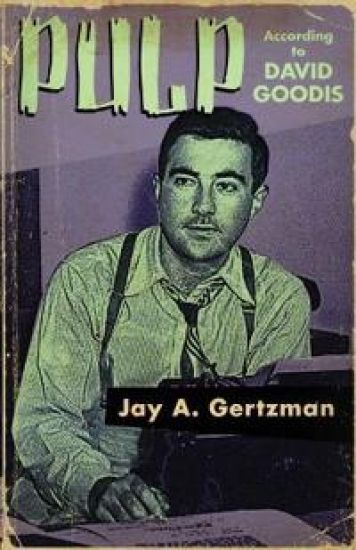
Pulp According to David Goodis

Pulp According to David Goodis

Jay A Gertzman

Down Out Books
2018
pokkari
Pulp, According to David Goodis starts with six characteristics of 1950s pulp noir that please editors because they obviously fascinate mass-market readers. Extremely valuable is an urban setting, which Goodis provided chiefly in his home town, Philadelphia. There, as factories moved to the suburbs, employers, police, and politicians abandoned postwar working-class and underclass neighborhoods. Declared "blighted," they endured the racketeering of the local mob boss. Only Goodis saw, in this Street of the Lost and in Down There and Night Squad, a still-vibrant community solidarity. He dramatizes all this in the language of the streets, the way a great film director would, and in fact Delmar Davies, Paul Wendkos, and Jacques Tourneur did produce films of his novels. As a Hollywood script writer, his most prestigious assignment was for an unproduced film on working class vets. It eventually became a prose poem in pulp paperback format, The Blonde on the Street Corner, set in the Depression-era Philadelphia of row houses and corner hang-outs. We become intimate with the manic-depressive protagonist, his drifting friends, his street corner, and the enigmatic wintry moonlight of a park in north Philadelphia. The writer departs radically from pulp crime conventions with themes of brother-sister incest (Of Tender Sin, The Moon in the Gutter). This gives him a chance to reveal the desperation of people who do not dare to examine their psychosexual desires and the nuclear family dynamics that nurtured them. Instead, they attach themselves to sexually aggressive women who add to their humiliation and guilt. They damn themselves to substituting pain for mutuality, as if the only feeling that arouses them is guilt. In many novels, Goodis' sympathy extends beyond the common man to the murderous crime boss, whose brutal success has deprived him of connection with a lover or a community. The successful gangster is "alone and guilty and defenseless amongst enemies; one is punished for success" (Robert Warshow). Night Squad and Black Friday are exemplary. It is yet another example of how a crime writer can teach his mass readership how to think beyond the expectations for the pulp thriller. It also helps explain why "Goodis did not choose the pulp crime genre, it chose him." Pulp According delineates the noir profundity of Goodis' work in the context of Franz Kafka's narratives. Goodis' precise sense of place, and painful insights about the indomitability of fate, parallel them. The Burglar, Down There, and Street of No Return are especially close. Both writers mix realism, the disorienting, and the dreamlike; both focus on horrific vistas of entrapment; both describe the protagonist's apparent degeneration to a sub-human condition. Goodis wrote his final novel, Somebody's Done For, after the death of his parents, alone and bereft in the family home. This underappreciated story recapitulates his major noir preoccupations: the noble, doomed loser and the inaccessible nature of intimacy and mutuality. The writer never told anyone he was more than an "entertainer." But so were Faulkner, Steinbeck, and Hemingway, all of whom are echoed by David Goodis. If there is one writer of mass market pulp literature who exemplifies the intensity of post-World War II experience among readers of noir crime pulp, it is this "poet of the losers." The emphasis is on "poet."
Samuel Roth, Infamous Modernist

Samuel Roth, Infamous Modernist

Jay A. Gertzman

University Press of Florida
2015
nidottu
Samuel Roth is known to most literary scholars as a bold literary “pirate” for issuing unauthorised editions of modernist sensations, including Ulysses and Lady Chatterley’s Lover.In the absence of an international copyright agreement and because works deemed obscene could not be copyrighted, what he did was not illegal. But it did violate the protocols of mutual fair dealing between publishers and authors. Those publications provoked an unprecedented international protest of writers, publishers, and intellectuals, who eventually vilified Roth on two continents.Roth was a man with an uncanny ability to recognise good contemporary writing and make it accessible to popular audiences. Ultimately, his dedication to the publication of these works broke down many of the censorship laws of the time, though he suffered greatly for his efforts. His story portrays a struggle with literary censorship in the mid-twentieth century while providing insights into how modernism was marketed in America.
A Descriptive Bibliography of Lady Chatterley's Lover
This bibliography clarifies the circumstances regarding the publication, marketing and distribution (in private, pirated, expurgated, trade and mass-market, hard- and soft-bound editions) of D. H. Lawrence's controversial novel, Lady Chatterley's Lover. Prefixed to the descriptions of each edition are introductory essays designed to both elucidate the novel's long and interesting publication history and indicate the social settings which conditioned its production and reception.The bibliographical listings classify the various printings into editions, impressions, issues and states. The work attempts to describe all appearances of the novel in English in book form whether in pirated, expurgated, continental, or decensored editions, and regardless of format. Introductory essays discuss such matters as distribution of piracies, strategy of expurgations, the 1959 Chatterley Sweepstakes, the Swedish, Paris, and Japanese editions, and the advertising tactics of the paperback publishers. The work therefore attempts a popular history of the novel. It incorporates information obtained through interviews with booksellers, writers, literary agents, and publishers and reproduces title pages, bindings, and illustrations. Special attention is given to the parodies and sequels, which exemplify the shrewdness of publishers from Samuel Roth to Lyle Stuart in exploiting the complex relationships between serious literature, popular pornography and pulp romance. Such details give evidence of the audience for which a particular volume was intended. While a standard bibliography of D. H. Lawrence does exist, no book has as yet offered as much detail on volumes containing the text of Lady Chatterley's Lover, nor has any attempted to capture the lengthy publishing history of Lawrence's pariah novel.
Beyond Twisted Sorrow

Beyond Twisted Sorrow

Jay A Gertzman

Down Out Books
2022
pokkari
Twentieth-century mass produced pulp crime usually ends with the protagonists unable to rid themselves of the presence of forces that inhibit professional or emotional growth. Stoic perseverance is often their acknowledgement of the power of fate. The diverse, still-emerging genre of Country (or Redneck, Ridgerunner, or Ozark) noir is marked by protagonists who have an instinct for community as a coherent territory and recreate the possibly self-destructive but stubbornly self-assertive traits that characterized what Greil Marcus called "the old, weird America." Rural fiction's protagonists struggle to replace a set of convictions which no longer sustain community or family. Often enough, their struggles produce a generational survival of perseverance, family and clan mutuality, the need for passing tough tests, and spirituality. They often wind up "far from the twisted reach of crazy sorrow" (Dylan's "Tambourine Man").
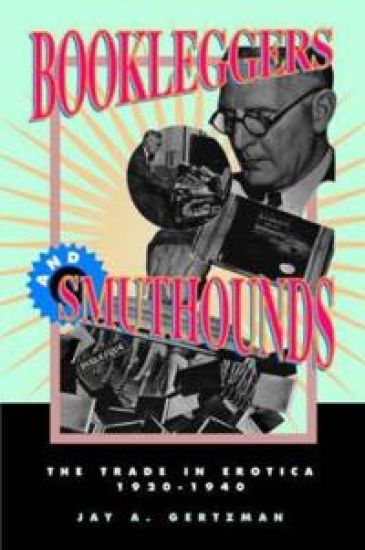
Bookleggers and Smuthounds

Bookleggers and Smuthounds

Jay A. Gertzman

University of Pennsylvania Press
2001
pokkari
Between the two world wars, at a time when both sexual repression and sexual curiosity were commonplace, New York was the center of the erotic literature trade in America. The market was large and contested, encompassing not just what might today be considered pornographic material but also sexually explicit fiction of authors such as James Joyce, Theodore Dreiser, and D.H. Lawrence; mail-order manuals; pulp romances; and "little dirty comics." Bookleggers and Smuthounds vividly brings to life this significant chapter in American publishing history, revealing the subtle, symbiotic relationship between the publishers of erotica and the moralists who attached them-and how the existence of both groups depended on the enduring appeal of prurience. By keeping intact the association of sex with obscenity and shameful silence, distributors of erotica simultaneously provided the antivice crusaders with a public enemy. Jay Gertzman offers unforgettable portrayals of the "pariah capitalists" who shaped the industry, and of the individuals, organizations, and government agencies that sought to control them. Among the most compelling personalities we meet are the notorious publisher Samuel Roth, "the Prometheus of the Unprintable," and his nemesis, John Sumner, head of the New York Society for the Suppression of Vice, a man aggressive in his pursuit of pornographers and in his quest for a morally united-and ethnically homogeneous-America.