Kirjailija
Jay L. Garfield
Kirjat ja teokset yhdessä paikassa: 21 kirjaa, julkaisuja vuosilta 2009-2026, suosituimpien joukossa Über die Kunst des Loslassens. Vertaile teosten hintoja ja tarkista saatavuus suomalaisista kirjakaupoista.
Mukana myös kirjoitusasut: Jay L Garfield
21 kirjaa
Kirjojen julkaisuhaarukka 2009-2026.
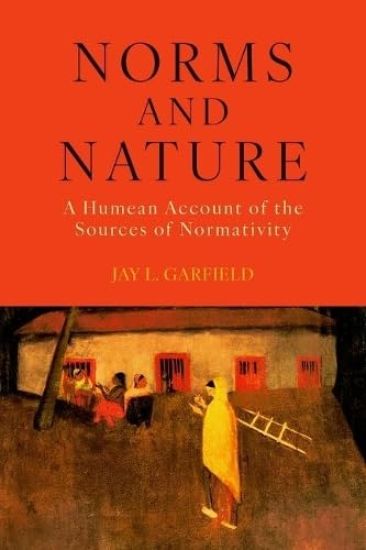
In The Treatise of Human Nature, Hume argued that we are normative animals, and he treats human nature in the context of, and on a par with, non-human nature. In Norms and Nature, Jay L. Garfield argues that Hume was right, and to demonstrate and explain this fact, he shows how the animals that we are construct norms, learn to conform to norms, and how we are transformed by the normative structures we come to inhabit. Garfield draws on the work of the American psychologist Edward Chace Tolman, who argued that the intentional could be naturalized without reducing it to the non-intentional and in the thought of those philosophers who shared that vision, including those in the Prasangika Madhyamaka tradition, as well as Nietzsche, Schopenhauer, Dewey, Wittgenstein, and Sellars. Norms and Nature examines what it is to be human in the full sense of the term: to be an organism that only comes to self-consciousness in virtue of being thrown into a world already pregnant with meaning; meaning that can only be constituted collectively. To be human is to be one whose very being is constituted both by the web of customs into which we are born. In this investigation, Garfield shows how much of our existence as persons depends upon a set of interlocking virtuous spirals that enable the development of the communities that make normativity possible, and on the development of the sets of norms that enable those communities to sustain themselves. Garfield argues that it is this very aspect of our nature which provides hope that we can improve ourselves. Norms and Nature offers a rich sense of our place as a species in the natural world, and of our places as individuals in the context of the social order that we create, and that in turn create us.

Über die Kunst des Loslassens
Jay L. Garfield; Maria Heim; Robert H. Sharf
FinanzBuch Verlag
2025
sidottu
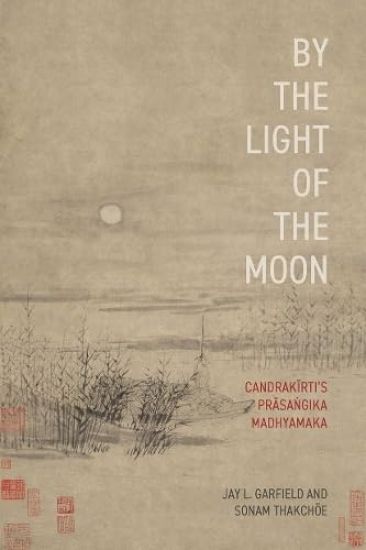
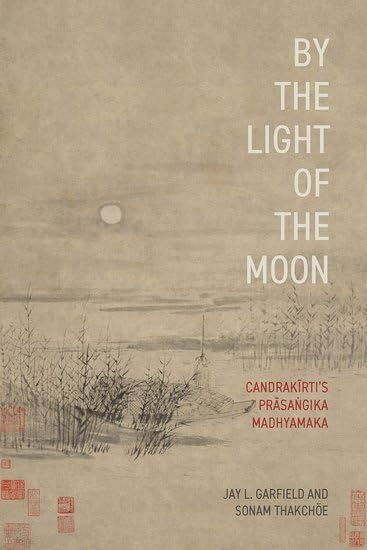
Much of the commentary and scholarship on Candrakirti-whether canonical or contemporary-has been concerned with the question of whether Candrakirti is a radical nihilist who denies the possibility of any knowledge and the reality of both the external world and of the mind. Eminent Tibetan exegetes have argued that this is the correct understanding of Candrakirti and of Madhyamaka itself, and that Madhyamaka so understood is the correct philosophical position. Others have argued that Candrakirti provides the resources for reconciling realism with the emptiness of all phenomena. This debate continues among contemporary scholars: many, while less sanguine regarding the cogency of the position they ascribe to Candrakirti, read him explicitly as an ontological and epistemological nihilist. Others take him to advocate a plausible, moderately realist position. The book argues that Candrakirti is not a nihilist. The authors show instead that Candrakirti develops a sophisticated understanding of knowledge in the context of massive delusion, of reality in the world of conventional truth, and of ethics in the domain of human life. This analysis reconciles the claim that all phenomena are empty-that they lack any intrinsic existence or identity-with a moderate realism about the conventional world.
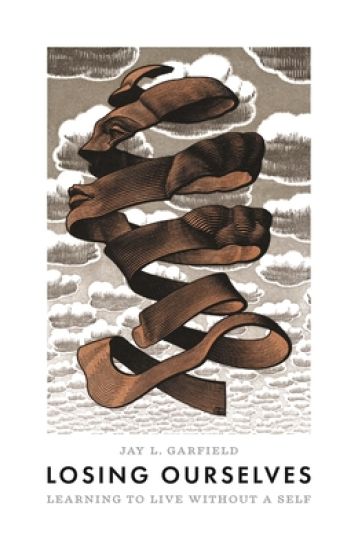
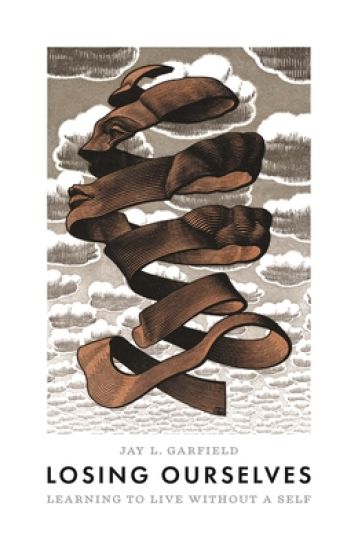
Why you don’t have a self—and why that’s a good thingIn Losing Ourselves, Jay Garfield, a leading expert on Buddhist philosophy, offers a brief and radically clear account of an idea that at first might seem frightening but that promises to liberate us and improve our lives, our relationships, and the world. Drawing on Indian and East Asian Buddhism, Daoism, Western philosophy, and cognitive neuroscience, Garfield shows why it is perfectly natural to think you have a self—and why it actually makes no sense at all and is even dangerous. Most importantly, he explains why shedding the illusion that you have a self can make you a better person.Examining a wide range of arguments for and against the existence of the self, Losing Ourselves makes the case that there are not only good philosophical and scientific reasons to deny the reality of the self, but that we can lead healthier social and moral lives if we understand that we are selfless persons. The book describes why the Buddhist idea of no-self is so powerful and why it has immense practical benefits, helping us to abandon egoism, act more morally and ethically, be more spontaneous, perform more expertly, and navigate ordinary life more skillfully. Getting over the self-illusion also means escaping the isolation of self-identity and becoming a person who participates with others in the shared enterprise of life.The result is a transformative book about why we have nothing to lose—and everything to gain—by losing our selves.
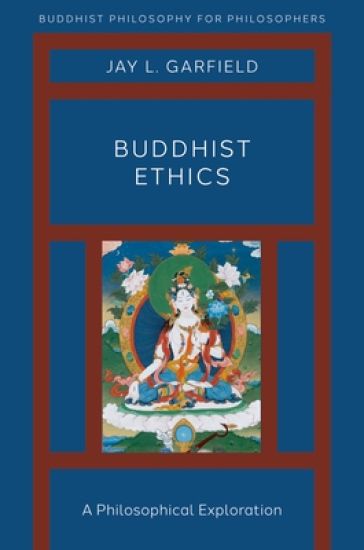
Buddhist Ethics presents an outline of Buddhist ethical thought. It is not a defense of Buddhist approaches to ethics as opposed to any other, nor is it a critique of the Western tradition. Garfield presents a broad overview of a range of Buddhist approaches to the question of moral philosophy. He draws on a variety of thinkers, reflecting the great diversity of this 2500-year-old tradition in philosophy but also the principles that tie them together. In particular, he engages with the literature that argues that Buddhist ethics is best understood as a species of virtue ethics, and with those who argue that it is best understood as consequentialist. Garfield argues that while there are important points of contact with these Western frameworks, Buddhist ethics is distinctive, and is a kind of moral phenomenology that is concerned with the ways in which we experience ourselves as agents and others as moral fellows. With this framework, Garfield explores the connections between Buddhist ethics and recent work in moral particularism, such as that of Jonathan Dancy, as well as the British and Scottish sentimentalist tradition represented by Hume and Smith.
What Can't be Said
Yasuo Deguchi; Jay L. Garfield; Graham Priest; Robert H. Sharf
Oxford University Press Inc
2021
sidottu
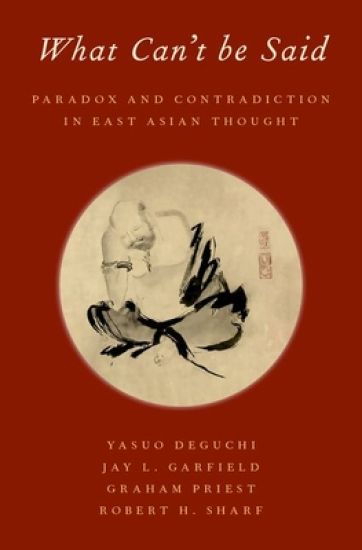
Typically, in the Western philosophical tradition, the presence of paradox and contradictions is taken to signal the failure or refutation of a theory or line of thinking. This aversion to paradox rests on the commitment-whether implicit or explicit-to the view that reality must be consistent. In What Can't be Said, Yasuo Deguchi, Jay L. Garfield, Graham Priest, and Robert H. Sharf extend their earlier arguments that the discovery of paradox and contradiction can deepen rather than disprove a philosophical position, and confirm these ideas in the context of East Asian philosophy. They claim that, unlike most Western philosophers, many East Asian philosophers embraced paradox, and provide textual evidence for this claim. Examining two classical Daoist texts, the Daodejing and the Zhaungzi, as well as the trajectory of Buddhism in East Asia, including works from the Sanlun, Tiantai, Chan, and Zen traditions and culminating with the Kyoto school of philosophy, they argue that these philosophers' commitment to paradox reflects an understanding of reality as inherently paradoxical, revealing significant philosophical insights.
Jay L. Garfield defends two exegetical theses regarding Hume's Treatise on Human Nature. The first is that Book II is the theoretical foundation of the Treatise. Second, Garfield argues that we cannot understand Hume's project without an appreciation of his own understanding of custom, and in particular, without an appreciation of the grounding of his thought about custom in the legal theory and debates of his time. Custom is the source of Hume's thoughts about normativity, not only in ethics and in political theory, but also in epistemological, linguistics, and scientific practice- and is the source of his insight that our psychological and social natures are so inextricably linked. The centrality of custom and the link between the psychological and the social are closely connected, which is why Garfield begins with Book II. There are four interpretative perspectives at work in this volume: one is a naturalistic skeptical interpretation of Hume's Treatise; a second is the foregrounding of Book II of the Treatise as foundational for Books I and III. A third is the consideration of the Treatise in relation to Hume's philosophical antecedents (particularly Sextus, Bayle, Hutcheson, Shaftesbury, and Mandeville), as well as eighteenth century debates about the status of customary law, with one eye on its sequellae in the work of Kant, the later Wittgenstein, and in contemporary cognitive science. The fourth is the Buddhist tradition in which many of the ideas Hume develops are anticipated and articulated in somewhat different ways. Garfield presents Hume as a naturalist, a skeptic and as, above all, a communitarian. In offering this interpretation, he provides an understanding of the text as a whole in the context of the literature to which it responded, and in the context of the literature it inspired.
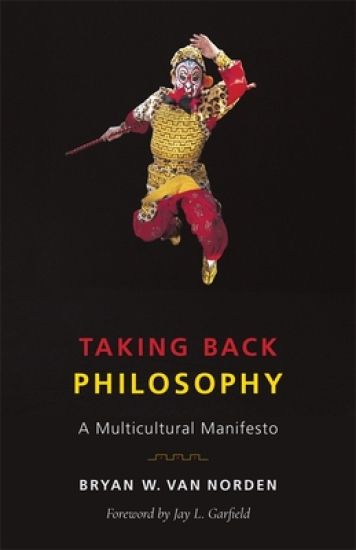
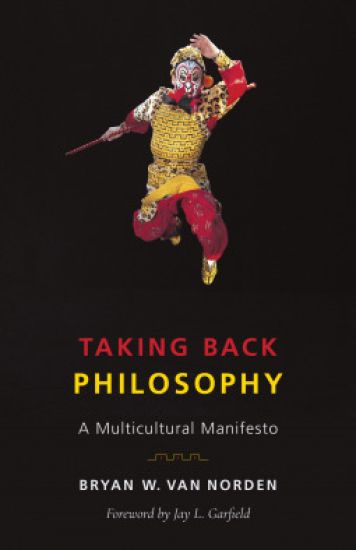
Are American colleges and universities failing their students by refusing to teach the philosophical traditions of China, India, Africa, and other non-Western cultures? This biting and provocative critique of American higher education says yes. Even though we live in an increasingly multicultural world, most philosophy departments stubbornly insist that only Western philosophy is real philosophy and denigrate everything outside the European canon. In Taking Back Philosophy, Bryan W. Van Norden lambastes academic philosophy for its Eurocentrism, insularity, and complicity with nationalism and issues a ringing call to make our educational institutions live up to their cosmopolitan ideals. In a cheeky, agenda-setting, and controversial style, Van Norden, an expert in Chinese philosophy, proposes an inclusive, multicultural approach to philosophical inquiry. He showcases several accessible examples of how Western and Asian thinkers can be brought into productive dialogue, demonstrating that philosophy only becomes deeper as it becomes increasingly diverse and pluralistic. Taking Back Philosophy is at once a manifesto for multicultural education, an accessible introduction to Confucian and Buddhist philosophy, a critique of the ethnocentrism and anti-intellectualism characteristic of much contemporary American politics, a defense of the value of philosophy and a liberal arts education, and a call to return to the search for the good life that defined philosophy for Confucius, Socrates, and the Buddha. Building on a popular New York Times opinion piece that suggested any philosophy department that fails to teach non-Western philosophy should be renamed a "Department of European and American Philosophy," this book will challenge any student or scholar of philosophy to reconsider what constitutes the love of wisdom.
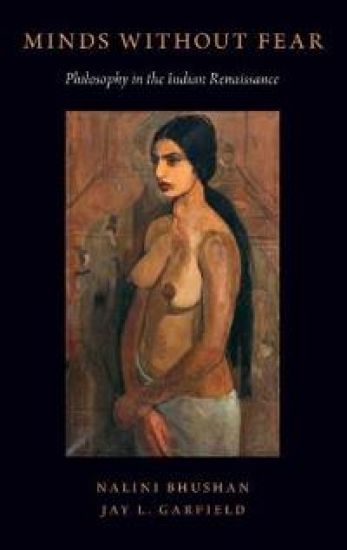
Minds Without Fear is an intellectual and cultural history of India during the period of British occupation. It demonstrates that this was a period of renaissance in India in which philosophy--both in the public sphere and in the Indian universities--played a central role in the emergence of a distinctively Indian modernity. This is also a history of Indian philosophy. It demonstrates how the development of a secular philosophical voice facilitated the construction of modern Indian society and the consolidation of the nationalist movement. Authors Nalini Bhushan and Jay Garfield explore the complex role of the English language in philosophical and nationalist discourse, demonstrating both the anxieties that surrounded English, and the processes that normalized it as an Indian vernacular and academic language. Garfield and Bhushan attend to both Hindu and Muslim philosophers, to public and academic intellectuals, to artists and art critics, and to national identity and nation-building. Also explored is the complex interactions between Indian and European thought during this period, including the role of missionary teachers and the influence of foreign universities in the evolution of Indian philosophy. This pattern of interaction, although often disparaged as "inauthentic" is continuous with the cosmopolitanism that has always characterized the intellectual life of India, and that the philosophy articulated during this period is a worthy continuation of the Indian philosophical tradition.
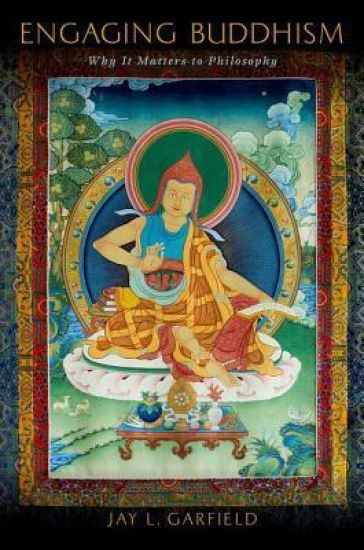
This is a book for scholars of Western philosophy who wish to engage with Buddhist philosophy, or who simply want to extend their philosophical horizons. It is also a book for scholars of Buddhist studies who want to see how Buddhist theory articulates with contemporary philosophy. Engaging Buddhism: Why it Matters to Philosophy articulates the basic metaphysical framework common to Buddhist traditions. It then explores questions in metaphysics, the philosophy of mind, phenomenology, epistemology, the philosophy of language and ethics as they are raised and addressed in a variety of Asian Buddhist traditions. In each case the focus is on philosophical problems; in each case the connections between Buddhist and contemporary Western debates are addressed, as are the distinctive contributions that the Buddhist tradition can make to Western discussions. Engaging Buddhism is not an introduction to Buddhist philosophy, but an engagement with it, and an argument for the importance of that engagement. It does not pretend to comprehensiveness, but it does address a wide range of Buddhist traditions, emphasizing the heterogeneity and the richness of those traditions. The book concludes with methodological reflections on how to prosecute dialogue between Buddhist and Western traditions. "Garfield has a unique talent for rendering abstruse philosophical concepts in ways that make them easy to grasp. This is an important book, one that can profitably be read by scholars of Western and non-Western philosophy, including specialists in Buddhist philosophy. This is in my estimation the most important work on Buddhist philosophy in recent memory. It covers a wide range of topics and provides perhaps the clearest analysis of some core Buddhist ideas to date. This is landmark work. I think it's the best cross-cultural analysis of the relevance of Buddhist thought for contemporary philosophy in the present literature. "-C. John Powers, Professor, School of Culture, History & Language, Australian National University
Sweet Reason
James M. Henle; Jay L. Garfield; Thomas Tymoczko
Wiley-Blackwell (an imprint of John Wiley Sons Ltd)
2011
nidottu
Sweet Reason: A Field Guide to Modern Logic, 2nd Edition offers an innovative, friendly, and effective introduction to logic. It integrates formal first order, modal, and non-classical logic with natural language reasoning, analytical writing, critical thinking, set theory, and the philosophy of logic and mathematics. An innovative introduction to the field of logic designed to entertain as it informsIntegrates formal first order, modal, and non-classical logic with natural language reasoning, analytical writing, critical thinking, set theory, and the philosophy of logic and mathematicsAddresses contemporary applications of logic in fields such as computer science and linguisticsA web-site (www.wiley.com/go/henle) linked to the text features numerous supplemental exercises and examples, enlightening puzzles and cartoons, and insightful essays
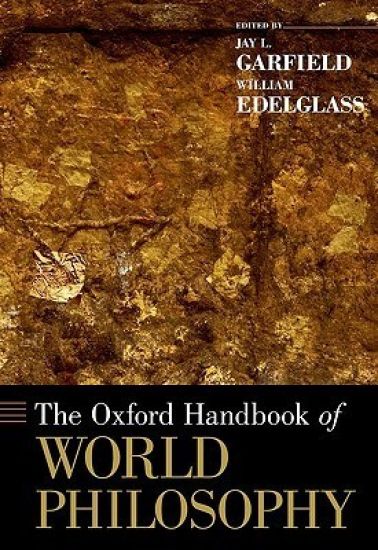
The Oxford Handbook of World Philosophy
Jay L. Garfield; William Edelglass
Oxford University Press Inc
2011
sidottu
The Oxford Handbook of World Philosophy provides the advanced student or scholar a set of introductions to each of the world's major non-European philosophical traditions. It offers the non-specialist a way in to unfamiliar philosophical texts and methods and the opportunity to explore non-European philosophical terrain and to connect her work in one tradition to philosophical ideas or texts from another. Sections on Chinese Philosophy, Indian Philosophy, Buddhist Philosophy, East Asian Philosophy, African Philosophy, and Recent Trends in Global Philosophy are each edited by an expert in the field. Each section includes a general introduction and a set of authoritative articles written by leading scholars, designed to provide the non-specialist a broad overview of a major topic or figure. This volume is an invaluable aid to those who would like to pursue philosophy in a global context, and to those who are committed to moving beyond Eurocentrism in academic philosophy.
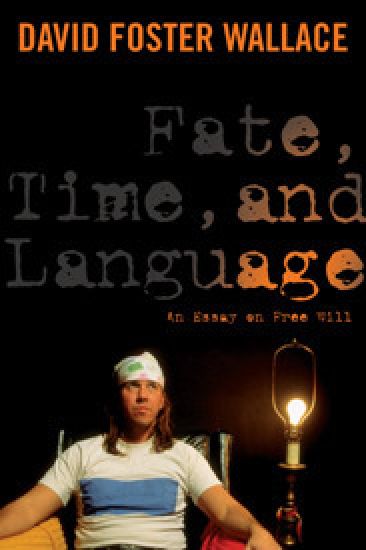
In 1962, the philosopher Richard Taylor used six commonly accepted presuppositions to imply that human beings have no control over the future. David Foster Wallace not only took issue with Taylor's method, which, according to him, scrambled the relations of logic, language, and the physical world, but also noted a semantic trick at the heart of Taylor's argument. Fate, Time, and Language presents Wallace's brilliant critique of Taylor's work. Written long before the publication of his fiction and essays, Wallace's thesis reveals his great skepticism of abstract thinking made to function as a negation of something more genuine and real. He was especially suspicious of certain paradigms of thought-the cerebral aestheticism of modernism, the clever gimmickry of postmodernism-that abandoned "the very old traditional human verities that have to do with spirituality and emotion and community." As Wallace rises to meet the challenge to free will presented by Taylor, we witness the developing perspective of this major novelist, along with his struggle to establish solid logical ground for his convictions. This volume, edited by Steven M. Cahn and Maureen Eckert, reproduces Taylor's original article and other works on fatalism cited by Wallace. James Ryerson's introduction connects Wallace's early philosophical work to the themes and explorations of his later fiction, and Jay Garfield supplies a critical biographical epilogue.
Pointing at the Moon
Jay L Garfield; Tom J.F. Tillemans; eds D'Amato
Oxford University Press Inc
2009
sidottu
This volume collects essays by philosophers and scholars working at the interface of Western philosophy and Buddhist Studies. Many have distinguished scholarly records in Western philosophy, with expertise in analytic philosophy and logic, as well as deep interest in Buddhist philosophy. Others have distinguished scholarly records in Buddhist Studies with strong interests in analytic philosophy and logic. All are committed to the enterprise of cross-cultural philosophy and to bringing the insights and techniques of each tradition to bear in order to illuminate problems and ideas of the other. These essays address a broad range of topics in the philosophy of mind, philosophy of language, logic, epistemology, and metaphysics, and demonstrate the fecundity of the interaction between the Buddhist and Western philosophical and logical traditions.