

Kirjailija
Jay M. Smith
Kirjat ja teokset yhdessä paikassa: 7 kirjaa, julkaisuja vuosilta 1996-2022, suosituimpien joukossa Cheated. Vertaile teosten hintoja ja tarkista saatavuus suomalaisista kirjakaupoista.
Mukana myös kirjoitusasut: Jay M Smith
7 kirjaa
Kirjojen julkaisuhaarukka 1996-2022.
ENDORSEMENTS "A sleek account of the twists and turns of the French Revolution, Smith's work achieves the rare feat of achieving clarity and coverage in a concise volume that students will appreciate. With its focus on revolutionary events, it provides essential context for classroom discussion of the principles at stake in 1789". Rafe Blaufarb, Professor of History at Florida State University. Director and Ben Weider Eminent Scholar in Napoleonic Studies at the FSU Department of History"A truly engaging immersion. Jay Smith's lively, suspenseful narrative introduces the key issues of the French Revolution. But he does not simply detail the unfolding of this pivotal event in modern history. He revisits the relationship between revolutionary origins and the Terror to explain how tradition, innovation, and contingent events intersected with explosive force to permanently change France and the world". Laura Mason, Sr. Lecturer at Johns Hopkins University, Department of History and Program in Film & Media Studies. "This is a brilliant, concise, up-to-date and engaging introduction to the French Revolution that will be of interest both to students and to the general public". David A. Bell, Sidney and Ruth Lapidus Professor in the Era of North Atlantic Revolutions, Princeton University."By eschewing a sweeping survey in favor of a thematic approach to the French Revolution, Jay Smith has produced something that is of far greater value to teachers. Focusing on four critical challenges at the heart of the revolutionary movement, this narrative lends itself well to coaching students in critical historical thinking skills - understanding cause and effect, the effects of contingency, and patterns of change and continuity. Written in clear, accessible prose, this text is suitable for students at various levels, from advanced high school courses to undergraduate seminars". Natasha S. Naujoks, Co-Director, Global Affairs Fellows Program and History Teacher at Norfolk Academy.SUMMARY This Quick Immersion introduces readers to one of the most dramatic and influential events in world history, one that opened a door to the implementation of 'liberal revolutions' across the globe in the following two centuries. The narrative's main focus is the peculiar political dynamic -oscillating between an almost utopian optimism and a pessimistic distrust of other political actors- that propelled the French Revolutionaries from one pivotal crisis to the next. Smith follows the story from the arguments over fiscal reform in the 1770s and 1780s, where many of the seeds of mistrust were first planted, to the fall of Robespierre and the dismantling of emergency government in 1794-1795.
In 2010 allegations of an utterly corrupt academic system for student-athletes emerged at the University of North Carolina at Chapel Hill, home of the legendary Tar Heels. Written by UNC professor of history Jay Smith and UNC athletics department whistleblower Mary Willingham, Cheated recounts the story of academic fraud in UNC’s athletics department, even as university leaders focused on minimizing the damage in order to keep the billion-dollar college sports revenue machine functioning. Smith and Willingham make an impassioned argument that the “student-athletes” in these programs are being cheated out of what, after all, they are promised in the first place: a college education. Updated with a new epilogue, the paperback edition of Cheated carries the narrative through the defining events of 2017, including the landmark Wainstein report, the findings of which UNC leaders initially embraced only to push aside in an audacious strategy of denial with the NCAA, ultimately even escaping punishment for offering sham coursework. The ongoing fallout from this scandal-and the continuing spotlight on the failings of college athletics, which are hardly unique to UNC-has continued to inform the debate about how the $16 billion college sports industry operates and influences colleges and universities nationwide.

In 2010 allegations of an utterly corrupt academic system for student-athletes emerged from the University of North Carolina at Chapel Hill campus, home of the legendary Tar Heels. As the alma mater of Michael Jordan, Larry Brown, Marion Jones, Lawrence Taylor, Rashad McCants, and many others; winner of forty national championships in six different sports; and a partner in one of the best rivalries in sports, UNC–Chapel Hill is a world-famous colossus of college athletics. In the wake of the Wainstein report, however, the fallout from this scandal-and the continuing spotlight on the failings of college athletics-has made the school ground zero in the debate about how the $16 billion college sports industry operates. Written by UNC professor of history Jay Smith and UNC athletics department whistleblower Mary Willingham, Cheated exposes the fraudulent inner workings of this famous university. For decades these internal systems have allowed woefully underprepared basketball and football players to take fake courses and earn devalued degrees from one of the nation’s top universities while faculty and administrators looked the other way. In unbiased and carefully sourced detail, Cheated recounts the academic fraud in UNC’s athletics department, even as university leaders focused on minimizing the damage in order to keep the billion-dollar college sports revenue machine functioning. Smith and Willingham make an impassioned argument that the “student-athletes” in these programs are being cheated out of what, after all, is promised them in the first place: a college education.
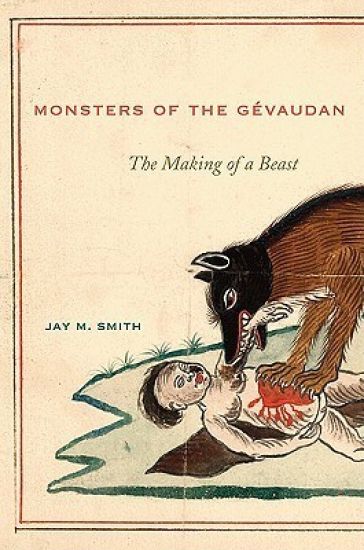
In a brilliant, original rendition, Monsters of the Gévaudan revisits a spellbinding French tale that has captivated imaginations for over two hundred years, and offers the definitive explanation of the strange events that underlie this timeless story.In 1764 a peasant girl was killed and partially eaten while tending a flock of sheep. Eventually, over a hundred victims fell prey to a mysterious creature, or creatures, whose cunning and deadly efficiency terrorized the region and mesmerized Europe. The fearsome aggressor quickly took on mythic status, and the beast of the Gévaudan passed into French folklore.What species was this killer, why did it decapitate so many of its victims, and why did it prefer the flesh of women and children? Why did contemporaries assume that the beast was anything but a wolf, or a pack of wolves, as authorities eventually claimed, and why is the tale so often ignored in histories of the ancien régime? Smith finds the answer to these last two questions in an accident of timing. The beast was bound to be perceived as strange and anomalous because its ravages coincided with the emergence of modernity itself.Expertly situated within the social, intellectual, cultural, and political currents of French life in the 1760s, Monsters of the Gévaudan will engage a wide range of readers with both its recasting of the beast narrative and its compelling insights into the allure of the monstrous in historical memory.
The mature nationalism that fueled the French Revolution grew from patriotic sensibilities fostered over the course of a century or more. Jay M. Smith proposes that the French thought their way to nationhood through a process of psychic adjustment premised on the reimagining of nobility, a social category and moral concept that had long dominated the cultural horizons of the old regime. Nobility Reimagined follows the elaboration of French patriotism across the eighteenth century and highlights the accentuation of key, and conflicting, features of patriotic thought at defining moments in the history of the monarchy. By enabling the articulation of different futures for nobility and nation, the patriotic awakening that marked the old regime helped to create both the quest for patriotic unity and the fierce constitutional battles that flowered at the time of the Revolution. Smith argues that the attempt to redefine and restore French nobility brought forth competing visions of patriotism with correlating models of the social and political order. Although the terms of public debate have changed, the same basic challenge continues to animate contemporary politics: how to reconcile inspiring and unifying nationalist ideals—honor, virtue, patriotism—with persistent social frictions rooted in class, ideology, ethnicity, or gender.
The eighteenth century's critique of privilege and its commitment to the idea of advancement by merit are widely regarded as sources of modernity. But if meritocratic values were indeed the product of the Enlightenment and the French Revolution, how do we explain earlier attention to merit--especially the nobility whose values the Revolution rejected? The Culture of Merit probes this paradox by analyzing changing perceptions of merit among the old nobility from the age of Louis XIII to the eve of the French Revolution.Jay M. Smith argues that the early modern nobility instinctively drew a correlation between the meaning of merit and an image of the "sovereign's gaze." In the early seventeenth century, merit meant the qualities traditionally associated with aristocratic values: generosity, fidelity, and honor. Nobles sought to display those qualities before the appreciative gaze of the king himself. But the expansion of the monarchy forced the routinization of the sovereign's gaze, and Louis XIV began to affirm and reward new qualities--talent and application--besides those thought innately noble.The contradictions implicit within the absolute monarchy's culture of merit are demonstrated by the eighteenth-century French army, which was dominated by the nobility, but also committed to efficiency and expertise. Smith shows that the army's continuous efforts to encourage and reward "merit" led to a clash of principles. The ever-growing emphasis on talent and discipline led reformers--the great majority of them noble--to attack the most egregious examples of privilege and favoritism in the army. Smith's analysis of the long-term evolution in conceptions of royal service suggests a new explanation for the shift in values signified by the French Revolution. The transition away from the "personal" gaze of the king toward the "public" gaze of the monarchy and nation foretold the triumph of a new culture of merit in which noble birth would have no meaning.The Culture of Merit will interest historians and other social scientists concerned with issues of aristocratic identity, state formation, professionalization, and the changing political culture of pre-Revolutionary France.Jay M. Smith is Assistant Professor of History, University of North Carolina, Chapel Hill.