Kirjojen hintavertailu. Mukana 12 595 353 kirjaa ja 12 kauppaa.
Kirjailija
Jay McTighe
Kirjat ja teokset yhdessä paikassa: 17 kirjaa, julkaisuja vuosilta 2004-2021, suosituimpien joukossa Thinking It Through. Vertaile teosten hintoja ja tarkista saatavuus suomalaisista kirjakaupoista.
How can we help teachers use classroom assessments to gather appropriate evidence for all valued learning goals, and to use those assessments not just to measure learning but to promote it? This book provides an answer in a practical, proven, and principled Assessment Planning Framework that moves away from solely multiple-choice tests toward a wide range of approaches to classroom assessment activities, including performance-based assessments. The Framework examines four different types of learning goals, considers various purposes and audiences for assessment information, reviews five categories of classroom assessment methods, and presents options for communicating actionable results. To the authors, the primary purpose of classroom assessment is to inform teaching and learning, rather than simply to assign grades. This concise resource will be a reliable go-to reference for teachers, school leaders, mentors, and coaches in guiding classroom assessment practices and understanding their underlying principles. Book Features:Builds on the classic book Understanding by Design, written by Grant Wiggins and Jay McTighe.Offers a practical, nontechnical presentation appropriate for teacher preparation and busy practitioners (K–16).Explores different purposes for, and methods of, classroom assessment and grading.Addresses assessment of academic standards as well as transdisciplinary outcomes, such as 21st-century skills.Describes the principles and practices underlying standards-based grading.
How can we help teachers use classroom assessments to gather appropriate evidence for all valued learning goals, and to use those assessments not just to measure learning but to promote it? This book provides an answer in a practical, proven, and principled Assessment Planning Framework that moves away from solely multiple-choice tests toward a wide range of approaches to classroom assessment activities, including performance-based assessments. The Framework examines four different types of learning goals, considers various purposes and audiences for assessment information, reviews five categories of classroom assessment methods, and presents options for communicating actionable results. To the authors, the primary purpose of classroom assessment is to inform teaching and learning, rather than simply to assign grades. This concise resource will be a reliable go-to reference for teachers, school leaders, mentors, and coaches in guiding classroom assessment practices and understanding their underlying principles. Book Features:Builds on the classic book Understanding by Design, written by Grant Wiggins and Jay McTighe.Offers a practical, nontechnical presentation appropriate for teacher preparation and busy practitioners (K–16).Explores different purposes for, and methods of, classroom assessment and grading.Addresses assessment of academic standards as well as transdisciplinary outcomes, such as 21st-century skills.Describes the principles and practices underlying standards-based grading.
Are you ready to make changes in your Christian school? Moving Learning Forward in Christian Schools: A Practical Guide for a Mission-Focused Curriculum challenges those involved in Christian schools to consider changes to better prepare students to enter adulthood and impact the world. Readers will gain insights into: -How current brain research about how the brain learns can be put into practice in classrooms. -How Christian schools can be much more mission-focused than they currently are. -An excellent framework to shift Christian schools' instructional programs from skills and knowledge (textbook-based) curriculum to focusing on understanding and transfer with improved curriculum, instruction, and assessment. -A perfect platform for developing better integration of biblical concepts in all subject areas. -How the six Facets of Understanding from Understanding by Design provide a vehicle to intentionally include the development of personal characteristics that are Bible based and often related to the school's mission. -A wonderful guideline for helping Christian schools think systemically about changes needed and for developing a three-to-five-year strategic plan for improving the instructional program. This is your opportunity to consider concrete and practical ideas for school improvement
Are you ready to make changes in your Christian school? Moving Learning Forward in Christian Schools: A Practical Guide for a Mission-Focused Curriculum challenges those involved in Christian schools to consider changes to better prepare students to enter adulthood and impact the world. Readers will gain insights into: -How current brain research about how the brain learns can be put into practice in classrooms. -How Christian schools can be much more mission-focused than they currently are. -An excellent framework to shift Christian schools' instructional programs from skills and knowledge (textbook-based) curriculum to focusing on understanding and transfer with improved curriculum, instruction, and assessment. -A perfect platform for developing better integration of biblical concepts in all subject areas. -How the six Facets of Understanding from Understanding by Design provide a vehicle to intentionally include the development of personal characteristics that are Bible based and often related to the school's mission. -A wonderful guideline for helping Christian schools think systemically about changes needed and for developing a three-to-five-year strategic plan for improving the instructional program. This is your opportunity to consider concrete and practical ideas for school improvement
Aimed at the growing number of educators who are looking to move beyond covering the curriculum, Designing Authentic Performance Tasks and Projects provides a comprehensive guide to ensuring students' deeper learning—in which they can transfer their knowledge, skills, and understandings to the world beyond the classroom. Readers will learn how to:Create authentic tasks and projects to address both academic standards and 21st century skills.Apply task frames to design performance tasks that allow voice and choice for students.Design and use criterion-based evaluation tools and rubrics for assessment, including those for students to use in self-assessment and peer assessment.Incorporate performance-based instructional strategies needed to prepare students for authentic performance.Differentiate tasks and projects for all students, including those needing additional support or challenge.Effectively manage the logistics of a performance-based classroom.Use project management approaches to facilitate successful implementation of tasks and projects.Develop performance-based curriculum at the program, school, and district levels.Authors Jay McTighe, Kristina J. Doubet, and Eric M. Carbaugh provide examples and resources across all grade levels and subject areas. Teachers can use this practical guidance to transform their classrooms into vibrant centers of learning, where students are motivated and engaged and see relevance in the work they are doing.
Far too often, our students attain only a superficial level of knowledge that fails to prepare them for deeper challenges in school and beyond. In Teaching for Deeper Learning, renowned educators and best-selling authors Jay McTighe and Harvey F. Silver propose a solution: teaching students to make meaning for themselves. Contending that the ability to ""earn"" understanding will equip students to thrive in school, at work, and in life, the authors highlight seven higher-order thinking skills that facilitate students' acquisition of information for greater retention, retrieval, and transfer. These skills, which cut across content areas and grade levels and are deeply embedded in current academic standards, separate high achievers from their low-performing peers. Drawing on their deep well of research and experience, the authors:Explore what kind of content is worth having students make meaning about.Provide practical tools and strategies to help teachers target each of the seven thinking skills in the classroom.Explain how teachers can incorporate the thinking skills and tools into lesson and unit design.Show how teachers can build students' capacity to use the strategies independently.If our goal is to prepare students to meet the rigorous demands of school, college, and career, then we must foster their ability to respond to such challenges. This comprehensive, practical guide will enable teachers to engage students in the kind of learning that yields enduring understanding and valuable skills that they can use throughout their lives.
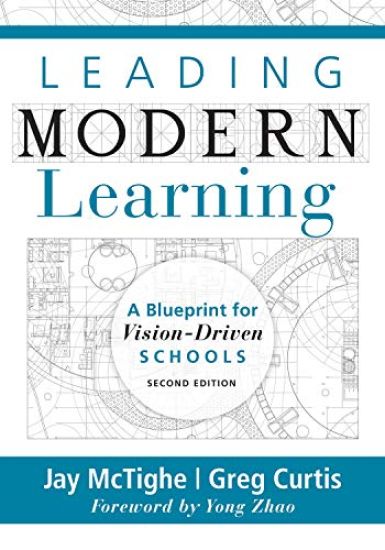
Redesign education to meet the needs of 21st century students. In the second edition of Leading Modern Learning, authors Jay McTighe and Greg Curtis outline a reworked version of their blueprint for major education reform. More than a simple refresh, the latest edition incorporates new insights, experiences, and tools that will help you implement modern learning practices in your department, school, or district. Use this book to guide education and curriculum reform and empower modern learners: Understand the necessity and value of education reform and updating school curriculum for the 21st century classroom. Learn how to use a blueprint for your vision of learning, mission, and curriculum development to establish mission clarity and effective instruction and assessment practices. Explore systems thinking and frameworks for backward-design that can be utilized by school leadership to develop action plans and guide school curriculum reform for modern learning. Read an all-new chapter on change management and strategic planning for district and school leadership as well as new Notes From the Field, which highlight how to avoid potential missteps and misunderstandings that inhibit progress. Utilize the appendices and free reproducibles to further your understanding of education reform, curriculum development, and school leadership for modern learning. A joint publication of ASCD and Solution Tree Contents: Foreword Introduction Chapter 1: Creating a Futures-Oriented Vision and Mission Chapter 2: From Mission to Action Chapter 3: Curriculum for Modern Learning Chapter 4: An Assessment System for Modern Learning Chapter 5: Instruction for Modern Learning Chapter 6: A Reporting System for Modern Learning Chapter 7: Leadership for Modern Learning Appendix A: Sources for Futures-Oriented Thinking Tools and Processes Appendix B: Sample Sources and Performance Indicators for 21st Century Skills Appendix C: Sample Map of Cornerstone Performance Tasks and Transfer Goals References and Resources Index
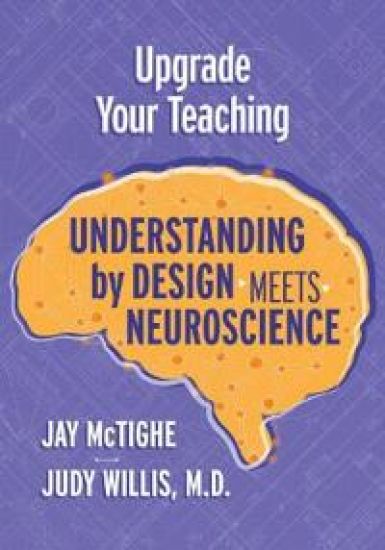
How can educators leverage neuroscience research about how the human brain learns? How can we use this information to improve curriculum, instruction, and assessment so our students achieve deep learning and understanding in all subject areas? Upgrade Your Teaching: Understanding by Design Meets Neuroscience answers these questions by merging insights from neuroscience with Understanding by Design (UbD), the framework used by thousands of educators to craft units of instruction and authentic assessments that emphasize understanding rather than recall.Readers will learn:How the brain processes incoming information and determines what is (or is not) retained as long-term memory.How brain science reveals factors that influence student motivation and willingness to put forth effort.How to fully engage all students through relevance and achievable challenge.How key components of UbD, including backward design, essential questions, and transfer tasks, are supported by research in neuroscience.Why specific kinds of teaching and assessment strategies are effective in helping students gain the knowledge, skills, and deep understanding they need to succeed in school and beyond.How to create a brain-friendly classroom climate that supports lasting learning.Authors Jay McTighe and Judy Willis translate research findings into practical information for everyday use in schools, at all grade levels and in all subject areas. With their guidance, educators at all levels can learn how to design and implement units that empower teachers and students alike to capitalize on the brain's tremendous capacity for learning.
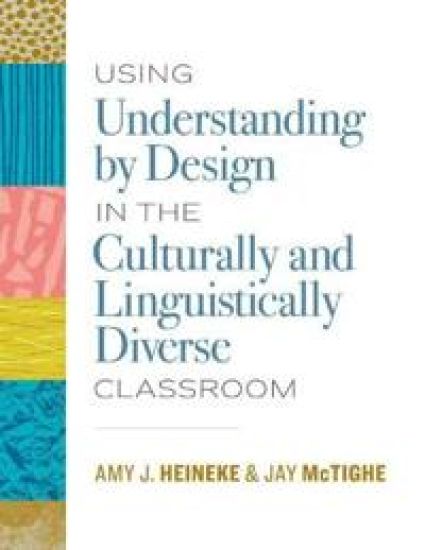
How can today's teachers, whose classrooms are more culturally and linguistically diverse than ever before, ensure that their students achieve at high levels? How can they design units and lessons that support English learners in language development and content learning—simultaneously? Authors Amy Heineke and Jay McTighe provide the answers by adding a lens on language to the widely used Understanding by Design® framework (UbD® framework) for curriculum design, which emphasizes teaching for understanding, not rote memorization.Readers will learn:The components of the UbD framework.The fundamentals of language and language development.How to use diversity as a valuable resource for instruction by gathering information about students' background knowledge from home, community, and school.How to design units and lessons that integrate language development with content learning in the form of essential knowledge and skills.How to assess in ways that enable language learners to reveal their academic knowledge.Student profiles, real-life classroom scenarios, and sample units and lessons provide compelling examples of how teachers in all grade levels and content areas use the UbD framework in their culturally and linguistically diverse classrooms. Combining these practical examples with findings from an extensive research base, the authors deliver a useful and authoritative guide for reaching the overarching goal: ensuring that all students have equitable access to high-quality curriculum and instruction.
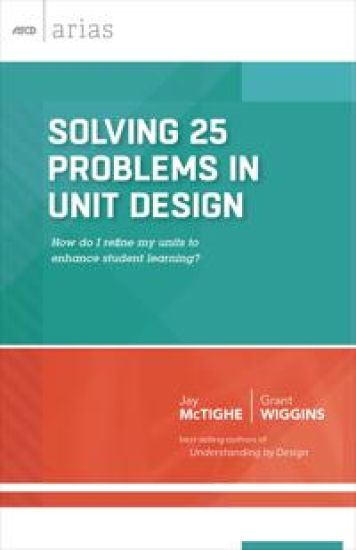
Curriculum design experts Jay McTighe and Grant Wiggins have reviewed thousands of curriculum documents and unit plans across a range of subjects and grades. In this book, they identify and describe the 25 most common problems in unit design and recommend how to fix them—and avoid them when planning new units.McTighe and Wiggins, creators of the Understanding by Design® framework, help you use the process of backward design to troubleshoot your units and achieve tighter alignment and focus on learning priorities. Whether you're working with local or national standards or with other learning goals, you can rely on their practical and proven solutions to promote deeper and better learning for your students.
What are ""essential questions,"" and how do they differ from other kinds of questions? What's so great about them? Why should you design and use essential questions in your classroom?Essential questions (EQs) help target standards as you organize curriculum content into coherent units that yield focused and thoughtful learning. In the classroom, EQs are used to stimulate students' discussions and promote a deeper understanding of the content.Whether you are an Understanding by Design (UbD) devotee or are searching for ways to address standards—local or Common Core State Standards—in an engaging way, Jay McTighe and Grant Wiggins provide practical guidance on how to design, initiate, and embed inquiry-based teaching and learning in your classroom.Offering dozens of examples, the authors explore the usefulness of EQs in all K-12 content areas, including skill-based areas such as math, PE, language instruction, and arts education. As an important element of their backward design approach to designing curriculum, instruction, and assessment, the authors:Give a comprehensive explanation of why EQs are so important.Explore seven defining characteristics of EQs.Distinguish between topical and overarching questions and their uses.Outline the rationale for using EQs as the focal point in creating units of study.Show how to create effective EQs, working from sources including standards, desired understandings, and student misconceptions.Using essential questions can be challenging—for both teachers and students—and this book provides guidance through practical and proven processes, as well as suggested ""response strategies"" to encourage student engagement. Finally, you will learn how to create a culture of inquiry so that all members of the educational community—students, teachers, and administrators—benefit from the increased rigor and deepened understanding that emerge when essential questions become a guiding force for learners of all ages.
The Understanding by Design Guide to Advanced Concepts in Creating and Reviewing Units offers instructional modules on how to refine units created using Understanding by Design (UbD) and how to effectively review the units using self-assessment and peer review, along with observation and supervision. The Guide builds upon its companion and predecessor, The Understanding by Design Guide to Creating High-Quality Units, and like the earlier volume, it presents the following components for each module:Narrative discussion of key ideas in the module.Exercises, worksheets, and design tips.Examples of unit designs.Review criteria for self- and peer assessment.References for further information.UbD is based on a backward design approach and is used by thousands of educators to create curriculum units and assessments that focus on developing students' understanding of essential ideas and helping students attain important skills. The Guide is intended for use by individuals or groups in K-16 education (teachers, school and district administrators, curriculum directors, graduate and undergraduate students in curriculum, and others) who want to further develop their skill in UbD. Users can work through the modules in order or pick and choose, depending on their interests and needs.Additional resources, including worksheets, examples, and FAQs, are available as downloadable forms (including fillable UbD templates that can be saved electronically), making it easy for UbD practitioners to advance their understanding and their ability to create curriculum that leads to deep, meaningful learning.
The Understanding by Design Guide to Creating High-Quality Units offers instructional modules on the basic concepts and elements of Understanding by Design (UbD), the ""backward design"" approach used by thousands of educators to create curriculum units and assessments that focus on developing students' understanding of important ideas. The eight modules are organized around the UbD Template Version 2.0 and feature components similar to what is typically provided in a UbD design workshop, including:Discussion and explanation of key ideas in the module.Guiding exercises, worksheets, and design tips.Examples of unit designs.Review criteria with prompts for self-assessment.A list of resources for further information.This guide is intended for K-16 educators—either individuals or groups—who may have received some training in UbD and want to continue their work independently; those who've read Understanding by Design and want to design curriculum units but have no access to formal training; graduate and undergraduate students in university curriculum courses; and school and district administrators, curriculum directors, and others who facilitate UbD work with staff. Users can go through the modules in sequence or skip around, depending on their previous experience with UbD and their preferred curriculum design style or approach. Unit creation, planning, and adaptation are easier than ever with the accompanying downloadable resources, including the UbD template set up as a fillable PDF form, additional worksheets, examples, and FAQs about the module topics that speak to UbD novices and veterans alike.
Implementing the popular Understanding by Design® (UbD™) framework is much easier when you use this in-depth resource for workshops, curriculum teams, and teacher training. This collection of templates, design tools, examples, and exercises helps you give all staff members a firm grasp of key UbD principles, including:How to use backward design to align curriculum with assessment and instruction.Why to focus curriculum on the ""big ideas"" in your content standards.Which learning activities are more apt to enable students to achieve desired results.Give staff members at all levels clear action steps they need in every stage of the UbD process, including:Drafting curriculum units based on essential questions. Creating performance tasks and rubrics for assessing student understanding in any subject.Organizing, sequencing, and guiding classroom learning experiences.Included are steps for conducting a peer review of unit designs plus process steps to guide your implementation of UbD systemwide.