Kirjojen hintavertailu. Mukana 12 595 353 kirjaa ja 12 kauppaa.

Kirjailija

Jay P. Childers

Kirjat ja teokset yhdessä paikassa: 4 kirjaa, julkaisuja vuosilta 2012-2013, suosituimpien joukossa Political Tone. Vertaile teosten hintoja ja tarkista saatavuus suomalaisista kirjakaupoista.

4 kirjaa

Kirjojen julkaisuhaarukka 2012-2013.

Political Tone

Political Tone

Roderick P. Hart; Jay P. Childers; Colene J. Lind

University of Chicago Press
2013
sidottu
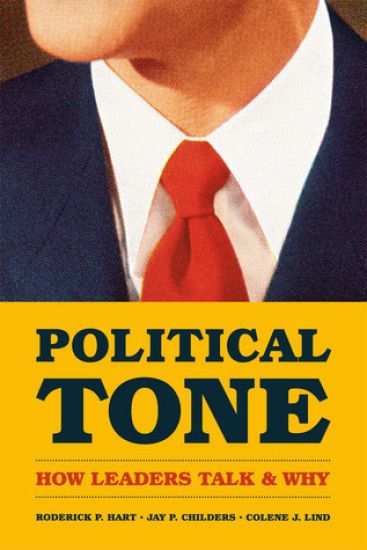
It's not what you say, but how you say it. Solving problems with words is the essence of politics, and finding the right words for the moment can make or break a politician's career. Yet very little has been said in political science about the elusive element of tone. In "Political Tone", Roderick P. Hart, Jay P. Childers, and Colene J. Lind analyze a range of texts - from speeches and debates to advertising and print and broadcast campaign coverage - using a sophisticated computer program, Diction, that parses their content for semantic features like realism, commonality, and certainty, as well as references to religion, party, or patriotic terms. Beginning with a look at how societal forces like diversity and modernity manifest themselves as political tones in the contexts of particular leaders and events, the authors proceed to consider how individual leaders have used tone to convey their messages: How did Bill Clinton's clever dexterity help him recover from the Monica Lewinsky scandal? How did Barack Obama draw on his experience as a talented community activist to overcome his inexperience as a national leader? And how does Sarah Palin's wandering tone indicate that she trusts her listeners and is open to their ideas? By focusing not on the substance of political arguments but on how they were phrased, "Political Tone" provides powerful and unexpected insights into American politics.
Political Tone

Political Tone

Roderick P. Hart; Jay P. Childers; Colene J. Lind

University of Chicago Press
2013
nidottu
It's not what you say, but how you say it. Solving problems with words is the essence of politics, and finding the right words for the moment can make or break a politician's career. Yet very little has been said in political science about the elusive element of tone. In "Political Tone", Roderick P. Hart, Jay P. Childers, and Colene J. Lind analyze a range of texts - from speeches and debates to advertising and print and broadcast campaign coverage - using a sophisticated computer program, DICTION, that parses their content for semantic features like realism, commonality, and certainty, as well as references to religion, party, or patriotic terms. Beginning with a look at how societal forces like diversity and modernity manifest themselves as political tones in the contexts of particular leaders and events, the authors proceed to consider how individual leaders have used tone to convey their messages: How did Bill Clinton's clever dexterity help him recover from the Monica Lewinsky scandal? How did Barack Obama draw on his experience as a talented community activist to overcome his inexperience as a national leader? And how does Sarah Palin's wandering tone indicate that she trusts her listeners and is open to their ideas? By focusing not on the substance of political arguments but on how they were phrased, "Political Tone" provides powerful and unexpected insights into American politics.
The Evolving Citizen

The Evolving Citizen

Jay P. Childers

Pennsylvania State University Press
2013
pokkari
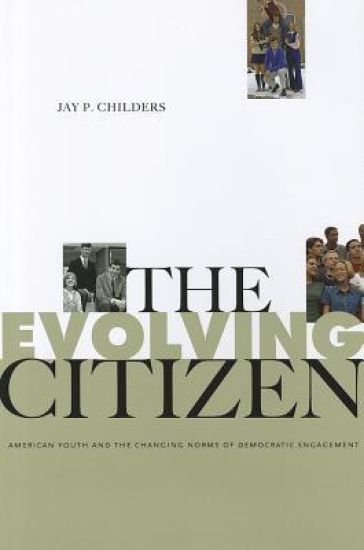
It has become a common complaint among academics and community leaders that citizens today are not what they used to be. Nowhere is this decline seen to be more troubling than when the focus is on young Americans. Compared to the youth of past generations, today’s young adults, so the story goes, spend too much time watching television, playing video games, and surfing the Internet. As a result, American democracy is in trouble.The Evolving Citizen challenges this decline thesis and argues instead that democratic engagement has not gotten worse—it has simply changed. Through an analysis of seven high school newspapers from 1965 to 2010, this book shows that young people today, according to what they have to say for themselves, are just as enmeshed in civic and political life as the adolescents who came before them. American youth remain good citizens concerned about their communities and hopeful that they can help make a difference. But as The Evolving Citizen demonstrates, today’s youth understand and perform their roles as citizens differently because the world they live in has changed remarkably over the last half century.
The Evolving Citizen

The Evolving Citizen

Jay P. Childers

Pennsylvania State University Press
2012
sidottu
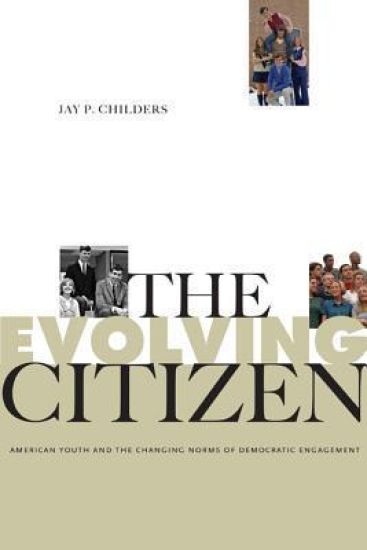
It has become a common complaint among academics and community leaders that citizens today are not what they used to be. Nowhere is this decline seen to be more troubling than when the focus is on young Americans. Compared to the youth of past generations, today’s young adults, so the story goes, spend too much time watching television, playing video games, and surfing the Internet. As a result, American democracy is in trouble.The Evolving Citizen challenges this decline thesis and argues instead that democratic engagement has not gotten worse—it has simply changed. Through an analysis of seven high school newspapers from 1965 to 2010, this book shows that young people today, according to what they have to say for themselves, are just as enmeshed in civic and political life as the adolescents who came before them. American youth remain good citizens concerned about their communities and hopeful that they can help make a difference. But as The Evolving Citizen demonstrates, today’s youth understand and perform their roles as citizens differently because the world they live in has changed remarkably over the last half century.