Kirjojen hintavertailu. Mukana 12 265 450 kirjaa ja 12 kauppaa.

Kirjailija

Jay Schulkin

Kirjat ja teokset yhdessä paikassa: 35 kirjaa, julkaisuja vuosilta 1992-2025, suosituimpien joukossa Oliver Wendell Holmes Jr., Pragmatism and Neuroscience. Vertaile teosten hintoja ja tarkista saatavuus suomalaisista kirjakaupoista.

35 kirjaa

Kirjojen julkaisuhaarukka 1992-2025.

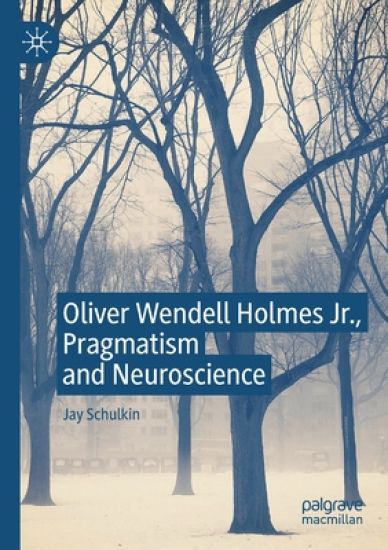
Oliver Wendell Holmes Jr., Pragmatism and Neuroscience

Oliver Wendell Holmes Jr., Pragmatism and Neuroscience

Jay Schulkin

Springer Nature Switzerland AG
2020
nidottu
This book explores the cultures of philosophy and the law as they interact with neuroscience and biology, through the perspective of American jurist Oliver Wendell Holmes’ Jr., and the pragmatist tradition of John Dewey. Schulkin proposes that human problem solving and the law are tied to a naturalistic, realistic and an anthropological understanding of the human condition. The situated character of legal reasoning, given its complexity, like reasoning in neuroscience, can be notoriously fallible. Legal and scientific reasoning is to be understood within a broader context in order to emphasize both the continuity and the porous relationship between the two. Some facts of neuroscience fit easily into discussions of human experience and the law. However, it is important not to oversell neuroscience: a meeting of law and neuroscience is unlikely to prove persuasive in the courtroom any time soon. Nevertheless, as knowledge of neuroscience becomes more reliableand more easily accepted by both the larger legislative community and in the wider public, through which neuroscience filters into epistemic and judicial reliability, the two will ultimately find themselves in front of a judge. A pragmatist view of neuroscience will aid and underlie these events.
Oliver Wendell Holmes Jr., Pragmatism and Neuroscience

Oliver Wendell Holmes Jr., Pragmatism and Neuroscience

Jay Schulkin

Springer Nature Switzerland AG
2019
sidottu
This book explores the cultures of philosophy and the law as they interact with neuroscience and biology, through the perspective of American jurist Oliver Wendell Holmes’ Jr., and the pragmatist tradition of John Dewey. Schulkin proposes that human problem solving and the law are tied to a naturalistic, realistic and an anthropological understanding of the human condition. The situated character of legal reasoning, given its complexity, like reasoning in neuroscience, can be notoriously fallible. Legal and scientific reasoning is to be understood within a broader context in order to emphasize both the continuity and the porous relationship between the two. Some facts of neuroscience fit easily into discussions of human experience and the law. However, it is important not to oversell neuroscience: a meeting of law and neuroscience is unlikely to prove persuasive in the courtroom any time soon. Nevertheless, as knowledge of neuroscience becomes more reliableand more easily accepted by both the larger legislative community and in the wider public, through which neuroscience filters into epistemic and judicial reliability, the two will ultimately find themselves in front of a judge. A pragmatist view of neuroscience will aid and underlie these events.
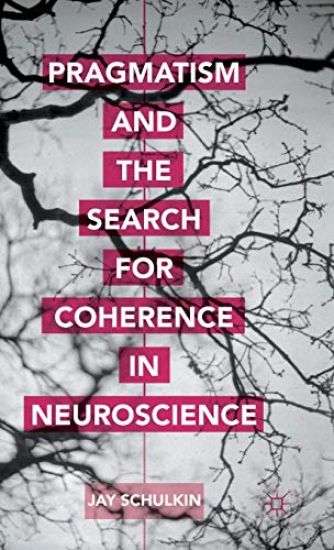
Pragmatism and the Search for Coherence in Neuroscience
We have known for over a thousand years that the brain underlies behavioral expression, but effective scientific study of the brain is only very recent. Two things converge in this book: a great respect for neuroscience and its many variations, and a sense of investigation and inquiry demythologized. Think of it as foraging for coherence.
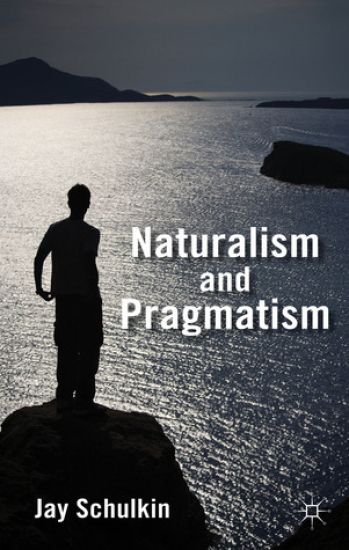
Naturalism and Pragmatism

Naturalism and Pragmatism

Jay Schulkin

Palgrave Macmillan
2012
sidottu
As a working neuroscientist, Jay Schulkin's ambitious exploration offers reflections on the pragmatic tradition from a fresh perspective, to present not only a scientist's take on the pragmatic tradition, but also a pragmatist's take on the evolution of human problem solving.
Curt Richter

Curt Richter

Jay Schulkin; Paul Rozin

Johns Hopkins University Press
2005
sidottu
In the first half of the twentieth century, psychology was a discipline in search of scientific legitimacy. Debates raged over how much of human and animal behavior is instinctive and how much is learned, and how behavior could be quantified accurately. At the Johns Hopkins University's new Phipps Psychiatric Clinic, Curt P. Richter stood aside from these heated theoretical arguments, choosing instead to apply his data-collection methods, innovative measurement techniques, playful sense of exploration, and consummate surgical skill to laboratory examinations of the biological basis of behavior. From identifying the biological clocks that govern behavior and physiology to observing the self-regulation of nutrient levels by the body, the cyclical nature of some mental illnesses, and the causes of hopelessness, Richter's wide-ranging discoveries not only influenced the burgeoning field of psychobiology and paved the way for later researchers but also often had implications for the treatment of patients in the clinic. At the time of his death in 1988, Richter left behind a massive collection of laboratory data. For this book, Jay Schulkin mined six decades of Richter's archived research data, personal documents, and interviews to flesh out an engaging portrait of a "laboratory artisan" in the context of his work.
A Perspective on Opioid Addiction

A Perspective on Opioid Addiction

Jay Schulkin; Bryce Huebner

Columbia University Press
2025
pokkari
Today, the opioid crisis often feels intractable. This book offers a wider perspective on its underlying causes, examining the biological, psychological, and social aspects of addiction and the interactions among them.Jay Schulkin, a behavioral neuroscientist, and Bryce Huebner, a philosopher, explore the complexities of opioid addiction through a distinctive combination of neuroscientific knowledge and pragmatist thought. They detail the biological and neurological processes that shape and sustain addiction, showing why opiates’ power to ease pain makes us vulnerable to abusing them. The book discusses the relationship between addiction and depression, the dilemmas of pain management, and the meaning of recovery. Schulkin and Huebner underscore the stigma that marginalizes people who struggle with addiction and the social factors that shape access to treatment and care, calling for a focus on harm reduction. They consider questions of individual and social accountability, reflecting on choice, autonomy, and freedom.Interdisciplinary and wide-ranging, this book brings deep learning, empathy, and insight to understanding the experience of addiction.
A Perspective on Opioid Addiction

A Perspective on Opioid Addiction

Jay Schulkin; Bryce Huebner

Columbia University Press
2025
sidottu
Today, the opioid crisis often feels intractable. This book offers a wider perspective on its underlying causes, examining the biological, psychological, and social aspects of addiction and the interactions among them.Jay Schulkin, a behavioral neuroscientist, and Bryce Huebner, a philosopher, explore the complexities of opioid addiction through a distinctive combination of neuroscientific knowledge and pragmatist thought. They detail the biological and neurological processes that shape and sustain addiction, showing why opiates’ power to ease pain makes us vulnerable to abusing them. The book discusses the relationship between addiction and depression, the dilemmas of pain management, and the meaning of recovery. Schulkin and Huebner underscore the stigma that marginalizes people who struggle with addiction and the social factors that shape access to treatment and care, calling for a focus on harm reduction. They consider questions of individual and social accountability, reflecting on choice, autonomy, and freedom.Interdisciplinary and wide-ranging, this book brings deep learning, empathy, and insight to understanding the experience of addiction.
Understanding Suicide in the United States

Understanding Suicide in the United States

Meaghan Stacy; Jay Schulkin

Cambridge University Press
2023
sidottu
By integrating sociological, psychological, and biological perspectives, this book aims to demystify and destigmatize a challenging and taboo topic – suicide. It weaves current theories and statistics on suicide into a larger message of how suicide can affect almost anyone, and how urgent prevention needs are. Written in an accessible manner, it assumes no pre-existing knowledge of suicide. The broad nontechnical overview will appeal to general readers and a wide range of disciplines, including politics and policy, biology, psychology, sociology, and psychiatry. It concludes on a positive note, focused on recovery, resilience, and hope. It considers not only how these factors may play a role in suicide prevention, but how, despite persistent suicide rates, we can proceed optimistically and take concrete action to support loved ones or promote suicide prevention efforts.
Understanding Suicide in the United States

Understanding Suicide in the United States

Meaghan Stacy; Jay Schulkin

Cambridge University Press
2023
pokkari
By integrating sociological, psychological, and biological perspectives, this book aims to demystify and destigmatize a challenging and taboo topic – suicide. It weaves current theories and statistics on suicide into a larger message of how suicide can affect almost anyone, and how urgent prevention needs are. Written in an accessible manner, it assumes no pre-existing knowledge of suicide. The broad nontechnical overview will appeal to general readers and a wide range of disciplines, including politics and policy, biology, psychology, sociology, and psychiatry. It concludes on a positive note, focused on recovery, resilience, and hope. It considers not only how these factors may play a role in suicide prevention, but how, despite persistent suicide rates, we can proceed optimistically and take concrete action to support loved ones or promote suicide prevention efforts.
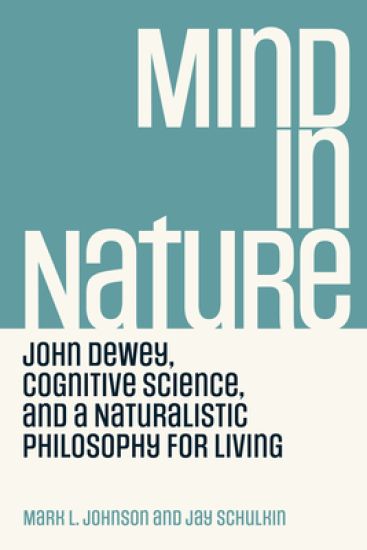
Mind in Nature

Mind in Nature

Mark L. Johnson; Jay Schulkin

MIT PRESS LTD
2023
nidottu
A dialogue between contemporary neuroscience and John Dewey's seminal philosophical work Experience and Nature, exploring how the bodily roots of human meaning, selfhood, and values provide wisdom for living. The intersection of cognitive science and pragmatist philosophy reveals the bodily basis of human meaning, thought, selfhood, and values. John Dewey's revolutionary account of pragmatist philosophy Experience and Nature (1925) explores humans as complex social animals, developing through ongoing engagement with their physical, interpersonal, and cultural environments. Drawing on recent research in biology and neuroscience that supports, extends, and, on occasion, reformulates some of Dewey's seminal insights, embodied cognition expert Mark L. Johnson and behavioral neuroscientist Jay Schulkin develop the most expansive intertwining of Dewey's philosophy with biology and neuroscience to date. The result is a positive, life-affirming understanding of how our evolutionary and individual development shapes who we are, what we can know, where our deepest values come from, and how we can cultivate wisdom for a meaningful and intelligent life.
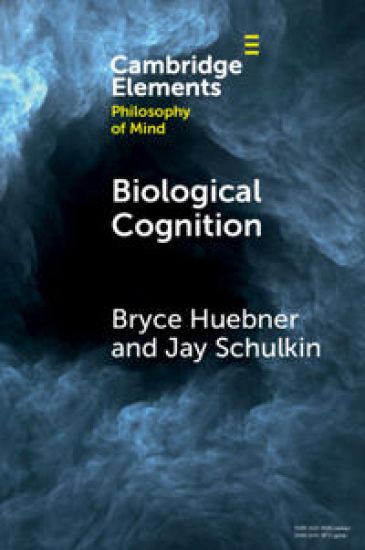
Biological Cognition

Biological Cognition

Bryce Huebner; Jay Schulkin

Cambridge University Press
2022
pokkari
This Element introduces a biological approach to cognition, which highlights the significance of allostatic regulation and the navigation of challenges and opportunities. It argues that cognition is best understood as a juggling act, which reflects numerous ongoing attempts to minimize disruptions while prioritizing the sources of information that are necessary to satisfy social and biological needs; and it provides a characterization of the architectural constraints, neurotransmitters, and affective states that shape visual perception, as well as the regulatory capacities that sustain flexible patterns of thought and behavior.
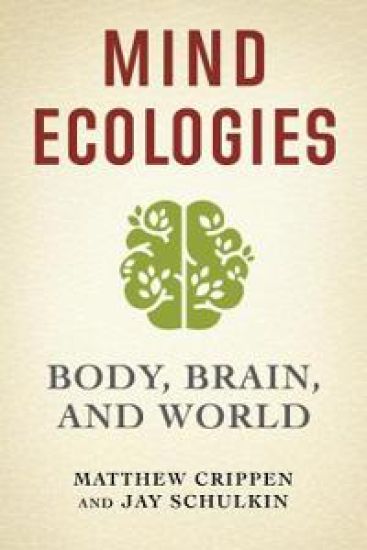
Mind Ecologies

Mind Ecologies

Matthew Crippen; Jay Schulkin

Columbia University Press
2020
pokkari
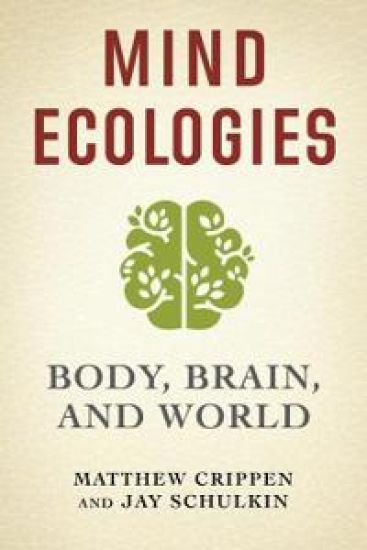
Pragmatism—a pluralistic philosophy with kinships to phenomenology, Gestalt psychology, and embodied cognitive science—is resurging across disciplines. It has growing relevance to literary studies, the arts, and religious scholarship, along with branches of political theory, not to mention our understanding of science. But philosophies and sciences of mind have lagged behind this pragmatic turn, for the most part retaining a central-nervous-system orientation, which pragmatists reject as too narrow.Matthew Crippen, a philosopher of mind, and Jay Schulkin, a behavioral neuroscientist, offer an innovative interdisciplinary theory of mind. They argue that pragmatism in combination with phenomenology is not only able to give an unusually persuasive rendering of how we think, feel, experience, and act in the world but also provides the account most consistent with current evidence from cognitive science and neurobiology. Crippen and Schulkin contend that cognition, emotion, and perception are incomplete without action, and in action they fuse together. Not only are we embodied subjects whose thoughts, emotions, and capacities comprise one integrated system; we are living ecologies inseparable from our surroundings, our cultures, and our world. Ranging from social coordination to the role of gut bacteria and visceral organs in mental activity, and touching upon fields such as robotics, artificial intelligence, and plant cognition, Crippen and Schulkin stress the role of aesthetics, emotions, interests, and moods in the ongoing enactment of experience. Synthesizing philosophy, neurobiology, psychology, and the history of science, Mind Ecologies offers a broad and deep exploration of evidence for the embodied, embedded, enacted, and extended nature of mind.
Mind Ecologies

Mind Ecologies

Matthew Crippen; Jay Schulkin

Columbia University Press
2020
sidottu
Pragmatism—a pluralistic philosophy with kinships to phenomenology, Gestalt psychology, and embodied cognitive science—is resurging across disciplines. It has growing relevance to literary studies, the arts, and religious scholarship, along with branches of political theory, not to mention our understanding of science. But philosophies and sciences of mind have lagged behind this pragmatic turn, for the most part retaining a central-nervous-system orientation, which pragmatists reject as too narrow.Matthew Crippen, a philosopher of mind, and Jay Schulkin, a behavioral neuroscientist, offer an innovative interdisciplinary theory of mind. They argue that pragmatism in combination with phenomenology is not only able to give an unusually persuasive rendering of how we think, feel, experience, and act in the world but also provides the account most consistent with current evidence from cognitive science and neurobiology. Crippen and Schulkin contend that cognition, emotion, and perception are incomplete without action, and in action they fuse together. Not only are we embodied subjects whose thoughts, emotions, and capacities comprise one integrated system; we are living ecologies inseparable from our surroundings, our cultures, and our world. Ranging from social coordination to the role of gut bacteria and visceral organs in mental activity, and touching upon fields such as robotics, artificial intelligence, and plant cognition, Crippen and Schulkin stress the role of aesthetics, emotions, interests, and moods in the ongoing enactment of experience. Synthesizing philosophy, neurobiology, psychology, and the history of science, Mind Ecologies offers a broad and deep exploration of evidence for the embodied, embedded, enacted, and extended nature of mind.
The Brain in Context

The Brain in Context

Jonathan D. Moreno; Jay Schulkin

Columbia University Press
2019
sidottu
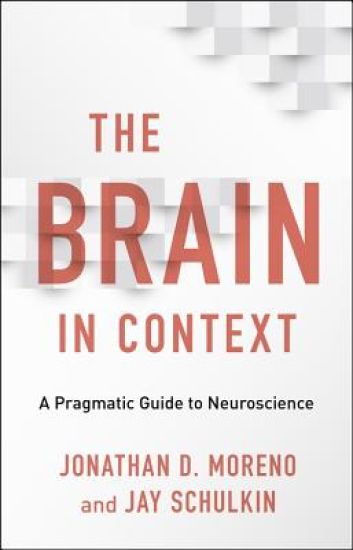
The human brain is the most complex object in the known universe. The field of neuroscience has made remarkable strides in recent years in understanding aspects of the brain, yet we still struggle with seemingly fundamental questions about how the brain works. What lessons can we learn from neuroscience’s successes and failures? What kinds of questions can neuroscience answer, and what will remain out of reach?In The Brain in Context, the bioethicist Jonathan D. Moreno and the neuroscientist Jay Schulkin provide an accessible and thought-provoking account of the evolution of neuroscience and the neuroscience of evolution. They emphasize that the brain is not an isolated organ—it extends into every part of the body and every aspect of human life. Understanding the brain requires studying the environmental, biological, chemical, genetic, and social factors that continue to shape it. Moreno and Schulkin describe today’s transformative devices, theories, and methods, including technologies like fMRI and optogenetics as well as massive whole-brain activity maps and the attempt to create a digital simulation of the brain. They show how theorizing about the brain and experimenting with it often go hand in hand, and they raise cautions about unintended consequences of technological interventions. The Brain in Context is a stimulating and even-handed assessment of the scope and limits of what we know about how we think.
Missed Information

Missed Information

David Sarokin; Jay Schulkin

MIT Press
2017
pokkari
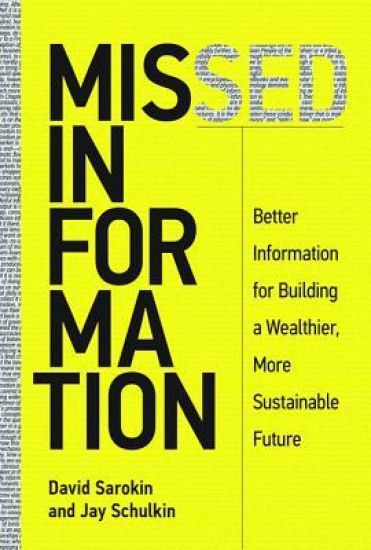
How better information and better access to it improves the quality of our decisions and makes for a more vibrant participatory society.Information is power. It drives commerce, protects nations, and forms the backbone of systems that range from health care to high finance. Yet despite the avalanche of data available in today's information age, neither institutions nor individuals get the information they truly need to make well-informed decisions. Faulty information and sub-optimal decision-making create an imbalance of power that is exaggerated as governments and corporations amass enormous databases on each of us. Who has more power: the government, in possession of uncounted terabytes of data (some of it obtained by cybersnooping), or the ordinary citizen, trying to get in touch with a government agency? In Missed Information, David Sarokin and Jay Schulkin explore information-not information technology, but information itself-as a central part of our lives and institutions. They show that providing better information and better access to it improves the quality of our decisions and makes for a more vibrant participatory society.Sarokin and Schulkin argue that freely flowing information helps systems run more efficiently and that incomplete information does just the opposite. It's easier to comparison shop for microwave ovens than for doctors or hospitals because of information gaps that hinder the entire health-care system. Better information about such social ills as child labor and pollution can help consumers support more sustainable products. The authors examine the opacity of corporate annual reports, the impenetrability of government secrets, and emerging techniques of "information foraging." The information imbalance of power can be reconfigured, they argue, with greater and more meaningful transparency from government and corporations.
The CRF Signal

The CRF Signal

Jay Schulkin

Oxford University Press
2017
sidottu
Information molecules, such as Cortico-Releasing Factor (CRF), are ancient and widely distributed across diverse organs, playing various regulatory roles. CRF has been associated with a range of human conditions, including fear and anxiety, social contact, and most recently, addiction – in particular the euphoric feelings associated with alcohol consumption. Since its original discovery, research has unearthed that the role of this molecule is much broader than first thought. The scientific community now knows that CRF is a dynamic and diversely widespread peptide hormone that plays many roles and has many functions, in addition to its role as a releasing factor in the brain. This book explores the role of CRF, examining the relationship between location and function. It considers recurrent features that are linked to CRF - movement and change. CRF expression in regions of the brain is tied to paying attention to novel events and invoking movement in response to those events. Indeed, CRF provokes simple organized rhythmic behavior and can be mobilized under diverse conditions, including adversity. Examining the evolutionary origins of CRH, its neural functions, and its role in a variety of human characteristics and social behaviors, this book provides unique insights into CRF, and will be of interest to students and researchers in Neuroscience, Psychology, and Biology.
Milk

Milk

Michael L. Power; Jay Schulkin

Johns Hopkins University Press
2016
sidottu
After drawing its first breath, every newborn mammal turns his or her complete attention to obtaining milk. This primal act was once thought to stem from a basic fact: milk provides the initial source of calories and nutrients for all mammalian young. But it turns out that milk is a much more complicated biochemical cocktail and provides benefits beyond nutrition. In this fascinating book, biologists Michael L. Power and Jay Schulkin reveal this liquid's evolutionary history and show how its ingredients have changed over many millions of years to become a potent elixir. Power and Schulkin walk readers through the early origins of the mammary gland and describe the incredible diversification of milk among the various mammalian lineages. After revealing the roots of lactation, the authors describe the substances that naturally occur in milk and discuss their biological functions. They reveal that mothers pass along numerous biochemical signals to their babies through milk. The authors explain how milk boosts an infant's immune system, affects an infant's metabolism and physiology, and helps inoculate and feed the baby's gut microbiome. Throughout the book, the authors weave in stories from studies of other species, explaining how comparative research sheds light on human lactation. The authors then turn their attention to the fascinating topic of cross-species milk consumption-something only practiced by certain humans who evolved an ability to retain lactase synthesis into adulthood. The first book to discuss milk from a comparative and evolutionary perspective, Power and Schulkin's masterpiece reveals the rich biological story of the common thread that connects all mammals.
Sport

Sport

Jay Schulkin

Columbia University Press
2016
sidottu
Sports are as varied as the people who play them. We run, jump, and swim. We kick, hit, and shoot balls. We ride sleds in the snow and surf in the sea. From the Olympians of ancient Greece to today's professional athletes, from adult pickup soccer games to children's gymnastics classes, people at all levels of ability at all times and in all places have engaged in sport. What drives this phenomenon? In Sport, the neuroscientist Jay Schulkin argues that biology and culture do more than coexist when we play sports-they blend together seamlessly, propelling each other toward greater physical and intellectual achievement. To support this claim, Schulkin discusses history, literature, and art-and engages philosophical inquiry and recent behavioral research. He connects sport's basic neural requirements, including spatial and temporal awareness, inference, memory, agency, direction, competitive spirit, and endurance, to the demands of other human activities. He affirms sport's natural role as a creative evolutionary catalyst, turning the external play of sports inward and bringing insight to the diversion that defines our species. Sport, we learn, is a fundamental part of human life.
Reflections on the Musical Mind

Reflections on the Musical Mind

Jay Schulkin; Robert O. Gjerdingen

Princeton University Press
2013
sidottu
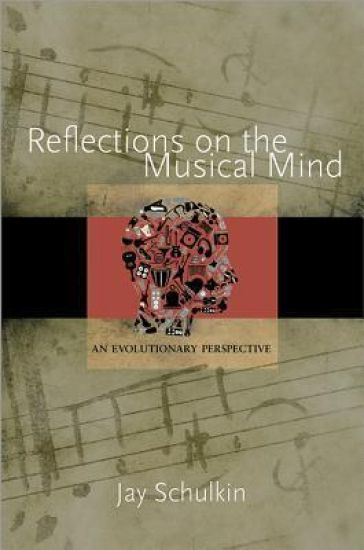
What's so special about music? We experience it internally, yet at the same time it is highly social. Music engages our cognitive/affective and sensory systems. We use music to communicate with one another--and even with other species--the things that we cannot express through language. Music is both ancient and ever evolving. Without music, our world is missing something essential. In Reflections on the Musical Mind, Jay Schulkin offers a social and behavioral neuroscientific explanation of why music matters. His aim is not to provide a grand, unifying theory. Instead, the book guides the reader through the relevant scientific evidence that links neuroscience, music, and meaning. Schulkin considers how music evolved in humans and birds, how music is experienced in relation to aesthetics and mathematics, the role of memory in musical expression, the role of music in child and social development, and the embodied experience of music through dance. He concludes with reflections on music and well-being. Reflections on the Musical Mind is a unique and valuable tour through the current research on the neuroscience of music.
The Evolution of Obesity

The Evolution of Obesity

Michael L. Power; Jay Schulkin

Johns Hopkins University Press
2013
pokkari
In this sweeping exploration of the relatively recent obesity epidemic, Michael L. Power and Jay Schulkin probe evolutionary biology, history, physiology, and medical science to uncover the causes of our growing girth. The unexpected answer? Our own evolutionary success. For most of the past few million years, our evolutionary ancestors' survival depended on being able to consume as much as possible when food was available and to store the excess energy for periods when it was scarce. In the developed world today, high-calorie foods are readily obtainable, yet the propensity to store fat is part of our species' heritage, leaving an increasing number of the world's people vulnerable to obesity. In an environment of abundant food, we are anatomically, physiologically, metabolically, and behaviorally programmed in a way that makes it difficult for us to avoid gaining weight. Power and Schulkin's engagingly argued book draws on popular examples and sound science to explain our expanding waistlines and to discuss the consequences of being overweight for different demographic groups. They review the various studies of human and animal fat use and storage, including those that examine fat deposition and metabolism in men and women; chronicle cultural differences in food procurement, preparation, and consumption; and consider the influence of sedentary occupations and lifestyles. A compelling and comprehensive examination of the causes and consequences of the obesity epidemic, The Evolution of Obesity offers fascinating insights into the question, Why are we getting fatter?