Kirjojen hintavertailu. Mukana 12 595 353 kirjaa ja 12 kauppaa.

Kirjailija

Jay Winter

Kirjat ja teokset yhdessä paikassa: 22 kirjaa, julkaisuja vuosilta 1999-2026, suosituimpien joukossa Toxic Demography. Vertaile teosten hintoja ja tarkista saatavuus suomalaisista kirjakaupoista.

22 kirjaa

Kirjojen julkaisuhaarukka 1999-2026.

Toxic Demography

Toxic Demography

Jennifer D. Sciubba; Michael S. Teitelbaum; Jay Winter

OXFORD UNIVERSITY PRESS INC
2026
nidottu
Population politics has taken many forms throughout history. Political leaders from both democracies and non-democracies commonly place population issues at the center of their political programs, manufacturing alarm over changing demographic distributions. From fears of existential decline to debates over migration and fertility, demographic issues are often distorted by political ideologies that obscure understanding and fuel divisive narratives. In Toxic Demography, Jennifer D. Sciubba, Michael S. Teitelbaum, and Jay Winter explore the deep entanglement of population dynamics with identity, modernization, nationalism, and populism. They unravel how concepts like "family" and "nation"--often seen as straightforward--carry diverse and politicized meanings that shape demographic debates. Focusing on the United States, Europe, and Asia, the authors examine the demographic dimensions of political conflict and the societal changes driven by aging populations and low fertility rates. These regions, at the forefront of unprecedented demographic transitions, reveal how population trends have been co-opted to serve political agendas that transform population debates into battlegrounds for broader ideological struggles. Drawing on historical and contemporary examples, Toxic Demography offers a critical lens to understand the persistent politicization of reproduction, fertility, and migration, showing how these distortions shape the futures of nations and societies.
War beyond Words

War beyond Words

Jay Winter

Cambridge University Press
2018
pokkari
What we know of war is always mediated knowledge and feeling. We need lenses to filter out some of its blinding, terrifying light. These lenses are not fixed; they change over time, and Jay Winter's panoramic history of war and memory offers an unprecedented study of transformations in our imaginings of war, from 1914 to the present. He reveals the ways in which different creative arts have framed our meditations on war, from painting and sculpture to photography, film and poetry, and ultimately to silence, as a language of memory in its own right. He shows how these highly mediated images of war, in turn, circulate through language to constitute our 'cultural memory' of war. This is a major contribution to our understanding of the diverse ways in which men and women have wrestled with the intractable task of conveying what twentieth-century wars meant to them and mean to us.
Cultural Olympians

Cultural Olympians

John Witheridge; John Clarke; Anthony Kenny; David Urquhart; Robin Poidevin; A N Wilson; Andrew Vincent; A C Grayling; Jay Winter; Ian Hesketh; David Boucher; Rowan Williams; Patrick Derham; John Taylor

The University of Buckingham Press
2013
nidottu
This book is designed to explore key questions surrounding faith, philosophy, science, culture and social progress by celebrating the life and thought of cultural leaders from Rugby School (estd. 1567).Some of the most distinguished historians, philosophers, social commentators and religious commentators are alumni of Rugby School. In this collection of essays, contributors explore the most important values that guide and challenge us today, by reflecting on the achievements of these cultural heavyweights.This collection is edited by Patrick Derham, the current Headmaster of Rugby School. Contributors include:John WitheridgeJohn ClarkeAnthony KennyDavid UrquhartRobin le PoidevinA.N. WilsonAndrew VincentA.C. GraylingJay Winter,Ian HeskethDavid BoucherRowan WilliamPatrick DerhamJohn Taylor
René Cassin and Human Rights

René Cassin and Human Rights

Jay Winter; Antoine Prost

Cambridge University Press
2013
sidottu
Through the life of one extraordinary man, this biography reveals what the term human rights meant to the men and women who endured two world wars, and how this major political and intellectual movement ultimately inspired and enshrined the Universal Declaration of Human Rights. René Cassin was a man of his generation, committed to moving from war to peace through international law, and whose work won him the Nobel Peace Prize in 1968. His life crossed all the major events of the first seventy years of the twentieth century, and illustrates the hopes, aspirations, failures and achievements of an entire generation. It shows how today's human rights regimes emerged from the First World War as a pacifist response to that catastrophe and how, after 1945, human rights became a way to go beyond the dangers of absolute state sovereignty, helping to create today's European project.
René Cassin and Human Rights

René Cassin and Human Rights

Jay Winter; Antoine Prost

Cambridge University Press
2013
pokkari
Through the life of one extraordinary man, this biography reveals what the term human rights meant to the men and women who endured two world wars, and how this major political and intellectual movement ultimately inspired and enshrined the Universal Declaration of Human Rights. René Cassin was a man of his generation, committed to moving from war to peace through international law, and whose work won him the Nobel Peace Prize in 1968. His life crossed all the major events of the first seventy years of the twentieth century, and illustrates the hopes, aspirations, failures and achievements of an entire generation. It shows how today's human rights regimes emerged from the First World War as a pacifist response to that catastrophe and how, after 1945, human rights became a way to go beyond the dangers of absolute state sovereignty, helping to create today's European project.
Capital Cities at War

Capital Cities at War

Jay Winter; Jean-Louis Robert

Cambridge University Press
1999
pokkari
This ambitious volume marks a huge step in our understanding of the social history of the Great War. Jay Winter and Jean-Louis Robert have gathered a group of scholars of London, Paris and Berlin, who collectively have drawn a coherent and original study of cities at war. The contributors explore notions of well-being in wartime cities - relating to the economy and the question of whether the state of the capitals contributed to victory or defeat. Expert contributors in fields stretching from history, demography, anthropology, economics, and sociology to the history of medicine, bring an interdisciplinary approach to the book, as well as representing the best of recent research in their own fields. Capital Cities at War, one of the few truly comparative works on the Great War, will transform studies of the conflict, and is likely to become a paradigm for research on other wars.
Toxic Demography

Toxic Demography

Jennifer D. Sciubba; Michael S. Teitelbaum; Jay Winter

OXFORD UNIVERSITY PRESS INC
2025
sidottu
Population politics has taken many forms throughout history. Political leaders from both democracies and non-democracies commonly place population issues at the center of their political programs, manufacturing alarm over changing demographic distributions. From fears of existential decline to debates over migration and fertility, demographic issues are often distorted by political ideologies that obscure understanding and fuel divisive narratives. In Toxic Demography, Jennifer D. Sciubba, Michael S. Teitelbaum, and Jay Winter explore the deep entanglement of population dynamics with identity, modernization, nationalism, and populism. They unravel how concepts like "family" and "nation"--often seen as straightforward--carry diverse and politicized meanings that shape demographic debates. Focusing on the United States, Europe, and Asia, the authors examine the demographic dimensions of political conflict and the societal changes driven by aging populations and low fertility rates. These regions, at the forefront of unprecedented demographic transitions, reveal how population trends have been co-opted to serve political agendas that transform population debates into battlegrounds for broader ideological struggles. Drawing on historical and contemporary examples, Toxic Demography offers a critical lens to understand the persistent politicization of reproduction, fertility, and migration, showing how these distortions shape the futures of nations and societies.
The Day the Great War Ended, 24 July 1923

The Day the Great War Ended, 24 July 1923

Jay Winter

Oxford University Press
2022
sidottu
On 24 July 1923 the last Treaty ending hostilities in the Great War was signed at Lausanne in Switzerland. That Treaty closed a decade of violence. Jay Winter tells the story of what happened on that day. On the shores of Lake Geneva, diplomats, statesmen, and soldiers came from Ankara and Athens, from London, Paris, and Rome, and from other capital cities to affirm that war was over. The Treaty they signed fixed the boundaries of present-day Greece and Turkey, and marked a beginning of a new phase in their history. That was its major achievement, but it came at a high price. The Treaty contained within it a Compulsory Population Exchange agreement. By that measure, Greek-Orthodox citizens of Turkey, with the exception of those living in Constantinople, lost the right of citizenship and residence in that state. So did Muslim citizens of Greece, except for residents of Western Thrace. This exchange of nearly two million people, introduced to the peace conference by Nobel Prize winner and humanitarian Fridtjof Nansen, provided a solution to the immense refugee problem arising out of the Greek-Turkish war. At the same time, it introduced into international law a definition of citizenship defined not by language or history or ethnicity, but solely by religion. This set a precedent for ethnic cleansing followed time and again later in the century and beyond. The second price of peace was the burial of commitments to the Armenian people that they would have a homeland in the lands from which they had been expelled, tortured and murdered in the genocide of 1915. This book tells the story of the peace conference, and its outcome. It shows how peace came before justice, and how it set in motion forces leading to the global war that followed in 1939.
The Cultural History of War in the Twentieth Century and After
This Element is a user's guide to the cultural history of warfare since 1914. It provides summaries of the basic questions historians have posed in what is now a truly global field of research. It is divided into three parts. The first provides an introduction to the cultural history of the state, focusing on the institutions of violence, both political and military, as well as introducing the key concept of the civilianization of war. The second part addresses civil society at war. It asks the question as to how do men and women try to make sense and attach meaning to the violence and cruelty of war. It also explores commemoration, religious life, humanitarianism, painting, cinema and the visual arts, and war literature and testimony. The third part explores the family, gender and migration in wartime, and shows how modern war continues to transform the world in which we live today.
The Great War in History

The Great War in History

Jay Winter; Antoine Prost

Cambridge University Press
2020
sidottu
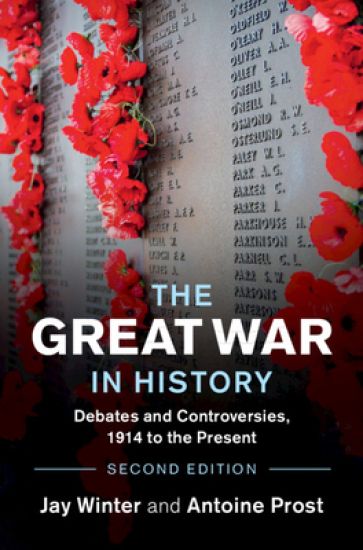
This revised and updated edition of The Great War in History provides the first survey of historical interpretations of the Great War from 1914 to 2020. It demonstrates how the history of the Great War has now gone global, and how the internet revolution has affected the way we understand the conflict. Jay Winter and Antoine Prost assess not only diplomatic and military studies but also the social and cultural interpretations of the war across academic and popular history, family history, and public history, including at museums, on the stage, on screen, in art, and at sites of memory. They provide a fascinating case study of the practice of history and the first survey of the ways in which the Centenary deepened and deflected both public and professional interpretations of the war. This will be essential reading for scholars and students in history, war studies, European history and international relations.
The Great War in History

The Great War in History

Jay Winter; Antoine Prost

Cambridge University Press
2020
pokkari
This revised and updated edition of The Great War in History provides the first survey of historical interpretations of the Great War from 1914 to 2020. It demonstrates how the history of the Great War has now gone global, and how the internet revolution has affected the way we understand the conflict. Jay Winter and Antoine Prost assess not only diplomatic and military studies but also the social and cultural interpretations of the war across academic and popular history, family history, and public history, including at museums, on the stage, on screen, in art, and at sites of memory. They provide a fascinating case study of the practice of history and the first survey of the ways in which the Centenary deepened and deflected both public and professional interpretations of the war. This will be essential reading for scholars and students in history, war studies, European history and international relations.
Dunera Lives: Profiles

Dunera Lives: Profiles

Ken Inglis; Bill Gammage; Seumas Spark; Jay Winter

Monash University Publishing
2020
nidottu
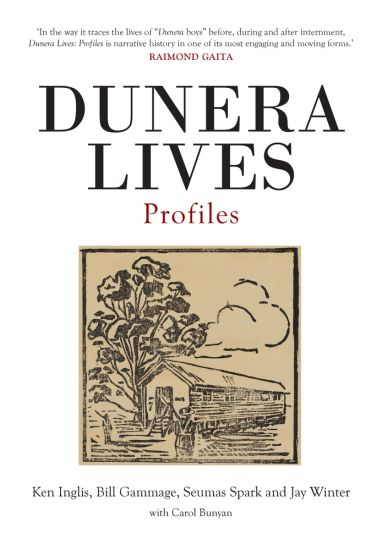
The story of the 'Dunera Boys' is an intrinsic part of the history of Australia in the Second World War and in its aftermath. The injustice these 2000 men suffered through British internment in camps at Hay, Tatura and Orange is well known. Less familiar is the tale of what happened to them afterwards. Following on from volume one Dunera Lives: A Visual History (2018), Dunera Lives: Profiles continues the saga in life stories. This second volume of Dunera Lives presents the voices, faces, and lives of 20 people, who, together with nearly 3000 other internees from Britain and Singapore, landed in Australia in 1940. All over the world there were Dunera lives, those of men and women who passed through the upheavals of the Second World War and survived to tell the tale. Here are some of their stories. A contribution to the history of Australia, to the history of migrants and migration, and to the history of human rights, these two volumes put in the public domain a story whose full dimensions and complexity have never been described.
Portraits of Remembrance

Portraits of Remembrance

Jay Winter

The University of Alabama Press
2020
sidottu
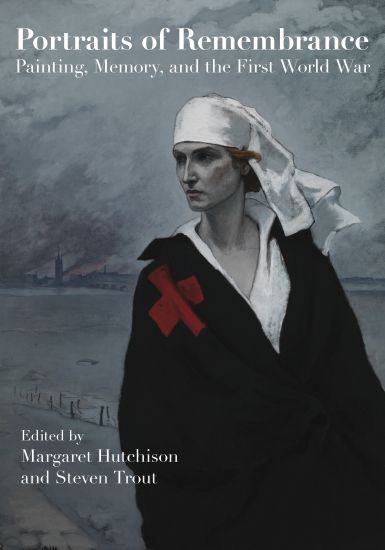
Interdisciplinary collection of essays on fine art painting as it relates to the First World War and commemoration of the conflict. Although photography and moving pictures achieved ubiquity during the First World War as technological means of recording history, the far more traditional medium of painting played a vital role in the visual culture of combatant nations. The public's appetite for the kind of up-close frontline action that snapshots and film footage could not yet provide resulted in a robust market for drawn or painted battle scenes. Painting also figured significantly in the formation of collective war memory after the armistice. Paintings became sites of memory in two ways: first, many governments and communities invested in freestanding panoramas or cycloramas that depicted the war or featured murals as components of even larger commemorative projects, and second, certain paintings, whether created by official artists or simply by those moved to do so, emerged over time as visual touchstones in the public's understanding of the war. Portraits of Remembrance: Painting, Memory, and the First World War examines the relationship between war painting and collective memory in Australia, Austria, Belgium, Canada, Croatia, France, Germany, Great Britain, New Zealand, Russia, Serbia, Turkey, and the United States. The paintings discussed vary tremendously, ranging from public murals and panoramas to works on a far more intimate scale, including modernist masterpieces and crowd-pleasing expressions of sentimentality or spiritualism. Contributors raise a host of topics in connection with the volume's overarching focus on memory, including national identity, constructions of gender, historical accuracy, issues of aesthetic taste, and connections between painting and literature, as well as other cultural forms.
War beyond Words

War beyond Words

Jay Winter

Cambridge University Press
2017
sidottu
What we know of war is always mediated knowledge and feeling. We need lenses to filter out some of its blinding, terrifying light. These lenses are not fixed; they change over time, and Jay Winter's panoramic history of war and memory offers an unprecedented study of transformations in our imaginings of war, from 1914 to the present. He reveals the ways in which different creative arts have framed our meditations on war, from painting and sculpture to photography, film and poetry, and ultimately to silence, as a language of memory in its own right. He shows how these highly mediated images of war, in turn, circulate through language to constitute our 'cultural memory' of war. This is a major contribution to our understanding of the diverse ways in which men and women have wrestled with the intractable task of conveying what twentieth-century wars meant to them and mean to us.
The Complete Book of Enoch: Standard English Version

The Complete Book of Enoch: Standard English Version

Jay Winter

Createspace Independent Publishing Platform
2017
nidottu
This eBook (on archive.org) includes the complete book of Enoch which has been translated from the Ethiopic. The Book of Noah, Testament of Solomon, Book of Giants, and a few other extras are also included in this third ePUB edition. The introduction by David Chariot is perhaps the best short form explanation of the book for those who are familiar with the book and those who are just discovering it. Enoch has been logically organized into chapter/verse settings and canonized in this English version which will resemble the King James Version of the Scriptures. Additionally, an XML file has been included with archaeological evidence of fossilized giant humans found throughout the world. All known fragments of the Book of Giants has been included in this edition along with a listing of external references to Enoch in other manuscripts such as the Book of Jubilees and other Scriptures. This is a standardized reference material regarding the body of knowledge presented in the Book of Enoch.
Sites of Memory, Sites of Mourning

Sites of Memory, Sites of Mourning

Jay Winter

Cambridge University Press
2014
pokkari
Jay Winter's powerful study of the 'collective remembrance' of the Great War offers a major reassessment of one of the critical episodes in the cultural history of the twentieth century. Dr Winter looks anew at the culture of commemoration and the ways in which communities endeavoured to find collective solace after 1918. Taking issue with the prevailing 'modernist' interpretation of the European reaction to the appalling events of 1914–18, Dr Winter instead argues that what characterised that reaction was, rather, the attempt to interpret the Great War within traditional frames of reference. Tensions arose inevitably. Sites of Memory, Sites of Mourning is a profound and moving book of seminal importance for the attempt to understand the course of European history during the first half of the twentieth century.
The Global Spread of Fertility Decline

The Global Spread of Fertility Decline

Jay Winter; Michael Teitelbaum

Yale University Press
2013
sidottu
The world's population has grown by five billion people over the past century, an astounding 300 percent increase. Yet it is actually the decline in family size and population growth that is the issue attracting greatest concern in many countries. This eye-opening book looks at demographic trends in Europe, North America, and Asia—areas that now have low fertility rates—and argues that there is an essential yet often neglected political dimension to a full assessment of these trends. Political decisions that promote or discourage marriage and childbearing, facilitate or discourage contraception and abortion, and stimulate or restrain immigration all have played significant roles in recent trends.
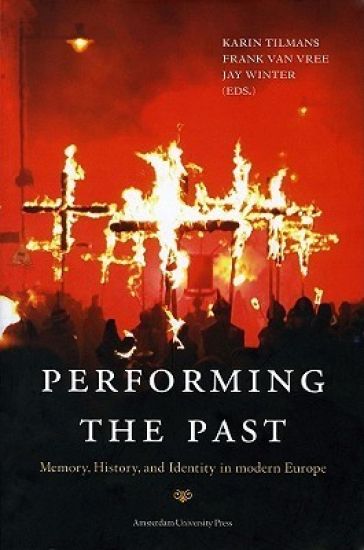
Performing the Past

Performing the Past

Jay Winter; Karin Tilmans; Frank Vree

Amsterdam University Press
2010
nidottu
Special €10,- discount for our ABG readers: now €24,50 instead of €34,50 Performing the Past is an investigation of the multiple social and culture practices through which Europeans have negotiated the space between their history and their memory over the past 200 years. In museums, in opera houses, in the streets, in the schools, in theatres, in films, on the internet and beyond, narratives about the past circulate today at a dizzying speed. Producing and selling them is big business; if the past is indeed a foreign country, there are tens of thousands of tourist agents, guides, and pundits around to help us on our way, for a fee, to be sure.This collection of essays by renowned scholars from, among others, Yale, Columbia, Amsterdam Oxford, Cambridge, New York University and the European University Institute in Florence, is essential reading for anyone interested in today’s memory boom. Drawing on different national and disciplinary traditions, the authors ultimately engage us with the ways in which Europeans continue a venerable tradition of finding out who they are, and where they are going, by performing the past.