Kirjojen hintavertailu. Mukana 12 595 353 kirjaa ja 12 kauppaa.

Kirjailija

Jean Barman

Kirjat ja teokset yhdessä paikassa: 20 kirjaa, julkaisuja vuosilta 1992-2025, suosituimpien joukossa On the Cusp of Contact. Vertaile teosten hintoja ja tarkista saatavuus suomalaisista kirjakaupoista.

20 kirjaa

Kirjojen julkaisuhaarukka 1992-2025.

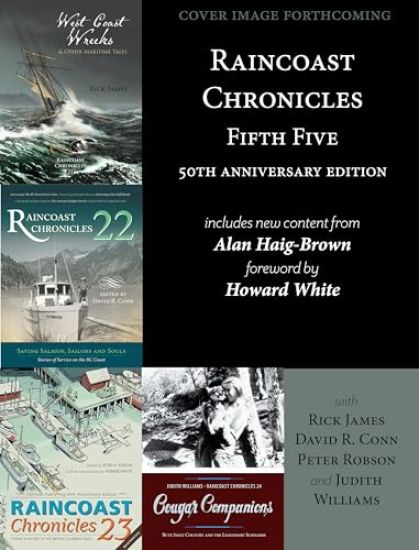
Raincoast Chronicles: Fifth Five

Raincoast Chronicles: Fifth Five

Jean Barman; Rick James; Judith Williams

Harbour Publishing
2025
sidottu
Brimming with stories and images, this fascinating collection celebrates Harbour Publishing's fifty-year commitment to recording the unique ways of life that have sprung from the West Coast.Half a century and hundreds of book releases have rolled by since Harbour Publishing was founded in 1974. So it is only appropriate to mark this golden anniversary with a new omnibus edition of Raincoast Chronicles, the series that has always been at the heart of Harbour's mission to express the rich culture and history of BC's coast. Indeed, it was the Chronicles, which began publication in 1972, that inspired the creation of Harbour itself, as the expansive articles grew into book-length works.The lushly illustrated collection Fifth Five gathers volumes 21 through 24 of Raincoast Chronicles along with a new, previously unpublished Raincoast Chronicle 25 by Alan Haig-Brown, focusing on the author's formative years as a deckhand in the 1960s and early '70s on a fishing boat run by a We Wai Kai family he married into as a teenager. The history of commercial fishing and of BC itself, in all its twisting relations with Indigenous peoples, is mirrored in Haig-Brown's vivid account of life aboard, where "there are no typical days" despite the tightly choreographed tasks and immense local knowledge required by this ever-risky business.In issue 21, West Coast Wrecks and Other Maritime Tales, maritime historian Rick James leads an authoritative tour of BC's most famous shipwrecks, as weathered sailors and divers share lore about one of the most dangerous stretches of coastline in the world. Also included are pieces from some of Canada's most exciting and iconic writers--Al Purdy, Anne Cameron, Edith Iglauer, Patrick Lane and Grant Lawrence, along with stories of disasters at sea, scarcely believable bush plane feats, eerie events at coastal ghost towns and reminisces of the Schnarr sisters who kept cougars as pets.In its passion for storytelling about overlooked but crucial aspects of the past, Fifth Five serves as a fitting tribute to Harbour Publishing's own deep history.
British Columbia in the Balance

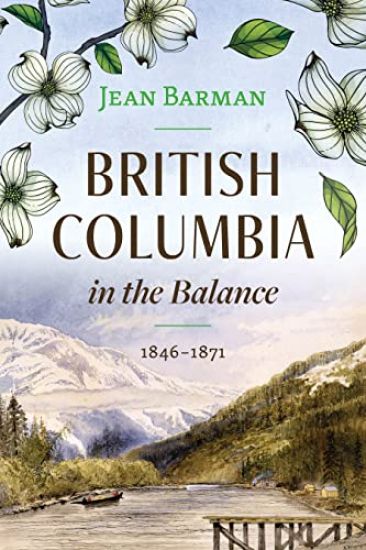
British Columbia in the Balance

Jean Barman

Harbour Publishing
2023
sidottu
Esteemed historian Jean Barman brings new insights on the seemingly disparate events that converged to lay the foundation of the present-day province. By examining newly accessible private correspondence exchanged with the Colonial Office in London, Barman pieces together the chain of events that caused the distant colony of British Columbia to join the Canadian Confederation as opposed to the very real possibility of becoming one or more American states. Following the division of the Pacific Northwest between Britain and the United States in 1846, it took British Columbia just a quarter of a century to be transformed from a largely Indigenous territory in 1871, into a province of the recently formed Canada Confederation. In this detailed exploration of colonial politics, including fur trader and politician James Douglas's governance and the critical role played by the many unions between white settlers and and Indigenous women, Barman expertly weaves together seemingly disparate events that converged to lay the foundations of today's Canadian province.
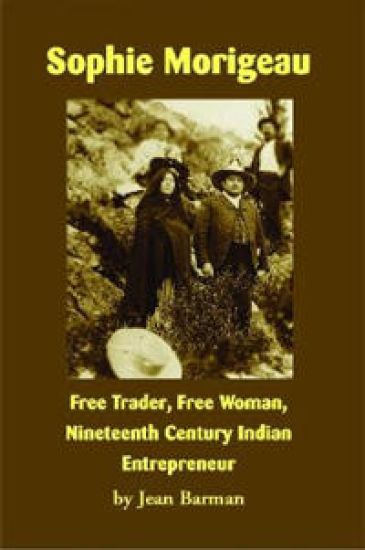
Sophie Morigeau

Sophie Morigeau

Jean Barman; Steve Lozar

SALISH KOOTENAI COLLEGE
2022
pokkari
Sophie Morigeau (1836–1916) was a remarkable woman. Of mixed Indian-white heritage, she lived her life on her own terms. She traded in Canadian mining camps and ran pack trains across the Northern Rocky Mountains. For years she maintained a trading post on Tobacco Plains on the border between Canada and the United States. She broke through the accepted roles for women in the nineteenth century to become an Indian entrepreneur. Jean Barman’s biography of Morigeau details the available historical evidence of a woman who cut her own path, was an important trader for the Kootenai Indians, and was a member of both the Indian and white communities in nineteenth-century northwest Montana and southern British Columbia. Sophie Morigeau was a resourceful and courageous woman on the cultural frontier.
Leaving Paradise

Leaving Paradise

Jean Barman; Bruce McIntyre Watson

UNIVERSITY OF HAWAI'I PRESS
2021
nidottu
Native Hawaiians arrived in the Pacific Northwest as early as 1787. Some went out of curiosity; many others were recruited as seamen or as workers in the fur trade. By the end of the nineteenth century more than a thousand men and women had journeyed across the Pacific, but the stories of these extraordinary individuals have gone largely unrecorded in Hawaiian or Western sources. Through painstaking archival work in British Columbia, Oregon, California, and Hawaii, Jean Barman and Bruce Watson pieced together what is known about these sailors, laborers, and settlers from 1787 to 1898, the year the Hawaiian Islands were annexed to the United States. In addition, the authors include descriptive biographical entries on some eight hundred Native Hawaiians, a remarkable and invaluable complement to their narrative history. "Kanakas" (as indigenous Hawaiians were called) formed the backbone of the fur trade along with French Canadians and Scots. As the trade waned and most of their countrymen returned home, several hundred men with indigenous wives raised families and formed settlements throughout the Pacific Northwest. Today their descendants remain proud of their distinctive heritage. The resourcefulness of these pioneers in the face of harsh physical conditions and racism challenges the early Western perception that Native Hawaiians were indolent and easily exploited.Scholars and others interested in a number of fields—Hawaiian history, Pacific Islander studies, Western U.S. and Western Canadian history, diaspora studies—will find Leaving Paradise an indispensable work.
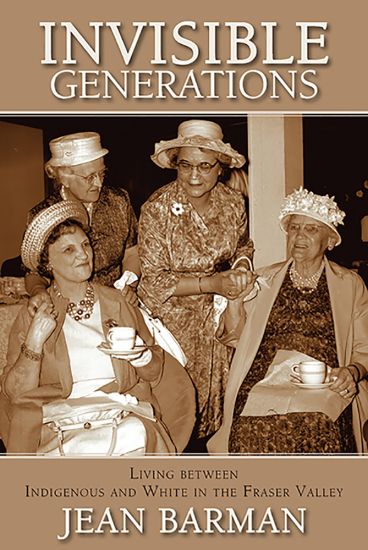
Invisible Generations

Invisible Generations

Jean Barman

Caitlin Press
2019
nidottu
Born of Indigenous grandmothers and white grandfathers, Irene Kelleher lived all her life in the shadow of her heritage. Her local community in British Columbia's Fraser Valley treated her as if she was invisible. The combination of white and Indigenous descent was beyond the bounds of acceptability by a dominant white society. To be mixed was to not belong. Attracted to the future British Columbia by a gold rush beginning in 1858, Irene's white grandfathers partnered with Indigenous women. Theirs was not an uncommon story. Some of the earliest newcomers to do so were in the employ of the fur trading Hudson's Bay Company at Fort Langley and elsewhere. And yet, more than 150 years later, the descendants of these early pioneers are still struggling for their stories of discrimination and segregation to be heard. Through research, family records and a personal connection to Irene, Governor General award-winning historian Jean Barman explores this aspect of British Columbia's history and the deeply rooted prejudice faced by families who helped to build this province. In INVISIBLE GENERATIONS, Barman writes of the Catholic residential school that Irene's parents and so many other ''mixed blood'' children were forced to attend. We meet Josephine, a family friend who was separated as a child from her beloved upwardly mobile politician father. When her presence in his socially charged household became untenable, Josephine was dispatched to the same Fraser Valley boarding school. ''The transition from genteel Victoria to St. Mary's Mission was horrendous, '' she wrote. Yet individuals and families survived as best they could, building good lives for themselves and those around them. Irene chose to be a schoolteacher, and taught many children including Doukhobor children at a time when the Doukhobor community was vehemently opposed to their children attending school. These stories along with many others have been largely forgotten, but in INVISIBLE GENERATIONS Barman brings this important conversation into focus, shedding light on a common history across British Columbia and Canada. It is, in Irene's words, ''time to tell the story.''
Iroquois in the West

Iroquois in the West

Jean Barman

McGill-Queen's University Press
2019
nidottu
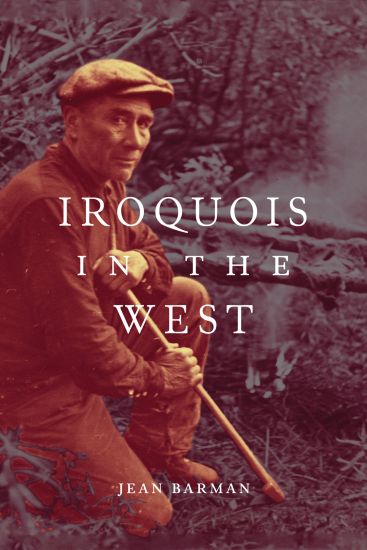
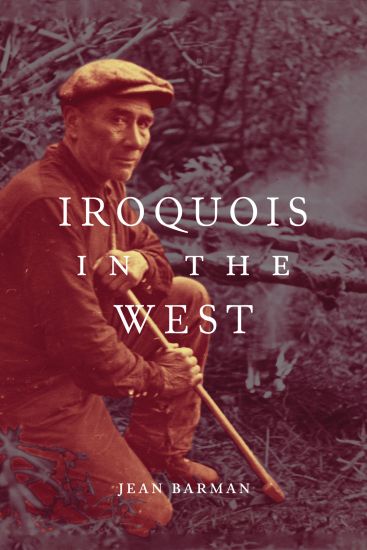
Two centuries ago, many hundreds of Iroquois – principally from what is now Kahnawà:ke – left home without leaving behind their ways of life. Recruited to man the large canoes that transported trade goods and animal pelts from and to Montreal, some Iroquois soon returned, while others were enticed ever further west by the rapidly expanding fur trade. Recounting stories of Indigenous self-determination and self-sufficiency, Iroquois in the West tracks four clusters of travellers across time, place, and generations: a band that settled in Montana, another ranging across the American West, others opting for British Columbia and the Pacific Northwest, and a group in Alberta who were evicted when their longtime home became Jasper National Park. Reclaiming slivers of Iroquois knowledge, anecdotes, and memories from the shadows of the past, Jean Barman draws on sources that range from descendants' recollections to fur-trade and government records to travellers' accounts. What becomes clear is that, no matter the places or the circumstances, the Iroquois never abandoned their senses of self. Opening up new ways of thinking about Indigenous peoples through time, Iroquois in the West shares the fascinating adventures of a people who have waited over two hundred years to be heard.
Iroquois in the West

Iroquois in the West

Jean Barman

McGill-Queen's University Press
2019
sidottu
Two centuries ago, many hundreds of Iroquois – principally from what is now Kahnawà:ke – left home without leaving behind their ways of life. Recruited to man the large canoes that transported trade goods and animal pelts from and to Montreal, some Iroquois soon returned, while others were enticed ever further west by the rapidly expanding fur trade. Recounting stories of Indigenous self-determination and self-sufficiency, Iroquois in the West tracks four clusters of travellers across time, place, and generations: a band that settled in Montana, another ranging across the American West, others opting for British Columbia and the Pacific Northwest, and a group in Alberta who were evicted when their longtime home became Jasper National Park. Reclaiming slivers of Iroquois knowledge, anecdotes, and memories from the shadows of the past, Jean Barman draws on sources that range from descendants' recollections to fur-trade and government records to travellers' accounts. What becomes clear is that, no matter the places or the circumstances, the Iroquois never abandoned their senses of self. Opening up new ways of thinking about Indigenous peoples through time, Iroquois in the West shares the fascinating adventures of a people who have waited over two hundred years to be heard.
Abenaki Daring

Abenaki Daring

Jean Barman

McGill-Queen's University Press
2016
sidottu
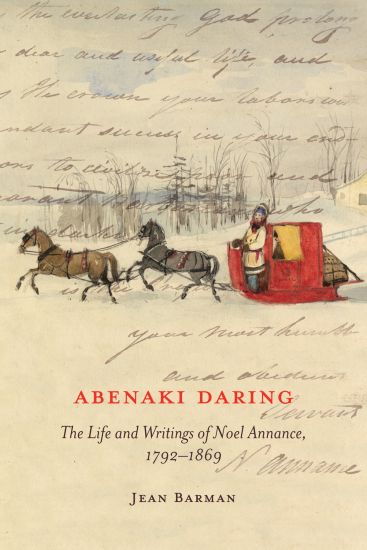
An Abenaki born in St Francis, Quebec, Noel Annance (1792-1869), by virtue of two of his great-grandparents having been early white captives, attended Dartmouth College in New Hampshire. Determined to apply his privileged education, he was caught between two ways of being, neither of which accepted him among their numbers. Despite outstanding service as an officer in the War of 1812, Annance was too Indigenous to be allowed to succeed in the far west fur trade, and too schooled in outsiders' ways to be accepted by those in charge on returning home. Annance did not crumple, but all his life dared the promise of literacy on his own behalf and on that of Indigenous peoples more generally. His doing so is tracked through his writings to government officials and others, some of which are reproduced in this volume. Annance's life makes visible how the exclusionary policies towards Indigenous peoples, generally considered to have originated with the Indian Act of 1876, were being put in place upwards to half a century earlier. On account of his literacy, Annance's story can be told. Recounting a life marked equally by success and failure, and by perseverance, Abenaki Daring speaks to similar barriers that to this day impede many educated Indigenous persons from realizing their life goals. To dare is no less essential than it was for Noel Annance.
French Canadians, Furs, and Indigenous Women in the Making of the Pacific Northwest
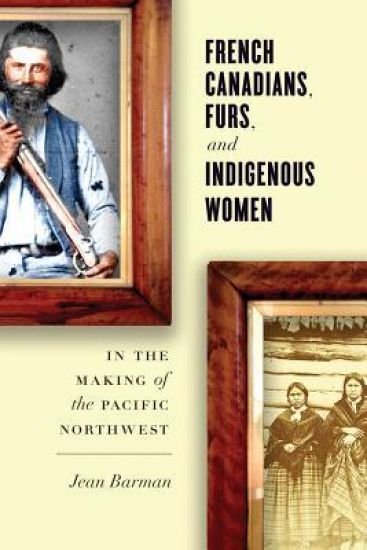
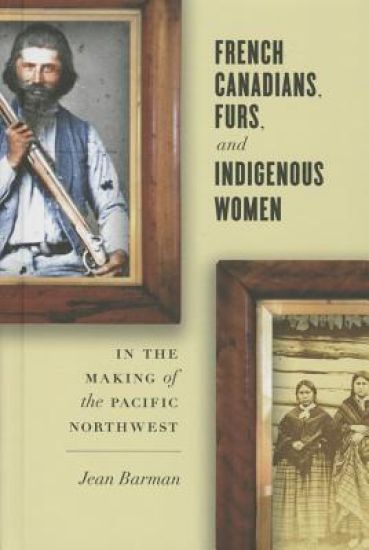
Jean Barman was the recipient of the 2014 George Woodcock Lifetime Achievement Award.In French Canadians, Furs, and Indigenous Women in the Making of the Pacific Northwest, Jean Barman rewrites the history of the Pacific Northwest from the perspective of French Canadians attracted by the fur economy, the indigenous women whose presence in their lives encouraged them to stay, and their descendants. Joined in this distant setting by Quebec paternal origins, the French language, and Catholicism, French Canadians comprised Canadiens from Quebec, Iroquois from the Montreal area, and métis combining Canadien and indigenous descent. For half a century, French Canadians were the largest group of newcomers to this region extending from Oregon and Washington east into Montana and north through British Columbia. Here, they facilitated the early overland crossings, drove the fur economy, initiated non-wholly-indigenous agricultural settlement, eased relations with indigenous peoples, and ensured that, when the region was divided in 1846, the northern half would go to Britain, giving today's Canada its Pacific shoreline.
French Canadians, Furs, and Indigenous Women in the Making of the Pacific Northwest
Jean Barman was the recipient of the 2014 George Woodcock Lifetime Achievement Award.In French Canadians, Furs, and Indigenous Women in the Making of the Pacific Northwest, Jean Barman rewrites the history of the Pacific Northwest from the perspective of French Canadians attracted by the fur economy, the indigenous women whose presence in their lives encouraged them to stay, and their descendants. Joined in this distant setting by Quebec paternal origins, the French language, and Catholicism, French Canadians comprised Canadiens from Quebec, Iroquois from the Montreal area, and métis combining Canadien and indigenous descent. For half a century, French Canadians were the largest group of newcomers to this region extending from Oregon and Washington east into Montana and north through British Columbia. Here, they facilitated the early overland crossings, drove the fur economy, initiated non-wholly-indigenous agricultural settlement, eased relations with indigenous peoples, and ensured that, when the region was divided in 1846, the northern half would go to Britain, giving today's Canada its Pacific shoreline.
The West Beyond the West

The West Beyond the West

Jean Barman

University of Toronto Press
2007
pokkari
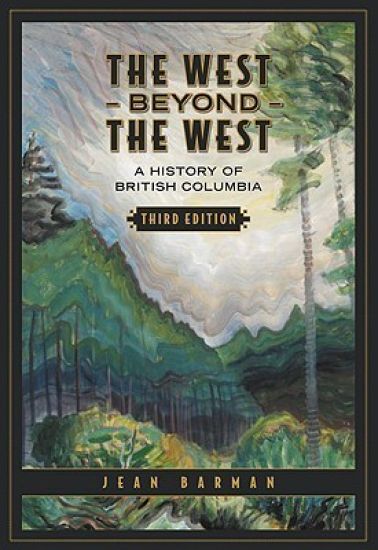
British Columbia is regularly described in superlatives both positive and negative - most spectacular scenery, strangest politics, greatest environmental sensitivity, richest Aboriginal cultures, most aggressive resource exploitation, closest ties to Asia. Jean Barman's The West beyond the West presents the history of the province in all its diversity and apparent contradictions. This critically acclaimed work is the premiere book on British Columbian history, with a narrative beginning at the point of contact between Native peoples and Europeans and continuing into the twenty-first century. Barman tells the story by focusing not only on the history made by leaders in government but also on the roles of women, immigrants, and Aboriginal peoples in the development of the province. She incorporates new perspectives and expands discussions on important topics such as the province's relationship to Canada as a nation, its involvement in the two world wars, the perspectives of non-mainstream British Columbians, and its participation in recreation and sports including Olympics. First published in 1991 and revised in 1996, this third edition of The West beyond the West has been supplemented by statistical tables incorporating the 2001 census, two more extensive illustration sections portraying British Columbia's history in images, and other new material bringing the book up to date. Barman's deft scholarship is readily apparent and the book demands to be on the shelf of anyone with an interest in British Columbian or Canadian history.
Good Intentions Gone Awry

Good Intentions Gone Awry

Jan Hare; Jean Barman

University of British Columbia Press
2006
pokkari
Unlike most missionary scholarship that focuses on male missionaries, Good Intentions Gone Awry chronicles the experiences of a missionary wife. It presents the letters of Emma Crosby, wife of the well-known Methodist missionary Thomas Crosby, who came to Fort Simpson, near present-day Prince Rupert, in 1874 to set up a mission among the Tsimshian people.Emma Crosby's letters to family and friends in Ontario shed light on a critical era and bear witness to the contribution of missionary wives. They mirror the hardships and isolation she faced as well as her assumptions about the supremacy of Euro-Canadian society and of Christianity. They speak to her "good intentions" and to the factors that caused them to "go awry." The authors critically represent Emma's sincere convictions towards mission work and the running of the Crosby Girls' Home (later to become a residential school), while at the same time exposing them as a product of the times in which she lived. They also examine the roles of Native and mixed-race intermediaries who made possible the feats attributed to Thomas Crosby as a heroic male missionary persevering on his own against tremendous odds.This book is a valuable contribution to Canadian history and will appeal to readers in women's, Canadian, Native, and religious studies, as well as those interested in missiology in the Canadian West.
Leaving Paradise

Leaving Paradise

Jean Barman; Bruce McIntyre Watson

University of Hawai'i Press
2006
sidottu
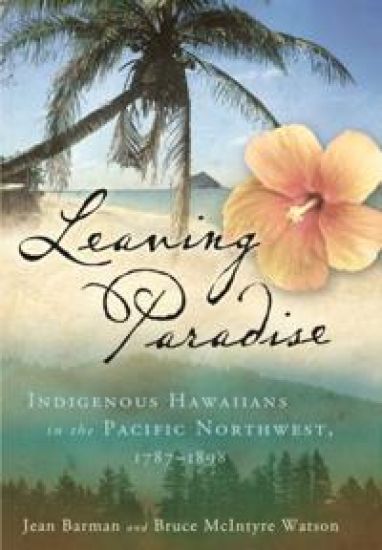
Native Hawaiians arrived in the Pacific Northwest as early as 1787. Some went out of curiosity; many others were recruited as seamen or as workers in the fur trade. By the end of the nineteenth century more than a thousand men and women had journeyed across the Pacific, but the stories of these extraordinary individuals have gone largely unrecorded in Hawaiian or Western sources. Through painstaking archival work in British Columbia, Oregon, California, and Hawaii, Jean Barman and Bruce Watson pieced together what is known about these sailors, laborers, and settlers from 1787 to 1898, the year the Hawaiian Islands were annexed to the United States. In addition, the authors include descriptive biographical entries on some eight hundred Native Hawaiians, a remarkable and invaluable complement to their narrative history. Scholars and others interested in a number of fields - Hawaiian history, Pacific Islander studies, Western U.S. and Western Canadian history, diaspora studies - will find ""Leaving Paradise"" an indispensable work.
Good Intentions Gone Awry

Good Intentions Gone Awry

Jan Hare; Jean Barman

University of British Columbia Press
2006
sidottu
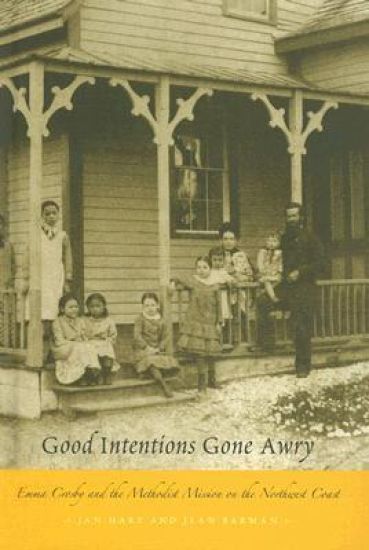
Unlike most missionary scholarship that focuses on male missionaries, Good Intentions Gone Awry chronicles the experiences of a missionary wife. It presents the letters of Emma Crosby, wife of the well-known Methodist missionary Thomas Crosby, who came to Fort Simpson, near present-day Prince Rupert, in 1874 to set up a mission among the Tsimshian people.Emma Crosby's letters to family and friends in Ontario shed light on a critical era and bear witness to the contribution of missionary wives. They mirror the hardships and isolation she faced as well as her assumptions about the supremacy of Euro-Canadian society and of Christianity. They speak to her "good intentions" and to the factors that caused them to "go awry." The authors critically represent Emma's sincere convictions towards mission work and the running of the Crosby Girls' Home (later to become a residential school), while at the same time exposing them as a product of the times in which she lived. They also examine the roles of Native and mixed-race intermediaries who made possible the feats attributed to Thomas Crosby as a heroic male missionary persevering on his own against tremendous odds.This book is a valuable contribution to Canadian history and will appeal to readers in women's, Canadian, Native, and religious studies, as well as those interested in missiology in the Canadian West.
Sojourning Sisters

Sojourning Sisters

Jean Barman

University of Toronto Press
2004
pokkari
Shortly after the completion of the transcontinental railroad in 1886, two young sisters from Pictou County, Nova Scotia, took the train west to British Columbia. Jessie and Annie McQueen each intended to teach there for three years and then return home. In fact they remained sojourners between British Columbia, Nova Scotia, and Ontario for much of their lives. Drawing on family correspondence and supported by extensive engagement with current scholarship, Jean Barman tells the sisters' stories and, in doing so, offers a new interpretation of early settlement across Canada. As did many other women of these years, Jessie and Annie McQueen remained bound by daughterhood's obligations and sisterhood's bonds even as they got involved in their new communities. Barman takes seriously women as sojourners and uses Jessie and Annie McQueen's letters home to evoke the boundless energy and enthusiasm shown by the thousands of women who helped to form Canada's frontiers. Like other sojourners, the McQueen sisters did not come to their new home empty handed. They brought with them a distinctly Scottish Presbyterian way of life, consistent with ideas of the nation being promoted in the public realm by fellow Nova Scotians such as George Monro Grant. Confident in their assumptions, including the central role of religion in the formation of a grand national vision, women like these sisters were critical in uniting Canada from coast to coast. Broad in its critical approach and nuanced in its interpretations, Sojourning Sisters is a major contribution to the field of life writing and to the political, gender, and social history of Canada.
Sojourning Sisters

Sojourning Sisters

Jean Barman

University of Toronto Press
2003
sidottu
Shortly after the completion of the transcontinental railroad in 1886, two young sisters from Pictou County, Nova Scotia, took the train west to British Columbia. Jessie and Annie McQueen each intended to teach there for three years and then return home. In fact they remained sojourners between British Columbia, Nova Scotia, and Ontario for much of their lives. Drawing on family correspondence and supported by extensive engagement with current scholarship, Jean Barman tells the sisters' stories and, in doing so, offers a new interpretation of early settlement across Canada. As did many other women of these years, Jessie and Annie McQueen remained bound by daughterhood's obligations and sisterhood's bonds even as they got involved in their new communities. Barman takes seriously women as sojourners and uses Jessie and Annie McQueen's letters home to evoke the boundless energy and enthusiasm shown by the thousands of women who helped to form Canada's frontiers. Like other sojourners, the McQueen sisters did not come to their new home empty handed. They brought with them a distinctly Scottish Presbyterian way of life, consistent with ideas of the nation being promoted in the public realm by fellow Nova Scotians such as George Monro Grant. Confident in their assumptions, including the central role of religion in the formation of a grand national vision, women like these sisters were critical in uniting Canada from coast to coast. Broad in its critical approach and nuanced in its interpretations, Sojourning Sisters is a major contribution to the field of life writing and to the political, gender, and social history of Canada.
Constance Lindsay Skinner

Constance Lindsay Skinner

Jean Barman

University of Toronto Press
2002
sidottu
Constance Lindsay Skinner made a living as a writer at a time when few men, and fewer women, managed the feat. Born in 1877 on the British Columbia frontier, she worked as a journalist in Vancouver, Los Angeles, and Chicago, before moving to New York City in 1912, where she supported herself by her pen until her death in 1939. Despite a prolific output - poetry, plays, short stories, histories, reviews, adult and children's novels - and in contrast to her reputation in the United States, she remains virtually unknown in the country of her birth. Reconstructing Constance Lindsay Skinner's writing life from her papers in the New York Public Library and from her publications, Jean Barman argues for three bases to her success. As well as a capacity to respond to market forces by moving between genres, she possessed an aura of authenticity by virtue of her Canadian frontier heritage. As a literary device, the frontier gave a freedom to tackle contentious issues of Aboriginal and hybrid identities, gender and sexuality, that might otherwise have been far more difficult to get into print. Third, and very important, was her willingness to subordinate a private self to the life of the imagination. Barman ponders Constance Lindsay Skinner's absence from the Canadian literary canon. She mixed with such twentieth-century personalities as Jack London, Harriet Monroe, Frederick Jackson Turner, Vilhjalmur Stefansson, Cornelia Meigs, Long Lance, and Margaret Mitchell, yet was unrecognized in her own country. Her sex mattered, just as it did for fellow Canadian women writers. So did her facility at multiple genres, a talent that, even as it made possible a writing life, prevented her from achieving a major breakthrough in any one of them. Perhaps most responsible was her identification with the frontier of a nation whose centre long shaped literary matters in its own image. Constance Lindsay Skinner makes a significant contribution to Canadian and American history and to literary and gender studies.
History of Canadian Childhood and Youth

History of Canadian Childhood and Youth

Jean Barman; Linda Hale; Neil Sutherland

Greenwood Press
1992
sidottu
This comprehensive bibliography provides complete coverage of the English-language literature on contemporary Canadian childhood and youth. It covers scholarly, professional, and other writings, including books, monographs, the reports of government commissions, scholarly and professional articles, and magistral and doctoral dissertations. The material is arranged geographically, and the work includes an extensive subject index and a full author index. A companion volume provides coverage of contemporary Canadian childhood and youth.
Contemporary Canadian Childhood and Youth

Contemporary Canadian Childhood and Youth

Jean Barman; Linda Hale; Neil Sutherland

Greenwood Press
1992
sidottu
This comprehensive bibliography provides complete coverage of the English-language literature on contemporary Canadian childhood and youth. It covers scholarly, professional, and other substantial writings, including books, monographs, the reports of government commissions, scholarly and professional articles, and magistral and doctoral dissertations.The material is arranged geographically and includes full subject and author indexes. A companion volume covers the literature on the history of Canadian childhood.