Kirjailija
Jean-Michel Rabaté
Kirjat ja teokset yhdessä paikassa: 29 kirjaa, julkaisuja vuosilta 1991-2024, suosituimpien joukossa James Joyce and the Politics of Egoism. Vertaile teosten hintoja ja tarkista saatavuus suomalaisista kirjakaupoista.
Mukana myös kirjoitusasut: Jean-Michel Rabate
29 kirjaa
Kirjojen julkaisuhaarukka 1991-2024.
In this book Jean-Michel Rabate approaches the Joycean canon through the concept of 'egoism'.
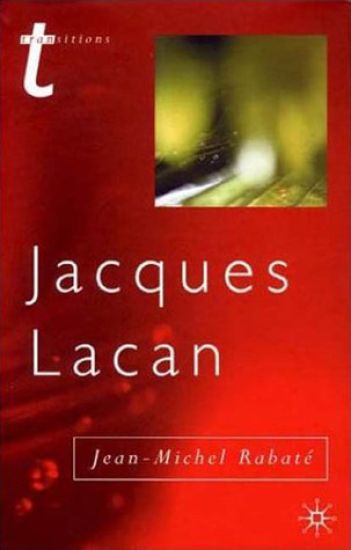
The French theorist Lacan has always been called a 'literary' theoretician. Here is, for the first time, a complete study of his literary analyses and examples, with an account of the importance of literature in the building of his highly original system of thought. Rabate offers a systematic genealogy of Lacan's theory of literature, reconstructing a doctrine based upon Freudian insights, and revitalised through close readings of authors as diverse as Poe, Gide, Shakespeare, Plato, Claudel, Genet, Duras and Joyce. Not simply an essay about Lacan's influences or style, this book shows how the emergence of key terms like the 'letter' and the 'symptom' would not have been possible without innovative readings of literary texts.
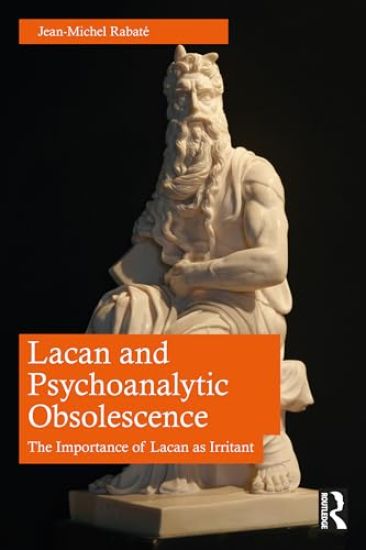
This book explores the importance of Lacan’s role as an irritant within psychoanalysis, and how Freud and Lacan saw that as key to ensuring that psychoanalysis remained fresh and vital rather than becoming obsolescent.Drawing on Freud’s thinking as well as Lacan’s, Rabate examines how Lacan’s unwillingness to allow psychoanalytic thinking to become stale or pigeonholed into one part of life was key in his thinking. By constantly returning to psychoanalytic ideas in new and evolving ways, Lacan kept psychoanalysis moving and changing, much as Socrates did for philosophical thinking in classical Athens. This ‘gadfly’ or irritant role gave him free reign to explore all aspects of psychoanalytic thinking and treatment, and how it can permeate all aspects of life, both in the consulting room and beyond.Drawing on a deep understanding of Lacan’s work as well as Freud’s, this book is key reading for all those seeking to understand why Lacan’s work remains so important and so challenging for contemporary psychoanalysis.
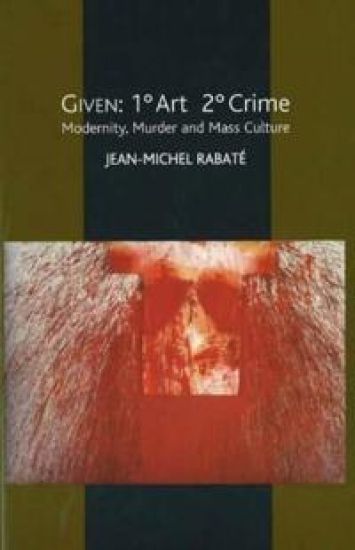
Investigates links between avant-garde art and the aesthetics of crime in order to bridge the gap between high modernism and mass culture, as emblematised by tabloid reports of unsolved crimes. Throughout Jean-Michel Rabate is concerned with two key questions: what is it that we enjoy when we read murder stories? and what has modern art to say about murder? Indeed, Rabate compels us to consider whether art itself is a form of murder. The book begins with Marcel Duchamp's fascination for trivia and found objects conjoined with his iconoclasm as an anti-artist. The visual parallels between the naked woman at the centre of his final work, 'Étant donnés', and a young woman who had been murdered in Los Angeles in January 1947, provides the specific point of departure. The text moves onward to Steven Hodel, the 'Black Dahlia' murder; Walter Benjamin's description of Eugene Atget's famous photographs of deserted Paris streets as presenting 'the scene of the crime'; and Ralph Roff's 1997 exhibition, which implied that modern art is indissociable from forensic gaze and a detective's outlook, a view first advanced by Edgar Allan Poe.
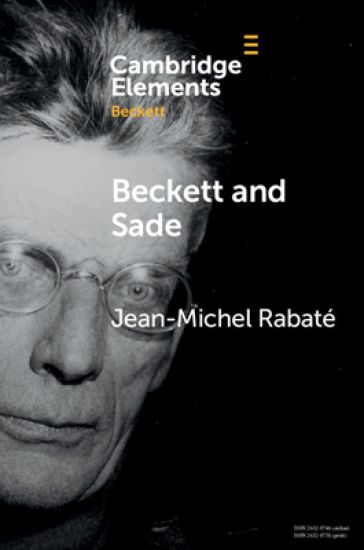
Much has been written on Beckett and Sade, yet nothing systematic has been produced. This Element is systematic by adopting a chronological order, which is necessary given the complexity of Beckett's varying assessments of Sade. Beckett mentioned Sade early in his career, with Proust as a first guide. His other sources were Guillaume Apollinaire and Mario Praz's book, La Carne, La morte e il Diavolo Nella Letteratura Romantica (1930), from which he took notes about sadism for his Dream Notebook. Dante's meditation on the absurdity of justice provides closure facing Beckett's wonder at the pervasive presence of sadism in humans.
Object Lessons is a series of short, beautifully designed books about the hidden lives of ordinary things.It’s happening all the time, all around us. We cover it up. We ignore it. Rust takes on the many meanings of this oxidized substance, showing how technology bleeds into biology and ecology. Jean-Michel Rabate´ combines art, science, and autobiography to share his fascination with peeling paints and rusty metal sheets. Rust, he concludes, is a place where things living, built, and remembered commingle.Object Lessons is published in partnership with an essay series in The Atlantic.
This book examines Samuel Beckett's unique lesson in courage in the wake of humanism's postwar crisis—the courage to go on living even after experiencing life as a series of catastrophes. Rabaté, a former president of the Samuel Beckett Society and a leading scholar of modernism, explores the whole range of Beckett's plays, novels, and essays. He places Beckett in a vital philosophical conversation that runs from Bataille to Adorno, from Kant and Sade to Badiou. At the same time, he stresses Beckett's inimitable sense of metaphysical comedy. Foregrounding Beckett's decision to write in French, Rabaté inscribes him in a continental context marked by a "writing degree zero" while showing the prescience and ethical import of Beckett's tendency to subvert the "human" through the theme of the animal. Beckett's "declaration of inhuman rights," he argues, offers the funniest mode of expression available to us today.
Draping the Sky for a Snowfall
Julian Wolfreys; J Hillis Miller; Jean-Michel Rabate
Triarchy Press
2016
nidottu
But, while the essays are often 'hard work', inviting us to grapple with Derrida and Merleau-Ponty, the finer points of linguistics and etymology, they are often also light, playful, beautiful. And each essay, appearing on the right (recto), faces a matching poem. The poetry (printed verso) is usually firmly located on the Isle of Wight, in the Baltic, in a cafe or on the steps of a railway station and is often the beautifully and minutely observed account of an event, action, remembrance, plant or bird. Sometimes the essays explain or offer context for the matching poem, and other times the essay is replaced by a photograph or on of Judy Rodrigues' inveigling paintings.At whatever level you absorb the poetry, read the essays and explore the illustrations, this is remarkable writing - writing that sometimes seems to touch us directly, bypassing the cognitive and, at other times, opens the doors of the mind onto corridors peopled with ideas we had never imagined existed.
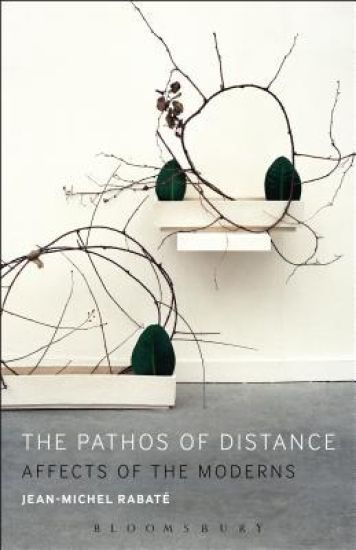
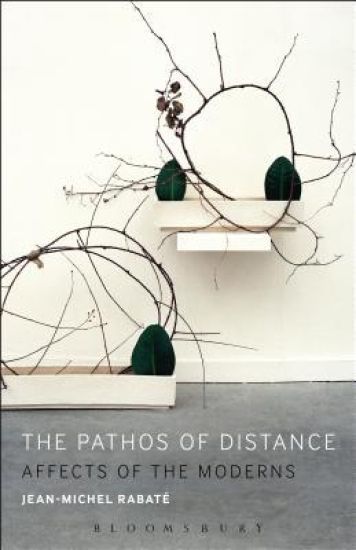
Jean-Michel Rabaté uses Nietzsche’s image of a “pathos of distance,” the notion that values are created by a few gifted and lofty individuals, as the basis for a wide-ranging investigation into the ethics of the moderns. Revealing overlooked connections between Nietzsche’s and Benjamin’s ideas of history and ethics, Rabaté provides an original genealogy for modernist thought, moving through figures and moments as varied as Yeats and the birth of Irish Modernism, the ethics of courage in Virginia Woolf, Rilke, Apollinaire, and others in 1910, T. S. Eliot’s post-war despair, Jean Cocteau’s formidable selfmythology in his first film The Blood of a Poet, Siri Hustvedt’s novel of American trauma, and J. M. Coetzee’s dystopia portraying an affectless future haunted by a messianic promise.
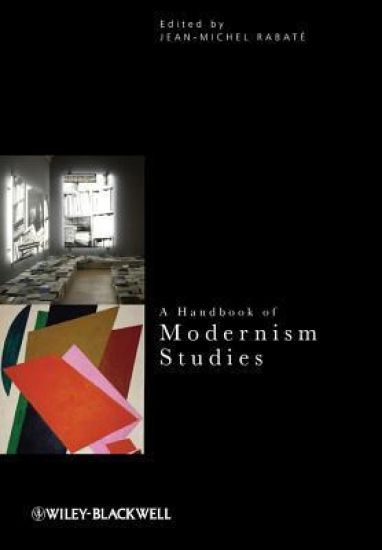
Featuring the latest research findings and exploring the fascinating interplay of modernist authors and intellectual luminaries, from Beckett and Kafka to Derrida and Adorno, this bold new collection of essays gives students a deeper grasp of key texts in modernist literature. Provides a wealth of fresh perspectives on canonical modernist texts, featuring the latest research dataAdopts an original and creative thematic approach to the subject, with concepts such as race, law, gender, class, time, and ideology forming the structure of the collectionExplores current and ongoing debates on the links between the aesthetics and praxis of authors and modernist theoreticiansReveals the profound ways in which modernist authors have influenced key thinkers, and vice versa
The Cambridge Introduction to Literature and Psychoanalysis
Jean-Michel Rabaté
Cambridge University Press
2014
sidottu
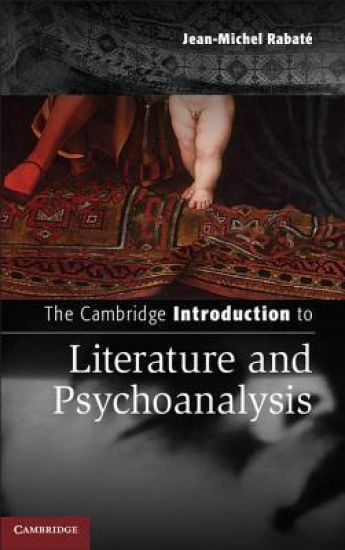
This volume is an introduction to the relationship between psychoanalysis and literature. Jean-Michel Rabaté takes Sigmund Freud as his point of departure, studying in detail Freud's integration of literature in the training of psychoanalysts and how literature provided crucial terms for his myriad theories, such as the Oedipus complex. Rabaté subsequently surveys other theoreticians such as Wilfred Bion, Marie Bonaparte, Carl Jung, Jacques Lacan, and Slavoj Žižek. This Introduction is organized thematically, examining in detail important terms like deferred action, fantasy, hysteria, paranoia, sublimation, the uncanny, trauma, and perversion. Using examples from Miguel de Cervantes and William Shakespeare to Sophie Calle and Yann Martel, Rabaté demonstrates that the psychoanalytic approach to literature, despite its erstwhile controversy, has recently reemerged as a dynamic method of interpretation.
The Cambridge Introduction to Literature and Psychoanalysis
Jean-Michel Rabaté
Cambridge University Press
2014
pokkari
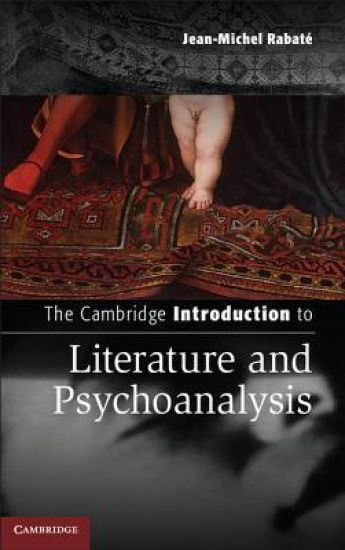
This volume is an introduction to the relationship between psychoanalysis and literature. Jean-Michel Rabaté takes Sigmund Freud as his point of departure, studying in detail Freud's integration of literature in the training of psychoanalysts and how literature provided crucial terms for his myriad theories, such as the Oedipus complex. Rabaté subsequently surveys other theoreticians such as Wilfred Bion, Marie Bonaparte, Carl Jung, Jacques Lacan, and Slavoj Žižek. This Introduction is organized thematically, examining in detail important terms like deferred action, fantasy, hysteria, paranoia, sublimation, the uncanny, trauma, and perversion. Using examples from Miguel de Cervantes and William Shakespeare to Sophie Calle and Yann Martel, Rabaté demonstrates that the psychoanalytic approach to literature, despite its erstwhile controversy, has recently reemerged as a dynamic method of interpretation.
The decade since the publication of Jean-Michel Rabaté's controversial manifesto The Future of Theory saw important changes in the field. The demise of most of the visible French or German philosophers, who had produced texts that would trigger new debates, then to be processed by Theory, has led to drastic revisions and starker assessments. Globalization has been the most obvious factor to modify the selection of texts studied. During the twentieth century, Theory incorporated poetics, rhetorics, aesthetics and linguistics, while also opening itself to continental philosophy. What has changed today? The knowledge that we live in a de-centered world has destabilized the primacy granted to a purely Western canon. Moreover, much of contemporary theory remains highly allusive and this is often baffling for students. Theory keeps recycling itself, producing authentic returns of basic theses, terms and concepts. Canonical modern theorists often return to classical texts, as those of Plato, Kant, Hegel, Nietzsche. And now we want to know: what is new?Crimes of the Future explores the past, present and potential future of Theory.
Raoul Moati intervenes in the critical debate that divided two prominent philosophers in the mid-twentieth century. In the 1950s, the British philosopher J. L. Austin advanced a theory of speech acts, or the "performative," that Jacques Derrida and John R. Searle interpreted in fundamentally different ways. Their disagreement centered on the issue of intentionality, which Derrida understood phenomenologically and Searle read pragmatically. The controversy had profound implications for the development of contemporary philosophy, which, Moati argues, can profit greatly by returning to this classic debate. In this book, Moati systematically replays the historical encounter between Austin, Derrida, and Searle and the disruption that caused the lasting break between Anglo-American language philosophy and continental traditions of phenomenology and its deconstruction. The key issue, Moati argues, is not whether "intentionality," a concept derived from Husserl's phenomenology, can or cannot be linked to Austin's speech-acts as defined in his groundbreaking How to Do Things with Words, but rather the emphasis Searle placed on the performativity and determined pragmatic values of Austin's speech-acts, whereas Derrida insisted on the trace of writing behind every act of speech and the iterability of signs in different contexts.
Featuring the latest research findings and exploring the fascinating interplay of modernist authors and intellectual luminaries, from Beckett and Kafka to Derrida and Adorno, this bold new collection of essays gives students a deeper grasp of key texts in modernist literature. Provides a wealth of fresh perspectives on canonical modernist texts, featuring the latest research dataAdopts an original and creative thematic approach to the subject, with concepts such as race, law, gender, class, time, and ideology forming the structure of the collectionExplores current and ongoing debates on the links between the aesthetics and praxis of authors and modernist theoreticiansReveals the profound ways in which modernist authors have influenced key thinkers, and vice versa