Kirjojen hintavertailu. Mukana 12 595 353 kirjaa ja 12 kauppaa.

Kirjailija

Jean Renoir

Kirjat ja teokset yhdessä paikassa: 4 kirjaa, julkaisuja vuosilta 1990-2004, suosituimpien joukossa My Life And My Films. Vertaile teosten hintoja ja tarkista saatavuus suomalaisista kirjakaupoista.

4 kirjaa

Kirjojen julkaisuhaarukka 1990-2004.

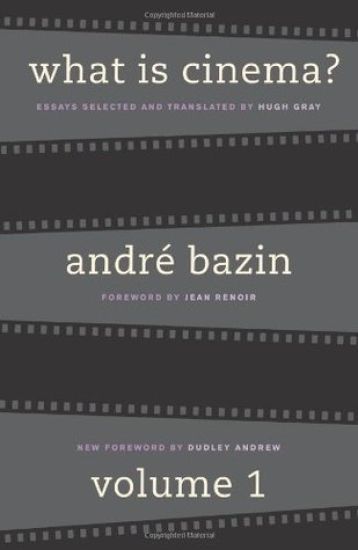
What Is Cinema? Volume I

What Is Cinema? Volume I

André Bazin; Jean Renoir; Dudley Andrew

University of California Press
2004
pokkari
Andre Bazin's What Is Cinema? (volumes I and II) have been classics of film studies for as long as they've been available and are considered the gold standard in the field of film criticism. Although Bazin made no films, his name has been one of the most important in French cinema since World War II. He was co-founder of the influential Cahiers du Cinema, which under his leadership became one of the world's most distinguished publications. Championing the films of Jean Renoir (who contributed a short foreword to Volume I), Orson Welles, and Roberto Rossellini, he became the protege of Francois Truffaut, who honors him touchingly in his forword to Volume II. This new edition includes graceful forewords to each volume by Bazin scholar and biographer Dudley Andrew, who reconsiders Bazin and his place in contemporary film study. The essays themselves are erudite but always accessible, intellectual, and stimulating. As Renoir puts it, the essays of Bazin "will survive even if the cinema does not."
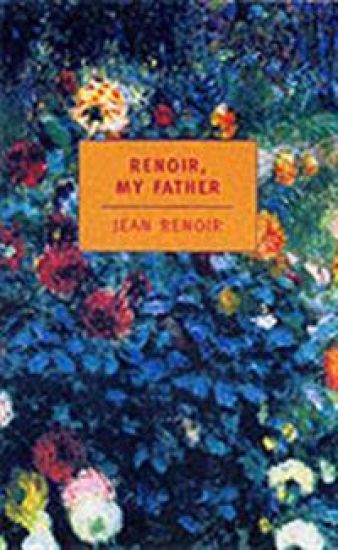
Renoir, My Father

Renoir, My Father

Dorothy Weaver; Jean Renoir; Randolph Weaver; Robert L. Herbert

NYRB Classics
2001
nidottu
In this delightful memoir, Jean Renoir, the director of such masterpieces of the cinema as Grand Illusion and The Rules of the Game, tells the life story of his father, Pierre-Auguste Renoir, the great Impressionist painter. Recounting Pierre-Auguste's extraordinary career, beginning as a painter of fans and porcelain, recording the rules of thumb by which he worked, and capturing his unpretentious and wonderfully engaging talk and personality, Jean Renoir's book is both a wonderful double portrait of father and son and, in the words of the distinguished art historian John Golding, it "remains the best account of Renoir, and, furthermore, among the most beautiful and moving biographies we have." Includes 12 pages of color plates and 18 pages of black and white images.
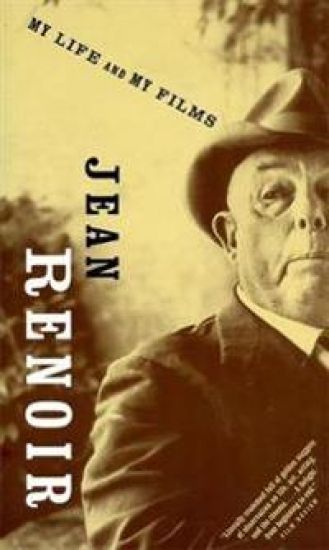
My Life And My Films

My Life And My Films

Jean Renoir

Da Capo Press Inc
1991
pokkari
Here is the autobiography of the little boy with golden curls in the paintings of his father, Pierre Auguste Renoir,the boy who became the director many consider the greatest in history. François Truffaut called him an infallible filmmaker . . . Renoir has succeeded in creating the most alive films in the history of cinema, films which still breathe forty years after they were made." In this book, Jean Renoir (1894-1979)presents his world, from his father's Montemarte studio to his own travels in Paris, Hollywood, and India. Here are tantalizing secrets about his greatest films, The Rules of the Game, The Grand Illusion, The River, A Day in the Country, La Bête Humaine, Toni. But most of all, Renoir shows us himself: a man if dazzling simplicity, immense creativity, and profound humanity.
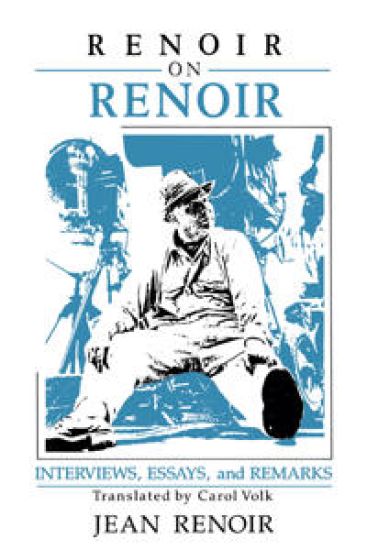
Renoir on Renoir

Renoir on Renoir

Jean Renoir

Cambridge University Press
1990
pokkari
Renoir on Renoir is a 1990 collection of essays by, and interviews of, the legendary filmmaker Jean Renoir, who created such classics as The Grand Illusion, The River and The Rules of the Game. Renoir's career in cinema, which straddled the transition from silent film to the talkies, has influenced a subsequent generation of filmmakers. Between 1954 and 1967, Renoir was interviewed by such eminent filmmakers and theorists as Jacques Rivette, Francois Truffaut and Jacques Becker. The interviews were originally recorded and published in the distinguished French film review Cahiers du Cinéma, and shown on French television. They are an engaging account of Renoir's deep commitment to his chosen profession. Providing additional information on his ideas and theories on screen writing and directing, Renoir's essays also include lively anecdotes of the genesis and evolution of each of his films. They reveal behind-the-scenes of some of the masterpieces of French cinema.