Kirjojen hintavertailu. Mukana 12 390 323 kirjaa ja 12 kauppaa.

Kirjailija

Jeanne H. Purcell

Kirjat ja teokset yhdessä paikassa: 6 kirjaa, julkaisuja vuosilta 2008-2020, suosituimpien joukossa The Parallel Curriculum. Vertaile teosten hintoja ja tarkista saatavuus suomalaisista kirjakaupoista.

6 kirjaa

Kirjojen julkaisuhaarukka 2008-2020.

The Parallel Curriculum

The Parallel Curriculum

Tomlinson Carol Ann; Kaplan Sandra N.; Renzulli Joseph S.; Jeanne H. Purcell; Leppien Jann H.; Burns Deborah E.; Strickland Cindy A.; Imbeau Marcia B.

SAGE Publications Inc
2008
sidottu
'The Parallel Curriculum Model helps teachers not only strengthen their knowledge and pedagogy, but also rediscover a passion for their discipline based on their deeper, more connected understanding. Our students think critically and deeply at a level I have never before witnessed.'ùTony Poole, PrincipalSky Vista Middle School, Aurora, CO'What makes this book unique is its insistence on the development of conceptual understanding of content and its focus on the abilities, interests, and learning preferences of each student.'ùH. Lynn Erickson, Educational ConsultantAuthor of Stirring the Head, Heart, and Soul'The approach honors the integrity of the disciplines while remaining responsive to the diversity of learners that teachers encounter.'ùJay McTighe, Educational ConsultantCoauthor of Understanding by DesignEngage students with a rich curriculum that strengthens their capacity as learners and thinkers!Based on the premise that every learner is somewhere on a path toward expertise in a content area, this resource promotes a curriculum model for developing the abilities of all students and extending the abilities of students who perform at advanced levels. The Parallel Curriculum Model (PCM) offers four curriculum parallels that incorporate the element of Ascending Intellectual Demand to help teachers determine current student performance levels and develop intellectual challenges to move learners along a continuum toward expertise. Updated throughout and reflecting state and national content standards, this new edition:Helps teachers design learning experiences that develop PreKû12 learners' analytical, critical, and creative thinking skills in each subject areaProvides a framework for planning differentiated curriculumIncludes examples of curriculum units, sample rubrics, and tables to help implement the PCM modelThe Parallel Curriculum effectively promotes educational equity and excellence by ensuring that all students are adequately challenged and supported through a multidimensional, high-quality curriculum.
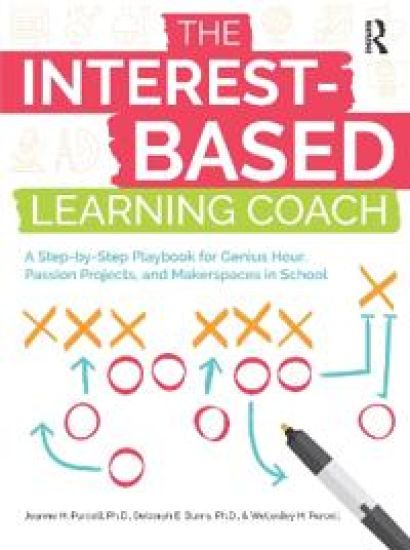
The Interest-Based Learning Coach

The Interest-Based Learning Coach

Jeanne H. Purcell; Deborah E. Burns; Wellesley Purcell

Prufrock Press
2020
nidottu
Many educators appreciate the value of interest-based learning, but struggle with the management and facilitation of individual and small-group projects in a limited space and time allocation. This easy-to-read guide:Features a step-by-step plan for managing Genius Hour, passion projects, Makerspaces, and more.Includes time-saving planning templates, checklists, and charts.Supports students' intrinsic motivation for learning, agency, voice, and problem-solving and critical thinking skills.Provides a systematic and practical approach to interest-based learning.Can be implemented and adapted by an individual teacher, department, or team.Chapters also include techniques for helping students identify their interests, frame their goals and questions, create project plans and timelines, self-assess their progress, and share their work with real-world audiences.
Parallel Curriculum Units for Social Studies, Grades 6-12

Parallel Curriculum Units for Social Studies, Grades 6-12

Jeanne H. Purcell; Leppien Jann H.

SAGE Publications Inc
2010
sidottu
The Parallel Curriculum Model (PCM), as described in the best-selling book The Parallel Curriculum, is a framework for developing a dynamic curriculum that helps students acquire expertise in specific subject areas. This resource deepens teachers' understanding of how to use the PCM to provide rigorous learning opportunities for students in social studies. In Parallel Curriculum Units for Social Studies, Grades 6–12, experienced teachers contribute sample social studies units that demonstrate what high-quality curriculum looks like within a PCM framework. Covering history, geography, sociology, and interdisciplinary studies, these field-tested units each contain: - Teacher explanations of the unit design - Connections to concepts, skills, and standards - Step-by-step directions for delivering the lessons and units - Modification strategies and methods for assessment Use these examples to design your own units and enhance your ability to provide challenging curriculum tailored to the abilities, interests, and learning preferences of each learner.
Parallel Curriculum Units for Social Studies, Grades 6-12

Parallel Curriculum Units for Social Studies, Grades 6-12

Jeanne H. Purcell; Leppien Jann H.

SAGE Publications Inc
2009
nidottu
The Parallel Curriculum Model (PCM), as described in the best-selling book The Parallel Curriculum, is a framework for developing a dynamic curriculum that helps students acquire expertise in specific subject areas. This resource deepens teachers' understanding of how to use the PCM to provide rigorous learning opportunities for students in social studies. In Parallel Curriculum Units for Social Studies, Grades 6–12, experienced teachers contribute sample social studies units that demonstrate what high-quality curriculum looks like within a PCM framework. Covering history, geography, sociology, and interdisciplinary studies, these field-tested units each contain: - Teacher explanations of the unit design - Connections to concepts, skills, and standards - Step-by-step directions for delivering the lessons and units - Modification strategies and methods for assessment Use these examples to design your own units and enhance your ability to provide challenging curriculum tailored to the abilities, interests, and learning preferences of each learner.
Parallel Curriculum Units for Language Arts, Grades 6-12

Parallel Curriculum Units for Language Arts, Grades 6-12

Jeanne H. Purcell; Jann H. Leppien

SAGE Publications Inc
2009
sidottu
"The Parallel Curriculum Model (PCM) holds the power to help students and teachers 'see the whole' of what they are learning. We invite practitioners to read more about this model and join us on a professional journey that we believe will yield that joy and wisdom that comes from seeing the whole. To address the varying needs of teachers across the K–12 grade span—as well as different content areas—we decided to create a series of curriculum units, based on PCM, that could be used by practitioners. It is our hope that the lessons not only underscore important and discipline-specific content, but also illuminate the four parallels in unique and enduring ways."—From the IntroductionDesign exemplary language arts lessons based on the Parallel Curriculum Model!Want to create rigorous learning opportunities for students in language arts based on a deeper understanding of pedagogy and curriculum design? As demonstrated in the best-selling book The Parallel Curriculum, the Parallel Curriculum Model (PCM) allows teachers to determine student performance levels and design intellectual challenges that help students develop expertise in specific subject areas. Parallel Curriculum Units for Language Arts, Grades 6–12 provides sample language arts units written by practicing teachers to demonstrate what high-quality curriculum looks like within a PCM framework. Covering a variety of topics—including narrative voice, literary criticism, and writing original pieces—these field-tested units each contain:Teacher rationales explaining the unit design Connections to concepts, skills, and national or state standardsStep-by-step directions for delivering the lessons and unit Modification strategies, assessments, and reproduciblesUse these examples to design your own units and deepen your understanding of how the PCM framework helps tailor curriculum to the abilities, interests, and learning preferences of each learner.
Parallel Curriculum Units for Language Arts, Grades 6-12

Parallel Curriculum Units for Language Arts, Grades 6-12

Jeanne H. Purcell

SAGE Publications Inc
2009
nidottu
'The Parallel Curriculum Model (PCM) holds the power to help students and teachers 'see the whole' of what they are learning. We invite practitioners to read more about this model and join us on a professional journey that we believe will yield that joy and wisdom that comes from seeing the whole. To address the varying needs of teachers across the K-12 grade span-as well as different content areas-we decided to create a series of curriculum units, based on PCM, that could be used by practitioners. It is our hope that the lessons not only underscore important and discipline-specific content, but also illuminate the four parallels in unique and enduring ways.'-From the IntroductionWant to create rigorous learning opportunities for students in language arts based on a deeper understanding of pedagogy and curriculum design? As demonstrated in the best-selling book The Parallel Curriculum, the Parallel Curriculum Model (PCM) allows teachers to determine student performance levels and design intellectual challenges that help students develop expertise in specific subject areas. Parallel Curriculum Units for Language Arts, Grades 6-12 provides sample language arts units written by practising teachers to demonstrate what high-quality curriculum looks like within a PCM framework. Covering a variety of topics-including narrative voice, literary criticism, and writing original pieces-these field-tested units each contain:- Teacher rationales explaining the unit design - Connections to concepts, skills, and national or state standards- Step-by-step directions for delivering the lessons and unit - Modification strategies, assessments, and reproduciblesUse these examples to design your own units and deepen your understanding of how the PCM framework helps tailor curriculum to the abilities, interests, and learning preferences of each learner.