Kirjojen hintavertailu. Mukana 12 595 353 kirjaa ja 12 kauppaa.

Kirjailija

Jeanne Theoharis

Kirjat ja teokset yhdessä paikassa: 10 kirjaa, julkaisuja vuosilta 2006-2026, suosituimpien joukossa A More Beautiful and Terrible History. Vertaile teosten hintoja ja tarkista saatavuus suomalaisista kirjakaupoista.

10 kirjaa

Kirjojen julkaisuhaarukka 2006-2026.

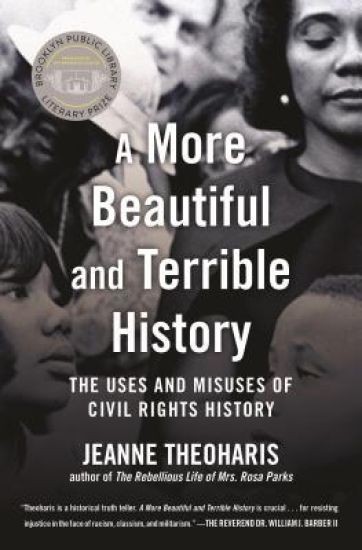
A More Beautiful and Terrible History

A More Beautiful and Terrible History

Jeanne Theoharis

Beacon Press
2019
nidottu
Praised by The New York Times; O, The Oprah Magazine; Bitch Magazine; Slate;Publishers Weekly; and more, this is "a bracing corrective to a national mythology" (New York Times) around the civil rights movement. Moving from "the histories we get" to "the histories we need," Theoharis challenges nine key aspects of the fable to reveal the diversity of people, especially women and young people, who led the movement; the work and disruption it took; the role of the media and "polite racism" in maintaining injustice; and the immense barriers and repression activists faced. Theoharis makes us reckon with the fact that far from being acceptable, passive or unified, the civil rights movement was unpopular, disruptive, and courageously persevering. Activists embraced an expansive vision of justice--which a majority of Americans opposed and which the federal government feared. By showing us the complex reality of the movement, the power of its organizing, and the beauty and scope of the vision, Theoharis proves that there was nothing natural or inevitable about the progress that occurred. A More Beautiful and Terrible History will change our historical frame, revealing the richness of our civil rights legacy, the uncomfortable mirror it holds to the nation, and the crucial work that remains to be done.
King of the North

King of the North

Jeanne Theoharis

THE NEW PRESS
2026
pokkari
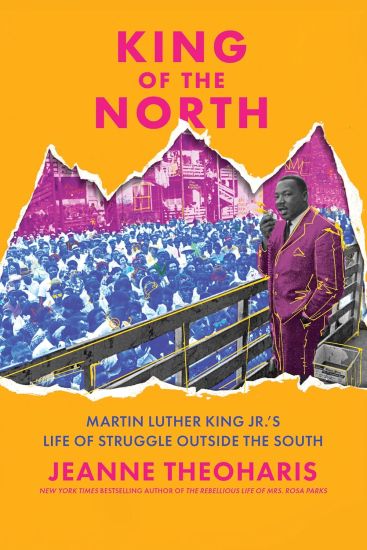
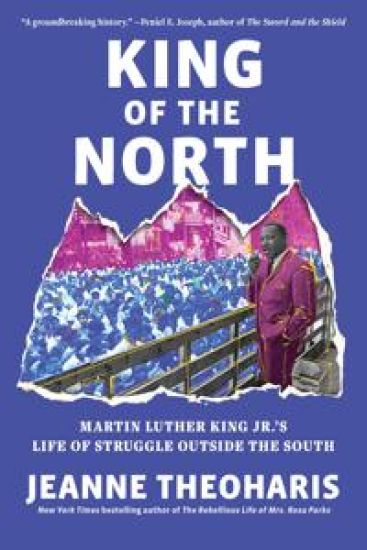
From the New York Times bestselling author, a radical reframing of the life and work of MLK The Martin Luther King Jr. of popular memory vanquished Jim Crow in the South, but award-winning and New York Times–bestselling historian Jeanne Theoharis argues that King’s time in Boston, New York, Los Angeles, and Chicago—outside Dixie—was at the heart of his campaign for racial justice. In a starred review, Publishers Weekly highlights the book’s “stellar” writing, and reveals that King of the North “makes a persuasive case that Martin Luther King Jr.’s campaign for racial justice has been significantly misrepresented.” In this bold retelling, “Theoharis depicts a complex, radical King whose fight against Northern racism alternately inspires and infuriates” (Kirkus Reviews, starred review). King emerges here as someone who not only led a movement but who showed up for other people’s struggles; a charismatic speaker who also listened and learned; a Black man who experienced police brutality; a minister who lived with and organized alongside the poor; and a husband who—despite his flaws—depended on Coretta Scott King as an intellectual and political guide in the national fight against racism, poverty, and war. In a book Democracy Now! calls “a major reexamination of the civil rights leader,” King of the North speaks directly to our struggles over racial inequality today.
King of the North

King of the North

Jeanne Theoharis

THE NEW PRESS
2025
sidottu
A Ms. Magazine Most Anticipated Book bestselling author, a radical reframing of the life and work of Martin Luther King Jr."Theoharis shows us through penetrating research and sensitive, scholarly insight that Dr. King not only was keenly aware of the history of antiblack racism in the North, but battled it from the very beginning of his career." -Henry Louis Gates Jr.The Martin Luther King Jr. of popular memory vanquished Jim Crow in the South. But in this myth-shattering book, award-winning andNew York Times bestselling historian Jeanne Theoharis argues that King's time in Boston, New York,Los Angeles, and Chicago-outside Dixie-was at the heart of his campaign for racial justice.King of the Northfollows King as he crisscrosses the country from the Northeast to the West Coast,challenging school segregation, police brutality, housing segregation, and job discrimination. For these efforts, he was relentlessly attacked by white liberals, the media, and the federal government.In this bold retelling, King emerges as a someone who not only led a movement but who showed up for other people's struggles; a charismatic speaker who also listened and learned; a Black man who experienced police brutality; a minister who lived with and organized alongside the poor; and a husband who-despite his flaws-depended on Coretta Scott King as an intellectual and political guide in the national fight against racism, poverty, and war.King of the Northspeaks directly to our struggles over racial inequality today.Just as she restored Rosa Parks's central place in modern American history, so Theoharis radically expands our understanding of King's life and work-a vision of justice unfulfilled in the present.
The Rebellious Life of Mrs. Rosa Parks (10th Anniversary Edition)
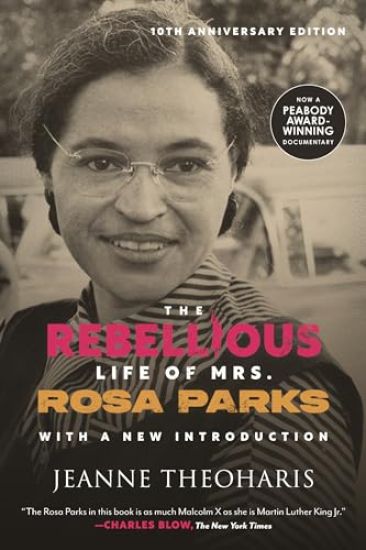
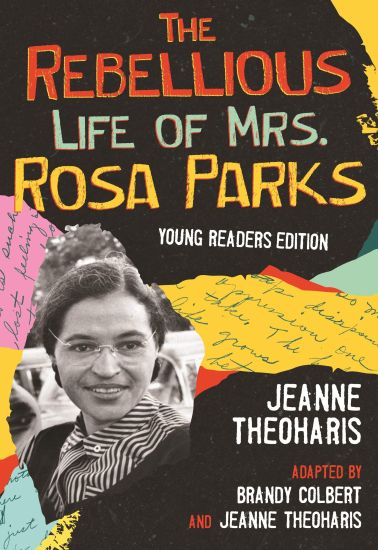
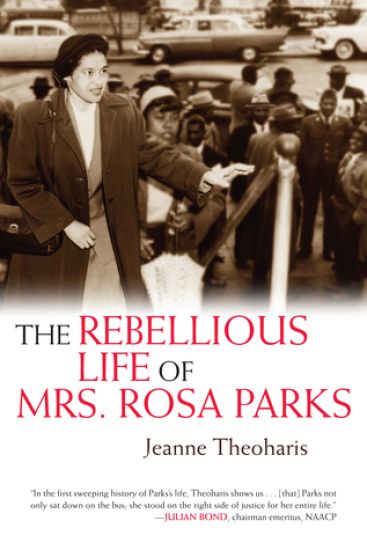
2014 NAACP Image Award Winner: Outstanding Literary Work - Biography / Auto Biography 2013 Letitia Woods Brown Award from the Association of Black Women Historians Choice Top 25 Academic Titles for 2013 The definitive political biography of Rosa Parks examines her six decades of activism, challenging perceptions of her as an accidental actor in the civil rights movementPresenting a corrective to the popular notion of Rosa Parks as the quiet seamstress who, with a single act, birthed the modern civil rights movement, Theoharis provides a revealing window into Parks's politics and years of activism. She shows readers how this civil rights movement radical sought--for more than a half a century--to expose and eradicate the American racial-caste system in jobs, schools, public services, and criminal justice.
The Rebellious Life of Mrs. Rosa Parks

The Rebellious Life of Mrs. Rosa Parks

Jeanne Theoharis

Beacon Press
2015
pokkari
2014 NAACP Image Award Winner: Outstanding Literary Work-Biography/Autobiography 2013 Letitia Woods Brown Award from the Association of Black Women Historians Choice Top 25 Academic Titles for 2013 The definitive political biography of Rosa Parks examines her six decades of activism, challenging perceptions of her as an accidental actor in the civil rights movement. This revised edition includes a new introduction by the author, who reflects on materials in the Rosa Parks estate, purchased by Howard Buffett in 2014 and opened to the public at the Library of Congress in February 2015. Theoharis contextualizes this rich material--made available to the public for the very first time and including more than seven thousand documents--and deepens our understanding of Parks's personal, financial, and political struggles. Presenting a powerful corrective to the popular iconography of Rosa Parks as the quiet seamstress who with a single act birthed the modern civil rights movement, scholar Jeanne Theoharis excavates Parks's political philosophy and six decades of activism. Theoharis masterfully details the political depth of a national heroine who dedicated her life to fighting American inequality and, in the process, resurrects a civil rights movement radical who has been hidden in plain sight far too long.
Our Schools Suck

Our Schools Suck

Jeanne Theoharis; Gaston Alonso; Noel S. Anderson; Celina Su

New York University Press
2009
pokkari
Shares the voices of students speaking out against the failures of urban education "Our schools suck." This is how many young people of color call attention to the kind of public education they are receiving. In cities across the nation, many students are trapped in under-funded, mismanaged and unsafe schools. Yet, a number of scholars and of public figures have shifted attention away from the persistence of school segregation to lambaste the values of young people themselves. Our Schools Suck forcefully challenges this assertion by giving voice to the compelling stories of African American and Latino students who attend under-resourced inner-city schools, where guidance counselors and AP classes are limited and security guards and metal detectors are plentiful—and grow disheartened by a public conversation that continually casts them as the problem with urban schools. By showing that young people are deeply committed to education but often critical of the kind of education they are receiving, this book highlights the dishonesty of public claims that they do not value education. Ultimately, these powerful student voices remind us of the ways we have shirked our public responsibility to create excellent schools. True school reform requires no less than a new civil rights movement, where adults join with young people to ensure an equal education for each and every student.
Our Schools Suck

Our Schools Suck

Jeanne Theoharis; Gaston Alonso; Noel S. Anderson; Celina Su

New York University Press
2009
sidottu
Shares the voices of students speaking out against the failures of urban education "Our schools suck." This is how many young people of color call attention to the kind of public education they are receiving. In cities across the nation, many students are trapped in under-funded, mismanaged and unsafe schools. Yet, a number of scholars and of public figures have shifted attention away from the persistence of school segregation to lambaste the values of young people themselves. Our Schools Suck forcefully challenges this assertion by giving voice to the compelling stories of African American and Latino students who attend under-resourced inner-city schools, where guidance counselors and AP classes are limited and security guards and metal detectors are plentiful—and grow disheartened by a public conversation that continually casts them as the problem with urban schools. By showing that young people are deeply committed to education but often critical of the kind of education they are receiving, this book highlights the dishonesty of public claims that they do not value education. Ultimately, these powerful student voices remind us of the ways we have shirked our public responsibility to create excellent schools. True school reform requires no less than a new civil rights movement, where adults join with young people to ensure an equal education for each and every student.
Not Working

Not Working

Alejandra Marchevsky; Jeanne Theoharis

New York University Press
2006
pokkari
Not Working chronicles the devastating effects of the 1996 welfare reform legislation that ended welfare as we know it. For those who now receive public assistance, "work" means pleading with supervisors for full-time hours, juggling ever-changing work schedules, and shuffling between dead-end jobs that leave one physically and psychically exhausted. Through vivid story-telling and pointed analysis, Not Working profiles the day-to-day struggles of Mexican immigrant women in the Los Angeles area, showing the increased vulnerability they face in the welfare office and labor market. The new "work first" policies now enacted impose time limits and mandate work requirements for those receiving public assistance, yet fail to offer real job training or needed childcare options, ultimately causing many families to fall deeper below the poverty line. Not Working shows that the new "welfare-to-work" regime has produced tremendous instability and insecurity for these women and their children. Moreover, the authors argue that the new politics of welfare enable greater infringements of rights and liberty for many of America's most vulnerable and constitute a crucial component of the broader assault on American citizenship. In short, the new welfare is not working.
Not Working

Not Working

Alejandra Marchevsky; Jeanne Theoharis

New York University Press
2006
sidottu
Not Working chronicles the devastating effects of the 1996 welfare reform legislation that ended welfare as we know it. For those who now receive public assistance, "work" means pleading with supervisors for full-time hours, juggling ever-changing work schedules, and shuffling between dead-end jobs that leave one physically and psychically exhausted. Through vivid story-telling and pointed analysis, Not Working profiles the day-to-day struggles of Mexican immigrant women in the Los Angeles area, showing the increased vulnerability they face in the welfare office and labor market. The new "work first" policies now enacted impose time limits and mandate work requirements for those receiving public assistance, yet fail to offer real job training or needed childcare options, ultimately causing many families to fall deeper below the poverty line. Not Working shows that the new "welfare-to-work" regime has produced tremendous instability and insecurity for these women and their children. Moreover, the authors argue that the new politics of welfare enable greater infringements of rights and liberty for many of America's most vulnerable and constitute a crucial component of the broader assault on American citizenship. In short, the new welfare is not working.