Kirjojen hintavertailu. Mukana 12 390 323 kirjaa ja 12 kauppaa.

Kirjailija

Jeannette Littlemore

Kirjat ja teokset yhdessä paikassa: 15 kirjaa, julkaisuja vuosilta 2011-2025, suosituimpien joukossa Metaphor, Metonymy, the Body and the Environment. Vertaile teosten hintoja ja tarkista saatavuus suomalaisista kirjakaupoista.

15 kirjaa

Kirjojen julkaisuhaarukka 2011-2025.

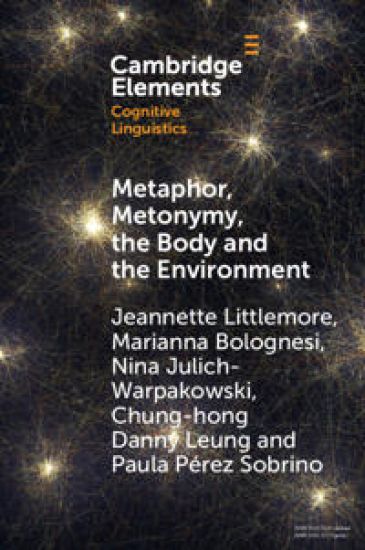
Metaphor, Metonymy, the Body and the Environment

Metaphor, Metonymy, the Body and the Environment

Jeannette Littlemore; Marianna Bolognesi; Nina Julich-Warpakowski; Chung-hong Danny Leung; Paula Pérez Sobrino

Cambridge University Press
2023
pokkari
By exploring the associations that people make between emotions and colours, looking at how they vary across languages, and exploring the explanations that people provide for the associations that they make, this Element provides insight into the ways in which humans express emotions through colour, and the reasons why they do so. Metaphoric (and metonymic) language and thought play a key role on several levels in the formation of emotion–colour associations, interacting with physical, environmental and social factors. A strong metaphorical connection between the valence of the emotion and the lightness of the colours with which it is associated, and between the intensity of an emotion and the saturation level of the colours with which it is associated is found. However, the strength of this association varies according to the linguistic background of the speaker, and the gender in which the emotion is presented.
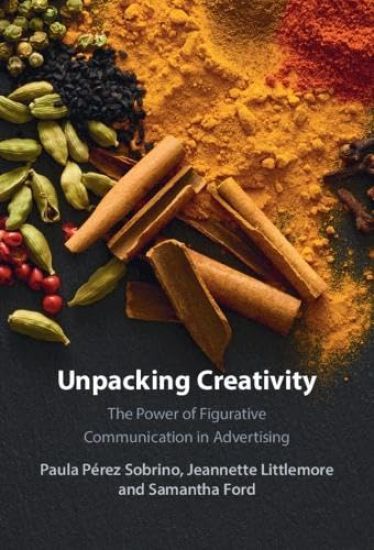
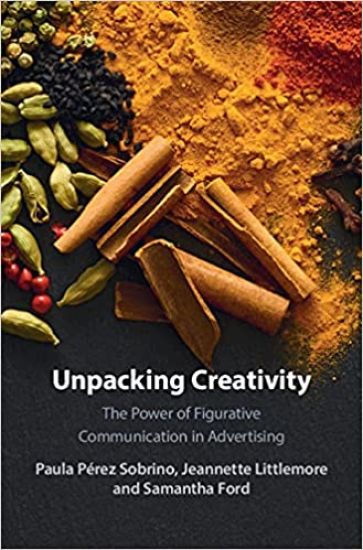
Unpacking Creativity

Unpacking Creativity

Paula Pérez Sobrino; Jeannette Littlemore; Samantha Ford

Cambridge University Press
2025
pokkari
Figurative communication (the use of metaphor, metonymy, hyperbole and irony) provides economy of expression, clarity, persuasiveness, politeness, evaluation, and communication of emotions. However, it also increases the potential for misunderstanding in situations when people lack shared background knowledge. This book combines theoretical frameworks with empirical studies that measure the effectiveness of different approaches to the use of figurative language in advertisements, to show how to maximise the benefits of creative metaphor and metonymy in global advertising. It highlights how subtle differences in colour, layout, and combinations of different kinds of figurative language affect the reception and appreciation of creative advertising, shedding new light on the nature of figurative communication itself. With a balance between theory, experiments and practical case studies, this book is accessible for academics in linguistics and communication studies, as well as advertising and marketing professionals.
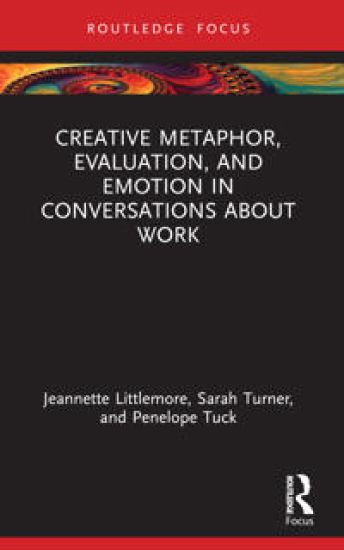
Creative Metaphor, Evaluation, and Emotion in Conversations about Work

Creative Metaphor, Evaluation, and Emotion in Conversations about Work

Jeannette Littlemore; Sarah Turner; Penelope Tuck

TAYLOR FRANCIS LTD
2024
nidottu
This book explores the roles played by creative and conventional metaphor in expressing positive and negative evaluation within a particular workplace, drawing on interviews with 31 current and former employees of the British Civil Service.Metaphor is often used to express evaluation but relatively few studies have investigated the ways in which metaphor is used to evaluate personal emotionally charged experiences. The volume explores how metaphor serves a predominantly evaluative function, with creatively used metaphors often more likely than conventional metaphors to perform an evaluative function, particularly when the evaluation is negative or ambiguous. The findings provide a deeper understanding of the relationship between evaluation, creativity, and metaphor. Examples, including military metaphors and family metaphors, show how creativity often comes through subverting the norms of use of a particular metaphor category, or altering the valence from its conventional use. The study elucidates the myriad ways in which people push at the boundaries of linguistic creativity in their efforts to describe the qualitative nature of their experiences.Demonstrating how metaphor can be a powerful tool for the nuanced expression of complex and ambiguous evaluation, this book will appeal to researchers interested in better understanding metaphor, creativity, evaluation, and workplace cultures.
Applying Cognitive Linguistics to Second Language Learning and Teaching

Applying Cognitive Linguistics to Second Language Learning and Teaching

Jeannette Littlemore

Springer International Publishing AG
2024
nidottu
This is a revised and updated edition of a seminal text in the field of Cognitive Linguistics, written in an engaging and accessible style for a new generation of scholars and students. The author surveys and incorporates a wealth of more recent studies conducted in different areas since the book’s original publication in 2009, exploring how new areas of research within Cognitive Linguistics have emerged and flourished, and taking account of key studies that have progressed the field since its inception. This new edition has been revised throughout to review, analyse and synthesise the latest state of the art in Cognitive Linguistics–inspired second language learning and teaching research, and suggests other areas that might benefit from further exploration. It will be essential reading for academics, educators and students across Linguistics and Education, particularly those with an interest in cognitive linguistics, second language acquisition, foreign language teaching and language education.
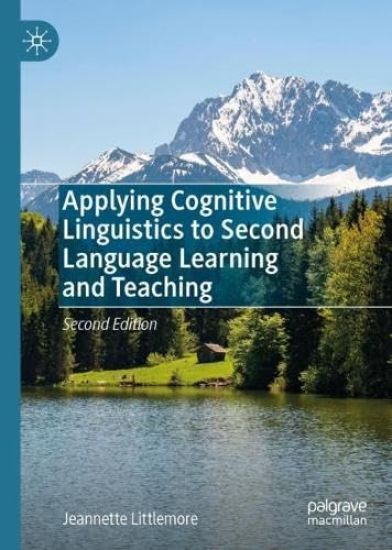
Applying Cognitive Linguistics to Second Language Learning and Teaching

Applying Cognitive Linguistics to Second Language Learning and Teaching

Jeannette Littlemore

Springer International Publishing AG
2023
sidottu
This is a revised and updated edition of a seminal text in the field of Cognitive Linguistics, written in an engaging and accessible style for a new generation of scholars and students. The author surveys and incorporates a wealth of more recent studies conducted in different areas since the book’s original publication in 2009, exploring how new areas of research within Cognitive Linguistics have emerged and flourished, and taking account of key studies that have progressed the field since its inception. This new edition has been revised throughout to review, analyse and synthesise the latest state of the art in Cognitive Linguistics–inspired second language learning and teaching research, and suggests other areas that might benefit from further exploration. It will be essential reading for academics, educators and students across Linguistics and Education, particularly those with an interest in cognitive linguistics, second language acquisition, foreign language teaching and language education.
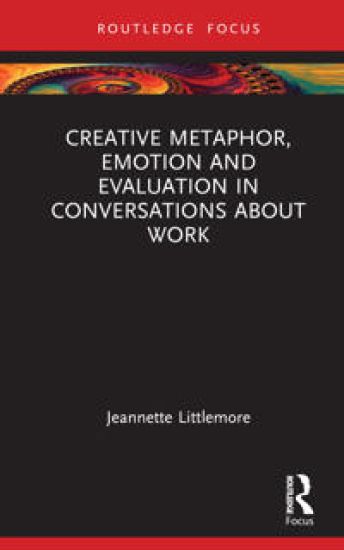
Creative Metaphor, Evaluation, and Emotion in Conversations about Work

Creative Metaphor, Evaluation, and Emotion in Conversations about Work

Jeannette Littlemore; Sarah Turner; Penelope Tuck

TAYLOR FRANCIS LTD
2023
sidottu
This book explores the roles played by creative and conventional metaphor in expressing positive and negative evaluation within a particular workplace, drawing on interviews with 31 current and former employees of the British Civil Service.Metaphor is often used to express evaluation but relatively few studies have investigated the ways in which metaphor is used to evaluate personal emotionally charged experiences. The volume explores how metaphor serves a predominantly evaluative function, with creatively used metaphors often more likely than conventional metaphors to perform an evaluative function, particularly when the evaluation is negative or ambiguous. The findings provide a deeper understanding of the relationship between evaluation, creativity, and metaphor. Examples, including military metaphors and family metaphors, show how creativity often comes through subverting the norms of use of a particular metaphor category, or altering the valence from its conventional use. The study elucidates the myriad ways in which people push at the boundaries of linguistic creativity in their efforts to describe the qualitative nature of their experiences.Demonstrating how metaphor can be a powerful tool for the nuanced expression of complex and ambiguous evaluation, this book will appeal to researchers interested in better understanding metaphor, creativity, evaluation, and workplace cultures.
The Many Faces of Creativity

The Many Faces of Creativity

Sarah Turner; Jeannette Littlemore

Cambridge University Press
2023
pokkari
Creative metaphor has been of central interest to the cognitive linguistic research community in recent years. However, little is known about what propels people to use metaphor in a creative way. In this Element, the authors identify and explore some of the clues that synaesthesia may provide to help us better understand the factors that drive creativity, with a particular focus on creative metaphor. They identify the factors that seem to trigger the production of creative metaphor in synaesthetes, and explore what this can tell us about creativity in the population more generally. Their findings provide insights into the nature of creativity as it relates to metaphor, emotion and embodied experience. This title is also available as Open Access on Cambridge Core.
Unpacking Creativity

Unpacking Creativity

Paula Pérez Sobrino; Jeannette Littlemore; Samantha Ford

Cambridge University Press
2021
sidottu
Figurative communication (the use of metaphor, metonymy, hyperbole and irony) provides economy of expression, clarity, persuasiveness, politeness, evaluation, and communication of emotions. However, it also increases the potential for misunderstanding in situations when people lack shared background knowledge. This book combines theoretical frameworks with empirical studies that measure the effectiveness of different approaches to the use of figurative language in advertisements, to show how to maximise the benefits of creative metaphor and metonymy in global advertising. It highlights how subtle differences in colour, layout, and combinations of different kinds of figurative language affect the reception and appreciation of creative advertising, shedding new light on the nature of figurative communication itself. With a balance between theory, experiments and practical case studies, this book is accessible for academics in linguistics and communication studies, as well as advertising and marketing professionals.
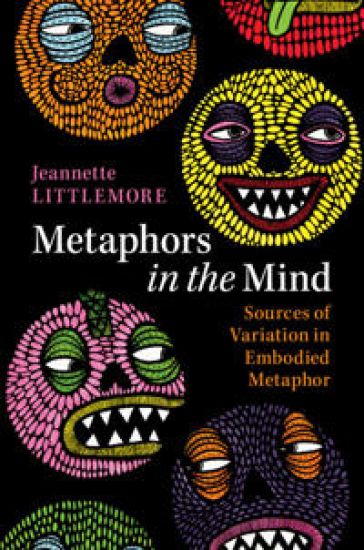
Metaphors in the Mind

Metaphors in the Mind

Jeannette Littlemore

Cambridge University Press
2019
sidottu
Abstract concepts are often embodied through metaphor. For example, we talk about moving through time in metaphorical terms, as if we were moving through space, allowing us to 'look back' on past events. Much of the work on embodied metaphor to date has assumed a single set of universal, shared bodily experiences that motivate our understanding of abstract concepts. This book explores sources of variation in people's experiences of embodied metaphor, including, for example, the shape and size of one's body, one's age, gender, state of mind, physical or linguistic impairments, personality, ideology, political stance, religious beliefs, and linguistic background. It focuses on the ways in which people's experiences of metaphor fluctuate over time within a single communicative event or across a lifetime. Combining theoretical argument with findings from new studies, Littlemore analyses sources of variation in embodied metaphor and provides a deeper understanding of the nature of embodied metaphor itself.
Metaphors in the Mind

Metaphors in the Mind

Jeannette Littlemore

Cambridge University Press
2019
pokkari
Abstract concepts are often embodied through metaphor. For example, we talk about moving through time in metaphorical terms, as if we were moving through space, allowing us to 'look back' on past events. Much of the work on embodied metaphor to date has assumed a single set of universal, shared bodily experiences that motivate our understanding of abstract concepts. This book explores sources of variation in people's experiences of embodied metaphor, including, for example, the shape and size of one's body, one's age, gender, state of mind, physical or linguistic impairments, personality, ideology, political stance, religious beliefs, and linguistic background. It focuses on the ways in which people's experiences of metaphor fluctuate over time within a single communicative event or across a lifetime. Combining theoretical argument with findings from new studies, Littlemore analyses sources of variation in embodied metaphor and provides a deeper understanding of the nature of embodied metaphor itself.
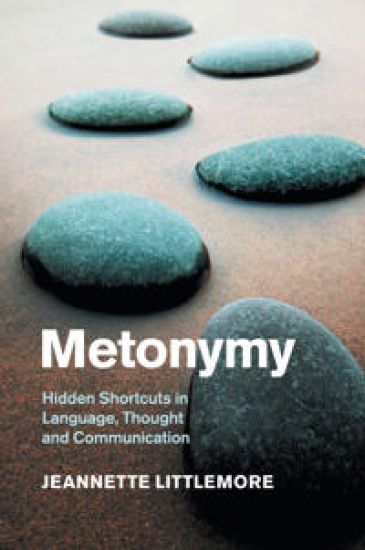
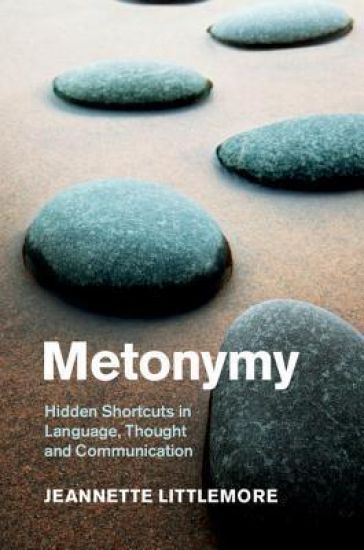
Metonymy

Metonymy

Jeannette Littlemore

Cambridge University Press
2018
pokkari
'Metonymy' is a type of figurative language used in everyday conversation, a form of shorthand that allows us to use our shared knowledge to communicate with fewer words than we would otherwise need. 'I'll pencil you in' and 'let me give you a hand' are both examples of metonymic language. Metonymy serves a wide range of communicative functions, such as textual cohesion, humour, irony, euphemism and hyperbole - all of which play a key role in the development of language and discourse communities. Using authentic data throughout, this book shows how metonymy operates, not just in language, but also in gesture, sign language, art, music, film and advertising. It explores the role of metonymy in cross-cultural communication, along with the challenges it presents to language learners and translators. Ideal for researchers and students in linguistics and literature, as well as teachers and general readers interested in the art of communication.
Metonymy

Metonymy

Jeannette Littlemore

Cambridge University Press
2015
sidottu
'Metonymy' is a type of figurative language used in everyday conversation, a form of shorthand that allows us to use our shared knowledge to communicate with fewer words than we would otherwise need. 'I'll pencil you in' and 'let me give you a hand' are both examples of metonymic language. Metonymy serves a wide range of communicative functions, such as textual cohesion, humour, irony, euphemism and hyperbole - all of which play a key role in the development of language and discourse communities. Using authentic data throughout, this book shows how metonymy operates, not just in language, but also in gesture, sign language, art, music, film and advertising. It explores the role of metonymy in cross-cultural communication, along with the challenges it presents to language learners and translators. Ideal for researchers and students in linguistics and literature, as well as teachers and general readers interested in the art of communication.
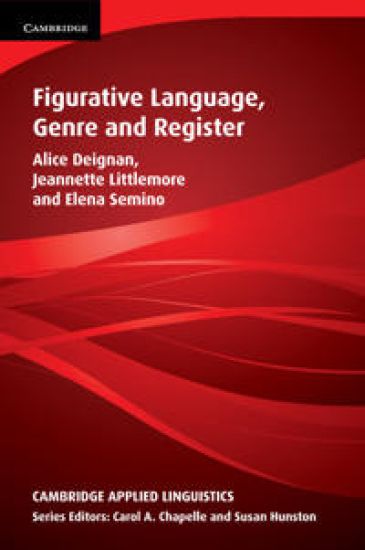
Figurative Language, Genre and Register

Figurative Language, Genre and Register

Alice Deignan; Jeannette Littlemore; Elena Semino

Cambridge University Press
2013
pokkari
This book brings together methods from discourse analysis and corpus linguistics in a cutting-edge study of figurative language in spoken and written discourse. Figurative Language, Genre and Register brings together discourse analysis and corpus linguistics in a cutting-edge study of figurative language in spoken and written discourse. The authors explore a diverse range of communities from chronic pain sufferers to nursery staff to present a detailed framework for the analysis of figurative language. The reader is shown how figurative language is used between members of these communities to construct their own 'world view', and how this can change with a shift in perspective. Figurative language is shown to be pervasive and inescapable, but it is also suggested that it varies significantly across genres.
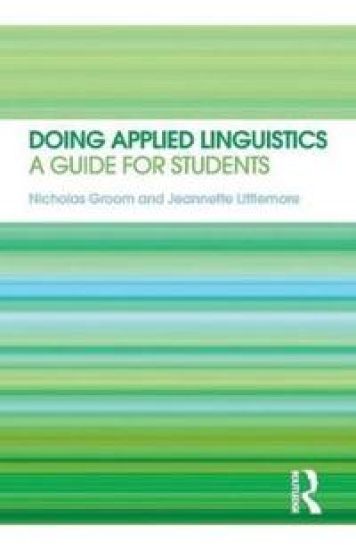
Doing Applied Linguistics

Doing Applied Linguistics

Nicholas Groom; Jeannette Littlemore

Routledge
2011
nidottu
Doing Applied Linguistics provides a concise, lively and accessible introduction to the field of applied linguistics for readers who have little or no prior knowledge of the subject. The book explores the basics of the field then goes on to examine in more depth what applied linguists actually do, and the types of research methods that are most frequently used in the field. By reading this book students will find the answers to four sets of basic questions: What is applied linguistics, and what do applied linguists do?Why do it? What is the point of applied linguistics?How and why might I get involved in applied linguistics?How to do it? What kinds of activities are involved in doing applied linguistic research?Written by teachers and researchers in applied linguistics Doing Applied Linguistics is essential reading for all students with interests in this area.
Doing Applied Linguistics

Doing Applied Linguistics

Nicholas Groom; Jeannette Littlemore

Routledge
2011
sidottu
Doing Applied Linguistics provides a concise, lively and accessible introduction to the field of applied linguistics for readers who have little or no prior knowledge of the subject. The book explores the basics of the field then goes on to examine in more depth what applied linguists actually do, and the types of research methods that are most frequently used in the field. By reading this book students will find the answers to four sets of basic questions: What is applied linguistics, and what do applied linguists do?Why do it? What is the point of applied linguistics?How and why might I get involved in applied linguistics?How to do it? What kinds of activities are involved in doing applied linguistic research?Written by teachers and researchers in applied linguistics Doing Applied Linguistics is essential reading for all students with interests in this area.