Kirjojen hintavertailu. Mukana 12 657 676 kirjaa ja 12 kauppaa.

Kirjailija

Jed Perl

Kirjat ja teokset yhdessä paikassa: 11 kirjaa, julkaisuja vuosilta 2000-2025, suosituimpien joukossa Paris Without End. Vertaile teosten hintoja ja tarkista saatavuus suomalaisista kirjakaupoista.

11 kirjaa

Kirjojen julkaisuhaarukka 2000-2025.

The Forbidden Experiment

The Forbidden Experiment

Roger Shattuck; Jed Perl

New York Review Books
2025
nidottu
The true story of the nineteenth century's so-called "Wild Boy of Aveyron"--an abandoned French child who lived for years alone in the wilderness before being brought under the care of an innovative young physician. "Before dawn on January 8, 1800, a remarkable creature came out of the woods near the village of Saint-Sernin in southern France..." So begins Roger Shattuck's book about the Wild Boy of Aveyron--a child tragically abandoned by his caretakers and captured years later while scavenging food from a local garden. The Wild Boy could not speak, refused all clothing, and repeatedly tried to escape from captivity. Sent to the National Institute for the Deaf in Paris and declared a hopeless case, he was left to run wild until, one day, a medical student arrived on the scene. Jean Itard, young and from the provinces, began spending time with the boy and imagining ways to help him. He hired a woman named Gu rin to care for him and gradually introduced him to social interaction, engaging his senses and imagination with games, toys, and other forms of training. For a while Victor (as Itard named him) made progress, but by 1805 their sessions together had reached an impasse. Victor died in obscurity, still cared for by Madame Gu rin, in 1828. The Forbidden Experiment tells the story of a troubled young man and the extraordinary doctor who tried, however imperfectly, to help him. It is also, in Shattuck's thoughtful, accessible, and compassionate prose, a book that explores essential questions about the human condition. What separates us from animals? What is language, and how do we acquire it? Can children who have been neglected or abused learn to trust the world? First published in 1980--and inspired by Fran ois Truffaut's film The Wild Child--The Forbidden Experiment is now back in print for the first time in more than a decade.
Calder: Chess Knightmares

Calder: Chess Knightmares

Jed Perl; Susan Braeuer Dam

Cahiers d'art
2025
sidottu
A sumptuous compendium of Alexander Calder's chess works, with ephemera and archival materialsThis handsome volume celebrates Alexander Calder's fascination with the game of chess. It comprises two parts: the first features scholarly and experimental texts exploring such topics as Calder's relationship with Marcel Duchamp (who was famously obsessed with chess) and his involvement in the 1944 exhibition The Imagery of Chess at Julien Levy Gallery. Archival documentation, ephemera and reproductions of Calder's chess sets--including photographs of each chess piece and related works on paper--are also featured. The second part of the book presents The Knightmares Portfolio, an approximation of an unrealized publication conceived in 1944 but never published. It comprises 46 chess drawings by Calder inscribed with titles, alternate titles and puns by Duchamp, Mary Reynolds and Calder. Alexander Calder (1898-1976) settled in Paris in the late 1920s, and soon found himself at the center of the city's artistic avant-garde. There, he developed his seminal Cirque Calder, a performance artwork comprising dozens of miniature handmade objects, and a group of standalone figurative works in wire. In 1930, Calder shifted towards abstraction with his invention of the mobile--an abstract sculpture made of independent parts that incorporate natural or mechanical movement. Calder would continue to explore the possibilities of this visual language for the rest of his career, though eventually shifting to monumental constructions and public works.
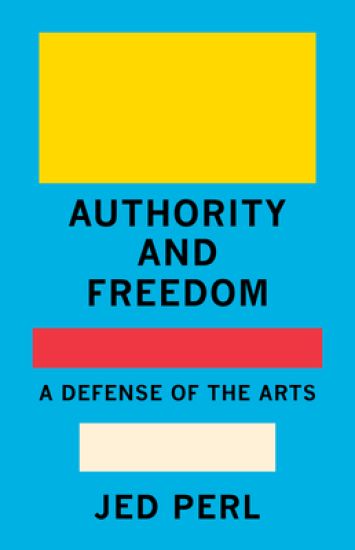
Authority and Freedom: A Defense of the Arts

Authority and Freedom: A Defense of the Arts

Jed Perl

Knopf Publishing Group
2022
sidottu
From one of our most widely admired art critics comes a bold and timely manifesto reaffirming the independence of all the arts--musical, literary, and visual--and their unique and unparalleled power to excite, disturb, and inspire us. As people look to the arts to promote a particular ideology, whether radical, liberal, or conservative, Jed Perl argues that the arts have their own laws and logic, which transcend the controversies of any one moment. "Art's relevance," he writes, "has everything to do with what many regard as its irrelevance." Authority and Freedom will find readers from college classrooms to foundation board meetings--wherever the arts are confronting social, political, and economic ferment and heated debates about political correctness and cancel culture. Perl embraces the work of creative spirits as varied as Mozart, Michelangelo, Jane Austen, Henry James, Picasso, and Aretha Franklin. He contends that the essence of the arts is their ability to free us from fixed definitions and categories. Art is inherently uncategorizable--that's the key to its importance. Taking his stand with artists and thinkers ranging from W. H. Auden to Hannah Arendt, Perl defends works of art as adventuresome dialogues, simultaneously dispassionate and impassioned. He describes the fundamental sense of vocation--the engagement with the tools and traditions of a medium--that gives artists their purpose and focus. Whether we're experiencing a poem, a painting, or an opera, it's the interplay between authority and freedom--what Perl calls "the lifeblood of the arts"--that fuels the imaginative experience. This book will be essential reading for everybody who cares about the future of the arts in a democratic society.
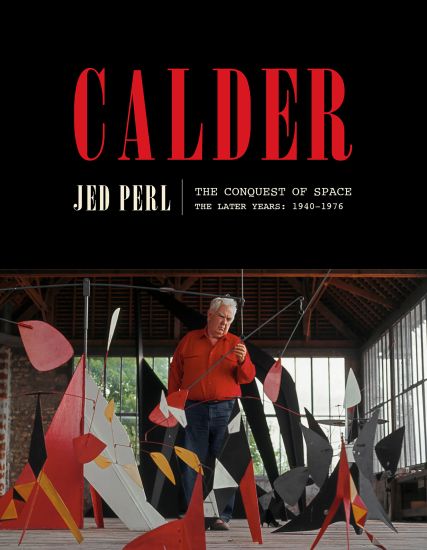
Calder: The Conquest of Space

Calder: The Conquest of Space

Jed Perl

Alfred A. Knopf
2020
sidottu
The concluding volume of the first biography of one of the most important, influential, and beloved of twentieth-century sculptors, and one of the greatest artists in the cultural history of America--a vividly written, illuminating account of his triumphant later years. The final volume of this magnificent biography begins during World War II, when Calder--known to all as Sandy--and his wife, Louisa, opened their home to the stream of artists and writers in exile from Europe. In the postwar decades, they divided their time between the United States and France, as Calder made his first monumental public sculptures and received blockbuster commissions that included Expo '67 in Montreal and the 1968 Olympics in Mexico City. Jed Perl makes clear how Calder's radical sculptural imagination shaped the minimalist and kinetic art movements that emerged in the 1960s. And we see, as well, that through everything--their ever-expanding friendships with artists and writers of all stripes; working to end the war in Vietnam; hosting riotous dance parties at their Connecticut home; seeing the "mobile," Calder's essential artistic invention, find its way into Webster's dictionary--Calder and Louisa remained the risk-taking, singularly bohemian couple they had been since first meeting at the end of the Roaring Twenties. The biography ends with Calder's death in 1976 at the age of seventy-eight--only weeks after an encyclopedic retrospective of his work opened at the Whitney Museum in New York--but leaves us with a new, clearer understanding of his legacy, both as an artist and a man.
Calder-Picasso

Calder-Picasso

Mariah Coulibaly; Estrella de Diego; Simona Dvorakova; Claire Garnier; Donatien Grau; Chus Martinez; Jordana Mendelson; Jed Perl; Emilia Philippot; Alexander S. C. Rower; Bernard Ruis-Picasso

Editions Skira Paris
2019
sidottu
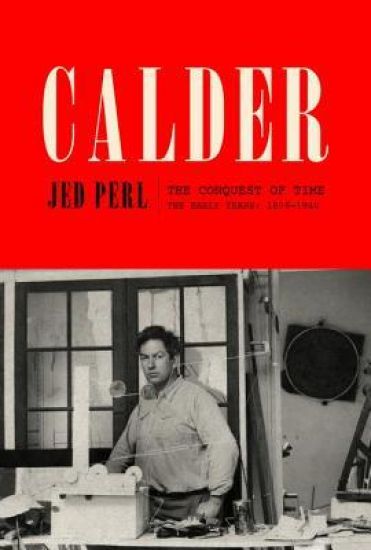
Calder: The Conquest of Time

Calder: The Conquest of Time

Jed Perl

Alfred A. Knopf
2017
sidottu
The first biography of America's greatest twentieth-century sculptor, Alexander Calder: an authoritative and revelatory achievement, based on a wealth of letters and papers never before available, and written by one of our most renowned art critics. Alexander Calder is one of the most beloved and widely admired artists of the twentieth century. Anybody who has ever set foot in a museum knows him as the inventor of the mobile, America's unique contribution to modern art. But only now, forty years after the artist's death, is the full story of his life being told in this biography, which is based on unprecedented access to Calder's letters and papers as well as scores of interviews. Jed Perl shows us why Calder was--and remains--a barrier breaker, an avant-garde artist with mass appeal. This beautifully written, deeply researched book opens with Calder's wonderfully peripatetic upbringing in Philadelphia, California, and New York. Born in 1898 into a family of artists--his father was a well-known sculptor, his mother a painter and a pioneering feminist--Calder went on as an adult to forge important friendships with a who's who of twentieth-century artists, including Joan Miro, Marcel Duchamp, Georges Braque, and Piet Mondrian. We move through Calder's early years studying engineering to his first artistic triumphs in Paris in the late 1920s, and to his emergence as a leader in the international abstract avant-garde. His marriage in 1931 to the free-spirited Louisa James--she was a great-niece of Henry James--is a richly romantic story, related here with a wealth of detail and nuance. Calder's life takes on a transatlantic richness, from New York's Greenwich Village in the Roaring Twenties, to the Left Bank of Paris during the Depression, and then back to the United States, where the Calders bought a run-down old farmhouse in western Connecticut. New light is shed on Calder's lifelong interest in dance, theater, and performance, ranging from the Cirque Calder, the theatrical event that became his calling card in bohemian Paris to collaborations with the choreographer Martha Graham and the composer Virgil Thomson. More than 350 illustrations in color and black-and-white--including little-known works and many archival photographs that have never before been seen--further enrich the story.
Calder

Calder

Jed Perl

Yale University Press
2017
sidottu
The first biography of America's greatest twentieth-century sculptor. In this beautifully written, deeply researched book Jed Perl shows how Alexander Calder became an avant-garde artist with enduring appeal. One of our most beloved modern artists, Calder is celebrated above all as the inventor of the mobile. Only now is the full story of his life being told in a gloriously illustrated biography, which features unseen photographs and is based on scores of interviews and unprecedented access to Calder's papers. Born into a family of artists, Calder forged important friendships with a who's who of twentieth-century creators, including Georges Braque, Marcel Duchamp, Martha Graham, Joan Miró, Piet Mondrian and Virgil Thomson. His early years studying engineering were followed by artistic triumphs in Paris in the late 1920s, and his emergence as a leader in the international abstract avant-garde. His marriage in 1931 to Louisa James—a great-niece of Henry James—is a richly romantic story. This transatlantic life carries readers from New York's Greenwich Village, to the Left Bank of Paris during the Depression, and then to a refugee-filled London just before the War, where Calder's circle of friends included Barbara Hepworth, Ben Nicholson and Kenneth Clark.
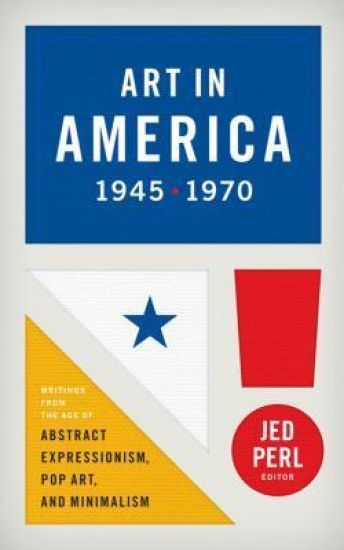
Art In America 1945 - 1970

Art In America 1945 - 1970

Jed Perl

The Library of America
2014
sidottu
Experience the creative explosion that transformed American art, in the words of the artists, writers, and critics who were there: In the quarter century after the end of World War II, a new generation of painters, sculptors, and photographers transformed the face of American art and shifted the center of the art world from Paris to New York. Signaled by the triumph of abstraction and the ascendancy of painters such as Pollock, Rothko, de Kooning, and Kline, this revolution generated an exuberant and contentious body of writing without parallel in our cultural history. In the words of editor Jed Perl, there has never been a period when the visual arts have been written about with more mongrel energy with more unexpected mixtures of reportage, rhapsody, analysis, advocacy, editorializing, and philosophy. Perl has gathered the best of this writing together for the first time, interwoven with fascinating headnotes that establish the historical background, the outsized personalities of the artists and critics, and the nature of the aesthetic battles that defined the era. Here are statements by the most significant artists, and major critical essays by Clement Greenberg, Susan Sontag, Hilton Kramer, and other influential figures. Here too is an electrifying array of responses by poets and novelists, reflecting the free interplay between different art forms: John Ashbery on Andy Warhol, James Agee on Helen Levitt, James Baldwin on Beauford Delaney, Truman Capote on Richard Avedon, Tennessee Williams on Hans Hofmann, Jack Kerouac on Robert Frank. The atmosphere of the time comes to vivid life in memoirs, diaries, and journalism by Peggy Guggenheim, Dwight Macdonald, Calvin Tomkins, and others. Lavishly illustrated with scores of black-and-white images and a 32-page color insert, this is a book that every art lover will treasure."
Paris Without End

Paris Without End

Jed Perl

Skyhorse Publishing
2014
sidottu
This brilliant blend of history, biography, and criticism explores the seminal figures of twentieth-century French art?Matisse, Picasso, Derain, Léger, Dufy, Braque, Giacometti, Balthus, and Hélion?and the vital art world in which they thrived. The ten interlocking essays in this important book include radical new evaluations of Derain, Léger, and Dufy, and penetrating studies of the final works of Picasso and Braque. Paris Without End, Jed Perl’s first book, is now celebrating its twenty-fifth anniversary and is essential reading for anyone passionate about modern art. Roberta Smith called it ?a quiet, cogent tour de force. . . . As one critic’s demonstration of what he considers the best in art and the best way to write about it, this book sets a high standard.” Hilton Kramer also noted, ?Everyone who cares about the art of the twentieth century will find something to disagree with in this book?its many unorthodox judgments are bound to be controversial?but that, in my view, is a mark of the book’s importance.”
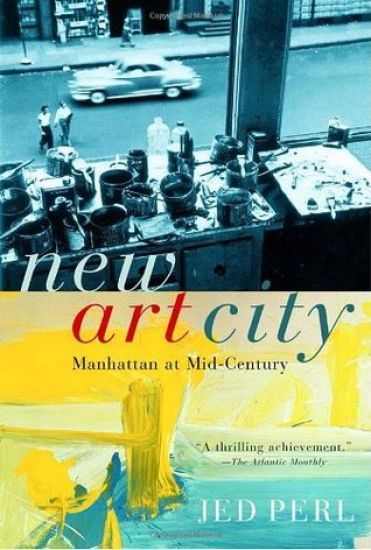
New Art City

New Art City

Jed Perl

Vintage Books
2007
pokkari
A panoramic study of mid-twentieth-century New York art and culture focuses on an innovative, revolutionary period in American cultural development, looking at the work of such figures as Jackson Pollock, David Smith, Willem de Kooning, Joseph Cornell, Andy Warhol, Donald Judd, Joan Mitchell, Fairfield Porter, and other, lesser known artists. Reprint. 20,000 first printing.
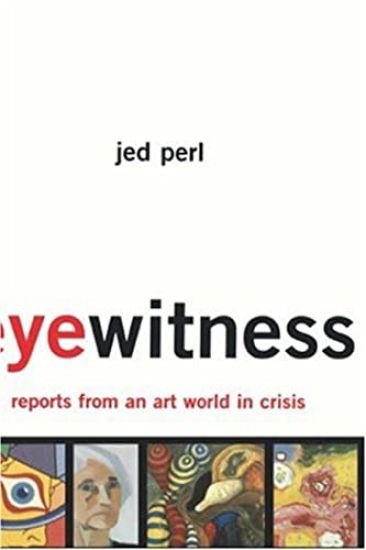
Eyewitness: Reports From An Art World In Crisis
As art critic for The New Republic , Jed Perl is renowned for combining a passion for art and a skepticism about the current art establishment with an ability to write about art in the context of our larger culture. In this collection of essays, including two written especially for this book, he delivers a brilliant mixture of first-rate art criticism and politically informed insight into the true workings of the American art world.Perl offers incisive analysis into the marketing mentality that dominates today's museums, the poverty of academic criticism, and the changing expectations of the gallery-going public. He re-evaluates the old masters, and turns an avid, unprejudiced eye on the works of his contemporaries. He laments the collapse of a gallery culture that once allowed artists to develop slowly, and argues for a radical reassessment of the way art is presented to,and is viewed by,the public.