Kirjojen hintavertailu. Mukana 12 595 353 kirjaa ja 12 kauppaa.
Kirjailija
Jeff Bennett
Kirjat ja teokset yhdessä paikassa: 9 kirjaa, julkaisuja vuosilta 1996-2019, suosituimpien joukossa Environmental Management and the Competitiveness of Nature-Based Tourism Destinations. Vertaile teosten hintoja ja tarkista saatavuus suomalaisista kirjakaupoista.
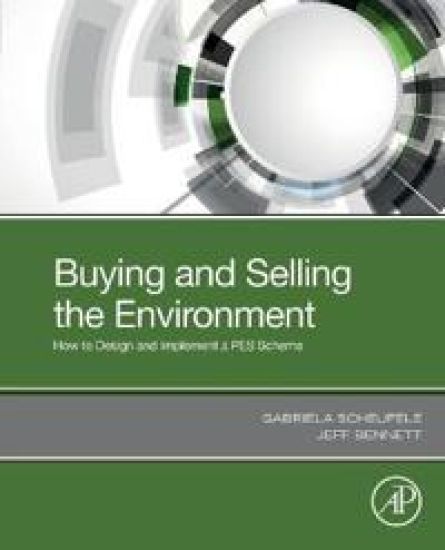
Buying and Selling the Environment: How to Design and Implement a PES Scheme provides a guide to the design and implementation of PES schemes that ‘mimic’ market processes, including three key elements: the estimation of the demand for environmental services, an understanding of the costs of supply, and how to predict the productivity of actions taken. This book will act as an instructional manual for practitioners, policymakers and their advisors in government and non-government organizations. Users will find a step-by-step demonstration based on firsthand experiences gained through a PES application at two case study sites. Finally, the book presents research in applied economics and bio-physical modeling.
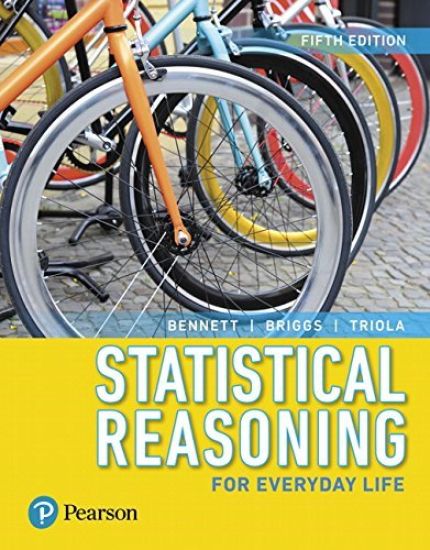
For courses in Statistical Literacy A qualitative approach teaches students how to reason using statistics Understanding the core ideas behind statistics is crucial to everyday success in the modern world. Statistical Reasoning for Everyday Life is designed to teach these core ideas through real-life examples so that students are able to understand the statistics needed in their college courses, reason with statistical information in their careers, and to evaluate and make everyday decisions using statistics. The authors approach each concept qualitatively, using computation techniques only to enhance understanding and build on ideas step-by-step, working up to real examples and complex case studies. The Fifth Edition has been revised to update many exercises, examples, and case studies to engage today’s students with the latest data and relevant topics. Also available with MyLab Statistics MyLab™ Statistics is an online homework, tutorial, and assessment program designed to work with this text to engage students and improve results. Within its structured environment, students practice what they learn, test their understanding, and pursue a personalized study plan that helps them absorb course material and understand difficult concepts. NOTE: You are purchasing a standalone product; MyLab Statistics does not come packaged with this content. If you would like to purchase both the physical text and MyLab Statistics, search for: 0134701364 / 9780134701363 Statistical Reasoning for Everyday Life Plus NEW MyLab Statistics with Pearson eText -- Access Card Package, 5/e Package consists of: 0134494040 / 9780134494043 Statistical Reasoning for Everyday Life0134678524 / 9780134678528 MyLab Statistics with Pearson eText -- Standalone Access Card -- for Statistical Reasoning for Everyday Life0134678559 / 9780134678559 MyLab Statistics-- Royalty Bearing Content -- for Statistical Reasoning for Everyday Life MyLab Statistics should only be purchased when required by an instructor.
NOTE: Before purchasing, check with your instructor to ensure you select the correct ISBN. Several versions of Pearson's MyLab™ products exist for each title, and registrations are not transferable. To register for and use Pearson's MyLab products, you may also need a Course ID, which your instructor will provide. Used books, rentals, and purchases made outside of Pearson If purchasing or renting from companies other than Pearson, the access codes for Pearson's MyLab products may not be included, may be incorrect, or may be previously redeemed. Check with the seller before completing your purchase. For courses in Statistical Literacy This package includes MyLab Statistics. A qualitative approach teaches students how to reason using statistics Understanding the core ideas behind statistics is crucial to everyday success in the modern world. Statistical Reasoning for Everyday Life is designed to teach these core ideas through real-life examples so that students are able to understand the statistics needed in their college courses, reason with statistical information in their careers, and to evaluate and make everyday decisions using statistics. The authors approach each concept qualitatively, using computation techniques only to enhance understanding and build on ideas step-by-step, working up to real examples and complex case studies. The Fifth Edition has been revised to update many exercises, examples, and case studies to engage today’s students with the latest data and relevant topics. Personalize learning with MyLab Statistics MyLab™ Statistics is an online homework, tutorial, and assessment program designed to work with this text to engage students and improve results. Within its structured environment, students practice what they learn, test their understanding, and pursue a personalized study plan that helps them absorb course material and understand difficult concepts. NOTE: This package includes a MyLab Statistics access kit created specifically for Bennett/Briggs/Triola, Statistical Reasoning for Everyday Life 5/e. This title-specific access kit provides access to the Bennett/Briggs/Triola, Statistical Reasoning for Everyday Life 5/e accompanying MyLab course ONLY. 0134701364 / 9780134701363 Statistical Reasoning for Everyday Life Plus NEW MyLab Statistics with Pearson eText -- Access Card Package, 5/e Package consists of: 0134494040 / 9780134494043 Statistical Reasoning for Everyday Life0134678524 / 9780134678528 MyLab Statistics with Pearson eText -- Standalone Access Card -- for Statistical Reasoning for Everyday Life0134678559 / 9780134678559 MyLab Statistics -- Royalty Bearing Content -- for Statistical Reasoning for Everyday Life
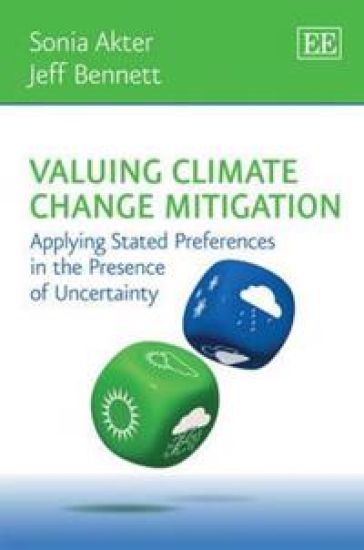
This enriching book presents a holistic overview of climate change uncertainty and offers a number of pathways that could be used to account for such uncertainties in the stated preference valuation research. It shows that uncertainty plays an important role in determining the values of climate change mitigation benefits and as the authors say 'If this uncertainty remains unaccounted for, there is a potential danger that the estimated economic values will misrepresent social preferences for public policy interventions to manage environmental externalities'. Valuing Climate Change Mitigation discusses the role of uncertainty in valuing the benefits of climate change mitigation policies using contingent valuation and choice experiments techniques. It treats climate change using three dimensions of uncertainty: scenario, policy and preference. Conceptual frameworks are advanced to account simultaneously for these various dimensions of uncertainty. The authors then explore the impact of introducing these uncertainties into benefit estimates for the Australian Carbon Pollutions Reduction Scheme. The authors present frameworks to account for multiple uncertainty in environmental decision analysis that will prove invaluable for academics and students in the fields of environmental economics and management. Policymakers will also gain invaluable methodological insight.
This pathbreaking study illustrates and enhances the potential of cost-benefit analysis as a tool for decision-making. Advancing the incorporation of equity preferences in policy analysis, the authors demonstrate the application of choice modeling to the estimation of distributional weights suitable for inclusion in a cost-benefit analytical framework. A platform for discussion of the challenges and opportunities of this approach is presented in the form of a detailed case study designed to estimate community preferences for different intergenerational distributions. While the case study is focused on natural resource management and environmental policy, the conceptual and methodological advances illustrated by the authors are relevant and applicable to a wider array of policy deliberations. This book will prove a challenging and thought-provoking read for academics, students and policy makers with an interest in environmental issues and/or public sector economics.
The management of natural resources located on private lands often involves a perceived conflict between the mix of private and public benefits they produce. This book is focused on one such issue: the design of policy relating to the production of wetland outputs in order to maximize private and social welfare. The authors first address the welfare impacts of alternative wetland management strategies on the wider community. They then concentrate on privately owned wetlands in Australia and find that they generate substantial public benefits. Furthermore, they are able to identify cost-effective avenues to increase these benefits. The authors then turn their attention to the integration of policy costs in decision-making and the implications for wetland policy. They highlight the fact that policy development and implementation is a costly process and in some cases can even outweigh the net benefits available from increasing wetland production. This important new book develops theory and policy for the provision of public goods from private land, and applies this to case studies of wetlands in Australia. It will be of great interest and practical value to environmental economists and policy makers working on the theory and application of economics to policy development. It will also appeal to environmental NGOs concerned about the effective production of environmental goods.
Environmental management, either voluntary or imposed, can add to the costs of nature-based tourism businesses. Such costs can make tourism destinations less competitive, but the same activities can also enhance competitiveness by increasing demand. The aim of this book is to provide an assessment of the relative importance of these two opposing effects in the context of a case study of nature-based tourism in Tropical North Queensland, Australia.The authors estimate the demand side effects using discrete choice modelling to determine the impact of changing environmental conditions on the market share of a variety of tourist destinations. The costs of environmental management are also considered by analysing firm level data. The effects are then integrated using a model of the tourism market that is formulated around nature-based tourism regions. The results show that the competitiveness of a region is enhanced through its environmental management and highlight the importance of self-regulation in the industry when the environment is a common property resource. The authors also draw some insightful conclusions regarding business strategies that would aid the profitability of firms and regions supplying nature-based tourism products. The conceptual foundations developed in the book are not restricted by national boundaries and the empirical analyses can be extended to other nature-based tourism destinations and to other relevant policy issues. As such, this book will have a broad appeal amongst environmentalists, scholars of tourism economics and management, and policymakers concerned with the regulation of the tourism industry and its effect on the environment.
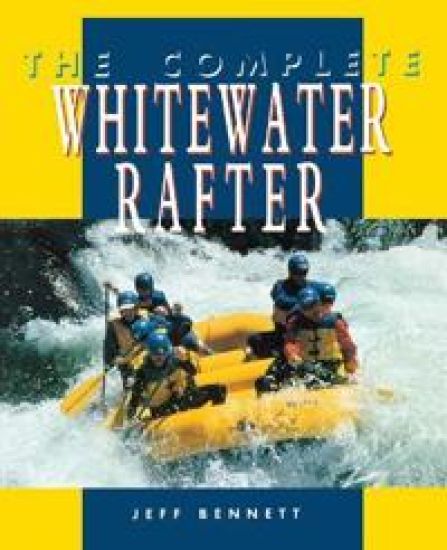
This is the manual endorsed by professional guides, instructors, and recreational river runners everywhere. With comprehensive step-by-step coverage starting with the first run, it includes tips from top guides, outfitters, and instructors, plus the most complete guide to Class V rafting techniques ever assembled. This is the completely revised and updated successor to Bennett's best-selling manual, Rafting!.