Kirjojen hintavertailu. Mukana 12 595 353 kirjaa ja 12 kauppaa.
Kirjailija
Jeff McSwain
Kirjat ja teokset yhdessä paikassa: 8 kirjaa, julkaisuja vuosilta 2010-2024, suosituimpien joukossa The Goodness of Judgment. Vertaile teosten hintoja ja tarkista saatavuus suomalaisista kirjakaupoista.
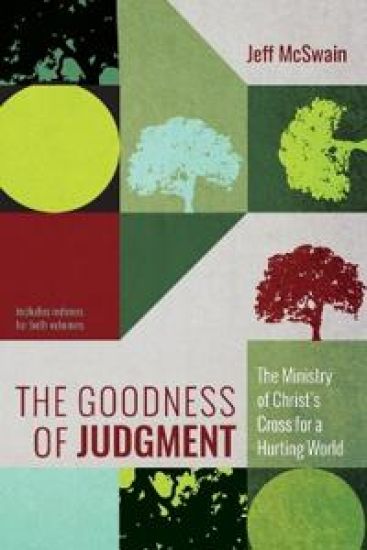
In this volume McSwain continues to deploy Karl Barth, Julian of Norwich, Athanasius, James Cone, and dozens of others to buttress his claim about human duplicity and the Easter asymmetry which allows us to properly interpret our lives by the gospel. Specifically, the focus is on Christ's cross which provides the radical discontinuity (judgment) needed to preserve the continuity of God's good creation. In resurrection light we see the inner connection of re-creation to creation, an atonement that disentangles good from evil, righteousness from sin, and life from death. Even though the perfect clarity of this liberating separation is reserved for judgment day, this same judgment of grace frees us to live now as "eschatological activists" in the Liberator's way of justice and peace. In view of the cross, the Spirit empowers us to live in the hidden truth of who Christ is and who we have always been in Christ, as God's beloved in the Trinitarian communion. McSwain's cosmic vision pictures all people sharing in Christ's sufferings and also in his glory. Thus, the reconciled human community genuinely participates "as one" in Christ's victory over sin, death, and the devil.
In this volume McSwain continues to deploy Karl Barth, Julian of Norwich, Athanasius, James Cone, and dozens of others to buttress his claim about human duplicity and the Easter asymmetry which allows us to properly interpret our lives by the gospel. Specifically, the focus is on Christ's cross which provides the radical discontinuity (judgment) needed to preserve the continuity of God's good creation. In resurrection light we see the inner connection of re-creation to creation, an atonement that disentangles good from evil, righteousness from sin, and life from death. Even though the perfect clarity of this liberating separation is reserved for judgment day, this same judgment of grace frees us to live now as "eschatological activists" in the Liberator's way of justice and peace. In view of the cross, the Spirit empowers us to live in the hidden truth of who Christ is and who we have always been in Christ, as God's beloved in the Trinitarian communion. McSwain's cosmic vision pictures all people sharing in Christ's sufferings and also in his glory. Thus, the reconciled human community genuinely participates "as one" in Christ's victory over sin, death, and the devil.
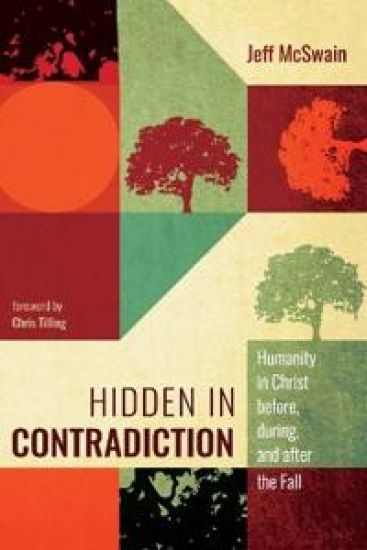
Does God's grace grab you and stir you to purposeful, Spirit-filled living? Or is the gospel that you hear and preach big on belief and short on embodiment? Do you see a need for change, whether personal, ecclesial, or social, that transcends "us" (righteous) vs. "them" (wicked) polarizations? Beginning with every person's participation in Christ as a keystone to creation, Jeff McSwain introduces the vibrant reality of Trinitarian community and shows us the dangers of losing sight of the belovedness we share as humans hidden with Christ in God. Avoiding simplistic categories, McSwain exalts the total goodness of every person in this world (by virtue of creation in Christ) while also acknowledging the simultaneous contradiction--the total depravity of every person (by virtue of the fall). If ignoring our human duplicity contributes to relational fractures at every level, McSwain's dimensional view of human agency urges us to embrace the redemptive truth of our identity in Christ and to refuse our false, destructive selves that have been crucified with Christ. Filled with scriptural exegesis and practical illustrations that pastors and teachers will especially appreciate, this project is a refreshing application of Christology to anthropology and everyday life--an inspiring work of systematic theology aimed at systematic change.
Does God's grace grab you and stir you to purposeful, Spirit-filled living? Or is the gospel that you hear and preach big on belief and short on embodiment? Do you see a need for change, whether personal, ecclesial, or social, that transcends "us" (righteous) vs. "them" (wicked) polarizations? Beginning with every person's participation in Christ as a keystone to creation, Jeff McSwain introduces the vibrant reality of Trinitarian community and shows us the dangers of losing sight of the belovedness we share as humans hidden with Christ in God. Avoiding simplistic categories, McSwain exalts the total goodness of every person in this world (by virtue of creation in Christ) while also acknowledging the simultaneous contradiction--the total depravity of every person (by virtue of the fall). If ignoring our human duplicity contributes to relational fractures at every level, McSwain's dimensional view of human agency urges us to embrace the redemptive truth of our identity in Christ and to refuse our false, destructive selves that have been crucified with Christ. Filled with scriptural exegesis and practical illustrations that pastors and teachers will especially appreciate, this project is a refreshing application of Christology to anthropology and everyday life--an inspiring work of systematic theology aimed at systematic change.
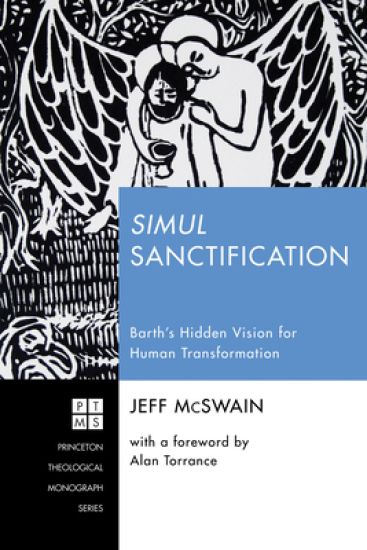
Why do we see so much fruitful good in unbelievers and so much evil in believers? What could it mean for a believer that the old is ""gone,"" especially when it doesn't feel that way? What does it mean for humans who are simul iustus et peccator (simultaneously righteous and sinner) to be transformed in Christ and by his Spirit? We typically think of sanctification as pertaining to humans being conformed to Jesus, but what could it mean when Jesus speaks of himself as being sanctified for our sakes (John 17:19)? Jeff McSwain mines the theology of Karl Barth to engage such questions. In looking ""through the simul,"" he concludes with Barth that universal human transformation is a reality before it is a possibility, and that, despite our contradictory state, we may live Spirit-filled lives as we participate in Christ's true humanity that determines ours--a humanity which never gets old. ""In an original contribution, McSwain succeeds in demonstrating how Barth's version of the Lutheran 'simul iustus et peccator' is radicalized by its extension to the incarnate Son and thereby to the race as a whole, transferring the pattern of Chalcedonian Christology (the so-called 'two natures' doctrine) into the field of anthropology. The result is a significant recasting of our ways of thinking about numerous core doctrines, including creation, atonement and incarnation as well as redemption and fall."" --Trevor Hart, author of Regarding Karl Barth ""I have literally been waiting for years for this book--a book that explores in depth what the sanctification of Jesus Christ means for the sanctification of humanity. In this excellent, accessible, and innovative work, Jeff McSwain carefully examines how Karl Barth reappropriates the classic doctrine simul iustus et peccator while also creatively imagining ways Barth's understanding could enliven the life and ministry of the church today. This is a beautiful contribution to the growing theological literature on sanctification and discipleship."" --Kristen Deede Johnson, award winning author of The Justice Calling ""McSwain argues persuasively that the simul . . . is a powerful key to Barth's theology as a whole. Breaking new ground, yet firmly committed to all the key truths championed by Barth, McSwain's theological insightfulness is evident on every page. An impressively comprehensive knowledge of Barth's Dogmatics is also on display, along with a truly Barthian passion for the truth and the importance of the gospel . . . McSwain's thesis is both fascinating and challenging. It will richly reward careful engagement."" --Douglas Campbell, Duke University ""There's a remarkable single-mindedness about Jeff McSwain, a theological determination that yields insights impossible to ignore. Here he presses us to read Barth's doctrine of sanctification through Luther's simul iustus et peccator, and in the process uncovers a wealth of connections and resonances with immense practical consequences for the life of the church. Provocative and game-changing, Barth--and the gospel --will never sound quite the same again."" --Jeremy Begbie, Duke University ""Birthed in the fires of real world missional controversy, this book crackles with the urgency of the gospel. Drawing from the deep well of Barth's Church Dogmatics, Jeff McSwain offers a refreshing vision of Christian life freed to live wholly in this world by seeking the true life hidden in Christ."" --Brian Brock, University of Aberdeen ""McSwain casts his net wide, but discerningly, fastidiously mirroring Barth's understanding of tradition and the Bible. Simul Sanctification: Jesus Christ incarnate is at once the Righteous One of God, and the One who assumes sinful human flesh. With echoes of Gregory, what McSwain calls 'Chalcedonian anthropology' adds to the corpus of Barthian studies and provides enhanced perspective on Barth's theological actualism: the sanctified life of a singular Jewish human of humble origins who re-presents in every hum
Why do we see so much fruitful good in unbelievers and so much evil in believers? What could it mean for a believer that the old is ""gone,"" especially when it doesn't feel that way? What does it mean for humans who are simul iustus et peccator (simultaneously righteous and sinner) to be transformed in Christ and by his Spirit? We typically think of sanctification as pertaining to humans being conformed to Jesus, but what could it mean when Jesus speaks of himself as being sanctified for our sakes (John 17:19)? Jeff McSwain mines the theology of Karl Barth to engage such questions. In looking ""through the simul,"" he concludes with Barth that universal human transformation is a reality before it is a possibility, and that, despite our contradictory state, we may live Spirit-filled lives as we participate in Christ's true humanity that determines ours--a humanity which never gets old. ""In an original contribution, McSwain succeeds in demonstrating how Barth's version of the Lutheran 'simul iustus et peccator' is radicalized by its extension to the incarnate Son and thereby to the race as a whole, transferring the pattern of Chalcedonian Christology (the so-called 'two natures' doctrine) into the field of anthropology. The result is a significant recasting of our ways of thinking about numerous core doctrines, including creation, atonement and incarnation as well as redemption and fall."" --Trevor Hart, author of Regarding Karl Barth ""I have literally been waiting for years for this book--a book that explores in depth what the sanctification of Jesus Christ means for the sanctification of humanity. In this excellent, accessible, and innovative work, Jeff McSwain carefully examines how Karl Barth reappropriates the classic doctrine simul iustus et peccator while also creatively imagining ways Barth's understanding could enliven the life and ministry of the church today. This is a beautiful contribution to the growing theological literature on sanctification and discipleship."" --Kristen Deede Johnson, award winning author of The Justice Calling ""McSwain argues persuasively that the simul . . . is a powerful key to Barth's theology as a whole. Breaking new ground, yet firmly committed to all the key truths championed by Barth, McSwain's theological insightfulness is evident on every page. An impressively comprehensive knowledge of Barth's Dogmatics is also on display, along with a truly Barthian passion for the truth and the importance of the gospel . . . McSwain's thesis is both fascinating and challenging. It will richly reward careful engagement."" --Douglas Campbell, Duke University ""There's a remarkable single-mindedness about Jeff McSwain, a theological determination that yields insights impossible to ignore. Here he presses us to read Barth's doctrine of sanctification through Luther's simul iustus et peccator, and in the process uncovers a wealth of connections and resonances with immense practical consequences for the life of the church. Provocative and game-changing, Barth--and the gospel --will never sound quite the same again."" --Jeremy Begbie, Duke University ""Birthed in the fires of real world missional controversy, this book crackles with the urgency of the gospel. Drawing from the deep well of Barth's Church Dogmatics, Jeff McSwain offers a refreshing vision of Christian life freed to live wholly in this world by seeking the true life hidden in Christ."" --Brian Brock, University of Aberdeen ""McSwain casts his net wide, but discerningly, fastidiously mirroring Barth's understanding of tradition and the Bible. Simul Sanctification: Jesus Christ incarnate is at once the Righteous One of God, and the One who assumes sinful human flesh. With echoes of Gregory, what McSwain calls 'Chalcedonian anthropology' adds to the corpus of Barthian studies and provides enhanced perspective on Barth's theological actualism: the sanctified life of a singular Jewish human of humble origins who re-presents in every hum