

Kirjailija
Jeff Pepper
Kirjat ja teokset yhdessä paikassa: 109 kirjaa, julkaisuja vuosilta 2010-2026, suosituimpien joukossa Great Peng and His Brothers. Vertaile teosten hintoja ja tarkista saatavuus suomalaisista kirjakaupoista.
109 kirjaa
Kirjojen julkaisuhaarukka 2010-2026.

A long, long time ago, in a magical version of ancient China, an island called Aolai stood in the sea like a king in his palace. In the center of the island was Flower Fruit Mountain, and at the very top of the mountain was a large stone, as tall as six men. The stone was made pregnant by heaven and earth, and one day the wind blew over the egg and it cracked open. A little stone monkey emerged. He opened his eyes, and two beams of light shot up to heaven. The Jade Emperor on his throne saw the beams of light but he did not interfere. The little stone monkey grew up to be Sun Wukong, the Handsome Monkey King.Journey to the West is probably the most famous and best-loved novel in China and is considered one of the four great classical novels of Chinese literature. The original Chinese novel written by Wu Chen'en in the 16th century is over a half million Chinese characters long, and a direct English translation runs over 2,000 pages and has a very large vocabulary. This book is not a literal translation of the Journey to the West. Rather, it's a retelling of the story in easy-to-read English. Unlike the other full-text translations, this is a graded reader that uses a restricted vocabulary, simpler sentence structure, and fewer proper nouns. The chapters start off quite easy and gradually increase in complexity. For example the first chapter is written at a grade level of 2.6 (using the Flesh-Kincaid scale), while the final chapter is written at a grade level of 5.1.

During one of my business trips to Japan I was treated to a big dinner event at a fancy Tokyo restaurant. A dozen Japanese executives were there. At some point, after several rounds of drinks, I asked the senior Sumitomo executive if he could tell a joke. The room grew quiet. The executive stood up, whiskey glass in hand, and said, "In my youth I had time and health but I had no money. In my middle age I had health and money but I had no time. Now I am old, I have money and time but I have no health."This little joke has given me a neat way to organize all the little episodes that make up the story of my life. In Part 1, the first 25 years of my life, I grew up in the counterculture of the 1960's, searching for truth and trying to have as much fun as possible. In Part 2, the next 40 years, I was a serial entrepreneur working crazy hours and building two very successful tech companies. And now I'm in Part 3, where I have enough time and remaining health to do things like writing this book.It's all here. From out-of-body experiences to boardroom battles, from cross country hitchhiking to developing one of the first world's spreadsheet programs, from Ouija boards to road racing to high-stakes business drama. And from West African drumming to Chinese books, adventures in India, and mountain climbing."Sun and shower, wind and rain, in and out the window like a moth before a flame."This is a memoir by Jeff Pepper. He has founded and led several successful software companies, including one that became publicly traded. He's currently President and CEO of Imagin8 Press and Tunescribers.com. Jeff has authored over 40 books and was awarded three U.S. patents.

The weary monk Tangseng and his three troublemaking disciples have now been traveling for over fourteen years. They arrive at a city near the Indian border just in time for the annual Lantern Festival, when three Buddhas come down from the sky and gather up large quantities of special lamp oil. Unfortunately these are not true Buddhas but monsters. They grab Tangseng and spirit him away to their cave. The monkey king Sun Wukong must get help from four wood bird stars and a dragon king to rescue his master.Later, the travelers arrive at a monastery where a strange girl is being held in a locked cell for her own protection. She claims to be the daughter of the King of India, but if so, who is the girl living in the king's palace? The travelers investigate and learn the truth, but not before Tangseng is nearly forced to marry a beautiful demon.This is the 30th book in the best-selling Journey to the West series of stories for students learning to read Chinese. It is based on the events in Chapters 91 through 95 of the epic 16th century novel of the same name by Wu Chen'en. That novel was inspired by an actual journey by the Buddhist monk Tangseng, who traveled from Chang'an (today's Xi'an) westward to India in 629 A.D. and returned seventeen years later with priceless knowledge and spiritual texts. Over the course of the book the four travelers face the 81 trials that Tangseng had to endure to attain Buddhahood.The first 30 books in the Journey to the West series have used a total of about 2,000 different Chinese words, but only 1,065 are used in this book. We introduce 31 new words for the first time, and each one is defined on the page where it is first used. The book uses Traditional Chinese characters and includes pinyin, an English translation, and a full glossary. A free audiobook is available at www.imagin8press.com, and on YouTube's Imagin8 Press channel.

The monk Tangseng and his three disciples are nearing the end of their epic journey. They approach Thunderclap Monastery in India, the home of Tathagata Buddha. But Tangseng's ordeals are not over yet. First, the travelers are mistaken for murderers and thieves and must talk their way out of jail with some help from Sun Wukong's body-changing magic. When they finally arrive at the home of the Buddha, Tangseng asks for the holy scriptures which he plans to bring back to China. But it turns out that he has only endured eighty trials, one fewer than the 81 that are required of him. And bringing back the Buddhist scriptures turns out to be much more difficult than the pilgrims expected.This is the 31st and final book in the best-selling Journey to the West series of stories for students learning to read Chinese. It is based on the events in Chapters 96 through 100 of the epic 16th century novel of the same name by Wu Chen'en. That novel was inspired by an actual journey by the Buddhist monk Tangseng, who traveled from Chang'an (today's Xi'an) westward to India in 629 A.D. and returned seventeen years later with priceless knowledge and spiritual texts. Over the course of the book the four travelers face the 81 trials that Tangseng had to endure to attain Buddhahood.The entire Journey to the West story has been told using a total of about 2,000 different Chinese words, but only 1,112 are used in this book. We introduce 25 new words for the first time, and each one is defined on the page where it is first used. The book uses Traditional Chinese characters and includes pinyin, an English translation, and a full glossary. A free audiobook is available at www.imagin8press.com, and on YouTube's Imagin8 Press channel.

The Buddhist monk and his three disciples finally approach the western border of China. They find themselves in a kingdom where it hasn't rained for three years because the prefect has angered the King of Heaven. Sun Wukong brings rain and, of course, trouble. Continuing their journey, they meet a prince and his three sons. The sons want to learn how to use the disciples' magic weapons, but one night the magic weapons are stolen by a nearby lion demon. When the disciples go to retrieve them, they encounter an entire family of lion demons, including a nine-headed lion with vast powers.This is the 29th book in the best-selling Journey to the West series of stories for students learning to read Chinese. It is based on the events in Chapters 87 through 90 of the epic 16th century novel of the same name by Wu Chen'en. That novel was inspired by an actual journey by the Buddhist monk Tangseng, who traveled from Chang'an westward to India in 629 A.D. and returned seventeen years later with priceless knowledge and spiritual texts. Over the course of the book the four travelers face the 81 tribulations that Tangseng had to endure to attain Buddhahood.Books 1 through 29 in the Journey to the West series have used a total of about 2,000 different Chinese words, but only 919 words are used in this book. We introduce 23 new words for the first time in this book, and each one is defined on the page where it is first used. The book uses Traditional Chinese characters and includes pinyin, an English translation, and a full glossary. A free audiobook is available on YouTube's Imagin8 Press channel and on www.imagin8press.com.
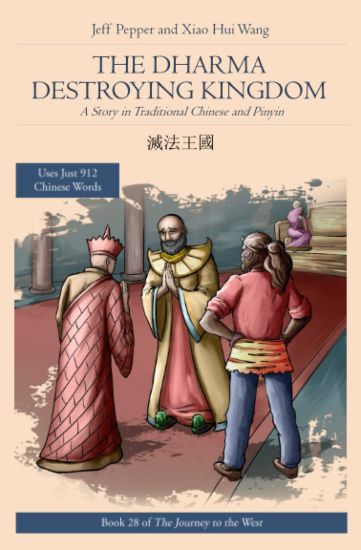
Ignoring a warning from the Bodhisattva Guanyin, Tangseng and his three disciples enter a city whose king has vowed to kill 10,000 Buddhist monks and has already finished off 9,996. The travelers must avoid being killed and figure out how to show the king the error of his ways. Later, the Monkey King Sun Wukong flies over a mountain and sees a large demon with 30 little demons, all blowing fog from their mouths. This leads to a great battle where the demons use the "Dividing the Petals of the Plum Flower" trick to confuse the disciples and kidnap Tangseng.This is the 28th book in the best-selling Journey to the West series of stories for students learning to read Traditional Chinese. It is based on the events in Chapters 84 through 86 of the epic 16th century novel of the same name by Wu Chen'en. That novel was inspired by an actual journey by the Buddhist monk Tangseng, who traveled from Chang'an westward to India in 629 A.D. and returned seventeen years later with priceless knowledge and spiritual texts. Over the course of the book the four travelers face the 81 tribulations that Tangseng had to endure to attain Buddhahood.Books 1 through 28 in the Journey to the West series have used a total of about 2,000 different Chinese words, but only 912 words are used in this book. We introduce 29 new words for the first time in this book, and each one is defined on the page where it is first used. The book uses Traditional Chinese characters and includes pinyin, an English translation, and a full glossary. A free audiobook is available on YouTube's Imagin8 Press channel and on www.imagin8press.com.

In a dark forest the monk Tangseng comes upon a beautiful young woman tied to a tree and half-buried in the ground. The monk frees her, not realizing she is a deadly mouse demon. Later they arrive at a nearby monastery where she devours some monks and tries to force Tangseng to marry her. Sun Wukong learns the truth about her, lodges a complaint with the great Jade Emperor in heaven, and battles the mouse demon to save his master.This is the 27th book in the best-selling Journey to the West series of stories for students learning to read Traditional Chinese. It is based on the events in Chapters 80 through 83 of the epic 16th century novel of the same name by Wu Chen'en. That novel was inspired by an actual journey by the Buddhist monk Tangseng, who traveled from Chang'an westward to India in 629 A.D. and returned seventeen years later with priceless knowledge and spiritual texts. Over the course of the book the four travelers face the 81 tribulations that Tangseng had to endure to attain Buddhahood.All 27 books in the Journey to the West series have used a total of about 2000 different Chinese words, but only 904 words are used in this book. We introduce 23 words for the first time in this book, and each one is defined on the page where it is first used. The book uses Traditional Chinese characters and includes pinyin, an English translation, and a full glossary. A free audiobook is available on YouTube's Imagin8 Press channel and on www.imagin8press.com.

Tangseng and his disciples arrive at the capital of Bhiksu Kingdom and learn that it's been renamed "Boytown" because over a thousand little boys have been locked in cages in front of their homes. When they learn what fate awaits these children, Sun Wukong arranges to get them safely out of the city. Then he and the others unravel a plot devised by two demons who, disguised as a Daoist master and his lovely daughter, have beguiled the king. They must defeat the demon, release the king from his spell, and save the children.This is the 26th book in the best-selling Journey to the West series of stories for students learning to read Simplified Chinese. It is based on the events in Chapters 78 and 79 of the epic 16th century novel of the same name by Wu Chen'en. That novel was inspired by an actual journey by the Buddhist monk Tangseng, who traveled from Chang'an westward to India in 629 A.D. and returned seventeen years later with priceless knowledge and spiritual texts. Over the course of the book the four travelers face the 81 tribulations that Tangseng had to endure to attain Buddhahood.All 26 books in the Journey to the West series have used a total of about 2000 different Chinese words, but only 839 words are used in this book. We introduce 16 words for the first time in this book, and each one is defined on the page where it is first used. The book uses Traditional Chinese characters and includes pinyin, an English translation, and a full glossary. A free audiobook is available on YouTube's Imagin8 Press channel and on www.imagin8press.com.

The Buddhist monk Tangseng goes alone to beg some food at the home of some beautiful and seemingly gentle young women. He soon finds out that they are far from gentle. Trapped in their web, he waits to be cooked and eaten while his three disciples attempt to rescue him by confronting the spider demons, a horde of biting insects, and a mysterious Daoist alchemist.This is the 24th book in the best-selling Journey to the West series of stories for students learning to read Chinese. It is based on the events in Chapters 72 and 73 of the epic 16th century novel of the same name by Wu Chen'en. That novel was inspired by an actual journey by the Buddhist monk Tangseng, who traveled from Chang'an westward to India in 629 A.D. and returned seventeen years later with priceless knowledge and spiritual texts. Over the course of the book the four travelers face the 81 tribulations that Tangseng had to endure to attain Buddhahood.The first 24 books in the Journey to the West series have used a total of about 2000 different Chinese words, but only 791 words are used in this book. All new words are defined on the page where they are first used. The book uses Traditional Chinese characters and includes pinyin, an English translation, and a full glossary. A free audiobook is available on YouTube's Imagin8 Press channel and on www.imagin8press.com.

As Tangseng and his three disciples continue on their westward journey, they meet the king of Scarlet Purple Kingdom. The king is gravely ill, sick with grief over the loss of one of his wives who was abducted by a nearby demon king. Sun Wukong pretends to be a doctor and attempts to cure the king with a treatment not found in any medical textbook. Then he goes to rescue the imprisoned queen, leading to an earth-shaking confrontation with the demon king.This is the 23rd book in the best-selling Journey to the West series of stories for students learning to read Chinese. It is based on the events in Chapters 68 through 71 of the epic 16th century novel of the same name by Wu Chen'en. That novel was inspired by an actual journey by the Buddhist monk Tangseng, who traveled from Chang'an westward to India in 629 A.D. and returned seventeen years later with priceless knowledge and spiritual texts. Over the course of the book the four travelers face the 81 tribulations that Tangseng had to endure to attain Buddhahood.The first 23 books in the Journey to the West series have used a total of about 2000 different Chinese words, but only 916 are used in this book. All new words are defined on the page where they are first used. The book uses Traditional Chinese characters and includes pinyin, an English translation, and a full glossary. A free audiobook is available on YouTube's Imagin8 Press channel and on www.imagin8press.com.
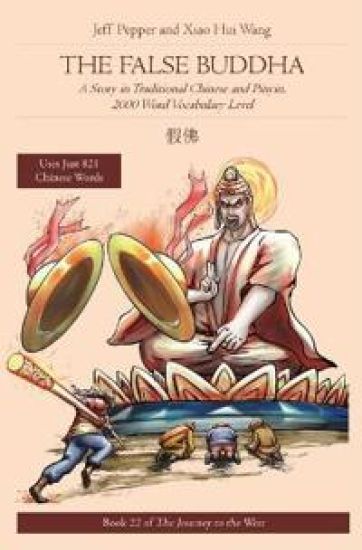
The Buddhist monk Tangseng sees a sign, "Small Thunderclap Monastery," and foolishly thinks they have reached their goal. His disciple Sun Wukong sees through the illusion, but the false Buddha in the monastery traps him between two gold cymbals and plans to kill his companions. The ensuing struggle involves a golden dragon, a turtle, a snake, twenty eight constellations, and a mysterious being from the highest heaven. Escaping that, the travelers find their path blocked by a giant snake and a huge pile of slimy and foul-smelling rotting fruit.This is the 22nd book in the best-selling Journey to the West series of stories for students learning to read Chinese. It is based on the events in Chapters 65 through 67 of the epic 16th century novel of the same name by Wu Chen'en. That novel was inspired by an actual journey by the Buddhist monk Tangseng, who traveled from Chang'an westward to India in 629 A.D. and returned seventeen years later with priceless knowledge and spiritual texts. Over the course of the book the four travelers face the 81 tribulations that Tangseng had to endure to attain Buddhahood.The first 22 books in the Journey to the West series have used a total of about 2000 different Chinese words, but only 821 are used in this book. All new words are defined on the page where they are first used. The book uses Traditional Chinese characters and includes pinyin, an English translation, and a full glossary. A free audiobook is available on YouTube's Imagin8 Press channel and on www.imagin8press.com.

An evil rainstorm of blood covers a city and defiles a beautiful Buddhist monastery. Three years later the monk Tangseng and his three disciples arrive at the city. They explore the monastery and discover two fish-demons drinking wine and gambling in the top floor of the monastery's pagoda. This leads to an epic underwater confrontation with their boss, a powerful dragon king. And later, Tangseng is trapped in a vast field of brambles by a group of poetry loving but extremely dangerous nature spirits.This is the 21st book in the best-selling Journey to the West series of stories for students learning to read Chinese. It is based on the events in Chapters 62 through 64 of the epic 16th century novel of the same name by Wu Chen'en. That novel was inspired by an actual journey by the Buddhist monk Tangseng, who traveled from Chang'an westward to India in 629 A.D. and returned seventeen years later with priceless knowledge and spiritual texts. Over the course of the book the four travelers face the 81 tribulations that Tangseng had to endure to attain Buddhahood.The first 21 books in the Journey to the West series have used a total of about 1800 different Chinese words, but only 897 are used in this book. All new words are defined on the page where they are first used. The book uses Traditional Chinese characters and includes pinyin, an English translation, and a full glossary. A free audiobook is available on YouTube's Imagin8 Press channel and on www.imagin8press.com.

As the monk Tangseng and his three disciples travel west, they find their path blocked by a huge blazing mountain eight hundred miles wide. Tangseng refuses to go around it, so his senior disciple, the monkey king Sun Wukong, must discover why the mountain is on fire and how they can cross it. He soon learns that he himself caused the mountain to ignite five centuries earlier. But finding out how to extinguish the blaze is a far more difficult and dangerous task...This is the 20th book in the best-selling Journey to the West series of stories for students learning to read Chinese. It is based on the events in Chapters 59 through 61 of the epic 16th century novel of the same name by Wu Chen'en. That novel was inspired by an actual journey by the Buddhist monk Tangseng, who traveled from Chang'an westward to India in 629 A.D. and returned seventeen years later with priceless knowledge and spiritual texts. Over the course of the book Tangseng and his companions face the 81 tribulations that Tangseng had to endure to attain Buddhahood.The first 20 books in the Journey to the West series have used a total of about 1800 different Chinese words, but only 834 are used in this book. All new words are defined on the page where they are first used. The book uses Traditional Chinese characters and includes pinyin, an English translation, and a full glossary. A free audiobook is available on YouTube's Imagin8 Press channel and on www.imagin8press.com.
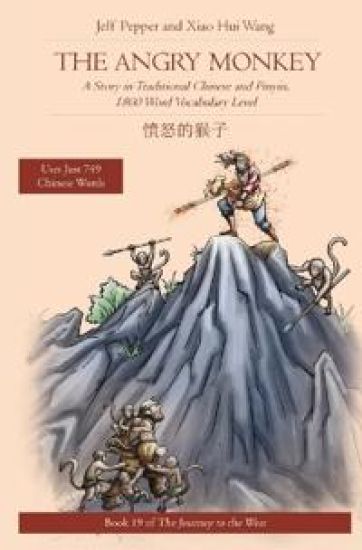
The monk Tangseng has harsh words for his eldest disciple, the monkey king Sun Wukong. His pride hurt, Sun Wukong complains to the Bodhisattva Guanyin and asks to be released from his service to the monk. She refuses his request. This leads to a case of mistaken identity and an earthshaking battle that begins in the sky over the monkey's home on Flower Fruit Mountain, moves through the palaces of heaven and the depths of the underworld, and ends in front of the Buddha himself.This is the 19th book in the best-selling Journey to the West series of stories for students learning to read Chinese. It is based on the events in Chapters 56 through 58 of the epic 16th century novel of the same name by Wu Chen'en. That novel was inspired by an actual journey by the Buddhist monk Tangseng, who traveled from Chang'an westward to India in 629 A.D. and returned seventeen years later with priceless knowledge and spiritual texts. Over the course of the book Tangseng and his companions face the 81 tribulations that Tangseng had to endure to attain Buddhahood.The first 19 books in the Journey to the West series have used a total of about 1800 different Chinese words, but only 749 are used in this book. All new words are defined on the page where they are first used. The book uses Traditional Chinese characters and includes pinyin, an English translation, and a full glossary. A free audiobook is available on YouTube's Imagin8 Press channel and on www.imagin8press.com.

The four travelers run into difficulties and temptations in a nation of women and girls. First, the monk Tangseng and his disciple Zhu become pregnant after drinking from the Mother and Child River. Later, the nation's queen meets Tangseng and pressures him to marry her. He barely escapes that fate, only to be kidnapped by a powerful female demon who takes him to her cave and tries to seduce him. The travelers must use all their tricks and strength to escape.This is the 18th book in the best-selling The Journey to the West series of stories for students learning to read Chinese. It is based on the events in Chapters 53 through 55 of the epic 16th century novel of the same name by Wu Chen'en. That novel was inspired by an actual journey by the Buddhist monk Tangseng, who traveled from Chang'an westward to India in 629 A.D. and returned seventeen years later with priceless knowledge and spiritual texts. Over the course of the book Tangseng and his companions face the 81 tribulations that Tangseng had to endure to attain Buddhahood.The first 18 books in the Journey to the West series have used a total of about 1800 different Chinese words, but only 788 are used in this book. All new words are defined on the page where they are first used. The book uses Traditional Chinese characters and includes pinyin, an English translation, and a full glossary. A free audiobook is available on YouTube's Imagin8 Press channel and on www.imagin8press.com.

As the travelers continue westward, the monkey king Sun Wukong steals rice from an elderly villager's kitchen. Then the pig-man Zhu Bajie takes three silk vests from a seemingly abandoned tower. These small crimes trigger a violent confrontation with a monster who uses a strange and powerful weapon to disarm and defeat the disciples. Helpless and out of options, Sun Wukong must journey to Thunderclap Mountain and beg the Buddha himself for help.This is the 17th book in the best-selling Journey to the West series of stories for students learning to read Chinese. It is based on the events in Chapters 50 through 52 of the epic 16th century novel of the same name by Wu Chen'en. That novel was inspired by an actual journey by the Buddhist monk Tangseng, who traveled from Chang'an westward to India in 629 A.D. and returned seventeen years later with priceless knowledge and spiritual texts. Over the course of the book Tangseng and his companions face the 81 tribulations that Tangseng had to endure to attain Buddhahood.The first 17 books in the Journey to the West series have used a total of about 1800 different Chinese words, but only 801 are used in this book. All new words are defined on the page where they are first used. The book uses Traditional Chinese characters and includes pinyin, an English translation, and a full glossary. A free audiobook is available on YouTube's Imagin8 Press channel and on www.imagin8press.com.

Tangseng and his three disciples have traveled to the wild country west of China. They arrive at a strange city where Daoism is revered and Buddhism is forbidden. The few remaining Buddhist monks are enslaved, but every night they receive a dream message that the Great Sage Equal to Heaven will come to save them. This of course is the Monkey King Sun Wukong, Tangseng's eldest disciple. Sun Wukong gleefully causes trouble in the city, and finds himself in a series of deadly competitions with three Daoist Immortals.This is the 15th book in the best-selling Journey to the West series of stories for students learning to read Chinese. It is based on the events in Chapters 44 through 46 of the epic 16th century novel of the same name by Wu Chen'en. That novel was inspired by an actual journey by the Buddhist monk Tangseng, who traveled from Chang'an westward to India in 629 A.D. and returned seventeen years later with priceless knowledge and spiritual texts. Over the course of the book Tangseng and his companions face the 81 tribulations that Tangseng had to endure to attain Buddhahood.The first 15 books in the Journey to the West series have used a total of about 1500 different Chinese words, but only 815 are used in this book. All new words are defined on the page where they are first used. The book uses Traditional Chinese characters and includes pinyin, an English translation, and a full glossary. A free audiobook is available on YouTube's Imagin8 Press channel and on www.imagin8press.com.

The Buddhist monk Tangseng arrives with his disciples at a mountain monastery, and he is visited in a dream by someone claiming to be the ghost of a murdered king. The ghost claims that the king sitting on the throne is really an evil demon. Is he telling the truth or is he actually a demon in disguise? Tangseng's chief disciple, the monkey king Sun Wukong, offers to go to the king's palace and sort things out with his iron rod. But things do not go as planned...This is the 13th book in the best-selling Journey to the West series of stories for students learning to read Chinese. It is based on the events in Chapters 36 through 39 of the epic 16th century novel of the same name by Wu Chen'en. That novel was inspired by an actual journey by the Buddhist monk Tangseng, who traveled from Chang'an westward to India in 629 A.D. and returned seventeen years later with priceless knowledge and spiritual texts. Over the course of the book Tangseng and his companions face the 81 tribulations that Tangseng had to endure to attain Buddhahood.The first 13 books in the Journey to the West series have used a total of about 1500 different Chinese words, but only 691 are used in this book. All new words are defined on the page where they are first used. The book uses Traditional Chinese characters and includes pinyin, an English translation, and a full glossary. A free audiobook is available on YouTube's Imagin8 Press channel and on www.imagin8press.com.

The Monkey King Sun Wukong leads the Tang monk and his two fellow disciples westward until their path is blocked by a river eight hundred miles wide. On the riverbank is a village where the people live in fear of the Great Demon King, who demands two human sacrifices each year. Sun Wukong and the pig-man Zhu Bajie come up with a clever plan to trick the Demon King and save the people of the village, but they soon discover that the Demon King has clever plans of his own.This is the 16th book in the best-selling Journey to the West series of stories for students learning to read Chinese. It is based on the events in Chapters 47 through 49 of the epic 16th century novel of the same name by Wu Chen'en. That novel was inspired by an actual journey by the Buddhist monk Tangseng, who traveled from Chang'an westward to India in 629 A.D. and returned seventeen years later with priceless knowledge and spiritual texts. Over the course of the book Tangseng and his companions face the 81 tribulations that Tangseng had to endure to attain Buddhahood.The first 16 books in the Journey to the West series have used a total of about 1800 different Chinese words, but only 839 are used in this book. All new words are defined on the page where they are first used. The book uses Traditional Chinese characters and includes pinyin, an English translation, and a full glossary. A free audiobook is available on YouTube's Imagin8 Press channel and on www.imagin8press.com.