Kirjojen hintavertailu. Mukana 12 390 323 kirjaa ja 12 kauppaa.

Kirjailija

Jeffery A. Jenkins

Kirjat ja teokset yhdessä paikassa: 6 kirjaa, julkaisuja vuosilta 2012-2021, suosituimpien joukossa Republican Party Politics and the American South, 1865–1968. Vertaile teosten hintoja ja tarkista saatavuus suomalaisista kirjakaupoista.

6 kirjaa

Kirjojen julkaisuhaarukka 2012-2021.

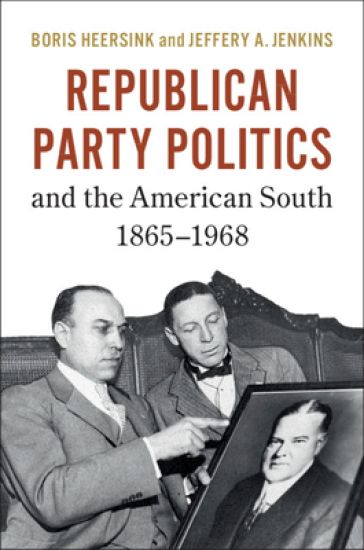
Republican Party Politics and the American South, 1865–1968

Republican Party Politics and the American South, 1865–1968

Boris Heersink; Jeffery A. Jenkins

Cambridge University Press
2020
pokkari
In Republican Party Politics and the American South, 1865–1968, Heersink and Jenkins examine how National Convention politics allowed the South to remain important to the Republican Party after Reconstruction, and trace how Republican organizations in the South changed from biracial coalitions to mostly all-white ones over time. Little research exists on the GOP in the South after Reconstruction and before the 1960s. Republican Party Politics and the American South, 1865–1968 helps fill this knowledge gap. Using data on the race of Republican convention delegates from 1868 to 1952, the authors explore how the 'whitening' of the Republican Party affected its vote totals in the South. Once states passed laws to disenfranchise blacks during the Jim Crow era, the Republican Party in the South performed better electorally the whiter it became. These results are important for understanding how the GOP emerged as a competitive, and ultimately dominant, electoral party in the late-twentieth century South.
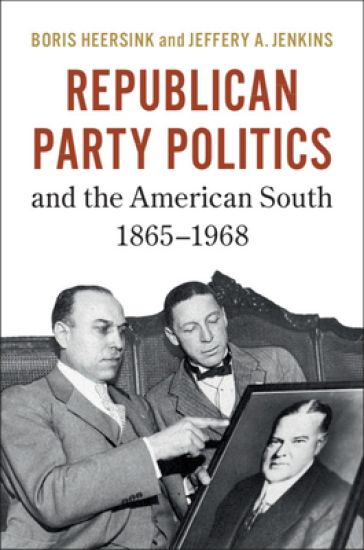
Republican Party Politics and the American South, 1865–1968

Republican Party Politics and the American South, 1865–1968

Boris Heersink; Jeffery A. Jenkins

Cambridge University Press
2020
sidottu
In Republican Party Politics and the American South, 1865–1968, Heersink and Jenkins examine how National Convention politics allowed the South to remain important to the Republican Party after Reconstruction, and trace how Republican organizations in the South changed from biracial coalitions to mostly all-white ones over time. Little research exists on the GOP in the South after Reconstruction and before the 1960s. Republican Party Politics and the American South, 1865–1968 helps fill this knowledge gap. Using data on the race of Republican convention delegates from 1868 to 1952, the authors explore how the 'whitening' of the Republican Party affected its vote totals in the South. Once states passed laws to disenfranchise blacks during the Jim Crow era, the Republican Party in the South performed better electorally the whiter it became. These results are important for understanding how the GOP emerged as a competitive, and ultimately dominant, electoral party in the late-twentieth century South.

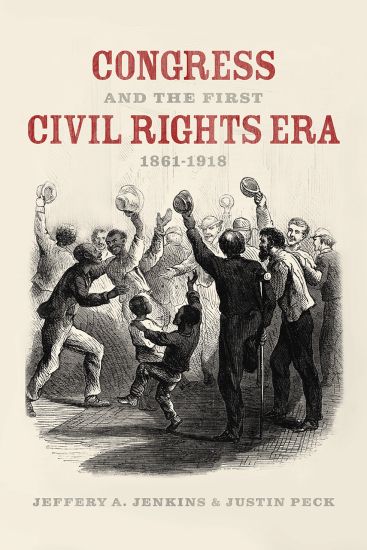
Congress and the First Civil Rights Era, 1861-1918

Congress and the First Civil Rights Era, 1861-1918

Jeffery A. Jenkins; Justin Peck

University of Chicago Press
2021
sidottu
Civil rights legislation figured prominently in the agenda of Congress during the Civil War and Reconstruction. But as Reconstruction came to an end and discrimination against African Americans in the South became commonplace, civil rights advocates in Congress increasingly shifted to policies desired by white constituents in the North who had grown tired of efforts to legislate equality. In this book, the first of a two-volume set, Jeffery A. Jenkins and Justin Peck explore the rise and fall of civil rights legislation in Congress from 1861 to 1918. The authors examine in detail how the Republican Party slowly withdrew its support for a meaningful civil rights agenda, as well as how Democrats and Republicans worked together to keep civil rights off the legislative agenda at various points. In doing so, Jenkins and Peck show how legal institutions can be used both to liberate and protect oppressed minorities and to assert the power of the white majority against those same minority groups.
Congress and the First Civil Rights Era, 1861-1918

Congress and the First Civil Rights Era, 1861-1918

Jeffery A. Jenkins; Justin Peck

University of Chicago Press
2021
nidottu
Civil rights legislation figured prominently in the agenda of Congress during the Civil War and Reconstruction. But as Reconstruction came to an end and discrimination against African Americans in the South became commonplace, civil rights advocates in Congress increasingly shifted to policies desired by white constituents in the North who had grown tired of efforts to legislate equality. In this book, the first of a two-volume set, Jeffery A. Jenkins and Justin Peck explore the rise and fall of civil rights legislation in Congress from 1861 to 1918. The authors examine in detail how the Republican Party slowly withdrew its support for a meaningful civil rights agenda, as well as how Democrats and Republicans worked together to keep civil rights off the legislative agenda at various points. In doing so, Jenkins and Peck show how legal institutions can be used both to liberate and protect oppressed minorities and to assert the power of the white majority against those same minority groups.
Fighting for the Speakership

Fighting for the Speakership

Jeffery A. Jenkins; Charles Stewart

Princeton University Press
2012
pokkari
The Speaker of the House of Representatives is the most powerful partisan figure in the contemporary U.S. Congress. How this came to be, and how the majority party in the House has made control of the speakership a routine matter, is far from straightforward. Fighting for the Speakership provides a comprehensive history of how Speakers have been elected in the U.S. House since 1789, arguing that the organizational politics of these elections were critical to the construction of mass political parties in America and laid the groundwork for the role they play in setting the agenda of Congress today. Jeffery Jenkins and Charles Stewart show how the speakership began as a relatively weak office, and how votes for Speaker prior to the Civil War often favored regional interests over party loyalty. While struggle, contention, and deadlock over House organization were common in the antebellum era, such instability vanished with the outbreak of war, as the majority party became an "organizational cartel" capable of controlling with certainty the selection of the Speaker and other key House officers. This organizational cartel has survived Gilded Age partisan strife, Progressive Era challenge, and conservative coalition politics to guide speakership elections through the present day. Fighting for the Speakership reveals how struggles over House organization prior to the Civil War were among the most consequential turning points in American political history.
Fighting for the Speakership

Fighting for the Speakership

Jeffery A. Jenkins; Charles Stewart

Princeton University Press
2012
sidottu
The Speaker of the House of Representatives is the most powerful partisan figure in the contemporary U.S. Congress. How this came to be, and how the majority party in the House has made control of the speakership a routine matter, is far from straightforward. Fighting for the Speakership provides a comprehensive history of how Speakers have been elected in the U.S. House since 1789, arguing that the organizational politics of these elections were critical to the construction of mass political parties in America and laid the groundwork for the role they play in setting the agenda of Congress today. Jeffery Jenkins and Charles Stewart show how the speakership began as a relatively weak office, and how votes for Speaker prior to the Civil War often favored regional interests over party loyalty. While struggle, contention, and deadlock over House organization were common in the antebellum era, such instability vanished with the outbreak of war, as the majority party became an "organizational cartel" capable of controlling with certainty the selection of the Speaker and other key House officers. This organizational cartel has survived Gilded Age partisan strife, Progressive Era challenge, and conservative coalition politics to guide speakership elections through the present day. Fighting for the Speakership reveals how struggles over House organization prior to the Civil War were among the most consequential turning points in American political history.