Kirjojen hintavertailu. Mukana 12 525 443 kirjaa ja 12 kauppaa.

Kirjailija

Jeffrey A. Brown

Kirjat ja teokset yhdessä paikassa: 17 kirjaa, julkaisuja vuosilta 2000-2023, suosituimpien joukossa Panthers, Hulks and Ironhearts. Vertaile teosten hintoja ja tarkista saatavuus suomalaisista kirjakaupoista.

17 kirjaa

Kirjojen julkaisuhaarukka 2000-2023.

Super Bodies

Super Bodies

Jeffrey A. Brown

UNIVERSITY OF TEXAS PRESS
2023
sidottu
Finalist - San Diego Comic-Con International 2024 Eisner Award in Best Academic/Scholarly Work 2024 MPCA/ACA Best Book for Use in the Classroom, Midwest Popular Culture Association / Midwest American Culture Association (MPCA/ACA)An examination of the art in superhero comics and how style influences comic narratives. For many, the idea of comic book art implies simplistic four-color renderings of stiff characters slugging it out. In fact, modern superhero comic books showcase a range of complex artistic styles, with diverse connotations. Leading comics scholar Jeffrey A. Brown assesses six distinct approaches to superhero illustration-idealism, realism, cute, retro, grotesque, and noir-examining how each visually represents the superhero as a symbolic construct freighted with meaning. Whereas comic book studies tend to focus on text and narrative, Super Bodies gives overdue credit to the artwork, which is not only a principal source of the appeal of comic books but also central to the values these works embody. Brown argues that superheroes are to be taken not as representations of people but as iconic types, and the art conveys this. Even the most realistic comic illustrations are designed to suggest not persons but ideas-ideas about bodies and societies. Thus the appearance of superheroes both directly and indirectly influences the story being told as well as the opinions readers form concerning justice, authority, gender, puberty, sexuality, ethnicity, violence, and other concepts central to political and cultural life.
Love, Sex, Gender, and Superheroes

Love, Sex, Gender, and Superheroes

Jeffrey A. Brown

Rutgers University Press
2021
sidottu
Impossibly muscular men and voluptuous women parade around in revealing, skintight outfits, and their romantic and sexual entanglements are a key part of the ongoing drama. Such is the state of superhero comics and movies, a genre that has become one of our leading mythologies, conveying influential messages about gender, sexuality, and relationships. Love, Sex, Gender, and Superheroes examines a full range of superhero media, from comics to films to television to merchandising. With a keen eye for the genre’s complex and internally contradictory mythology, comics scholar Jeffrey A. Brown considers its mixed messages. Superhero comics may reinforce sex roles with their litany of phallic musclemen and slinky femme fatales, but they also blur gender binaries with their emphasis on transformation and body swaps. Similarly, while most heroes have heterosexual love interests, the genre prioritizes homosocial bonding, and it both celebrates and condemns gendered and sexualized violence. With examples spanning from the Golden Ages of DC and Marvel comics up to recent works like the TV series The Boys, this study provides a comprehensive look at how superhero media shapes our perceptions of love, sex, and gender.
Love, Sex, Gender, and Superheroes

Love, Sex, Gender, and Superheroes

Jeffrey A. Brown

Rutgers University Press
2021
nidottu
Impossibly muscular men and voluptuous women parade around in revealing, skintight outfits, and their romantic and sexual entanglements are a key part of the ongoing drama. Such is the state of superhero comics and movies, a genre that has become one of our leading mythologies, conveying influential messages about gender, sexuality, and relationships. Love, Sex, Gender, and Superheroes examines a full range of superhero media, from comics to films to television to merchandising. With a keen eye for the genre’s complex and internally contradictory mythology, comics scholar Jeffrey A. Brown considers its mixed messages. Superhero comics may reinforce sex roles with their litany of phallic musclemen and slinky femme fatales, but they also blur gender binaries with their emphasis on transformation and body swaps. Similarly, while most heroes have heterosexual love interests, the genre prioritizes homosocial bonding, and it both celebrates and condemns gendered and sexualized violence. With examples spanning from the Golden Ages of DC and Marvel comics up to recent works like the TV series The Boys, this study provides a comprehensive look at how superhero media shapes our perceptions of love, sex, and gender.
Panthers, Hulks and Ironhearts

Panthers, Hulks and Ironhearts

Jeffrey A. Brown

Rutgers University Press
2021
nidottu
Marvel is one of the hottest media companies in the world right now, and its beloved superheroes are all over film, television and comic books. Yet rather than simply cashing in on the popularity of iconic white male characters like Peter Parker, Tony Stark and Steve Rogers, Marvel has consciously diversified its lineup of superheroes, courting controversy in the process. Panthers, Hulks, and Ironhearts offers the first comprehensive study of how Marvel has reimagined what a superhero might look like in the twenty-first century. It examines how they have revitalized older characters like Black Panther and Luke Cage, while creating new ones like Latina superhero Miss America. Furthermore, it considers the mixed fan responses to Marvel’s recasting of certain “legacy heroes,” including a Pakistani-American Ms. Marvel, a Korean-American Hulk, and a whole rainbow of multiverse Spidermen. If the superhero comic is a quintessentially American creation, then how might the increasing diversification of Marvel’s superhero lineup reveal a fundamental shift in our understanding of American identity? This timely study answers those questions and considers what Marvel’s comics, TV series, and films might teach us about stereotyping, Orientalism, repatriation, whitewashing, and identification.
Panthers, Hulks and Ironhearts

Panthers, Hulks and Ironhearts

Jeffrey A. Brown

Rutgers University Press
2021
sidottu
Marvel is one of the hottest media companies in the world right now, and its beloved superheroes are all over film, television and comic books. Yet rather than simply cashing in on the popularity of iconic white male characters like Peter Parker, Tony Stark and Steve Rogers, Marvel has consciously diversified its lineup of superheroes, courting controversy in the process. Panthers, Hulks, and Ironhearts offers the first comprehensive study of how Marvel has reimagined what a superhero might look like in the twenty-first century. It examines how they have revitalized older characters like Black Panther and Luke Cage, while creating new ones like Latina superhero Miss America. Furthermore, it considers the mixed fan responses to Marvel’s recasting of certain “legacy heroes,” including a Pakistani-American Ms. Marvel, a Korean-American Hulk, and a whole rainbow of multiverse Spidermen. If the superhero comic is a quintessentially American creation, then how might the increasing diversification of Marvel’s superhero lineup reveal a fundamental shift in our understanding of American identity? This timely study answers those questions and considers what Marvel’s comics, TV series, and films might teach us about stereotyping, Orientalism, repatriation, whitewashing, and identification.
Batman and the Multiplicity of Identity
Concentrating primarily on contemporary depictions of Batman in the comic books, this book analyzes why Batman is so immensely popular right now in America and globally, and how the fictional Dark Knight reveals both new cultural concerns and longstanding beliefs about American values. The organizing premise is that while Batman is perceived as a very clearly defined character, he is open to a wide range of interpretations and depictions in the comics (what Henry Jenkins refers to as "multiplicities"), each of which allows access to different cultural issues. The idea of Batman functions as an anchoring point out of which multiple Batmen, or Batman-like characters, can occupy different positions: Grim Batman, Gay Batman, Female Batman, Black Batman, Cute Batman, and so on. Each iteration opens up a discussion of different cultural issues pertinent to modern society, such as sexuality, ethnicity, feminism and familial relationships.
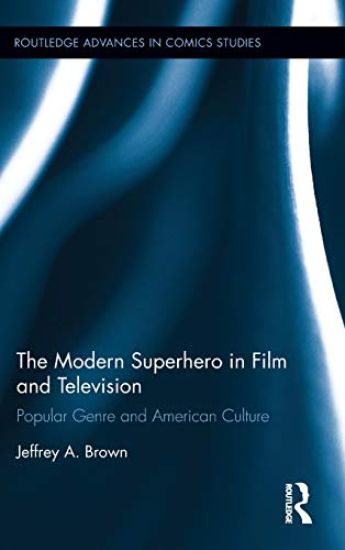
The Modern Superhero in Film and Television
Hollywood’s live-action superhero films currently dominate the worldwide box-office, with the characters enjoying more notoriety through their feature film and television depictions than they have ever before. This book argues that this immense popularity reveals deep cultural concerns about politics, gender, ethnicity, patriotism and consumerism after the events of 9/11. Superheroes have long been agents of hegemony, fighting for abstract ideals of justice while overall perpetuating the American status quo. Yet at the same time, the book explores how the genre has also been utilized to question and critique these dominant cultural assumptions.
Functional Neurosurgery

Functional Neurosurgery

Jeffrey A. Brown; Julie G. Pilitsis; Michael Schulder

Thieme Medical Publishers Inc
2019
muu
Functional neurosurgery resource features state-of-the-art approaches from renowned experts! For patients with inadequately treated epilepsy, tremor, dystonia, spasticity, depression, obsessive-compulsive disorder, Parkinson's and Alzheimer's disease, functional neurosurgery offers hope. Functional Neurosurgery: The Essentials is a reader-friendly introduction to this fascinating and rapidly evolving field. The text is edited by internationally prominent functional neurosurgeons Jeffrey A. Brown, Julie G. Pilitsis, and Michael Schulder. It features contributions from authors with expertise spanning the disciplines of neurosurgery, neurology, rehabilitation and physical medicine, neurophysiology, bioengineering, psychiatry and ophthalmology. Opening with a brief history of stereotaxy/functional neurosurgery and brain stereotactic frames, 41 concise and coherent chapters explore cutting-edge approaches to a broad range of functionally treatable conditions. The chapters yield a solid foundation of understanding of the field, with insightful commentary, pearls, and nuances from the editors. The starting question in the neuroprosthetics chapter, "Can a computer infer human intention or perception?" brings to life the exciting, inquisitive, and pioneering spirit of this subspecialty. The robust reference list provides a guide to deeper study that should continue throughout training and practice. HighlightsImaging: MRI and CT for stereotactic neurosurgery, fMRI and resting state MRIMovement disorders: A comparative analysis of the risks and benefits of deep brain stimulation versus lesioningEpilepsy: Temporal lobectomy and extra-temporal surgery; invasive monitoring, neuromodulation, laser interstitial thermal therapy, and vagus nerve stimulationDystonia: Etiology to diagnosis, medical and surgical optionsFuture innovations: Exoskeletons, intention contr
Batman and the Multiplicity of Identity
Concentrating primarily on contemporary depictions of Batman in the comic books, this book analyzes why Batman is so immensely popular right now in America and globally, and how the fictional Dark Knight reveals both new cultural concerns and longstanding beliefs about American values. The organizing premise is that while Batman is perceived as a very clearly defined character, he is open to a wide range of interpretations and depictions in the comics (what Henry Jenkins refers to as "multiplicities"), each of which allows access to different cultural issues. The idea of Batman functions as an anchoring point out of which multiple Batmen, or Batman-like characters, can occupy different positions: Grim Batman, Gay Batman, Female Batman, Black Batman, Cute Batman, and so on. Each iteration opens up a discussion of different cultural issues pertinent to modern society, such as sexuality, ethnicity, feminism and familial relationships.
Beyond Bombshells

Beyond Bombshells

Jeffrey A. Brown

University Press of Mississippi
2018
nidottu
Beyond Bombshells analyzes the cultural importance of strong women in a variety of current media forms. Action heroines are now more popular in movies, comic books, television, and literature than they have ever been. Their spectacular presence represents shifting ideas about female agency, power, and sexuality. Beyond Bombshells explores how action heroines reveal and reconfigure perceptions about how and why women are capable of physically dominating roles in modern fiction, indicating the various strategies used to contain and/or exploit female violence.Focusing on a range of successful and controversial recent heroines in the mass media, including Katniss Everdeen from The Hunger Games books and movies, Lisbeth Salander from The Girl with the Dragon Tattoo novels and films, and Hit-Girl from the Kick-Ass movies and comic books, Jeffrey A. Brown argues that the role of action heroine reveals evolving beliefs about femininity. While women in action roles are still heavily sexualized and objectified, they also challenge preconceived myths about normal or culturally appropriate gender behavior. The ascribed sexuality of modern heroines remains Brown’s consistent theme, particularly how objectification intersects with issues of racial stereotyping, romantic fantasies, images of violent adolescent and preadolescent girls, and neoliberal feminist revolutionary parables.Individual chapters study the gendered dynamics of torture in action films, the role of women in partnerships with male colleagues, young women as well as revolutionary leaders in dystopic societies, adolescent sexuality and romance in action narratives, the historical import of nonwhite heroines, and how modern African American, Asian, and Latina heroines both challenge and are restricted by longstanding racial stereotypes.
The Modern Superhero in Film and Television
Hollywood’s live-action superhero films currently dominate the worldwide box-office, with the characters enjoying more notoriety through their feature film and television depictions than they have ever before. This book argues that this immense popularity reveals deep cultural concerns about politics, gender, ethnicity, patriotism and consumerism after the events of 9/11. Superheroes have long been agents of hegemony, fighting for abstract ideals of justice while overall perpetuating the American status quo. Yet at the same time, the book explores how the genre has also been utilized to question and critique these dominant cultural assumptions.
Beyond Bombshells

Beyond Bombshells

Jeffrey A. Brown

University Press of Mississippi
2015
sidottu
Beyond Bombshells analyzes the cultural importance of strong women in a variety of current media forms. Action heroines are now more popular in movies, comic books, television, and literature than they have ever been. Their spectacular presence represents shifting ideas about female agency, power, and sexuality. Beyond Bombshells explores how action heroines reveal and reconfigure perceptions about ""how"" and ""why"" women are capable of physically dominating roles in modern fiction, indicating the various strategies used to contain and/or exploit female violence.Focusing on a range of successful and controversial recent heroines in the mass media, including Katniss Everdeen from The Hunger Games books and movies, Lisbeth Salander from The Girl with the Dragon Tattoo novels and films, and Hit-Girl from the Kick-Ass movies and comic books, Brown argues that the role of action heroine reveals evolving beliefs about femininity. While women in action roles are still heavily sexualized and objectified, they also challenge preconceived myths about normal or culturally appropriate gender behavior. The ascribed sexuality of modern heroines remains Brown's consistent theme, particularly how objectification intersects with issues of racial stereotyping, romantic fantasies, images of violent adolescent and preadolescent girls, and neoliberal feminist revolutionary parables.Individual chapters study the gendered dynamics of torture in action films, the role of women in partnerships with male colleagues, young women as well as revolutionary leaders in dystopic societies, adolescent sexuality and romance in action narratives, the historical import of non-white heroines, and how modern African American, Asian, and Latina heroines both challenge and are restricted by longstanding racial stereotypes.
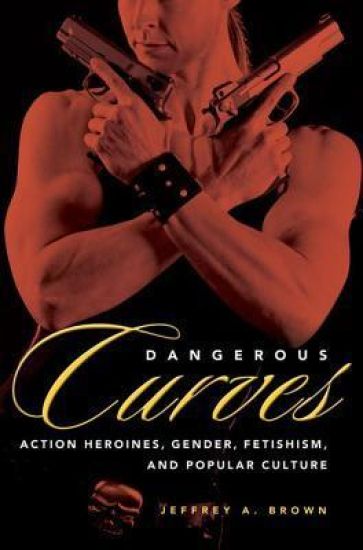
Dangerous Curves

Dangerous Curves

Jeffrey A. Brown

University Press of Mississippi
2013
nidottu
Dangerous Curves: Action Heroines, Gender, Fetishism, and Popular Culture addresses the conflicted meanings associated with the figure of the action heroine as she has evolved in various media forms since the late 1980s. Jeffrey A. Brown discusses this immensely popular character type, the action heroine, as an example of, and challenge to, existing theories about gender as a performance identity. Her assumption of heroic masculine traits combined with her sexualized physical depiction demonstrates the ambiguous nature of traditional gender expectations and indicates a growing awareness of more aggressive and violent roles for women.The excessive sexual fetishization of action heroines is a central theme throughout. The topic is analyzed as an insight into the transgressive image of the dominatrix, as a reflection of the shift in popular feminism from second-wave politics to third-wave and postfeminist pleasures, and as a form of patriarchal backlash that facilitates a masculine fantasy of controlling strong female characters. Brown interprets the action heroine as a representation of changing gender dynamics that balances the sexual objectification of women with progressive models of female strength. While the primary focus of this study is the action heroine as represented in Hollywood film and television, the book also includes the action heroine's emergence in contemporary popular literature, comic books, cartoons, and video games.
Dangerous Curves

Dangerous Curves

Jeffrey A. Brown

University Press of Mississippi
2011
sidottu
Dangerous Curves: Action Heroines, Gender, Fetishism, and Popular Culture addresses the conflicted meanings associated with the figure of the action heroine as she has evolved in various media forms since the late 1980s. Jeffrey A. Brown discusses this immensely popular character type as an example of, and challenge to, existing theories about gender as a performance identity. Her assumption of heroic masculine traits combined with her sexualized physical depiction demonstrates the ambiguous nature of traditional gender expectations and indicates a growing awareness of more aggressive and violent roles for women.The excessive sexual fetishism of action heroines is a central theme throughout. The topic is analyzed as an insight into the transgressive image of the dominatrix, as a refection of the shift in popular feminism from second-wave politics to third-wave and post-feminist pleasures, and as a form of patriarchal backlash that facilitates a masculine fantasy of controlling strong female characters. Brown interprets the action heroine as a representation of changing gender dynamics that balances the sexual objectification of women with progressive models of female strength. While the primary focus of this study is the action heroine as represented in Hollywood film and television, the book also includes the action heroine's emergence in contemporary popular literature, comic books, cartoons, and video games.
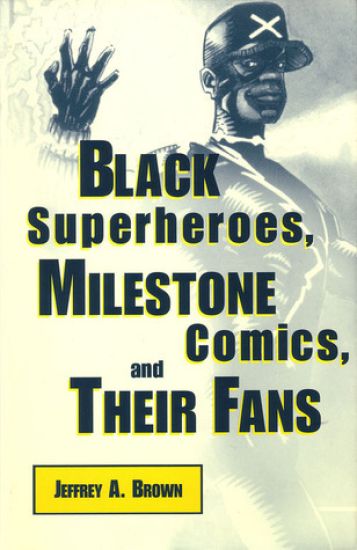
Black Superheroes, Milestone Comics, and Their Fans

Black Superheroes, Milestone Comics, and Their Fans

Jeffrey A. Brown

University Press of Mississippi
2000
nidottu
What do the comic book figures Static, Hardware, and Icon all have in common? Black Superheroes, Milestone Comics, and Their Fans gives an answer that goes far beyond ""tights and capes,"" an answer that lies within the mission Milestone Media, Inc., assumed in comic book culture. Milestone was the brainchild of four young black creators who wanted to part from the mainstream and do their stories their own way. This history of Milestone, a ""creator-owned"" publishing company, tells how success came to these mavericks in the 1990s and how comics culture was expanded and enriched as fans were captivated by this new genre. Milestone focused on the African American heroes in a town called Dakota. Quite soon these black action comics took a firm position in the controversies of race, gender, and corporate identity in contemporary America. Characters battled supervillains and sometimes even clashed with more widely known superheroes. Front covers of Milestone comics often bore confrontational slogans like ""Hardware: A Cog in the Corporate Machine is About to Strip Some Gears."" Milestone's creators aimed for exceptional stories that addressed racial issues without alienating readers. Some competitors, however, accused their comics of not being black enough or of merely marketing Superman in black face. Some felt that the stories were too black, but a large cluster of readers applauded these new superheroes for fostering African American pride and identity. Milestone came to represent an alternative model of black heroism and, for a host of admirers, the ideal of masculinity. Black Superheroes gives details about the founding of Milestone and reports on the secure niche its work and its image achieved in the marketplace. Tracing the company's history and discussing its creators, their works, and the fans, this book gauges Milestone alongside other black comic book publishers, mainstream publishers, and the history of costumed characters.