Kirjojen hintavertailu. Mukana 12 595 353 kirjaa ja 12 kauppaa.

Kirjailija

Jeffrey Abt

Kirjat ja teokset yhdessä paikassa: 6 kirjaa, julkaisuja vuosilta 2012-2024, suosituimpien joukossa American Egyptologist. Vertaile teosten hintoja ja tarkista saatavuus suomalaisista kirjakaupoista.

6 kirjaa

Kirjojen julkaisuhaarukka 2012-2024.

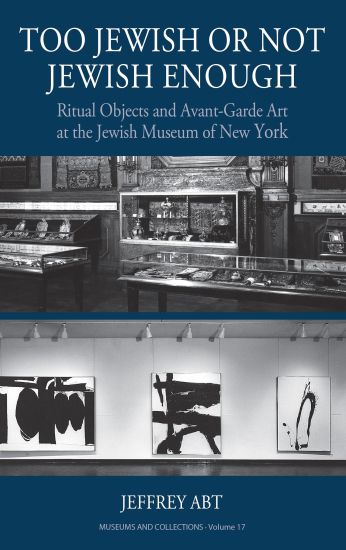
Too Jewish or Not Jewish Enough

Too Jewish or Not Jewish Enough

Jeffrey Abt

BERGHAHN BOOKS
2024
sidottu
Displays of Jewish ritual objects in public, non-Jewish settings by Jews are a comparatively recent phenomenon. So too is the establishment of Jewish museums. This volume explores the origins of the Jewish Museum of New York and its evolution from collecting and displaying Jewish ritual objects, to Jewish art, to exhibiting avant-garde art devoid of Jewish content, created by non-Jews. Established within a rabbinic seminary, the museum’s formation and development reflect changes in Jewish society over the twentieth century as it grappled with choices between religion and secularism, particularism and universalism, and ethnic pride and assimilation.
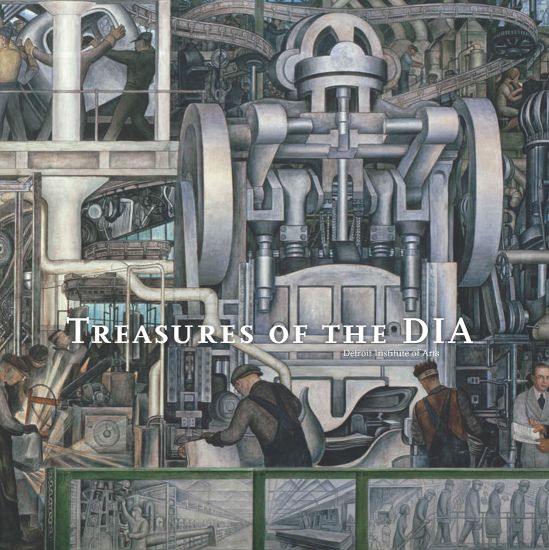
Treasures of the Detroit Institute of Arts

Treasures of the Detroit Institute of Arts

Salvador Salort Pons; Jeffrey Abt; Debra N. Mancoff

Yale University Press
2021
sidottu
A testament to the Detroit Institute of Arts’ rich and diverse collection, this impressive catalogue brings together a selection of the museum’s masterworks in American, European, African, Asian, Native American, Oceanic, Islamic, ancient, modern and contemporary, and graphic arts. The artworks, organized geographically, are showcased in more than 400 color illustrations. Among the notable works are Vincent van Gogh’s Self-Portrait; James McNeill Whistler’s Nocturne in Black and Gold: The Falling Rocket; Pieter Bruegel the Elder’s The Wedding Dance; Diego Rivera’s Detroit Industry murals; a magnificent palace door by the Yoruban artist Olówè of Isè; and a rare ewer produced by the Medici Grand Ducal workshops, one of only 59 surviving works of Medici porcelain known to exist. This lavish volume brings the distinction of the Detroit Institute of Arts’ encyclopedic collection to the larger public.
Valuing Detroit’s Art Museum

Valuing Detroit’s Art Museum

Jeffrey Abt

Springer International Publishing AG
2018
nidottu
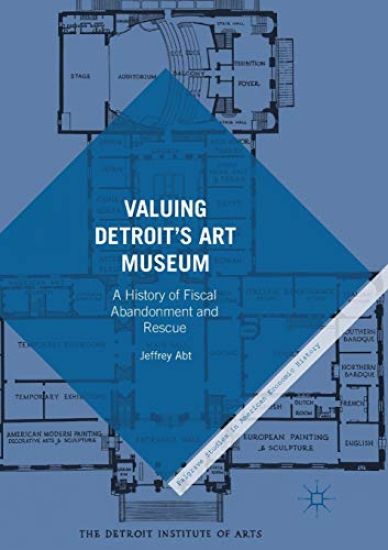
This book explores the perilous situation that faced the Detroit Institute of Arts during the city's bankruptcy, when creditors considered it a "nonessential asset" that might be sold to settle Detroit's debts. It presents the history of the museum in the context of the social, economic, and political development of Detroit, giving a history of the city as well as of the institution, and providing a model of contextual institutional history.Abt describes how the Detroit Institute of Arts became the fifth largest art museum in America, from its founding as a private non-profit corporation in 1885 to its transformation into a municipal department in 1919, through the subsequent decades of extraordinary collections and facilities growth coupled with the repeated setbacks of government funding cuts during economic downturns. Detroit's 2013 bankruptcy underscored the nearly 130 years of fiscal missteps and false assumptions that rendered the museum particularly vulnerable to the monetary power of a global art investment community eager to capitalize on the city's failures and its creditors' demands.This is a remarkable and important contribution to many fields, including non-profit management and economics, cultural policy, museum and urban history, and the histories of both the Detroit Institute of Arts and the city of Detroit itself. Despite the museum's unique history, its story offers valuable lessons for anyone concerned about the future of art museums in the United States and abroad.
Valuing Detroit’s Art Museum

Valuing Detroit’s Art Museum

Jeffrey Abt

Springer International Publishing AG
2017
sidottu
This book explores the perilous situation that faced the Detroit Institute of Arts during the city's bankruptcy, when creditors considered it a "nonessential asset" that might be sold to settle Detroit's debts. It presents the history of the museum in the context of the social, economic, and political development of Detroit, giving a history of the city as well as of the institution, and providing a model of contextual institutional history.Abt describes how the Detroit Institute of Arts became the fifth largest art museum in America, from its founding as a private non-profit corporation in 1885 to its transformation into a municipal department in 1919, through the subsequent decades of extraordinary collections and facilities growth coupled with the repeated setbacks of government funding cuts during economic downturns. Detroit's 2013 bankruptcy underscored the nearly 130 years of fiscal missteps and false assumptions that rendered the museum particularly vulnerable to the monetary power of a global art investment community eager to capitalize on the city's failures and its creditors' demands.This is a remarkable and important contribution to many fields, including non-profit management and economics, cultural policy, museum and urban history, and the histories of both the Detroit Institute of Arts and the city of Detroit itself. Despite the museum's unique history, its story offers valuable lessons for anyone concerned about the future of art museums in the United States and abroad.
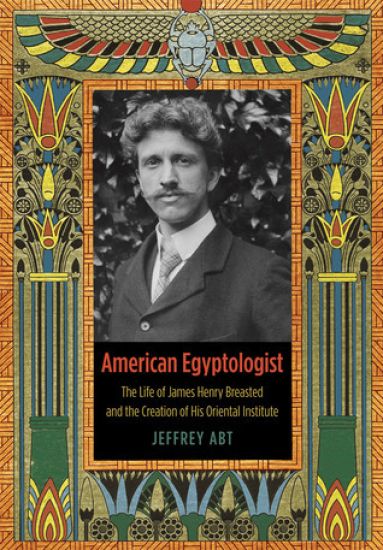
American Egyptologist

American Egyptologist

Jeffrey Abt

University of Chicago Press
2013
nidottu
James Henry Breasted (1865-1935) had a career that epitomizes our popular image of the archaeologist. Daring, handsome, and charismatic, he travelled on expeditions to remote and politically unstable corners of the Middle East, helped identify the tomb of King Tut, and was on the cover of "Time" magazine. But Breasted was more than an Indiana Jones - he was also an accomplished scholar, academic, entrepreneur, and talented author who brought ancient history to life not just for students but for such notables as Teddy Roosevelt and Sigmund Freud. In "American Egyptologist", Jeffrey Abt weaves together the disparate strands of Breasted's life, from his small-town origins following the Civil War to his evolution into the father of American Egyptology and the founder of the Oriental Institute in the early years of the University of Chicago. Abt explores the scholarly, philanthropic, diplomatic, and religious contexts of his ideas and projects, providing insight into the origins of America's most prominent center for Near Eastern archaeology. An illuminating portrait of the nearly forgotten man who demystified ancient Egypt for the general public, "American Egyptologist" restores James Henry Breasted to the world and puts forward a brilliant case for his place as one of the most important scholars of modern times.
American Egyptologist

American Egyptologist

Jeffrey Abt

University of Chicago Press
2012
sidottu
James Henry Breasted (1865-1935) had a career that epitomizes our popular image of the archaeologist. Daring, handsome, and charismatic, he travelled on expeditions to remote and politically unstable corners of the Middle East, helped identify the tomb of King Tut, and was on the cover of "Time" magazine. But Breasted was more than an Indiana Jones - he was an accomplished scholar, academic entrepreneur, and talented author who brought ancient history to life not just for students but for such notables as Teddy Roosevelt and Sigmund Freud. In "American Egyptologist", Jeffrey Abt weaves together the disparate strands of Breasted's life, from his small-town origins following the Civil War to his evolution into the father of American Egyptology and the founder of the Oriental Institute in the early years of the University of Chicago. Abt explores the scholarly, philanthropic, diplomatic, and religious contexts of his ideas and projects, providing insight into the origins of America's most prominent center for Near Eastern archaeology. An illuminating portrait of the nearly forgotten man who demystified ancient Egypt for the general public, "American Egyptologist" restores James Henry Breasted to the world and puts forward a brilliant case for his place as one of the most important scholars of modern times.