Kirjojen hintavertailu. Mukana 12 390 323 kirjaa ja 12 kauppaa.
Kirjailija
Jeffrey C. Alexander
Kirjat ja teokset yhdessä paikassa: 46 kirjaa, julkaisuja vuosilta 1988-2025, suosituimpien joukossa The Civil Sphere. Vertaile teosten hintoja ja tarkista saatavuus suomalaisista kirjakaupoista.
I denne boka møtes de normative og empiriske vitenskapene, og de møtes på området for sivilsamfunnet. Vi trenger et nytt begrep om sivilsamfunnet som en sivil sfære, en sfære av verdier og institusjoner som både genererer en evne til sosial kritikk og demokratisk integrasjon, sier Alexander. En slik sfære er bygget på solidaritet, på følelser for andre som vi ikke kjenner. Premisset for Den sivile sfære er at samfunn ikke styres av makt alene og at de ikke er drevet frem av egeninteresse. Følelser for andre betyr noe. Solidaritet er mulig fordi mennesker ikke bare er interessert i det som skjer her og nå, men også det ideelle, det transcendente, i det de håper vil vare evig.Den sivile sfære har et nyskrevet forord av Jeffrey C. Alexander og etterord skrevet av Håkon Larsen.
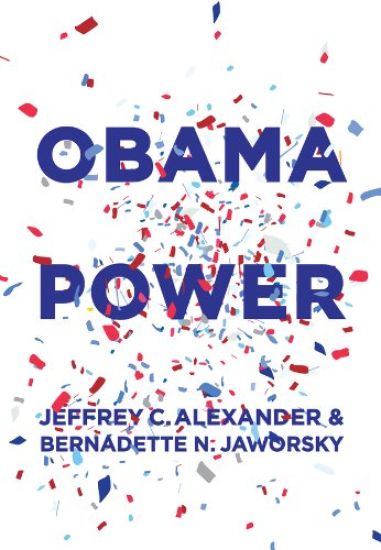
What is the source of Obama’s power? How is it that, after suffering a humiliating defeat in the 2010 mid-term elections, Obama was able to turn the situation around, deftly outmaneuvering his opponent and achieving a decisive victory in the November 2012 presidential election? In this short and brilliant book, Jeffrey Alexander and Bernadette Jaworsky argue that neither money nor demography can explain this dramatic turnaround. What made it possible, they show, was cultural reconstruction. Realizing he had failed to provide a compelling narrative of his power, the President began forging a new salvation story. It portrayed the Republican austerity budget as a sop to the wealthy, and Obama as a courageous hero fighting for plain folks against the rich. The reinvigorated cultural performance pushed the Tea Party off the political stage in 2011, and Mitt Romney became fodder for the script in 2012. Democrats painted their Republican opponent as a backward-looking elitist, a “Bain-capitalist” whose election would threaten the civil solidarity upon which democracy depends. Real world events can spoil even the most effective script. Obama faced monthly unemployment numbers, the daunting Bin Laden raid, three live debates, and Hurricane Sandy. The clumsiness of his opponent and his own good fortune helped the President, but it was the poise and felicity of his improvisations that allowed him to succeed a second time. Converting events into plot points, the President demonstrated the flair for the dramatic that has made him one of the most effective politicians of modern times.While persuasively explaining Obama’s success, this book also demonstrates a fundamental but rarely appreciated truth about political power in modern democratic societies namely, that winning power and holding on to it have as much to do with the ability to use symbols effectively and tell good stories as anything else.
Through case studies that examine historical and contemporary crises across the world, the contributing writers to this volume explore the cultural and social construction of trauma. How do some events get coded as traumatic and others which seem equally painful and dramatic not? Why do culpable groups often escape being categorised as perpetrators? These are just some of the important questions answered in this collection. Some of the cases analysed include Mao's China, the Holocaust, the Katyn Massacre and the Kosovo trauma. Expanding the pioneering cultural approach to trauma, this book will be of interest to scholars and postgraduate students of sociology.
In this book, one of the world’s leading social theorists presents a critical, alarmed, but also nuanced understanding of the post-traditional world we inhabit today. Jeffrey Alexander writes about modernity as historical time and social condition, but also as ideology and utopia. The idea of modernity embodies the Enlightenment’s noble hopes for progress and rationality, but its reality brings great suffering and exposes the destructive impulses that continue to motivate humankind. Alexander examines how twentieth-century theorists struggled to comprehend the Janus-faced character of modernity, which looks backward and forward at the same time. Weber linked the triumph of worldly asceticism to liberating autonomy but also ruthless domination, describing flights from rationalization as systemic and dangerous. Simmel pointed to the otherness haunting modernity, even as he normalized the stranger. Eisenstadt celebrated Axial Age transcendence, but acknowledged its increasing capacity for barbarity. Parsons heralded American community, but ignored modernity’s fragmentations. Rather than seeking to resolve modernity’s contradictions, Alexander argues that social theory should accept its Janus-faced character. It is a dangerous delusion to think that modernity can eliminate evil. Civil inclusion and anti-civil exclusion are intertwined. Alexander enumerates dangerous frictions endemic to modernity, but he also suggests new lines of social amelioration and emotional repair.
In this book, one of the world’s leading social theorists presents a critical, alarmed, but also nuanced understanding of the post-traditional world we inhabit today. Jeffrey Alexander writes about modernity as historical time and social condition, but also as ideology and utopia. The idea of modernity embodies the Enlightenment’s noble hopes for progress and rationality, but its reality brings great suffering and exposes the destructive impulses that continue to motivate humankind. Alexander examines how twentieth-century theorists struggled to comprehend the Janus-faced character of modernity, which looks backward and forward at the same time. Weber linked the triumph of worldly asceticism to liberating autonomy but also ruthless domination, describing flights from rationalization as systemic and dangerous. Simmel pointed to the otherness haunting modernity, even as he normalized the stranger. Eisenstadt celebrated Axial Age transcendence, but acknowledged its increasing capacity for barbarity. Parsons heralded American community, but ignored modernity’s fragmentations. Rather than seeking to resolve modernity’s contradictions, Alexander argues that social theory should accept its Janus-faced character. It is a dangerous delusion to think that modernity can eliminate evil. Civil inclusion and anti-civil exclusion are intertwined. Alexander enumerates dangerous frictions endemic to modernity, but he also suggests new lines of social amelioration and emotional repair.
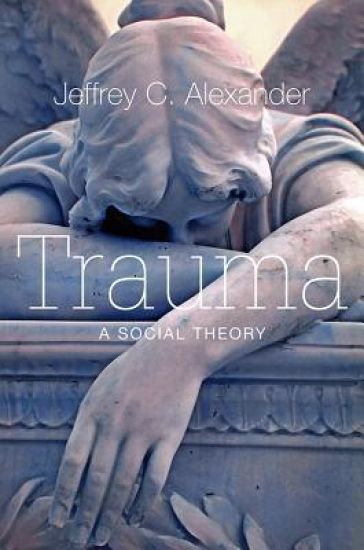
In this book Jeffrey C. Alexander develops an original social theory of trauma and uses it to carry out a series of empirical investigations into social suffering around the globe. Alexander argues that traumas are not merely psychological but collective experiences, and that trauma work plays a key role in defining the origins and outcomes of critical social conflicts. He outlines a model of trauma work that relates interests of carrier groups, competing narrative identifications of victim and perpetrator, utopian and dystopian proposals for trauma resolution, the performative power of constructed events, and the distribution of organizational resources. Alexander explores these processes in richly textured case studies of cultural-trauma origins and effects, from the universalism of the Holocaust to the particularism of the Israeli right, from postcolonial battles over the Partition of India and Pakistan to the invisibility of the Rape of Nanjing in Maoist China. In a particularly controversial chapter, Alexander describes the idealizing discourse of globalization as a trauma-response to the Cold War. Contemporary societies have often been described as more concerned with the past than the future, more with tragedy than progress. In Trauma: A Social Theory, Alexander explains why.
In this book Jeffrey C. Alexander develops an original social theory of trauma and uses it to carry out a series of empirical investigations into social suffering around the globe. Alexander argues that traumas are not merely psychological but collective experiences, and that trauma work plays a key role in defining the origins and outcomes of critical social conflicts. He outlines a model of trauma work that relates interests of carrier groups, competing narrative identifications of victim and perpetrator, utopian and dystopian proposals for trauma resolution, the performative power of constructed events, and the distribution of organizational resources. Alexander explores these processes in richly textured case studies of cultural-trauma origins and effects, from the universalism of the Holocaust to the particularism of the Israeli right, from postcolonial battles over the Partition of India and Pakistan to the invisibility of the Rape of Nanjing in Maoist China. In a particularly controversial chapter, Alexander describes the idealizing discourse of globalization as a trauma-response to the Cold War. Contemporary societies have often been described as more concerned with the past than the future, more with tragedy than progress. In Trauma: A Social Theory, Alexander explains why.
Performativity has emerged as a critical new idea across the humanities and social sciences, from literary and cultural studies to the study of gender and the philosophy of action. In this volume, Jeffrey Alexander demonstrates how performance can reorient our study of politics and society. Alexander develops a cultural pragmatics that shifts cultural sociology from texts to gestural meanings. Positioning social performance between ritual and strategy, he lays out the elements of social performance - from scripts to mise-en-scène, from critical mediation to audience reception - and systematically describes their tense interrelation. This is followed by a series of empirically oriented studies that demonstrate how cultural pragmatics transforms our approach to power. Alexander brings his new theory of social performance to bear on case studies that range from political to cultural power: Barack Obama's electoral campaign, American failure in the Iraqi war, the triumph of the Civil Rights Movement, terrorist violence on September 11th, public intellectuals, material icons, and social science itself. This path-breaking work by one of the world's leading social theorists will command a wide interdisciplinary readership.
Performativity has emerged as a critical new idea across the humanities and social sciences, from literary and cultural studies to the study of gender and the philosophy of action. In this volume, Jeffrey Alexander demonstrates how performance can reorient our study of politics and society. Alexander develops a cultural pragmatics that shifts cultural sociology from texts to gestural meanings. Positioning social performance between ritual and strategy, he lays out the elements of social performance - from scripts to mise-en-scène, from critical mediation to audience reception - and systematically describes their tense interrelation. This is followed by a series of empirically oriented studies that demonstrate how cultural pragmatics transforms our approach to power. Alexander brings his new theory of social performance to bear on case studies that range from political to cultural power: Barack Obama's electoral campaign, American failure in the Iraqi war, the triumph of the Civil Rights Movement, terrorist violence on September 11th, public intellectuals, material icons, and social science itself. This path-breaking work by one of the world's leading social theorists will command a wide interdisciplinary readership.
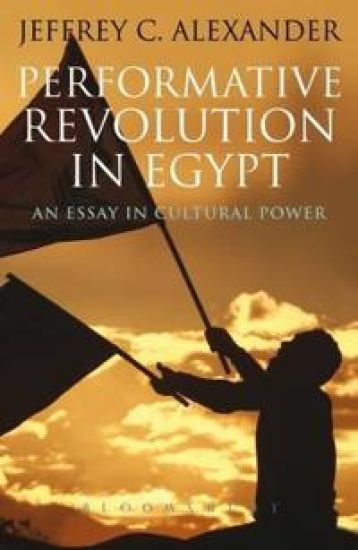
This book is available as open access through the Bloomsbury Open Access programme and is available on www.bloomsburycollections.com.Jeffrey C. Alexander examines what was new about Egypt's Spring revolution. Why was it so compelling to watch, and what made it so effective and does it have implications for democratic movements internationally. Using international news reports and translations of the social media pages that brought Egyptians flocking onto Tahrir Square, Alexander uncovers the narrative of a revolution that was scripted by its organizers, as both a moral statement and a media and digital statement. He sees it as a theatrical performance, designed to reveal to the key protagonists what a civil, egalitarian society might look like, by showing it in microcosm on the Square. Ultimately, he argues, it was the sight of the protestor's behaviour that swayed the army, and brought about regime change.From the author of the widely acclaimed 2010 book: The Performance of Politics: Obama's Victory and the Democratic Struggle for Power, this powerful intervention into the debate on the Arab Spring is a must-read for those curious about how social media are fundamentally changing global politics.
Through case studies that examine historical and contemporary crises across the world, the contributing writers to this volume explore the cultural and social construction of trauma. How do some events get coded as traumatic and others which seem equally painful and dramatic not? Why do culpable groups often escape being categorised as perpetrators? These are just some of the important questions answered in this collection. Some of the cases analysed include Mao's China, the Holocaust, the Katyn Massacre and the Kosovo trauma. Expanding the pioneering cultural approach to trauma, this book will be of interest to scholars and postgraduate students of sociology.
Theorist Clifford Geertz's influence extends far beyond Anthropology. This volume reflects the breadth of his influence, looking at Geertz as a theorist rather than as an anthropologist. To date there has been no impartial, comprehensive, and authoritative work published on this critical figure.
Theorist Clifford Geertz's influence extends far beyond Anthropology. This volume reflects the breadth of his influence, looking at Geertz as a theorist rather than as an anthropologist. To date there has been no impartial, comprehensive, and authoritative work published on this critical figure.
Jeffrey C. Alexander förespråkar en kulturell sociologi. Utgångspunkten är att samhälleliga institutioner och sociala handlingar alltid är inbäddade i meningssammanhang. Mening är alltid där. Den finns där som en symbolisk struktur i vår yttre miljö som vi inte alltid är medvetna om. Att synliggöra de ofta omedvetna symboliska strukturernas inflytande är den kulturella sociologins uppgift. Det handlar om att studera hur dessa strukturer blir levande i människors liv och gör handlingar meningsfulla. En sådan sociologi kan beskrivas som en slags social psykoanalys. Alexander hämtar sin inspiration från sociologins klassiker, särskilt Durkheims religionssociologi, och antropologer, inte minst Clifford Geertz kulturbegrepp och idé om tät beskrivning. Programmet för en kulturell sociologi utmejslas också i opposition mot brittiska kulturstudier, Pierre Bourdieu och Michel Foucault, vilka räknas till en sociologi om kultur som saknar en tillräcklig förståelse av kulturens autonomi. Alltför snabbt och entydigt reduceras kultur som levt meningssystem till ekonomi, klassreproduktion och styrningsteknologi. Programmet för en kulturell sociologi presenteras i bokens inledande artikel. Den följs av fem texter som visar vad denna sociologi kan bidra med till analysen av olika områden av samhällslivet. Den första är en studie av teknikens symboliska inbäddning. De tre följande handlar om hur vi bör förstå social integration i det mångkulturella samhället och är hämtade från Alexanders stora monografi The Civil Sphere (2006). I antologins avslutande och mest omfattande bidrag formulerar Alexander en teori om individuellt och kollektivt handlande som sätter symbolisk kommunikation i centrum. Boken är redigerad av Mats Trondman och Anna Lund vid Centrum för kultursociologi, Linnéuniversitetet i Växjö, och Jason L. Mast vid Center for Cultural Sociology, Yale University. Jeffrey C. Alexander är sedan 2001 verksam vid Yale University där han är Lillian Chavenson Saden Professor of Sociology och chef för Center for Cultural Sociology.
The South African Truth and Reconciliation Commission (TRC) is a modern social drama that enabled the nation's apartheid past to be constructed as a cultural trauma, and by doing so created a new collective narrative of diversity and inclusion. The TRC relied primarily on testimonies from victims and perpetrators of apartheid violence who came forward to tell their stories in a public forum. Rather than simply serving as data for setting the historical record straight, this book shows that it was not only the content of these testimonies but also how these stories were told and what values were attached to them that became significant. Goodman argues that the performative nature of the TRC process effectively designated the past as profane and simultaneously imagined a sacred future community based on democratic idealism and universal solidarity.
Culture is increasingly important to American social science, but in what way? This book addresses the core issues of the sociology of culture-questions about the social role of meaning, along with those about the methods sociologists use to study culture and society-in a manner that makes clear their relevance to sociology as a whole. Part I consists of essays by leading cultural sociologists on how the turn to culture has changed the sociological study of organizations, economic action, and television, and concludes with Georgina Born's methodological statement on the sociology of art and cultural production. Part II contains a highly original, and at times heated, debate between Richard Biernacki and John H. Evans on the appropriateness of abstract and quantifiable coding schemes for the sociological study of culture. Ranging from the philosophy of science to the concrete, practical problems of interpreting masses of cultural data, the debate raises the controversy over the interpretation of culture and the explanation of social action to a new level of sophistication.
The South African Truth and Reconciliation Commission (TRC) is a modern social drama that enabled the nation's apartheid past to be constructed as a cultural trauma, and by doing so created a new collective narrative of diversity and inclusion. The TRC relied primarily on testimonies from victims and perpetrators of apartheid violence who came forward to tell their stories in a public forum. Rather than simply serving as data for setting the historical record straight, this book shows that it was not only the content of these testimonies but also how these stories were told and what values were attached to them that became significant. Goodman argues that the performative nature of the TRC process effectively designated the past as profane and simultaneously imagined a sacred future community based on democratic idealism and universal solidarity.
Culture is increasingly important to American social science, but in what way? This book addresses the core issues of the sociology of culture-questions about the social role of meaning, along with those about the methods sociologists use to study culture and society-in a manner that makes clear their relevance to sociology as a whole. Part I consists of essays by leading cultural sociologists on how the turn to culture has changed the sociological study of organizations, economic action, and television, and concludes with Georgina Born's methodological statement on the sociology of art and cultural production. Part II contains a highly original, and at times heated, debate between Richard Biernacki and John H. Evans on the appropriateness of abstract and quantifiable coding schemes for the sociological study of culture. Ranging from the philosophy of science to the concrete, practical problems of interpreting masses of cultural data, the debate raises the controversy over the interpretation of culture and the explanation of social action to a new level of sophistication.
This volume addresses the key question of the intersection of sociology and politics, and asks what a non-Marxist cultural perspective can offer the Left. Written by leading scholars, it develops new conceptions of social critique, new techniques of interpretive analysis, and new concepts for the sociology of democratic practice. It is a volume for the twenty-first-century, where global and local meet, when critical theory must examine its most fundamental presuppositions.
This volume addresses the key question of the intersection of sociology and politics, and asks what a non-Marxist cultural perspective can offer the Left. Written by leading scholars, it develops new conceptions of social critique, new techniques of interpretive analysis, and new concepts for the sociology of democratic practice. It is a volume for the twenty-first-century, where global and local meet, when critical theory must examine its most fundamental presuppositions.