Kirjojen hintavertailu. Mukana 12 295 196 kirjaa ja 12 kauppaa.

Kirjailija

Jeffrey Clark

Kirjat ja teokset yhdessä paikassa: 4 kirjaa, julkaisuja vuosilta 2000-2022, suosituimpien joukossa Recognizing Rural Ministry. Vertaile teosten hintoja ja tarkista saatavuus suomalaisista kirjakaupoista.

4 kirjaa

Kirjojen julkaisuhaarukka 2000-2022.

Recognizing Rural Ministry

Recognizing Rural Ministry

Carl P Greene; Jeffrey Clark

Wipf Stock Publishers
2022
pokkari
Rural ministry can be a frustrating endeavor. Traditional metrics of success are misleading and anecdotal, one-size-fits-all approaches which often fall flat in the field. In Recognizing Rural Ministry, Carl Greene uses his research to suggest tools to customize your ministry to your community and effectively engage often-overlooked mission fields. These tools come from data-driven academic research presented through the lens of the author's lived experience as a dairy farmer, rural pastor, hospice chaplain, rural layperson, rural policy advocate, and administrator of a network of churches. The book is intended for rural ministry practitioners who want to use current scholarship to better examine the complexity and diversity of rural contexts. The book engages with the rural ministry impact of cultural phenomena such as the rise of the ""Spiritual but Not Religious"" (SBNR) phenomenon and ""early old age"" (EOA) demographics. The text also addresses key theories surrounding rural subcultures, demographic tools available to describe rural communities, and the shaping influence of rural community rituals on religiosity. Intended for pastors, seminarians, college students, and rural laypersons who are passionate about adding to their toolbox of rural ministry assessment.
Recognizing Rural Ministry

Recognizing Rural Ministry

Carl P Greene; Jeffrey Clark

Wipf Stock Publishers
2022
sidottu
Rural ministry can be a frustrating endeavor. Traditional metrics of success are misleading and anecdotal, one-size-fits-all approaches which often fall flat in the field. In Recognizing Rural Ministry, Carl Greene uses his research to suggest tools to customize your ministry to your community and effectively engage often-overlooked mission fields. These tools come from data-driven academic research presented through the lens of the author's lived experience as a dairy farmer, rural pastor, hospice chaplain, rural layperson, rural policy advocate, and administrator of a network of churches. The book is intended for rural ministry practitioners who want to use current scholarship to better examine the complexity and diversity of rural contexts. The book engages with the rural ministry impact of cultural phenomena such as the rise of the Spiritual but Not Religious (SBNR) phenomenon and early old age (EOA) demographics. The text also addresses key theories surrounding rural subcultures, demographic tools available to describe rural communities, and the shaping influence of rural community rituals on religiosity. Intended for pastors, seminarians, college students, and rural laypersons who are passionate about adding to their toolbox of rural ministry assessment.

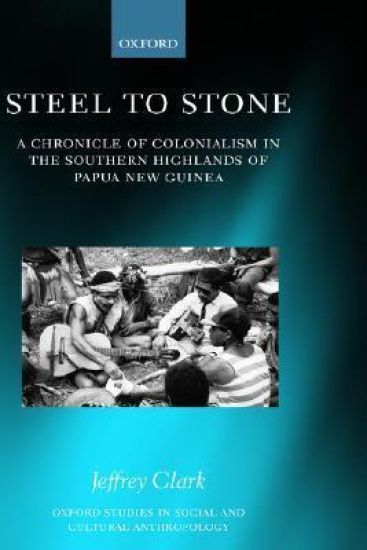
Steel to Stone

Steel to Stone

Jeffrey Clark

Oxford University Press
2000
sidottu
In this book the late Jeffrey Clark subjects the history of colonialism among the Wiru of Papua New Guinea to a fresh and subtle examination. He reflects upon his own fieldwork as an anthropologist as he scrutinizes the cultural construction of encounters and exchanges between New Guineans and Australians from the 1930s on. Colonized and colonizers alike are the focus of an analysis that draws upon theories of culture, temporality, discursive representation, and anthropology in the postcolonial era. Steel to Stone offers an original critique of several different theories and perspectives and, in its ensemble of frameworks, constitutes a highly innovative contribution to anthropological thinking about history and culture. Of especial interest is Clark's application, in a New Guinean context, of Foucault's analysis of `the way in which new regimes of power and knowledge are inscribed on the body'. The Wiru, faced with the impact of a colonizing culture, are shown to inscribe their own history on the body, and to read in it their understanding of particular events. Overall, Clark provides a compelling picture of a contemporary Melanesian culture, at the critical point at which the Wiru people are interpreting, invoking, and reinventing their history in the context of a developing nation state.