

Kirjailija
Jeffrey F. Hamburger
Kirjat ja teokset yhdessä paikassa: 7 kirjaa, julkaisuja vuosilta 1998-2025, suosituimpien joukossa Spaces of Knowledge in Medieval Diagrams. Vertaile teosten hintoja ja tarkista saatavuus suomalaisista kirjakaupoista.
Mukana myös kirjoitusasut: Jeffrey F Hamburger
7 kirjaa
Kirjojen julkaisuhaarukka 1998-2025.

Although the works of Pietro Lorenzetti (1280–1348) rank among the most famous of the fourteenth century, one of his panels, a small Crucifixion, has remained largely overlooked, despite its unique imagery. Combining three temporal horizons—past, present, and eschatological future—within an unparalleled allegorical presentation of the Crucifixion, this panel grants precedence to Clare of Assisi over Francis, founder of the Franciscan Order. Probably created for a nun, Lorenzetti’s painting turns abstruse allegory into a vehicle for a self-conscious meditation on the power of painting itself. In Flesh and Fabric: The Raiment of the Passion in a Crucifixion by Pietro Lorenzetti, Jeffrey F. Hamburger explores the historical context of this panel as well as the subtleties of Pietro’s painting technique and iconographic imagination, enriching not only our understanding of one of the most innovative artists of the Trecento but also of Italian painting during one of its most generative periods. In addition to an iconographical analysis and historical contextualization of the panel, this volume includes a technical analysis that reveals the subtleties of the painting’s technique and reconstructs its original format, demonstrating that, from the start, this panel was a freestanding devotional image.
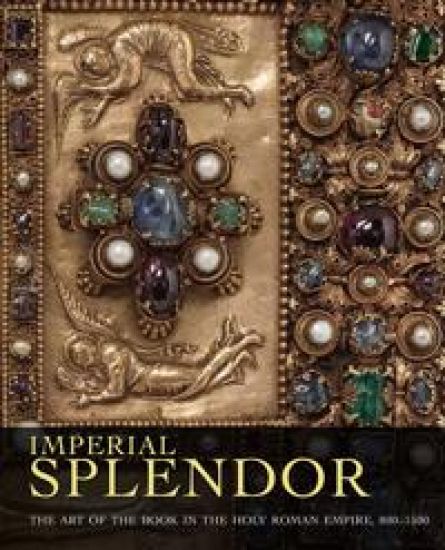
Focusing on production and patronage, this new volume features over 150 images of magnificently illustrated books and precious bindings, drawn largely from North American collections. The book's three sections are arranged chronologically, yet in each case with a different thematic focus. Opening with a look at the precedents set by the Carolingian forerunners of the Empire, the first section considers deluxe imperial manuscripts associated with the Ottonian emperors. The second section examines the role of imperial monasteries in the production of manuscripts, considering in particular the patronage of aristocratic elites. The final section offers a tour of imperial cities in the fourteenth and fifteenth centuries, from Vienna and Prague to Augsburg and Nuremberg. This final stop considers the impact of Albrecht Durer and humanism on the arts of the book. The volume features a glossary, indexes, and maps showing the shifting borders of the Empire over 700 years.

The Birth of the Author: Pictorial Prefaces in Glossed Books of the Twelfth Century
Jeffrey F. Hamburger
PIMS
2021
sidottu
The Birth of the Author argues that the images devised to accompany medieval commentaries, whether on the Bible or on classical texts, made claims to authority, even inspiration, that at times were even more forceful than those made by the texts themselves. Paradoxically, it was in the context of commentaries that modern conceptions of independent authorship first were forged. Looking beyond author portraits and the genre known as the accessus ad auctores, usually seen as the sites of such claims, this study examines pictorial programmes in copies of Horace's poetic works, the Glossa ordinaria, the dominant biblical commentary of the first half of the twelfth century, anti-heretical polemics, and Rupert of Deutz's commentary on the Song of Songs. The inventive images fashioned to accompany these works do not merely illustrate or exemplify pre-existing understandings of authorship; rather, they help to shape them at the very moment at which a particular historically situated set of ideas about authorship was itself coming into being. Pictorial prefaces of the twelfth century represent commentaries of their own that work both in concert with the commentaries to which they are attached but also, at times, in ways that go beyond anything that the commentator himself authored or authorized. In this way, they participate in a broader trend in the High Middle Ages to champion the ability of images to articulate and elaborate in the manner of rhetorical persuasion complex arguments regarding critical matters of faith.
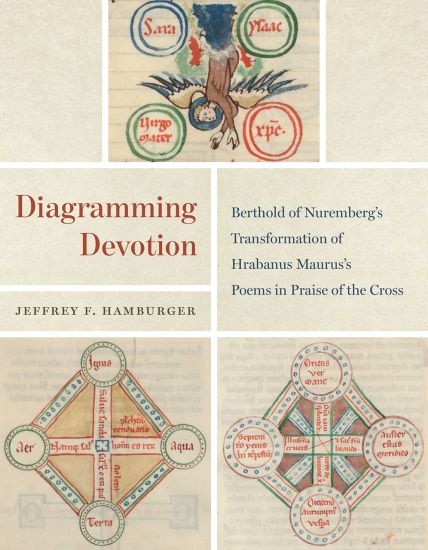
During the European Middle Ages, diagrams provided a critical tool of analysis in cosmological and theological debates. In addition to drawing relationships among diverse areas of human knowledge and experience, diagrams themselves generated such knowledge in the first place. In Diagramming Devotion, Jeffrey F. Hamburger examines two monumental works that are diagrammatic to their core: a famous set of picture poems of unrivaled complexity by the Carolingian monk Hrabanus Maurus, devoted to the praise of the cross, and a virtually unknown commentary on Hrabanus's work composed almost five hundred years later by the Dominican friar Berthold of Nuremberg. Berthold's profusely illustrated elaboration of Hrabnus translated his predecessor's poems into a series of almost one hundred diagrams. By examining Berthold of Nuremberg's transformation of a Carolingian classic, Hamburger brings modern and medieval visual culture into dialog, traces important changes in medieval visual culture, and introduces new ways of thinking about diagrams as an enduring visual and conceptual model.

Der diagrammatische Modus stellt eines der wichtigsten Merkmale religi ser Kunst des Mittelalters dar. Diagramme erfreuten sich im 12. Jahrhundert einer besonderen Beliebtheit. Daher ist es auffallend, dass eines der spektakul rsten Beispiele von diagrammatischer Darstellung verbunden mit einem h chst einflussreichen Text bisher relativ unbemerkt geblieben ist. Es handelt sich hierbei um die Reihe von Raddiagrammen, die ausgew hlte Handschriften von 'De missarum mysteriis' begleiten, einer einflussreichen Erkl rung der Messliturgie, die in Rom zwischen 1195 und 1197 von Lothar von Segni kurz vor seiner Wahl zum Papst (Innozenz III.) verfasst wurde. Die 42 Diagramme stellen die anspruchsvollste Reihe ihrer Art dar, die je zusammengestellt wurde, und sind umso eindrucksvoller dadurch, dass sie - bis auf eine Ausnahme - ausdr cklich f r diese Handschrift geschaffen und nicht von anderen Quellen kopiert wurden. Die Bildwerke pr sentieren einen ausf hrlichen visuellen Kommentar, nicht nur zum Inhalt, sondern auch zu den Handlungen und dem Prozedere des Messrituals.

A bew interpretation of the role of the visual arts in the spiritual lives of women in late medieval monastic communities.The Visual and the Visionary adds a new dimension to the study of female spirituality, with its nuanced account of the changing roles of images in medieval monasticism from the twelfth century to the Reformation. In nine essays embracing the histories of art, religion, and literature, Jeffrey Hamburger explores the interrelationships between the visual arts and female spirituality in the context of the cura monialium, the pastoral care of nuns. Used as instruments of instruction and inspiration, images occupied a central place in debates over devotional practice, monastic reform, and mystical expression. Far from supplementing a history of art from which they have been excluded, the images made by and for women shaped that history decisively by defining novel modes of religious expression, above all, the relationship between sight and subjectivity. With this book, the study of female piety and artistic patronage becomes an integral part of the general history of medieval art and spirituality.