Kirjailija
Jeffrey Haynes
Kirjat ja teokset yhdessä paikassa: 32 kirjaa, julkaisuja vuosilta 1996-2025, suosituimpien joukossa From Huntington to Trump. Vertaile teosten hintoja ja tarkista saatavuus suomalaisista kirjakaupoista.
32 kirjaa
Kirjojen julkaisuhaarukka 1996-2025.
Politics and Religion: The Basics provides a concise introduction to the complex interactions between politics and religion in both domestic and international contexts.This book examines the role of religion in shaping political systems, behaviours and debates worldwide. By introducing some of the most prominent religions, it explores their impact on contemporary politics and sheds light on key topics such as religious nationalism, gender inequality, religious terrorism and the struggle for religious freedom. Using case studies from countries including Iran, the USA, France, China and Turkey, it highlights pivotal events such as Iran’s 1979 revolution and addresses modern controversies such as the rise of religious nationalism. Broader discussions on democratisation, globalisation and secularisation are integrated with theoretical insights and practical examples, offering a comprehensive overview of the field.Aimed at undergraduate students in political science, international relations, and religious studies, this book is also a valuable resource for scholars. With its clear structure and real-world relevance, it provides an ideal starting point for understanding the dynamic relationship between politics and religion.
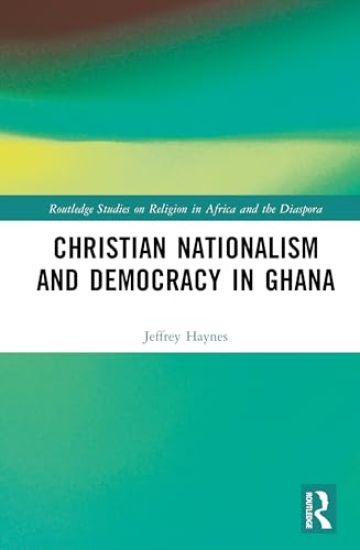
This book investigates the impact of Christian nationalism on democracy in Ghana, arguing that proponents of a specific Christian worldview seek to remake the country according to their values and beliefs.Christian nationalism is a significant religious and political ideology in several African countries, not only Ghana, but also Zambia and Nigeria. In Ghana, prominent Christian nationalists, encouraged by sections of the American Christian Right, cultivate political influence with powerful political elites and by developing a high media profile to promote their views and increase their numbers of followers. The book examines specific examples of Christian nationalism’s impact on Ghana’s democracy: the national cathedral as a symbol of national unity and social cohesion, anti-Muslim pronouncements threatening inter-faith harmony, and attacks on Ghana’s LGBTQ+ community. Overall, the book argues that Christian nationalism is a specific threat to Ghana’s three decade-long liberal democracy, with the aim of undermining the constitutional equality and human rights of some Ghanaians in favour of a specific Christian worldview.This book will be of interest to researchers of religion and politics in Africa, with Ghana serving as an important case study for those interested in the regional impact of Christian nationalism.
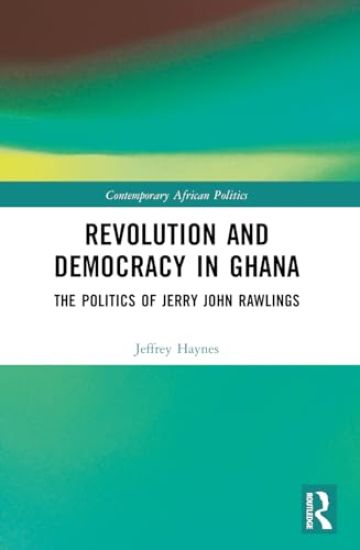
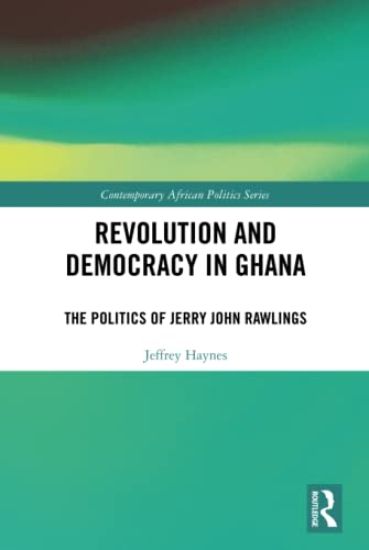
This book analyses Flight-Lieutenant Jerry John Rawlings’ plans for radical democratisation in Ghana, involving ordinary people directly in the country’s political and economic decision-making processes. Rawlings came to power in Ghana in late 1981 determined to restructure the characteristics of Ghana's political and economic systems. Despite Rawlings’ aim to bring ordinary Ghanaians into the decision-making process, his regime was still heavily dependent on the support of the military and attempts at direct democracy ultimately ended in failure. Outside analysts have viewed his plans as one of Africa’s most draconian economic reform programmes. The book traces this turbulent period of Ghana’s history, showing Rawlings’ development from a fiery revolutionary to a democracy-supporting politician adept at winning elections. It investigates how, despite frequent coup attempts and the loss of most of its original civilian support base, the regime was able to remain in power, overseeing a halt to economic decline and a return to growth. Building on over thirty years of research, including contemporaneous interviews conducted by the author during Ghana’s ‘revolutionary’ period, this book will be of interest to researchers of African history and politics.
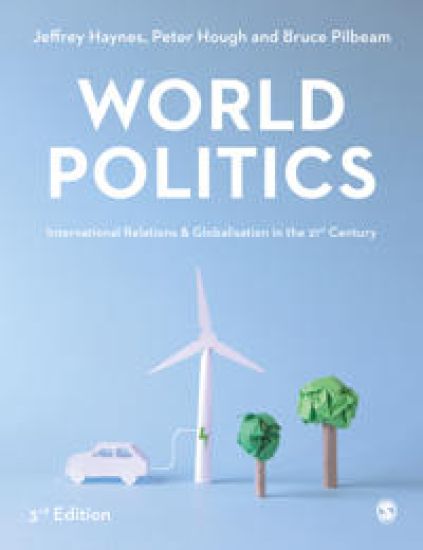
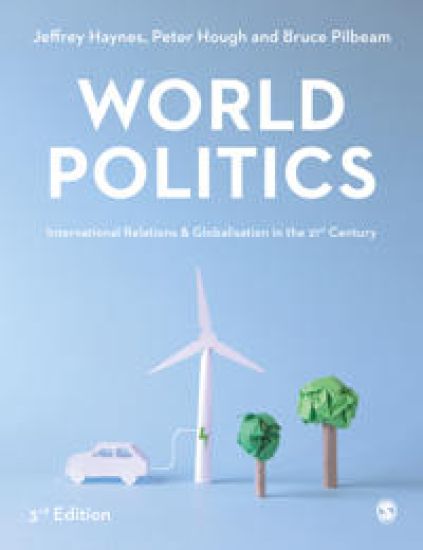
How can we better resolve issues like climate change or global pandemics? When is resolution of armed conflict achievable? What impact does culture, religion or identity have on world events? Today’s world politics is complex, contested and changing fast. Sovereign states, big data, international institutions, world leaders, large companies, and citizens all have vested interests in the most momentous issues facing us. Whether it’s economic crisis, global health, nuclear deterrence or war, this text is the ideal guide to understanding the most critical issues of today, and the competing ways to interpret them. Extensively revised, the third edition takes you through the key events and changes in world politics from the 1500s, showing how historical events and developments are essential for understanding world politics today. Packed with examples from around the world, the book introduces the reader to different theories, concepts, issues, and actors in world politics.Covering all the essential topics, from international law and political economy to critical theory and security studies, this new edition includes: - 3 brand new chapters on Foreign Policy Analysis, Race and Identity, and Global Health - Fully revised historical chapters for a comprehensive historical perspective - An expanded range of topics, cases, and cutting-edge research to fully reflect the latest empirical and theoretical developments Its unparalleled breadth and clarity make it the perfect introductory text for all undergraduate students of International Relations and Global Politics. Jeffrey Haynes is an emeritus professor of politics at London Metropolitan University. Peter Hough is an Associate Professor in International Politics at Middlesex University, London. Bruce Pilbeam is a Senior Lecturer in Politics and International Relations at London Metropolitan University.
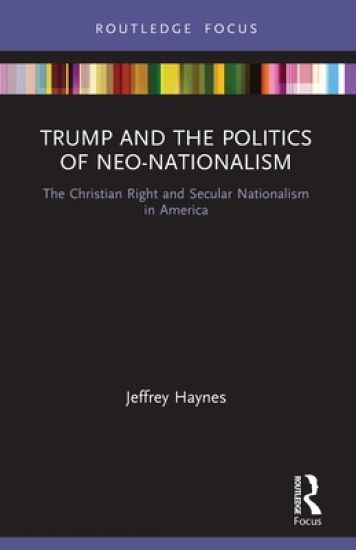
No analysis of the Donald Trump phenomenon and American neo-nationalism is satisfactory without examining the impact of both the Christian Right and the secular nationalist right, both in the USA and abroad. This book analyses the political impact of both strands in relation to America’s culture wars at home and the clash of civilisations in the USA’s foreign policy.Each strand – religious and secular – has had different issues to pursue during the Trump presidency: religious liberty and associated issues, on the one hand, and 'America's place in the world', on the other. This book demonstrates how both strands overlap and draw on each other's concerns to exhibit a pronounced, multifaceted neo-nationalism which was ideologically important for the Trump presidency. The author emphasises that the Trump phenomenon has been building for decades, and the Trump presidency has used significant political, social, economic, and cultural disquiet, and the post-2008 economic crisis and associated global turmoil, to fashion and progress policies which appeal strongly to both the Christian Right and many secular nationalists.This book will be of interest to students, researchers, and policy-makers interested in American politics, American political history, religion and politics in America, and religion and IR with a focus on the USA.
This book analyses Flight-Lieutenant Jerry John Rawlings’ plans for radical democratisation in Ghana, involving ordinary people directly in the country’s political and economic decision-making processes. Rawlings came to power in Ghana in late 1981 determined to restructure the characteristics of Ghana's political and economic systems. Despite Rawlings’ aim to bring ordinary Ghanaians into the decision-making process, his regime was still heavily dependent on the support of the military and attempts at direct democracy ultimately ended in failure. Outside analysts have viewed his plans as one of Africa’s most draconian economic reform programmes. The book traces this turbulent period of Ghana’s history, showing Rawlings’ development from a fiery revolutionary to a democracy-supporting politician adept at winning elections. It investigates how, despite frequent coup attempts and the loss of most of its original civilian support base, the regime was able to remain in power, overseeing a halt to economic decline and a return to growth. Building on over thirty years of research, including contemporaneous interviews conducted by the author during Ghana’s ‘revolutionary’ period, this book will be of interest to researchers of African history and politics.
Religion, Identity and Power
Ahmet Erdi zt rk; Jeffrey Haynes
EDINBURGH UNIVERSITY PRESS
2022
nidottu
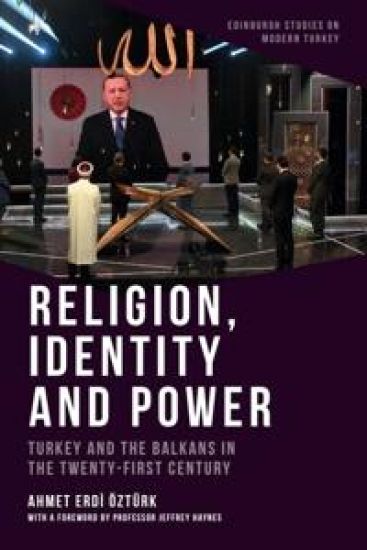
Examines the role of religion and state identity transformation in Erdogan's Turkey and its reflections to the Balkan Peninsula Discusses the effects of Turkey's authoritarian turn during the AKP rule in the domain of foreign policy Examines the role of religion, ethnicity, state identity and power in the relations between Turkey and the Balkan Peninsula Presents the results of more than 120 semi-structured interviews with political actors, diplomats, religious leaders, scholars, journalists and religious community representatives in Turkey and the Balkans Provides an example of a hybrid insider/outsider status when conducting ethnographical fieldwork among religious groups Watch a webinar from The Berkley Center for Religion, Peace, and World Affairs (Georgetown University) where Ahmet Erdi zt rk discusses the book with Nukhet Sandal Watch Ahmet Erdi zt rk talk about his book with Prof. Scott Lucas on DeepDivePolitics Read an interview with Ahmet Erdi zt rk about this book at The Adriatic Report Watch Ahmet Erdi zt rk discuss this book on the Centre for Southeast European Studies Youtube Turkey and its recent ethno-religious transformation have had a strong impact on the state identity and country's relation to the Balkan Peninsula. This book examines Turkey's ethno-religious activism and power-related political strategies in the Balkans between 2002 and 2020, the period under the rule of the Justice and Development Party (AKP), to determine the scopes of its activities in the region. Ahmet Erdi zt rk illuminates an often-neglected aspect of Turkey's relations with its Balkan neighbours that emerged as a result of the much discussed 'authoritarian turn' a broader shift in Turkish domestic and foreign policy from a realist-secular to a Sunni Islamic orientation with ethno-nationalist policies. In order to understand how these concepts have been received locally, zt rk draws on personal testimonies given by both Turkish and non-Turkish, Muslim and non-Muslim interviewees in three country cases: Republic of Bulgaria, Republic of North Macedonia and Republic of Albania. The findings shed light on contemporary issues surrounding the continuous redefinition of Turkish secularism under the AKP rule and the emergence of a new Muslim elite in Turkey. "
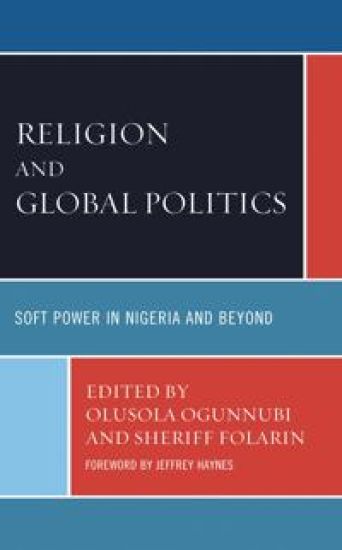
Religion and Global Politics: Soft Power in Nigeria and Beyond examines the deployment of religious soft power in African states and the potential this has for transforming perceptions of the continent. The contributors refocus the attention on religion away from the ‘misery’ discourse of conflict and violence towards the domain of international relations, diplomacy, and foreign policy in Africa. Through this shift, the chapters analyze the ways in which religion has impacted the external relations of African states. Religion and Global Politics introduces the theme of religion to the discourse of African international relations and politics to provide a thorough examination of religion’s influence on politics in the daily lives of African people.
From Huntington to Trump argues that the “clash of civilizations,” an idea first raised three decades ago by Bernard Lewis and endorsed by Samuel Huntington, has created a template for understanding the world which has been adopted by both the United Nations and right-wing populist politicians in Europe and the United States of America. Haynes traces the development of the “clash of civilizations” from the colonial period through the end of the Cold War and 9/11 and analyzes its effects on society.
This book identifies and examines the political activities of selected religious actors, in both domestic and international contexts, in relation to democracy, human rights and civilisational interactions. And it asks why, how and when do selected religious actors seek to influence political outcomes?The book is divided into two parts. Section 1 examines the controversial issue of how, why and when religious actors affect democratisation – that is, the transition to democracy – and democracy itself. These chapters examine the impact of religion on democratisation and human rights, with particular attention to secularisation, Islam, and globalisation. They indicate that numerous religious actors have had major importance in helping determine democratisation outcomes in various countries. Section 2 examines the relationships between religion, human rights and civilisational interactions in the context of post-secular politics and links to conflict, and it explores how these relationships affect political outcomes in both domestic and international contexts.This book will be of great interest to postgraduate and advanced undergraduate students of religion and politics; religion and international relations; democratisation and democracy; and global governance, especially studies of the United Nations. It will also interest practitioners and scholars who work on religion and politics, at a domestic and international level.
No analysis of the Donald Trump phenomenon and American neo-nationalism is satisfactory without examining the impact of both the Christian Right and the secular nationalist right, both in the USA and abroad. This book analyses the political impact of both strands in relation to America’s culture wars at home and the clash of civilisations in the USA’s foreign policy.Each strand – religious and secular – has had different issues to pursue during the Trump presidency: religious liberty and associated issues, on the one hand, and 'America's place in the world', on the other. This book demonstrates how both strands overlap and draw on each other's concerns to exhibit a pronounced, multifaceted neo-nationalism which was ideologically important for the Trump presidency. The author emphasises that the Trump phenomenon has been building for decades, and the Trump presidency has used significant political, social, economic, and cultural disquiet, and the post-2008 economic crisis and associated global turmoil, to fashion and progress policies which appeal strongly to both the Christian Right and many secular nationalists.This book will be of interest to students, researchers, and policy-makers interested in American politics, American political history, religion and politics in America, and religion and IR with a focus on the USA.
This book identifies and examines the political activities of selected religious actors, in both domestic and international contexts, in relation to democracy, human rights and civilisational interactions. And it asks why, how and when do selected religious actors seek to influence political outcomes?The book is divided into two parts. Section 1 examines the controversial issue of how, why and when religious actors affect democratisation – that is, the transition to democracy – and democracy itself. These chapters examine the impact of religion on democratisation and human rights, with particular attention to secularisation, Islam, and globalisation. They indicate that numerous religious actors have had major importance in helping determine democratisation outcomes in various countries. Section 2 examines the relationships between religion, human rights and civilisational interactions in the context of post-secular politics and links to conflict, and it explores how these relationships affect political outcomes in both domestic and international contexts.This book will be of great interest to postgraduate and advanced undergraduate students of religion and politics; religion and international relations; democratisation and democracy; and global governance, especially studies of the United Nations. It will also interest practitioners and scholars who work on religion and politics, at a domestic and international level.
From Huntington to Trump argues that the “clash of civilizations,” an idea first raised three decades ago by Bernard Lewis and endorsed by Samuel Huntington, has created a template for understanding the world which has been adopted by both the United Nations and right-wing populist politicians in Europe and the United States of America. Haynes traces the development of the “clash of civilizations” from the colonial period through the end of the Cold War and 9/11 and analyzes its effects on society.
One of the most resilient ideas about societal development after World War II was that nations would inevitably secularise as they modernised. However, as we come to the end of the 'secular' twentieth century, it is obvious that religion continues to be an important factor in politics around the world. The author examines the continuing importance of religion, focusing upon the regions of Europe, the Americas, Africa, and Asia.
Haynes looks at religious transnational actors in the context of international relations, with a focus on both security and order. With renewed scholarly interest in the involvement of religion in international relations, many observers and scholars have found this move unexpected because it challenges conventional wisdom about the nature and long-term historical impact of secularisation. The 'return' of religion to international relations necessarily involves deprivatisation. Recent challenges to international security and order emanate from various entities, notably 'extremists', people often said to be 'excluded' from the benefits of globalisation for reasons of culture, history and geography. This study looks at the dynamics of this new religious pluralism as it influences the global political landscape. Several specific transnational religious actors are examined in the chapters including: American Evangelical Protestants, Roman Catholics, the Organisation of the Islamic Conference, Sunni extremist groups (al Qaeda and Lashkar-e-Taiba), and Shia transnational networks. While varying widely in what they seek to achieve, they also share an important characteristic: each seeks to use religious soft power to advance their interests. In sum, these religious transnational actors all wish to see the spread and development of certain values and norms, which impact on international security and order.
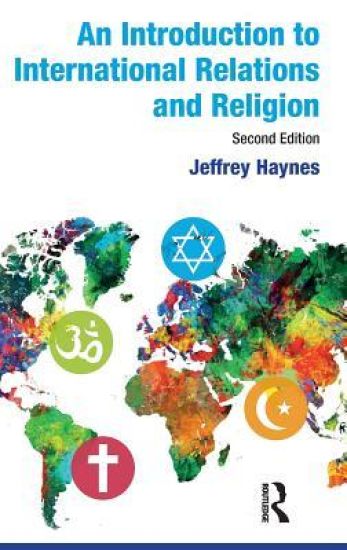
Not so very long ago it seemed reasonable to assert that the influence of religion on global politics was on the wane. As the Western world became increasingly secular and the process of globalisation deepened, it seemed inevitable - on the surface at least - that the voice of religion was to be heard softly if it was to be heard at all.This has now changed, and changed perhaps irrevocably. As Jeff Haynes argues in this thought-provoking and important new book, various religious 'actors' are now significantly involved in international relations and have become a crucial influence on policy in a post-Westphalian world. International Relations and Religion guides the reader through the complex issues at the heart of this topic with clarity and insight. This updated second edition starts with a close reading of the many theoretical and analytical concepts - notably Huntington and the clash of civilisations - that have grown up around this area and then concludes with a summary of the issues under discussion and attempts to put into context what it means to live in a world that is increasingly shaped by a whole host of diverse religious groups. Essential reading for students of International Relations and Politics.
From the war on terror to the global financial crisis, traditional concepts of world politics are being challenged on a daily basis. In these uncertain times, the study of international relations and the forces that shape them have never been more important.Written specifically for students who are approaching this subject for the first time, World Politics is the most accessible, coherent and up-to-date account of the field available. It covers the historical backdrop to today’s political situations, the complex interactions of states and non-state actors, the role of political economy, human security in all its forms, and the ways in which culture, religion and identity influence events. World Politics takes a new approach that challenges traditional interpretations, and will equip students with the knowledge and the confidence needed to tackle the big issues.