Kirjojen hintavertailu. Mukana 12 595 353 kirjaa ja 12 kauppaa.

Kirjailija

Jeffrey J. Sallaz

Kirjat ja teokset yhdessä paikassa: 4 kirjaa, julkaisuja vuosilta 2013-2019, suosituimpien joukossa Lives on the Line. Vertaile teosten hintoja ja tarkista saatavuus suomalaisista kirjakaupoista.

4 kirjaa

Kirjojen julkaisuhaarukka 2013-2019.

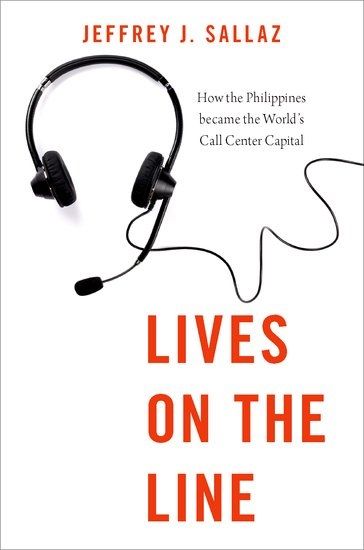
Lives on the Line

Lives on the Line

Jeffrey J. Sallaz

Oxford University Press Inc
2019
nidottu
The call center industry is booming in the Philippines. Around the year 2005, the country overtook India as the world's "voice capital," and industry revenues are now the second largest contributor to national GDP. In Lives on the Line, Jeffrey J. Sallaz retraces the assemblage of a global market for voice over the past two decades. Drawing upon case studies of sixty Filipino call center workers and two years of fieldwork in Manila, he illustrates how offshore call center jobs represent a middle path for educated Filipinos, who are faced with the dismaying choice to migrate abroad in search of prosperity versus stay at home as an impoverished professional. A rich ethnographic study, this book challenges existing stereotypes regarding offshore service jobs and sheds light upon the reasons that the Philippines has become the world's favored location for "voice." It looks beyond call centers and beyond India to advance debates concerning global capitalism, the future of work, and the lives of those who labor in offshored jobs.
Lives on the Line

Lives on the Line

Jeffrey J. Sallaz

Oxford University Press Inc
2019
sidottu
The call center industry is booming in the Philippines. Around the year 2005, the country overtook India as the world's "voice capital," and industry revenues are now the second largest contributor to national GDP. In Lives on the Line, Jeffrey J. Sallaz retraces the assemblage of a global market for voice over the past two decades. Drawing upon case studies of sixty Filipino call center workers and two years of fieldwork in Manila, he illustrates how offshore call center jobs represent a middle path for educated Filipinos, who are faced with the dismaying choice to migrate abroad in search of prosperity versus stay at home as an impoverished professional. A rich ethnographic study, this book challenges existing stereotypes regarding offshore service jobs and sheds light upon the reasons that the Philippines has become the world's favored location for "voice." It looks beyond call centers and beyond India to advance debates concerning global capitalism, the future of work, and the lives of those who labor in offshored jobs.

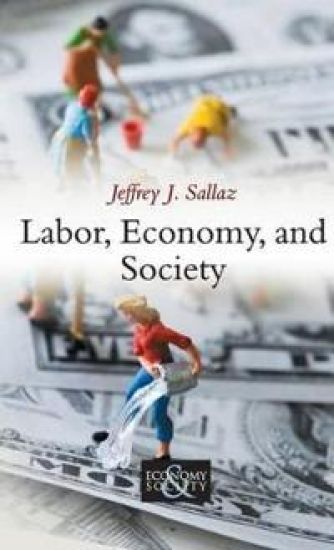
Labor, Economy, and Society

Labor, Economy, and Society

Jeffrey J. Sallaz

Polity Press
2013
nidottu
Work is, and always will be, a central institution of society. What makes a capitalist society unique is that it treats the human capacity to engage in labor as a basic commodity. This can be a source of dynamism, as when innovative firms raise wages to attract the best and brightest. But it can also be a source of misery, as when one’s skills are suddenly rendered obsolete by forces beyond one’s control. Jeffrey J. Sallaz asks us to rethink our basic assumptions about work. Drawing on cutting-edge theories within economic sociology and through the use of contemporary examples, he conceptualizes labor as embedded exchange. This draws attention to issues that all too frequently are overlooked in our public discourse and private imaginations: how various forms of work are classified and valued; how markets for labor operate in practice; and how people can challenge the central fiction that their work is simply a commodity to be bought and sold. This readable and engaging book is suitable for both graduate and advanced undergraduate students. It will be of interest to economic sociologists, scholars of labor, and all of those who find themselves working for a living.
Labor, Economy, and Society

Labor, Economy, and Society

Jeffrey J. Sallaz

Polity Press
2013
sidottu
Work is, and always will be, a central institution of society. What makes a capitalist society unique is that it treats the human capacity to engage in labor as a basic commodity. This can be a source of dynamism, as when innovative firms raise wages to attract the best and brightest. But it can also be a source of misery, as when one’s skills are suddenly rendered obsolete by forces beyond one’s control. Jeffrey J. Sallaz asks us to rethink our basic assumptions about work. Drawing on cutting-edge theories within economic sociology and through the use of contemporary examples, he conceptualizes labor as embedded exchange. This draws attention to issues that all too frequently are overlooked in our public discourse and private imaginations: how various forms of work are classified and valued; how markets for labor operate in practice; and how people can challenge the central fiction that their work is simply a commodity to be bought and sold. This readable and engaging book is suitable for both graduate and advanced undergraduate students. It will be of interest to economic sociologists, scholars of labor, and all of those who find themselves working for a living.