Kirjojen hintavertailu. Mukana 12 657 676 kirjaa ja 12 kauppaa.

Kirjailija

Jeffrey James

Kirjat ja teokset yhdessä paikassa: 26 kirjaa, julkaisuja vuosilta 1993-2025, suosituimpien joukossa Ireland: The Struggle for Power. Vertaile teosten hintoja ja tarkista saatavuus suomalaisista kirjakaupoista.

26 kirjaa

Kirjojen julkaisuhaarukka 1993-2025.

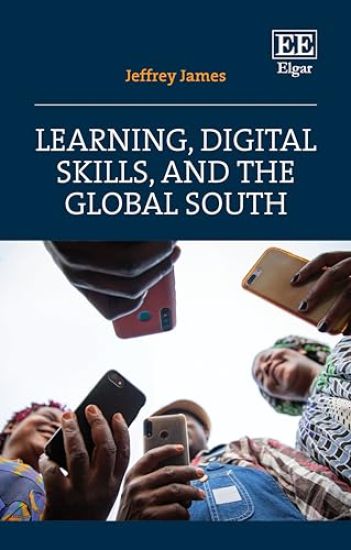
Learning, Digital Skills, and the Global South

Learning, Digital Skills, and the Global South

Jeffrey James

EDWARD ELGAR PUBLISHING LTD
2025
sidottu
With our modern world relying more and more on internet-based technologies, this timely book takes a renewed look at the ever-increasing digital divide between developing and more technologically advanced countries and the resulting impacts on achieving the Sustainable Development Goals (SDGs).Jeffrey James conducts a methodological and conceptual review of the patterns and shortfalls arising from the technological divide between countries, recommending a more proactive response for countries that are struggling to minimise the gap. He juxtaposes the current usage of technology coupled with the prohibitive cost of accessing the internet in the Global South against the cost of living in poverty, the lack of literacy, and learned digital skills. The book addresses these key issues and investigates the current gender disparity, offering solutions for implementing low-cost policies such as the recent successful launch of the inexpensive JioPhone handset.Learning, Digital Skills, and the Global South is an excellent resource for scholars of development economics, innovation economics and information technology. It is also an invigorating read for policy makers in developing countries to make future decisions drawing on a wider variety of analytical frameworks and methods than is usually the case.
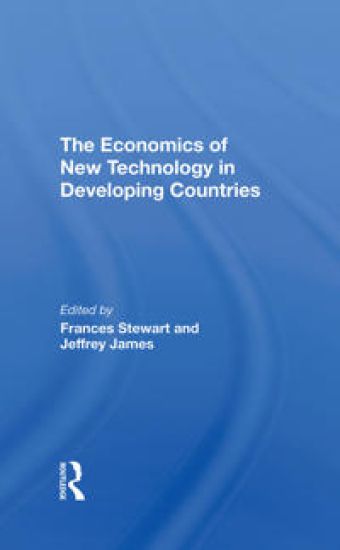
The Economics Of New Technology In Developing Countries

The Economics Of New Technology In Developing Countries

Frances Stewart; Jeffrey James

TAYLOR FRANCIS LTD
2024
nidottu
This book is the outcome of a Development Studies Association Workshop on Technology that we convened in Queen Elizabeth House in March 1980. In the 1960s and 1970s most research on technology in poor countries was directed at the question of the labour or capital intensity of production technique (sometimes described as the 'neo-classical' question). The collection of essays raises questions as much as it provides answers: but in so doing it provides a comprehensive introduction to the major new topics which are of substantial concern to those working on issues of technology and development.
Gender, Internet Use, and Covid-19 in the Global South

Gender, Internet Use, and Covid-19 in the Global South

Jeffrey James

Springer International Publishing AG
2022
nidottu
This book analyzes the use of the mobile Internet against the background of gender bias and Covid-19, currently two of the most important and pressing problems of the Global South. The book argues that the degree of benefits from this new technology depends heavily on the way it is actually used and that most new technologies are developed for the conditions prevailing in rich countries, where they tend to be quite easily adopted and used. In the Global South, by contrast, a paucity of digital skills and other factors make the potentially valuable benefits from the Internet much more difficult to derive. Using empirical data recently provided by the Groupe Speciale Mobile Association (GSMA), the book examines the existence and extent of the digital divide between males and females in mobile Internet use, which constitutes a new form of divide. It sheds light on the acute difficulty for first-time mobile Internet users in the Global South, and especially Sub-Saharan Africa, to learn the digital skills that are needed to use the said technology effectively, with a special focus on how these users acquire the required knowledge, without having undergone the process of learning by doing. The book further discusses the determinants of digital skills in the Global South, as well as major factors underlying the extent to which different users actually benefit from the mobile Internet, such as gender, location, age, and education. Finally, it investigates how womens' use of the Internet has been altered by the pandemic in the Global South.This book will appeal to students, researchers, and scholars of development economics and development studies, as well as policy-makers interested in a better understanding of the impact of gender bias and Covid-19 on mobile internet use in the Global South.
New Perspectives on Current Development Policy

New Perspectives on Current Development Policy

Jeffrey James

Springer Nature Switzerland AG
2021
nidottu
This book presents new perspectives on current development policy against the background of the Covid-19 pandemic. The author applies new methodological, disciplinary, and analytical approaches to examine specific major contemporary policy issues. The topics covered include the impact of the Covid-19 pandemic in developing countries, an anomaly in the digital divide, Internet connectivity differences in Sub-Saharan Africa, and the domination of India in the spread of new, low-cost smart feature phones.This book is a must-read for a general audience interested in the current development policy in the light of the current Covid-19 pandemic, as well as for students and researchers of development economics and development studies who are interested in issues involving the digital divide and state policy towards the internet in the Global-South.
The Impact of Smart Feature Phones on Development

The Impact of Smart Feature Phones on Development

Jeffrey James

Springer Nature Switzerland AG
2020
nidottu
This novel book, motivated by the recent introduction of a major innovation in information technology, explores the possibility of the Internet being made available to millions of poor people in developing countries, who are not yet connected. The new technology, known as a smart feature phone, is based on open-source software and otherwise designed for a low-income population. The purpose of this book is to examine the origins, spread and impact of this innovation. Much attention is paid to literacy and digital skills, which determine the benefits that are actually derived.
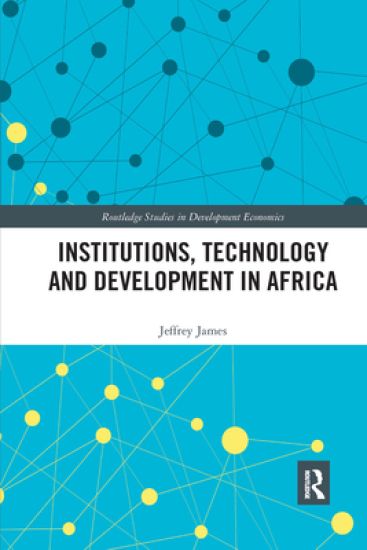
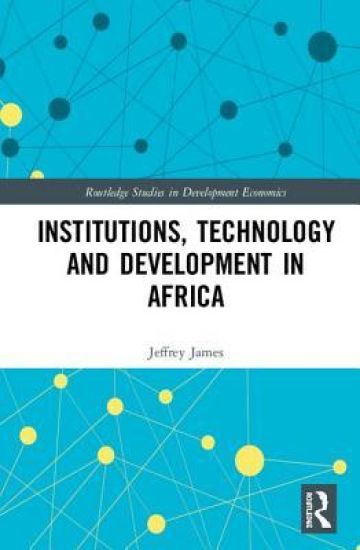
Institutions, Technology and Development in Africa
An extensive literature has demonstrated that technologies in sub-Saharan Africa are largely inappropriate: that is, that they are typically capital- and import-intensive rather than labour- and local input-intensive. These technologies have created a pattern of development that is highly unequal, with widespread unemployment and under-employment. In this literature, however, relatively little attention has been paid to the institutions that govern the generation, adoption and use of technology.This book draws on historical analysis and case studies to evaluate how institutions in different countries, including those in Africa itself, generate technologies that vary in their characteristics and suitability for the region. Through these case studies, insight is gained into the characteristics of ‘appropriate’ institutions that might underlie a more balanced pattern of technology and development than currently exists. The findings of the book clearly confirm a major tenet of institutionalist theory: namely, that institutions developed in one set of circumstances are unlikely to be appropriate to conditions in a markedly different set.This book will be of interest to economists, social historians and anyone with an interest in modern African development.
The Bastard's Sons

The Bastard's Sons

Jeffrey James

Amberley Publishing
2020
sidottu
William the Conqueror’s intellect is said to have remained clear right up to his death. He would have questioned whether any of his three sons individually had the ability to rule the troublesome amalgam of England, Normandy and Maine once he was gone. The Bastard’s Sons is the story of those three men: Robert, William and Henry of Normandy. Of Robert, the dying king is said to have claimed he was ‘a proud and silly prodigal’, adding that ‘the country which is subject to his dominion will be truly wretched’. Yet Robert became a great crusader. William got on better with his namesake, known to us as William Rufus for his florid looks. He was, like his father, of kingship material, and might have gained the throne of England on his father’s nod, but, equally plausibly, orchestrated a coup. The youngest of the Bastard’s sons, Henry, inherited money from his father, but not land. To placate Henry, the Conqueror is alleged to have told him that one day he would gain both England and Normandy. The stage was set for an epic power struggle between the three men and their barons, who held lands on both sides of the Channel and were thus caught in a difficult position. A mysterious death in the forest, a crusading hero’s return and the tenacity of an overlooked third son would all combine to see this issue settled once and for all.
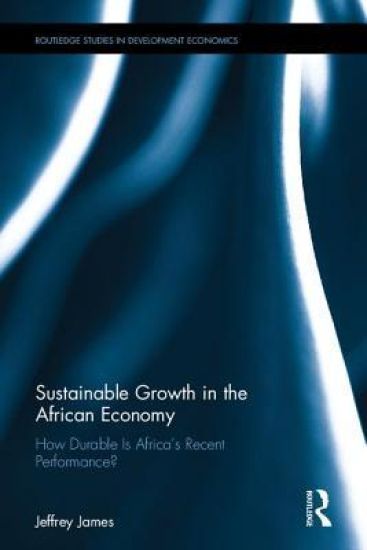
Sustainable Growth in the African Economy
The current growth path in sub-Saharan Africa is not following the Lewis model where labour moves from low-productivity agriculture to higher productivity manufacturing. Instead, it is moving directly to inappropriate (import and labour-saving) methods. This book seeks to show how this distorted growth process leaves out the major resource of these countries – labour – and ends up creating unstable employment and underemployment, leading to inequality and poverty. In this way it demonstrates how the entire growth process may be rendered unstable and unsustainable.Sustainable Growth in the African Economy considers whether the relatively rapid growth of recent years can be maintained or improved upon, with a focus on the process of industrialisation. Basing itself on a well-known dual-economy model, the proposed book focuses on several major problems of industrialisation, which has long been seen as the means of structural change in an economy which begins from a low income level. The book considers how the future trajectory of sub-Saharan Africa compares to recent success stories on other continents, and explains how factors such as rapid population growth and capital and import-intensive technology in manufacturing could foreshadow future social and political problems. This book will be essential reading to students and policymakers who are concerned with the existing pattern of African growth.
Visitors

Visitors

Jeffrey James

Independently Published
2019
nidottu
This is a Fantasy/Sci-fi/Adventure story about an alien disguised as a human and visiting this planet. He has an invisible ship hidden in the clouds and can time-travel. He is hunting down monsters that killed his father, but finds a nice girl instead. There are castles, pirates, mobsters, natives, cowboys, hippies, nerds, ninjas, a blue tiger-dragon, a hovercraft, and a hoverboard... Time to fly away.
Uffish Thoughts: Essays, Insight, and Stories About Living Life
Funny. Insightful. Intelligent. Stupid.Have you ever chased a baby rabbit out of your living room with a broom, or elaborately staged your house to appear deserted in order to avoid speaking with a door to door salesperson? These are real things that happen to real people, and Jeffrey James wants to talk about them. His essays and stories uniquely blend inspiration, wit, comedy, and raw emotion in an entertaining collection about living life. He advocates slowing down, finding comforts, and celebrating the goofy side of our personalities. This compilation is sure to inspire and entertain. This is his first collection of essays. Its selections will have you rolling with laughter as you read, but also provide a platform for insightful introspection, helping you examine life and all its wondrous nonsense.A selection from Uffish Thoughts: The day following our wedding, my new wife and I sat in the back seat of our good friend's tiny clown car sausage wagon really cool new Honda Fit as he graciously transported us across the dull, empty, 126-mile expanse between my in-laws' house and Pittsburgh International Airport, where we were scheduled to depart for our honeymoon: a luxurious week of Disney World escapades. If you haven't been to Disney World as an adult, I suggest you remedy that horrendous problem with haste, because it's really the only way to go. I'm sure witnessing the expression on your child's face the first time they see Cinderella's castle elicits some sort of euphoric emotional orgasm, but being an adult trapped in a child's play-town without the encumbrance of actual kids is an exercise in unparalleled bliss. Our honeymoon was my third (fourth?) time to the carnival of commercialism and all newlywed elation aside, it was my favorite trip. There is something eerily amazing about the magical world of Disney, ever-growing and expanding, reaching its giant Disney fingers around everything you've ever known and loved and smothering you under its weight, charging you enormous fees to breathe again. The place is just giant plush characters, $5 sodas, zillions of people, standing in lines in the hot Florida sun, bronze statues, and everything in sight is trying to plunder every dollar you've ever earned from your moth-eaten pockets. But for some reason, you do it all nary a plaint be heard, never wanting to leave. You hand over your money, drop your pants, bend over, and let the Imagineers see if they can dig a couple extra nickels from your colon - because dammit, Disney World is magic, and they know it.This was the first time my wife and I had flown anywhere together, and I think only the second time she'd ever been on an airplane in her life, which is adorable in a really sad sort of way, like when handicapped dogs use those hind leg mobility carts to wheel themselves around.We arrived at the airport after what felt like an infinite amount of time trying not to throw up in the back of that Honda Fit. Inside, we did the whole bag, shoe, laptop, belt, scanner, beep, wand, beep, pass, scanner, belt, laptop, beep, shoe, bag routine and got to our gate without much of a hitch. None of this 21st-century airport security business really bothers either of us because we're a couple mellow yellows and don't get all hissy about nonsense. (That description of our attitudes you just read is a literary term called 'foreshadowing.' You'll see why at the end. That's how foreshadowing works.) And now I've just insulted your intelligence.We boarded the plane and Laura took the window seat because she gets what she wants. Happy wife, happy life. We were on day two and I already knew that, guys...Check out the full book for the rest
The Economics Of New Technology In Developing Countries

The Economics Of New Technology In Developing Countries

Frances Stewart; Jeffrey James

Routledge
2019
sidottu
This book is the outcome of a Development Studies Association Workshop on Technology that we convened in Queen Elizabeth House in March 1980. In the 1960s and 1970s most research on technology in poor countries was directed at the question of the labour or capital intensity of production technique (sometimes described as the 'neo-classical' question). The collection of essays raises questions as much as it provides answers: but in so doing it provides a comprehensive introduction to the major new topics which are of substantial concern to those working on issues of technology and development.
Institutions, Technology and Development in Africa
An extensive literature has demonstrated that technologies in sub-Saharan Africa are largely inappropriate: that is, that they are typically capital- and import-intensive rather than labour- and local input-intensive. These technologies have created a pattern of development that is highly unequal, with widespread unemployment and under-employment. In this literature, however, relatively little attention has been paid to the institutions that govern the generation, adoption and use of technology.This book draws on historical analysis and case studies to evaluate how institutions in different countries, including those in Africa itself, generate technologies that vary in their characteristics and suitability for the region. Through these case studies, insight is gained into the characteristics of ‘appropriate’ institutions that might underlie a more balanced pattern of technology and development than currently exists. The findings of the book clearly confirm a major tenet of institutionalist theory: namely, that institutions developed in one set of circumstances are unlikely to be appropriate to conditions in a markedly different set.This book will be of interest to economists, social historians and anyone with an interest in modern African development.
Edward IV

Edward IV

Jeffrey James

Amberley Publishing
2017
pokkari
Few English monarchs had to fight harder for the right to rule than King Edward IV – Shakespeare’s glorious son of York. Cast in the Plantagenet mould, over six feet tall, he was a naturally charismatic leader. Edward had the knack of seizing the initiative and winning battles and is free from the unflattering characterisations that plagued his brother, Richard III, having been portrayed as a good-looking and formidable military tactician. Described sometimes as reckless and profligate, all sources remark on his personal bravery. In the eleven years between 1460 and 1471 he fought five major battles in the Wars of the Roses. Three of them – Towton, Barnet and Tewkesbury – rank among the most decisive of the medieval period. This book covers Edward’s family background, the Yorkist takeover and the drift to war. It charts the tensions created by the controversial Woodville marriage and Edward’s deposition by the Earl of Warwick and subsequent exile. The return of the king brought with it more battles and Edward’s decisive campaigns against Warwick and Margaret of Anjou. Finally, Edward’s sudden death heralded the demise of the House of York and the eventual triumph of the Tudors. This is the history of Edward IV’s struggle to gain –and regain – the crown during a period of sustained dynastic turmoil.
Ireland: The Struggle for Power

Ireland: The Struggle for Power

Jeffrey James

Amberley Publishing
2017
sidottu
Ireland’s history has been shaped by the many invaders who have set foot on the country’s shores. For centuries conflict raged amongst the native Irish, Vikings, Anglo-Normans, English and Scots, then the Catholics and Protestants. This real-life game of thrones has moulded the social, political and military history of the nation, so often its problems caused by its proximity to more powerful neighbours. Being a largely ‘empty’ land, Ireland was an attractive proposition for landless knights, and the Norman Conquest of Ireland in 1171 saw a group of carpetbagging Anglo-Normans begin to carve up the country. Without the incursions of the Vikings and Anglo-Normans, Ireland would not be the country it is today. Beginning with Ireland’s earliest history, Ireland spans the centuries, covering the period of Scottish raiding during the War of Scottish Independence and the Elizabethan and Stuart plantations. The seventeenth century witnessed rebellions against English rule and Oliver Cromwell’s storming of Drogheda and Wexford. Upon the installation of William III on the English throne, Ireland became a battleground between competing European powers, the struggle culminating in decisive defeats for James II at the battles of the Boyne and Aughrim, the bitter legacy of which has blighted modern times.
Sustainable Growth in the African Economy
The current growth path in sub-Saharan Africa is not following the Lewis model where labour moves from low-productivity agriculture to higher productivity manufacturing. Instead, it is moving directly to inappropriate (import and labour-saving) methods. This book seeks to show how this distorted growth process leaves out the major resource of these countries – labour – and ends up creating unstable employment and underemployment, leading to inequality and poverty. In this way it demonstrates how the entire growth process may be rendered unstable and unsustainable.Sustainable Growth in the African Economy considers whether the relatively rapid growth of recent years can be maintained or improved upon, with a focus on the process of industrialisation. Basing itself on a well-known dual-economy model, the proposed book focuses on several major problems of industrialisation, which has long been seen as the means of structural change in an economy which begins from a low income level. The book considers how the future trajectory of sub-Saharan Africa compares to recent success stories on other continents, and explains how factors such as rapid population growth and capital and import-intensive technology in manufacturing could foreshadow future social and political problems. This book will be essential reading to students and policymakers who are concerned with the existing pattern of African growth.
The Impact of Mobile Phones on Poverty and Inequality in Developing Countries
This book investigates at both the micro- and macroeconomic levels the impact of mobile phones on poverty and inequality in developing countries. To gauge the effects of mobile phones on these aspects, the author refers to the standard concept of technology adoption and also analyses the actual utilization of mobile phones as a means of communication and the degree to which they have supplanted fixed-line phones. Readers will learn why the substitution effect is stronger among poor than rich users and why the benefits of some mobile phone projects are confined to the local or village level, while in other projects the gains can be felt throughout the economy as a whole.
Edward IV

Edward IV

Jeffrey James

Amberley Publishing
2015
sidottu
Few English monarchs had to fight harder for the right to rule than King Edward IV – Shakespeare’s glorious son of York. Cast in the true Plantagenet mould, over six feet tall, he was a naturally charismatic leader. Edward had the knack of seizing the initiative and winning battles and is free from the unflattering characterisations that plagued his brother, Richard III, having been portrayed as a good-looking and formidable military tactician. Described sometimes as reckless and profligate, all sources remark on his personal bravery. In the eleven years between 1460 and 1471 he fought five major battles in the Wars of the Roses. Three of them – Towton, Barnet and Tewkesbury – rank among the most decisive of the medieval period. This book covers Edward’s family background, the Yorkist takeover and the drift to war. It charts the tensions created by the controversial Woodville marriage and Edward’s deposition by the Earl of Warwick and subsequent exile. The return of the king brought with it battles anew and Edward’s decisive campaigns against Warwick and Margaret of Anjou. Finally, Edward’s sudden death heralded the demise of the House of York and the triumph of the Tudors against Richard III. This is a history of Edward IV’s struggle to gain and retain the kingship of England during a period of sustained dynastic turmoil during the Wars of the Roses.
Digital Interactions in Developing Countries
Jeffrey James is one of the relatively few academics to have systematically taken on the topic of IT and development. In this timely book he undertakes a methodological critique of prominent topics in the debate.Challenging the existing literature by international and governmental institutions, the book looks not only at the digital divide but also at issues such as digital preparedness, leapfrogging and low-cost computers. James also raises important issues which have been largely neglected in the literature, such as the implications for poverty in developing countries and the macroeconomics of mobile phones.The book argues that benefits from IT are captured in a different form in developing as opposed to developed countries. In the latter, gains come from technology ownership and use, whereas in the former, benefits cannot be captured as much in this way because ownership is more limited. Interestingly, the author shows that developing countries have responded to this distinction with a series of local innovations which are often low-cost and pro-poor. This finding contradicts the widely held view that poor countries are unable to generate major innovations within their own borders.Accessible and clearly written, this book will be of great interest to scholars of development economics and development studies, and is relevant to both policy-makers and academics.
An Onslaught of Spears

An Onslaught of Spears

Jeffrey James

The History Press Ltd
2013
nidottu
After more than 200 years of menacing Viking attacks, England finally fell under Danish control in 1016. While earlier kings of Wessex had pushed back the tide of Danish encroachment, wave after wave of incursions from powerful Scandinavian raiders – such as fierce Thorkill ‘the tall’, wily Olaf Tryggvason and the redoubtable Swein Forkbeard – caused Aethelred II’s English forces to eventually buckle under the mounting pressure. Though losing and then regaining his kingdom through force of arms makes him one of only two English monarchs ever to do so, Aethelred’s military reputation has, as a result of bias, become irrevocably tarnished. And no less misunderstood is his son Edmund (Ironside), whose energetic campaign against Cnut in 1016 would decide England’s fate. An Onslaught of Spears comprehensively chronicles the events in England from the late eighth century to Cnut’s victory in 1016. Linking the Danish invasion to the Norman conquest that took place just fifty years later and challenging the myth of Aethelred ‘the Unready’, Jeffrey James’s military history of this turbulent period reveals the true nature of England’s armies and her kings.
Digital Interactions in Developing Countries
Jeffrey James is one of the relatively few academics to have systematically taken on the topic of IT and development. In this timely book he undertakes a methodological critique of prominent topics in the debate.Challenging the existing literature by international and governmental institutions, the book looks not only at the digital divide but also at issues such as digital preparedness, leapfrogging and low-cost computers. James also raises important issues which have been largely neglected in the literature, such as the implications for poverty in developing countries and the macroeconomics of mobile phones.The book argues that benefits from IT are captured in a different form in developing as opposed to developed countries. In the latter, gains come from technology ownership and use, whereas in the former, benefits cannot be captured as much in this way because ownership is more limited. Interestingly, the author shows that developing countries have responded to this distinction with a series of local innovations which are often low-cost and pro-poor. This finding contradicts the widely held view that poor countries are unable to generate major innovations within their own borders.Accessible and clearly written, this book will be of great interest to scholars of development economics and development studies, and is relevant to both policy-makers and academics.