
Kirjailija
Jeffrey Jerome Cohen
Kirjat ja teokset yhdessä paikassa: 7 kirjaa, julkaisuja vuosilta 1999-2022, suosituimpien joukossa Stein. Vertaile teosten hintoja ja tarkista saatavuus suomalaisista kirjakaupoista.
7 kirjaa
Kirjojen julkaisuhaarukka 1999-2022.
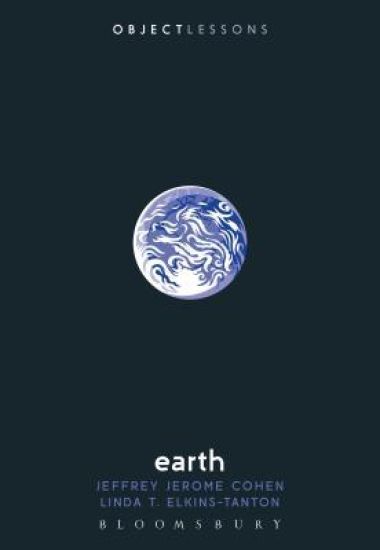
Object Lessons is a series of short, beautifully designed books about the hidden lives of ordinary things.In Earth, a planetary scientist and a literary humanist explore what happens when we think of the Earth as an object viewable from space. As a “blue marble,” “a blue pale dot,” or, as Chaucer described it, “this litel spot of erthe,” the solitary orb is a challenge to scale and to human self-importance. Beautiful and self-contained, the Earth turns out to be far less knowable than it at first appears: its vast interior an inferno of incandescent and yet solid rock and a reservoir of water vaster than the ocean, a world within the world. Viewing the Earth from space invites a dive into the abyss of scale: how can humans apprehend the distances, the temperatures, and the time scale on which planets are born, evolve, and die?Object Lessons is published in partnership with an essay series in The Atlantic.
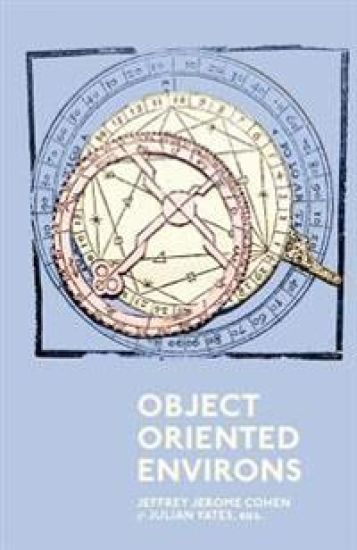
Object Oriented Environs is the lively archive of a critical confluence between the environmental turn so vigorous within early modern studies, and thing theory (object oriented ontology, vibrant materialism, the new materialism and speculative realism). The book unfolds a conversation that attempts to move beyond anthropocentrism and examine nonhumans at every scale, their relations to each other, and the ethics of human enmeshment within an agentic material world. The diverse essays, reflections, images and ephemera collected here offer a laboratory for probing the mystery and potential autonomy of objects, in their alliances and in performance.The book is the trace of an event-space crafted over a day of conversation in two seminars at the Shakespeare Association of America meeting in 2014 in St. Louis and offers its nineteen essays as the end to the work-cycle of the collective we crafted that day. It is a noisy collation, full of bees, bushes, laundry, crutches, lists, poems, plague vectors, planks, chairs, rain, shoes, meat, body parts, books, and assorted humans (living and dead), and also a repertoire of dance steps, ways of configuring the relations between subject and object, actors or actants (human and otherwise). It is also a book that asks readers to ponder their environs, to consider the particularities of their world, of their reading experiences, and to consider what orders of meaning we might be able to derive from attending closely to all the very many things we come into being with.Contributors include: Lizz Angello, Sallie Anglin, Keith M. Botelho, Patricia A. Cahill, Jeffrey Cohen, Drew Daniel, Christine Hoffmann, Neal Klomp, Julia Lupton, Vin Nardizzi, Tara Pedersen, Tripthi Pillai, Karen Raber, Pauline Reid, Emily Rendek, Lindsey Row-Heyveld, Debapriya Sarkar, Rob Wakeman, Jennifer Waldron, Luke Wilson, and Julian Yates.
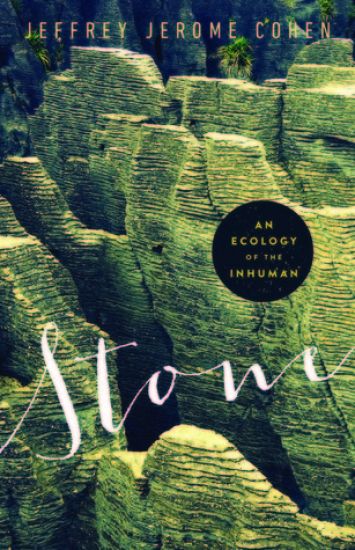
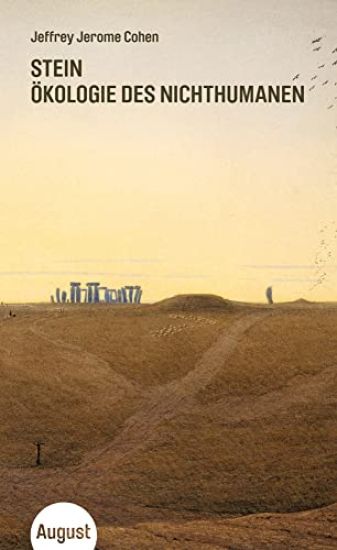
Stone maps the force, vivacity, and stories within our most mundane matter, stone. For too long stone has served as an unexamined metaphor for the “really real”: blunt factuality, nature’s curt rebuke. Yet, medieval writers knew that stones drop with fire from the sky, emerge through the subterranean lovemaking of the elements, tumble along riverbeds from Eden, partner with the masons who build worlds with them. Such motion suggests an ecological enmeshment and an almost creaturely mineral life. Although geological time can leave us reeling, Jeffrey Jerome Cohen argues that stone’s endurance is also an invitation to apprehend the world in other than human terms. Never truly inert, stone poses a profound challenge to modernity’s disenchantments. Its agency undermines the human desire to be separate from the environment, a bifurcation that renders nature “out there,” a mere resource for recreation, consumption, and exploitation. Written with great verve and elegance, this pioneering work is notable not only for interweaving the medieval and the modern but also as a major contribution to ecotheory. Comprising chapters organized by concept -“Geophilia,” “Time,” “Force,” and “Soul”-Cohen seamlessly brings together a wide range of topics including stone’s potential to transport humans into nonanthropocentric scales of place and time, the “petrification” of certain cultures, the messages fossils bear, the architecture of Bordeaux and Montparnasse, Yucca Mountain and nuclear waste disposal, the ability of stone to communicate across millennia in structures like Stonehenge, and debates over whether stones reproduce and have souls. Showing that what is often assumed to be the most lifeless of substances is, in its own time, restless and forever in motion, Stone fittingly concludes by taking us to Iceland?a land that, writes the author, “reminds us that stone like water is alive, that stone like water is transient.”
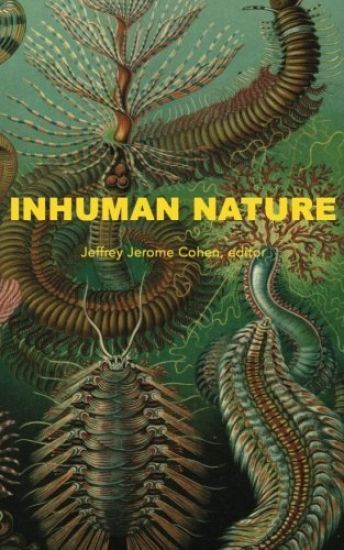
Gathering into lively conversation scholars in medieval, early modern and object studies, Inhuman Nature explores the activity of the things, forces, and relations that enable, sustain and operate indifferently to us. Enamored by fictions of environmental sovereignty, we too often imagine "human" to be a solitary category of being. This collection of essays maps the heterogeneous and asymmetrical ecologies within which we are enmeshed, a material world that makes the human possible but also offers difficulties and resistance. Among the topics explored are the futurity that inheres in storms and wrecks, wood that resists its burning or offers art and dwelling, hymns that implant themselves like viruses, the ontology of everyday objects, the seep and flow of substance, the resistant nature of matter, the dependence of community upon making things public, and the interstices at which nature and culture become inseparable.Tinker as you will.TABLE OF CONTENTS // Jeffrey Jerome Cohen - Introduction: Ecostitial / Steve Mentz - Shipwreck / Anne Harris - Hewn / Alan Montroso - Human / Valerie Allen - Matter / Lowell Duckert - Recreation / Alfred Kentigern Siewers - Trees / James Smith - Fluid / Ian Bogost - Inhuman
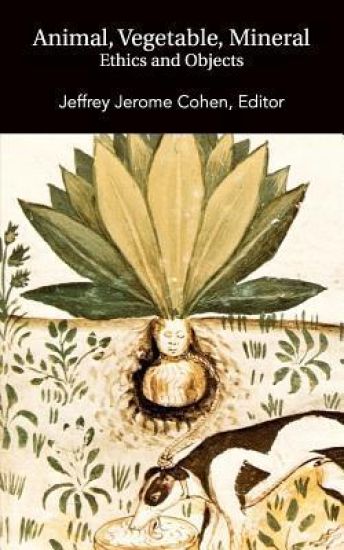
nimal, Mineral, Vegetable examines what happens when we cease to assume that only humans exert agency. Through a careful examination of medieval, early modern and contemporary lifeworlds, these essays collectively argue against ecological anthropocentricity. Sheep, wolves, camels, flowers, chairs, magnets, landscapes, refuse and gems are more than mere objects. They act; they withdraw; they make demands; they connect within lively networks that might foster a new humanism, or that might proceed with indifference towards human affairs. Through what ethics do we respond to these activities and forces? To what futures do these creatures and objects invite us, especially when they appear within the texts and cultures of the "distant" past?Jeffrey J. Cohen: "Introduction: All Things" - Karl Steel: "With the World, or Bound to Face the Sky: The Postures of the Wolf-Child of Hesse" - Sharon Kinoshita: "Animals and the Medieval Culture of Empire" - Peggy McCracken: "The Floral and the Human" - Kellie Robertson: "Exemplary Rocks" - Valerie Allen: "Mineral Virtue" - Eileen Joy: "You Are Here: A Manifesto" - Julian Yates: "Sheep Tracks: Multi-Species Impressions" - Julia Reinhard Lupton: "The Renaissance Res Publica of Things" - Jane Bennett: "Powers of the Hoard: Further Notes on Material Agency"Response essays: Lowell Duckert: "Speaking Stones, John Muir, and a Slower (Non)humanities" - Nedda Mehdizadeh: "'Ruinous Monument' Transporting Objects in Herbert's Persepolis" - Jonathan Gil Harris: "Animal, Vegetable, Mineral: Twenty Questions"
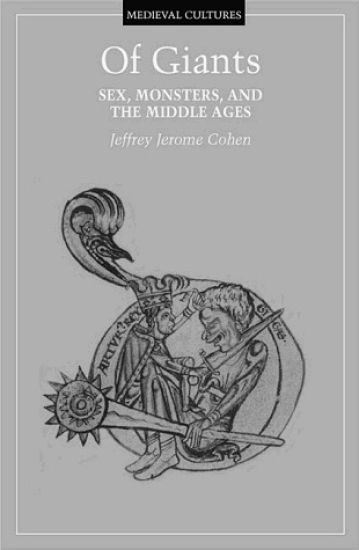
Considers what monsters tell us about identity in the medieval period.A monster lurks at the heart of medieval identity, and this book seeks him out. Reading a set of medieval texts in which giants and dismemberment figure prominently, Jeffrey Jerome Cohen brings a critical psychoanalytic perspective to bear on the question of identity formation-particularly masculine identity-in narrative representation. The giant emerges here as an intimate stranger, a monster who stands at the limits of selfhood.Arguing that in the romance tradition of late fourteenth-century England, identity is inscribed on sexed bodies only through the agency of a monster, Cohen looks at the giant as the masculine body writ large. In the giant he sees an uncanny figure, absolutely other and curiously familiar, that serves to define the boundaries of masculine embodiment. Philosophically compelling, the book is also a philologically rigorous inquiry into the phenomenon of giants and giant-slaying in various texts from the Anglo-Saxon period to late Middle English, including Beowulf, Chrétien de Troyes’s The Knight and the Lion, Geoffrey of Monmouth’s History of the Kings of Britain, several works by Chaucer, Sir Gowther, Sir Gawain and the Green Knight, and more.A significant contribution to our understanding of medieval culture, Of Giants also provides surprising insights into questions about the psychosocial work of representation in its key location for the individual: the construction of gender and the social formation of the boundaries of gender identification. It will engage students of the Middle Ages as well as those interested in discourses of the body, social identity, and the grotesque. ISBN 0-8166-3216-2 Cloth £00.00 $47.95xxISBN 0-8166-3217-0 Paper £00.00 $18.95x240 Pages 5 black-and-white photos 5 7/8 x 9 MayMedieval Cultures Series, volume 17Translation inquiries: University of Minnesota Press