Kirjojen hintavertailu. Mukana 12 595 353 kirjaa ja 12 kauppaa.

Kirjailija

Jeffrey K. Smith

Kirjat ja teokset yhdessä paikassa: 34 kirjaa, julkaisuja vuosilta 1999-2024, suosituimpien joukossa Fire in the Sky. Vertaile teosten hintoja ja tarkista saatavuus suomalaisista kirjakaupoista.

Mukana myös kirjoitusasut: Jeffrey K Smith

34 kirjaa

Kirjojen julkaisuhaarukka 1999-2024.

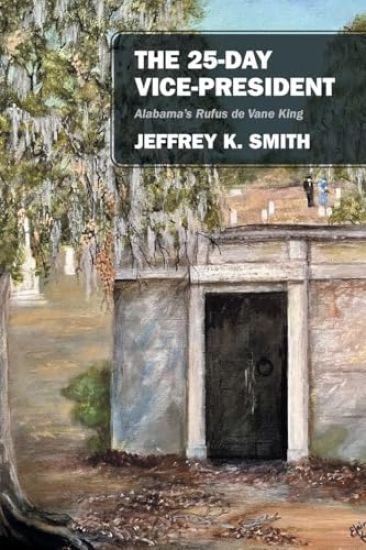
The 25-Day Vice-President

The 25-Day Vice-President

Jeffrey K Smith

Outskirts Press
2024
pokkari
"The 25-Day Vice-President: Alabama's William Rufus de Vane King" documents the life and times of an often overlooked 19th Century statesman. Born to wealth and privilege in North Carolina, King grew up to become an attorney and was elected by Tarheel voters to serve in the State Legislator and U.S. Congress.In 1819, after serving in Europe as Legation Secretary for the American Foreign Minister to the Two Sicilies and Russia, King migrated to the Alabama Territory. He quickly became a prominent member of the territory's rapidly growing, slaveholding, planter-class aristocracy. As an established community leader, King helped construct a new city near his plantation home. Furthermore, he was credited with naming the community Selmz, in honor of a favorite Ossian poem.After Alabama was admitted to the Union, King was elected as one of the 22nd state's first U.S. Senators. For nearly three decades, he served in the Senate representing his adopted home state. As a slaveholder, King believed perpetuation of the barbaric institution was a Constitutional right. Nonetheless, he never joined forces with the so-called "fire-eaters," rabid secessionists who advocated disunion if the federal government threatened to abolish slavery.As a Moderate Democrat, King was a political conciliator rather than agitator. While serving in the U.S. Senate, he facilitated compromises between pro- and anti-slavery forces, temporarily forestalling inevitable secession and the bloody American Civil War. As a conciliator and compromiser, King was a political anomaly in the Deep South. King died in March 1853, just 25 days after he was sworn into office as the 13th Vice-President of the United States, and eight years before the onset of the Civil War. Inaugurated while he was seeking treatment for terminal tuberculosis in the island nation of Cuba, King remains the first and only American President or Vice-President to take the oath of office on foreign soil. King was no doubt an enigmatic figure. He was a respected statesman who vainly sought to save America from disunion. In his later years, he resigned from Congress to serve as Foreign Minister to France where he convinced the European power to refrain from interfering with America's Manifest Destiny expansionist agenda. While mild-mannered and chivalrous, King was never a shrinking violet. On at least three separate occasions, he accepted challenges to participate in potentially deadly duels when his honor was called into question. As a lifelong bachelor, King was the target of unsubstantiated rumors and innuendo concerning his sexual orientation. Political enemies repeatedly proclaimed King was gay, derisively nicknaming him "Miss Fancy." "The 25-Day Vice-President" is a compelling narrative. Much of William R. King's life journey unfolded during America's tumultuous Antebellum-era, when the nation was not yet a century-old. While slavery proved to be the most divisive issue, other controversies led to bitter disagreements and the formation of rival political parties.Given the taboo nature of same-sex relationships in the 19th Century, King's private life is explored under a detailed and objective light. Readers will be challenged to judge whether individuals' personal and private choices detract from their accomplishments or meaningfully alter the historical record.Undoubtedly, King is one of many lesser-known public figures who helped weave America's complex political and social fabric.
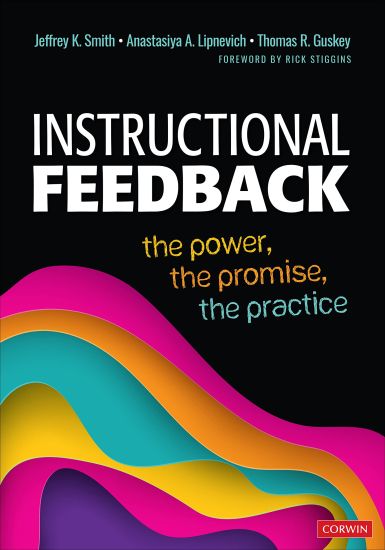
Instructional Feedback

Instructional Feedback

Jeffrey K. Smith; Anastasiya A. Lipnevich; Thomas R. Guskey

SAGE PUBLICATIONS INC
2023
nidottu
Implement evidence-based feedback practices that move learners forward Feedback is essential to successful instruction and improved student performance, but learners often dread and dismiss feedback and its effectiveness can vary. Thus, sharing intentions, clarifying success criteria, knowing what type of feedback to provide and when, and activating students as owners of their learning are essential feedback functions. Instructional Feedback presents a comprehensive summary of the most recent research on instructional feedback and describes its successful implementation. With a focus on evidence-based approaches adapted to specific contexts, the authors use common classroom situations to demystify feedback and place it within a broad instructional context, along with definitions, characteristics, and precautions about its effect on students’ emotions and behaviors. Inside you’ll find: Coverage of all grades and concentrations, including math, language arts, music, art, and sciencePeer feedback, self-assessment, and subject-specific nuancesStudent and teacher examples of feedback and suggestions for improvement Engaging and concise, Instructional Feedback discusses why feedback is so powerful, how it is promising, and what it looks like in practice.
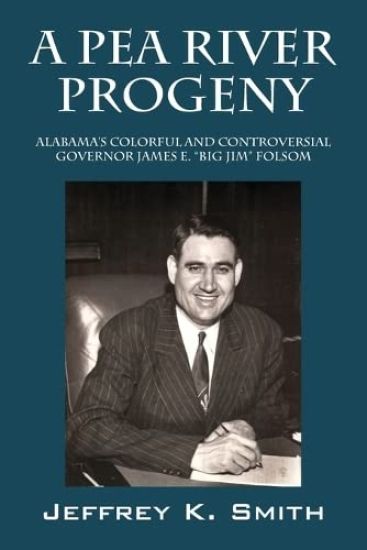
A Pea River Progeny

A Pea River Progeny

Jeffrey K Smith

Outskirts Press
2022
pokkari
"A Pea River Progeny: Alabama's Colorful and Controversial Governor James E. "Big Jim" Folsom chronicles the life of a 20th century Deep South politician who left behind a memorable legacy. A Populist who appealed to the common folks, Folsom directly bypassed the state's powerful, long-standing political machine and local power brokers to twice win the Governorship. He was devoted to helping the often-overlooked and less affluent residents of Alabama. Folsom's Progressive but largely unpopular views on civil rights were far ahead of his time. The biography of Folsom is filled with early- to mid-20th century Alabama and Southern history. At the same time, it is Shakespearian-like -- marked with comedy, drama, tragedy, and unfulfilled promises. At six-feet, eight inches tall and weighing 275 pounds, he was a literal and figurative giant. Folsom's compassion and Populism, however, were often tainted by his outrageous antics, progressive descent into alcoholism, and unpopularity with white supremacists. Those who read about Big Jim Folsom will discover his life and times are often stranger and more compelling than fiction.
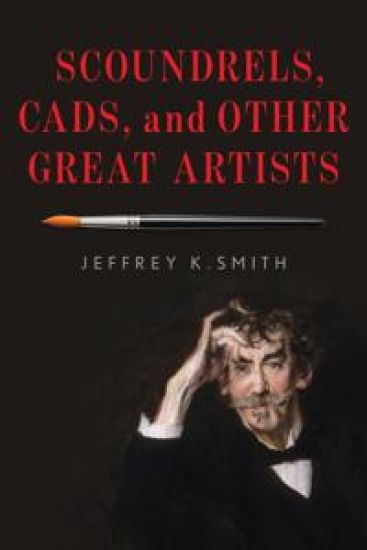
Scoundrels, Cads, and Other Great Artists

Scoundrels, Cads, and Other Great Artists

Jeffrey K. Smith

Rowman Littlefield
2020
sidottu
Scoundrels, Cads, and Other Great Artists examines the lives of 12 great artists who were less than exemplary human beings in their lives outside of their art. It explores the question, “Why do we like magnificent art from artists who were awful human beings?” For example, the great Baroque painter, Caravaggio, who developed the chiaroscuro style of painting, was in constant trouble with the law, even having killed a man in a dual. Frederick Remington, the great painter of the American West, was an incredible racist and bigot. His evocative paintings of native Americans on the trail on horseback give no hint of Remington’s enmity toward them or other ethnic groups in America. John James Audubon? He mostly shot the birds he painted; if in doing so, he damaged a part that he wanted to paint, he shot another one. Whistler and Courbet were philanderers and libertines. Scoundrels introduces people to great art by showing the more salacious side of the personal lives of great artists over time. The book not only tells the stories of a dozen artists, but explores how to look at art and the separation between art and artist. This lively narrative is enhanced by over 100 full-color reproductions of great paintings and details from them.
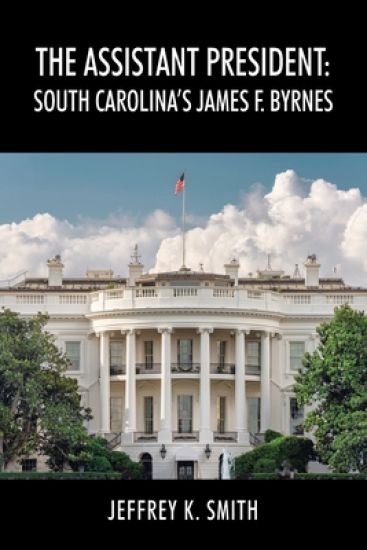
The Assistant President

The Assistant President

Jeffrey K Smith

Outskirts Press
2020
pokkari
Few people outside of South Carolina are familiar with the name of, much less the role, James F. Byrnes played in shaping 20th century America. He is the only man in the history of the United States to occupy positions in all three federal government branches--executive, congressional, and judicial. From pre-World War I through the 1960s, Byrnes was an influential legislator, supreme court justice, and intimate adviser to presidents. "The Assistant President: South Carolina's James F. Byrnes" chronicles the life and times of an important but often forgotten public servant.
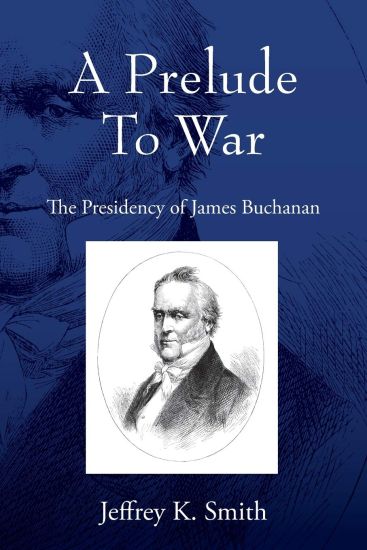
A Prelude To War

A Prelude To War

Jeffrey K Smith

Outskirts Press
2019
pokkari
In October of 2000, the Federalist Society and The Wall Street Journal asked 132 professors of history, political science, and law to rank presidents on a scale from one to five; five equaled "highly superior," while one represented "below average." Ultimately, 78 of the invited scholars chose to participate in the historical exercise. It was not surprising to discover that George Washington finished first in the survey (with an average score of 4.92), and Abraham Lincoln followed a close second (4.87). One of the presidents on the opposite end of the spectrum, Andrew Johnson (with a score of 1.65) was the subject of my 2012 biography entitled "The Loyalist." Johnson, who has the misfortune of succeeding the martyred Abraham Lincoln, was the first president to be impeached, which no doubt contributed to his negative rating. The 15th president of the United States, James Buchanan, with an average rating of 1.33, came in dead last among the 39 chief executives. Interestingly, Buchanan's administration directly preceded Lincoln's. Is it mere coincidence that two of the four lowest-rated presidents were bookends to Lincoln? Did the unfortunate timing of the Buchanan and Johnson administrations subject them to impossibly high standards? Why is James Buchanan regarded as the worse president? The answer is far from simple and is as much a reflection of the troubled times surrounding his administration as it is the of the man himself.
A Family Affair: The Rosenberg Espionage Case

A Family Affair: The Rosenberg Espionage Case

Jeffrey K. Smith

Createspace Independent Publishing Platform
2017
nidottu
This is a real-life spy story--one that not only polarized America and much of the world, but also tore a family asunder. More specifically, it pitted a brother against his sister and brother-in-law; one was sentenced to prison and the other two were executed. "A Family Affair: The Rosenberg Espionage Case" is tragic and compelling drama about Atomic Spies that occurred in an era when fear often trumped reason.
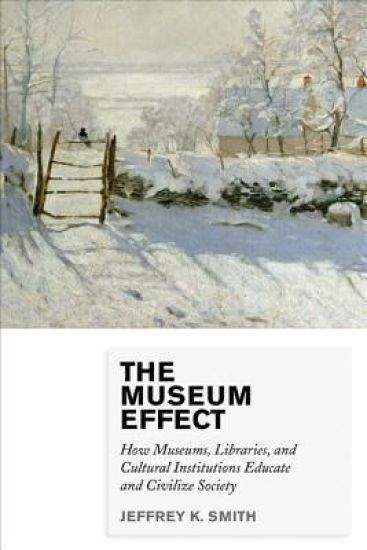
The Museum Effect

The Museum Effect

Jeffrey K. Smith

Rowman Littlefield Publishers
2014
sidottu
Museums, libraries, and cultural institutions provide opportunities for people to understand and celebrate who they are, were, and might be. These institutions educate the public and civilize society in a variety of ways, ranging from community events to a single child making a first visit. The Museum Effect documents this phenomenon, explains how it happens, and shows how institutions can facilitate this process. Cultural institutions vary dramatically in size, nature and purpose, but they all allow visitors to hold conversations with artists and authors perhaps long dead. These conversations, sometimes with others present, and sometimes with artists, scientists, explorers, or authors not present, allow visitors to explore their lives and their “possible selves.” Cultural institutions inspire personal reflection, and help visitors better themselves, in that they leave having contemplated what is noble, excellent, or exemplary about the society in which they live. The “museum effect” is a process through which cultural institutions educate and civilize us as individuals and as societies. These institutions allow visitors to spend some time with their thoughts elevated, and leave the institution better people in some meaningful fashion than when they entered. This visionary book presents the underlying idea and the argument for the museum effect, along with empirical research supporting that argument. It will help those working in museums, libraries, and archivists to facilitate this process, and study how this is working in their own institutions.
The Museum Effect

The Museum Effect

Jeffrey K. Smith

Rowman Littlefield Publishers
2014
nidottu
Museums, libraries, and cultural institutions provide opportunities for people to understand and celebrate who they are, were, and might be. These institutions educate the public and civilize society in a variety of ways, ranging from community events to a single child making a first visit. The Museum Effect documents this phenomenon, explains how it happens, and shows how institutions can facilitate this process. Cultural institutions vary dramatically in size, nature and purpose, but they all allow visitors to hold conversations with artists and authors perhaps long dead. These conversations, sometimes with others present, and sometimes with artists, scientists, explorers, or authors not present, allow visitors to explore their lives and their “possible selves.” Cultural institutions inspire personal reflection, and help visitors better themselves, in that they leave having contemplated what is noble, excellent, or exemplary about the society in which they live. The “museum effect” is a process through which cultural institutions educate and civilize us as individuals and as societies. These institutions allow visitors to spend some time with their thoughts elevated, and leave the institution better people in some meaningful fashion than when they entered. This visionary book presents the underlying idea and the argument for the museum effect, along with empirical research supporting that argument. It will help those working in museums, libraries, and archivists to facilitate this process, and study how this is working in their own institutions.