Kirjojen hintavertailu. Mukana 12 595 353 kirjaa ja 12 kauppaa.

Kirjailija

Jeffrey L. Cruikshank

Kirjat ja teokset yhdessä paikassa: 5 kirjaa, julkaisuja vuosilta 1992-2010, suosituimpien joukossa Breaking Robert's Rules. Vertaile teosten hintoja ja tarkista saatavuus suomalaisista kirjakaupoista.

5 kirjaa

Kirjojen julkaisuhaarukka 1992-2010.

Breaking Robert's Rules

Breaking Robert's Rules

Lawrence E. Susskind; Jeffrey L. Cruikshank

Oxford University Press Inc
2006
sidottu
Every day in communities across America hundreds of committees, boards, church groups, and social clubs hold meetings where they spend their time engaged in shouting matches and acrimonious debate. Whether they are aware of it or not, the procedures that most such groups rely on to reach decisions were first laid out as Robert's Rules more than 150 years ago by an officer in the U.S. Army's Corps of Engineers. Its arcane rituals of parliamentary procedure and majority rule usually produce a victorious majority and a very dissatisfied minority that expects to raise its concerns, again, at the next possible meeting. Breaking Robert's Rules clearly spells out how any group can work together effectively. After briefly explaining the problems created by Robert's Rules, the guide outlines the five key steps toward consensus building, and addresses the specific problems that often get in the way of a group's progress. Appendices include a basic one page "Handy Guide" that can be distributed at meetings and a case study demonstrating how the ideas presented in the book can also be applied in a corporate context. Written in a non-technical and engaging style, and containing clear ideas and instructions that anyone can understand and use, this one-of-a-kind guide will prove an essential tool for any group desperate to find ways of making their meetings more effective. In addition, neighborhood associations, ad hoc committees, social clubs, and other informal groups lacking a clear hierarchy will find solid advice on how to move forward without resorting to "majority rules" or bickering over who will take leadership positions. Bound to become a classic, Breaking Robert's Rules will change the way you hold meetings forever, paving the way for efficiency, efficacy, and peaceful decision making.
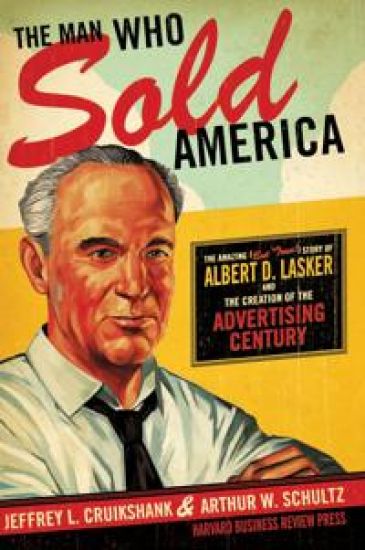
The Man Who Sold America

The Man Who Sold America

Jeffrey L. Cruikshank; Arthur W. Schultz

Harvard Business Review Press
2010
sidottu
We're living in the Age of Persuasion. Leaders and organizations of all kinds--public and private, large and small--fulfill their missions only by competing in the marketplace of images and messages. To win in that marketplace, they need advertising. This has been true since the advent of mass media, from mass-circulation magazines and radio through the age of television and the Internet. Yet even as they use advertising to capture consumers' imaginations and build their brands, few people know of the ingenious and tormented man who built the modern advertising industry and shaped a new consumer sensibility as the twentieth century unfolded: Albert D. Lasker. Drawing on a recently uncovered trove of Lasker's papers, Jeffrey Cruikshank and Arthur Schultz have written a fascinating biography of one of the past century's most influential, intriguing, troubled, and instructive figures. Lasker's creative and powerful use of "reason-why" advertising to inject ideas and arguments into ad campaigns had a profound impact on modern advertising, foreshadowing the consumer-centered "unique selling proposition" approach that dominates the industry today. His tactics helped launch or revitalize companies and brands that remain household names--including Palmolive, Goodyear, and Quaker Oats. As Lasker rose in prominence, he went beyond consumer products to apply his brilliance to presidential politics, government service, and professional sports, changing the game wherever he went, and building a vast fortune along the way. But his intensity had a price--he was felled by mental breakdowns throughout his life. This book also tells the story of how he fought back with determination and with support from family and friends in an age when lack of effective treatment doomed most mentally ill people. The Man Who Sold America is a riveting account of a man larger than life, who shaped not only an industry but also a century.
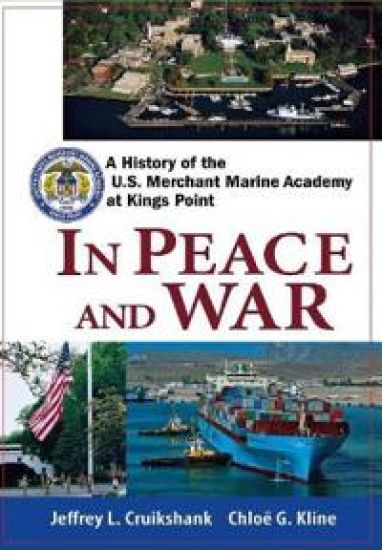
In Peace and in War

In Peace and in War

Jeffrey L. Cruikshank; Chloe G. Kline

John Wiley Sons Ltd
2007
sidottu
Praise for In Peace and War ""A comprehensive, balanced, and compelling history of a first-class educational institution, and of the complex history it services."" --Sean T. Connaughton, Esq., Kings Point '83, Maritime Administrator ""A great read . . . an accurate and absorbing depiction of an institution I was proud to lead for seven years. The authors truly grasped the unique character of the Academy."" --Rear Admiral Thomas A. King, Kings Point '42, sixth Superintendent of Kings Point ""Evokes memories of the earliest challenges in establishing a maritime institution where future success embodies the Academy's motto acta non verba."" --Rear Admiral Lauren S. McCready, Kings Point Professor and Head of Engineering, 1942-1975 ""Much more than an institutional history . . . a fascinating and informed portrait of the individuals and philosophies behind Kings Point."" --Captain Warren G. Leback, Kings Point '44, past Maritime Administrator and industry leader ""Well-written and meticulously researched . . . . A must-read for any maritime history buff."" --Captain Arthur R. Moore, Kings Point '44, author of A Careless Word . . . A Needless Sinking ""The best description of the merchant marine in the last seventy-five years, and the best account of why Kings Point became so important to our national security and economy."" --George R. Searle, past president, American Merchant Marine Veterans of World War II
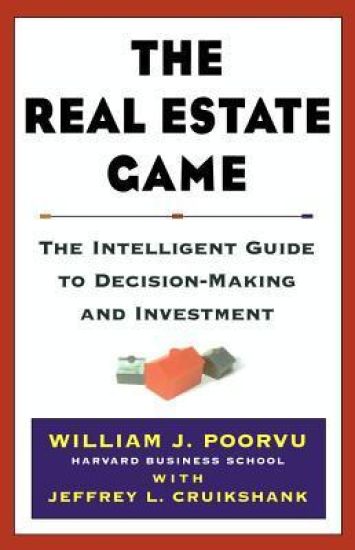
The Real Estate Game: The Intelligent Guide to Decisionmaking and Investment

The Real Estate Game: The Intelligent Guide to Decisionmaking and Investment

William J. Poorvu; Jeffrey L. Cruikshank

FREE PRESS
1999
sidottu
The Real Estate Game is a comprehensive guide to successful real estate investment from one of the masters in the field. Drawing upon four decades of experience developing, owning, and managing properties and on almost thirty years of teaching at the Harvard Business School, William J. Poorvu offers an insider's perspective on how to make smart decisions about real estate. The real estate "game" is played by people, and it's the stories of real people that make Poorvu's introduction to the industry colorful and interesting. You will meet players ranging from real estate moguls to small-scale developers to individual investors in exotic investment instruments. Their stories evolve throughout the book and illustrate how these people--with all their complicated needs, talents, and motives--fit into the larger process and context. In clear and nontechnical language, Poorvu explains how variables--players, properties, capital markets, and the external environment--come together to influence the shape and outcome of a real estate deal. He explains the time frame for different kinds of real estate investments and walks the reader through the key "periods of play" in the real estate game: concept, commitment, development, operation, reward, and reinvestment. The Real Estate Game introduces a simple but powerful "back-of-the-envelope" technique for analyzing the financial implications of a potential deal. Using this tool and others, Poorvu shows readers how to use direct investments, syndicates, and REITs to get into the real estate game across a broad range of property types: residential, office, hotel, industrial, and retail. Offering unique insight into the ways that developers and investors can create value, The Real Estate Game is both a perfect introduction for the novice and an invaluable overview for the experienced professional.
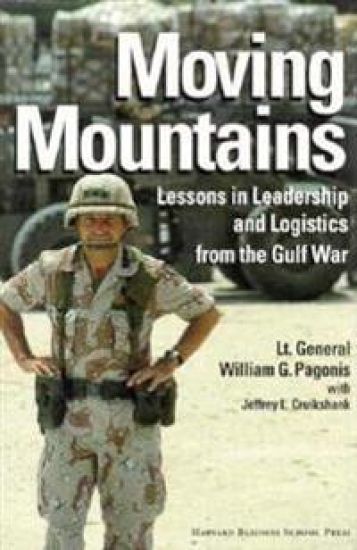
Moving Mountains

Moving Mountains

William G. Pagonis; Jeffrey L. Cruikshank

Harvard Business Review Press
1992
sidottu
A United States general describes his command of the deployment of U.S. troops and supplies to the Persian Gulf in the war with Iraq and recommends his methods of leadership and resource management for use in the business world.