Kirjojen hintavertailu. Mukana 12 657 676 kirjaa ja 12 kauppaa.

Kirjailija

Jeffrey M. Stonecash

Kirjat ja teokset yhdessä paikassa: 18 kirjaa, julkaisuja vuosilta 2002-2025, suosituimpien joukossa Polarization and the Politics of Personal Responsibility. Vertaile teosten hintoja ja tarkista saatavuus suomalaisista kirjakaupoista.

18 kirjaa

Kirjojen julkaisuhaarukka 2002-2025.

Polarization and the Politics of Personal Responsibility

Polarization and the Politics of Personal Responsibility

Mark D. Brewer; Jeffrey M. Stonecash

Oxford University Press Inc
2015
sidottu
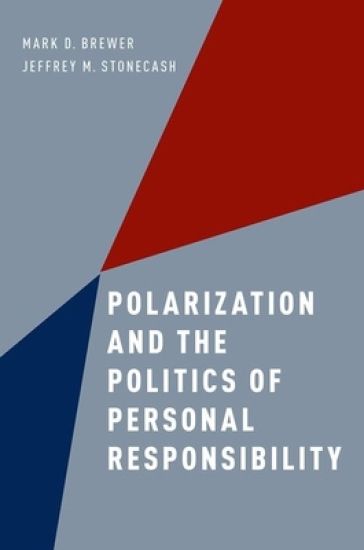
Contemporary American politics is highly polarized, and it is increasingly clear that this polarization exists at both the elite and mass levels. What is less clear is the source of this polarization. Social issues are routinely presented by some as the driver of polarization, while others point to economic inequality and class divisions. Still others single out divisions surrounding race and ethnicity, or gender, or religion as the underlying source of the deep political divide that currently exists in the United States. All of these phenomena are undoubtedly highly relevant in American politics, and it is also beyond question that they represent significant cleavages within the American polity. We argue, however, that disagreement over a much more fundamental matter lies at the foundation of the polarization that marks American politics in the early 21st century. That matter is personal responsibility. Some Americans fervently believe that an individual's lot in life is primarily if not exclusively his or her own responsibility. Opportunity is widespread in American society, and individuals succeed or fail based on their own talents and efforts. Society greatly benefits from such an arrangement, and as such government policies should support and reward individual initiative and responsibility. Other Americans see personal responsibility-while fine in theory-as an unjust organizing principle for contemporary American society. For these Americans, success or failure in life is far too often not the result of personal effort but of large forces well beyond the control of the individual. Opportunity is not widespread, and is by no means equally available to all Americans. In light of these basic facts of American life, it is the responsibility of the state to step in and implement policies that alleviate inequality and assist those who fail by no fault of their own. These basic differences surrounding the idea of personal responsibility are what separate Republicans and Democrats, conservatives and liberals, in contemporary American politics.
Diverging Parties

Diverging Parties

Jeffrey M. Stonecash; Mark D. Brewer; Mack Mariani

Routledge
2019
sidottu
Party polarization in the House of Representatives has increased in recent decades. Explaining this development has been difficult, given current interpretations of American elections. The dominant framework for interpreting elections has been to see them as candidate-centered, or individualistic. This framework may have seemed appropriate as a way
Interpreting Congressional Elections

Interpreting Congressional Elections

Jeffrey M. Stonecash

Routledge
2018
nidottu
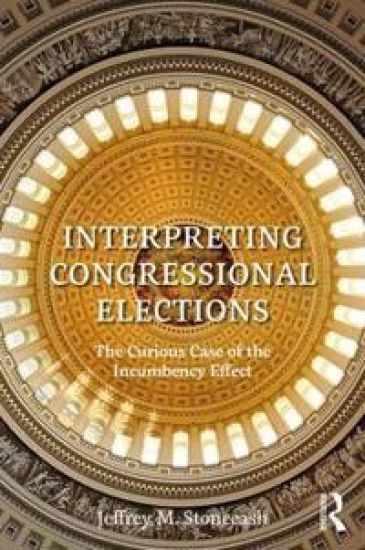
The increase in the "incumbency effect" has long dominated as a research focus and as a framework for interpreting congressional elections. This important new book challenges the empirical claim that incumbents are doing better and the research paradigm that accompanied the claim. It also offers an alternative interpretation of House elections since the 1960s. In a style that is provocative yet fair, learned, and transparent, Jeffrey Stonecash makes a two-pronged argument: frameworks and methodologies suffer when they stop being critically considered, and patterns of House elections over the long term actually reflect party change and realignment. A must-read for scholars and students of congressional elections.
Interpreting Congressional Elections

Interpreting Congressional Elections

Jeffrey M. Stonecash

Routledge
2018
sidottu
The increase in the "incumbency effect" has long dominated as a research focus and as a framework for interpreting congressional elections. This important new book challenges the empirical claim that incumbents are doing better and the research paradigm that accompanied the claim. It also offers an alternative interpretation of House elections since the 1960s. In a style that is provocative yet fair, learned, and transparent, Jeffrey Stonecash makes a two-pronged argument: frameworks and methodologies suffer when they stop being critically considered, and patterns of House elections over the long term actually reflect party change and realignment. A must-read for scholars and students of congressional elections.
Polarization and the Politics of Personal Responsibility

Polarization and the Politics of Personal Responsibility

Mark D. Brewer; Jeffrey M. Stonecash

Oxford University Press Inc
2015
nidottu
Contemporary American politics is highly polarized, and it is increasingly clear that this polarization exists at both the elite and mass levels. What is less clear is the source of this polarization. Social issues are routinely presented by some as the driver of polarization, while others point to economic inequality and class divisions. Still others single out divisions surrounding race and ethnicity, or gender, or religion as the underlying source of the deep political divide that currently exists in the United States. All of these phenomena are undoubtedly highly relevant in American politics, and it is also beyond question that they represent significant cleavages within the American polity. We argue, however, that disagreement over a much more fundamental matter lies at the foundation of the polarization that marks American politics in the early 21st century. That matter is personal responsibility. Some Americans fervently believe that an individual's lot in life is primarily if not exclusively his or her own responsibility. Opportunity is widespread in American society, and individuals succeed or fail based on their own talents and efforts. Society greatly benefits from such an arrangement, and as such government policies should support and reward individual initiative and responsibility. Other Americans see personal responsibility-while fine in theory-as an unjust organizing principle for contemporary American society. For these Americans, success or failure in life is far too often not the result of personal effort but of large forces well beyond the control of the individual. Opportunity is not widespread, and is by no means equally available to all Americans. In light of these basic facts of American life, it is the responsibility of the state to step in and implement policies that alleviate inequality and assist those who fail by no fault of their own. These basic differences surrounding the idea of personal responsibility are what separate Republicans and Democrats, conservatives and liberals, in contemporary American politics.
Understanding American Political Parties

Understanding American Political Parties

Jeffrey M. Stonecash

Routledge
2012
nidottu
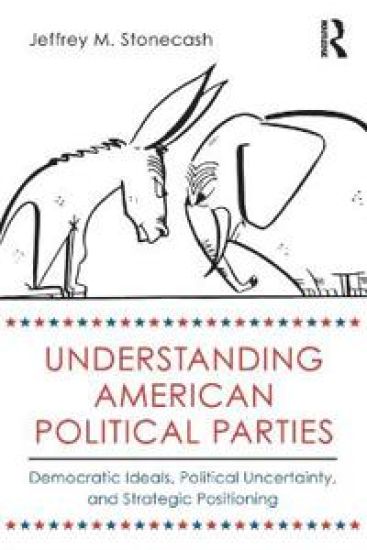
How do parties respond to the electorate and craft winning strategies? In the abstract parties are the vehicles to make democracy work, but it is often difficult to see the process working as well as we think it might. Indeed, voters often struggle to see parties as the valuable vehicles of representation that so many academics describe. There is a clear discrepancy between the ideal expressed in many textbooks and the reality that we see playing out in politics. Noted scholar Jeffrey Stonecash gives us a big picture analysis that helps us understand what is happening in contemporary party politics. He explains that parties behave the way they do because of existing political conditions and how parties adapt to those conditions as they prepare for the next election. Parties are unsure if realignment has stabilized and just what issues brought them their current base. Does a majority support their positions and how are they to react to ongoing social change? Is the electorate paying attention, and can parties get a clear message to those voters? This book focuses on the challenges parties face in preparing for future elections while seeking to cope with current conditions. This coping leads to indecisiveness of positioning, simplification of issues, repetition of messages, and efforts to disparage the reputation of the opposing party. Stonecash sheds much needed light on why parties engage in the practices that frustrate so many Americans.
Understanding American Political Parties

Understanding American Political Parties

Jeffrey M. Stonecash

Routledge
2012
sidottu
How do parties respond to the electorate and craft winning strategies? In the abstract parties are the vehicles to make democracy work, but it is often difficult to see the process working as well as we think it might. Indeed, voters often struggle to see parties as the valuable vehicles of representation that so many academics describe. There is a clear discrepancy between the ideal expressed in many textbooks and the reality that we see playing out in politics. Noted scholar Jeffrey Stonecash gives us a big picture analysis that helps us understand what is happening in contemporary party politics. He explains that parties behave the way they do because of existing political conditions and how parties adapt to those conditions as they prepare for the next election. Parties are unsure if realignment has stabilized and just what issues brought them their current base. Does a majority support their positions and how are they to react to ongoing social change? Is the electorate paying attention, and can parties get a clear message to those voters? This book focuses on the challenges parties face in preparing for future elections while seeking to cope with current conditions. This coping leads to indecisiveness of positioning, simplification of issues, repetition of messages, and efforts to disparage the reputation of the opposing party. Stonecash sheds much needed light on why parties engage in the practices that frustrate so many Americans.
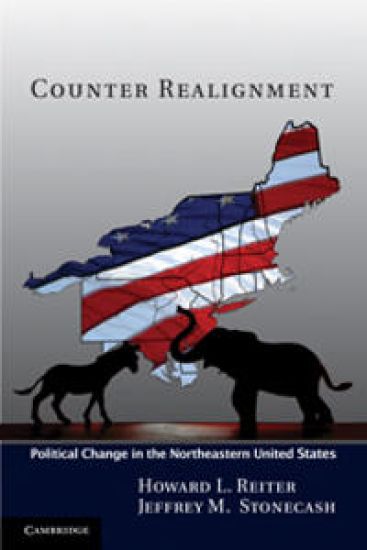
Counter Realignment

Counter Realignment

Howard L. Reiter; Jeffrey M. Stonecash

Cambridge University Press
2011
sidottu
In Counter Realignment, Howard L. Reiter and Jeffrey M. Stonecash analyze data from the early 1900s to the early 2000s to explain how the Republican Party lost the northeastern United States as a region of electoral support. Although the story of how the 'Solid South' shifted from the Democratic to the Republican parties has received extensive consideration from political scientists, far less attention has been given to the erosion of support for Republicans in the Northeast. Reiter and Stonecash examine who the Republican Party lost as it repositioned itself, resulting in the shift of power in the Northeast from heavily Republican in 1900 to heavily Democratic in the 2000s.
Counter Realignment

Counter Realignment

Howard L. Reiter; Jeffrey M. Stonecash

Cambridge University Press
2011
pokkari
In Counter Realignment, Howard L. Reiter and Jeffrey M. Stonecash analyze data from the early 1900s to the early 2000s to explain how the Republican Party lost the northeastern United States as a region of electoral support. Although the story of how the 'Solid South' shifted from the Democratic to the Republican parties has received extensive consideration from political scientists, far less attention has been given to the erosion of support for Republicans in the Northeast. Reiter and Stonecash examine who the Republican Party lost as it repositioned itself, resulting in the shift of power in the Northeast from heavily Republican in 1900 to heavily Democratic in the 2000s.
Dynamics of American Political Parties

Dynamics of American Political Parties

Mark D. Brewer; Jeffrey M. Stonecash

Cambridge University Press
2009
sidottu
Dynamics of American Political Parties examines the process of gradual change that inexorably shapes and reshapes American politics. Parties and the politicians that comprise them seek control of government in order to implement their visions of proper public policy. To gain control parties need to win elections, and winning elections requires assembling an electoral coalition that is larger than that crafted by the opposition. Uncertainty rules and intra-party conflict rages as different factions and groups within the parties debate the proper course(s) of action and battle it out for control of the party. Parties can never be sure how their strategic maneuvers will play out, and, even when it appears that a certain strategy has been successful, party leaders are unclear about how long apparent success will last. Change unfolds slowly, in fits and starts.
Dynamics of American Political Parties

Dynamics of American Political Parties

Mark D. Brewer; Jeffrey M. Stonecash

Cambridge University Press
2009
pokkari
Dynamics of American Political Parties examines the process of gradual change that inexorably shapes and reshapes American politics. Parties and the politicians that comprise them seek control of government in order to implement their visions of proper public policy. To gain control parties need to win elections, and winning elections requires assembling an electoral coalition that is larger than that crafted by the opposition. Uncertainty rules and intra-party conflict rages as different factions and groups within the parties debate the proper course(s) of action and battle it out for control of the party. Parties can never be sure how their strategic maneuvers will play out, and, even when it appears that a certain strategy has been successful, party leaders are unclear about how long apparent success will last. Change unfolds slowly, in fits and starts.
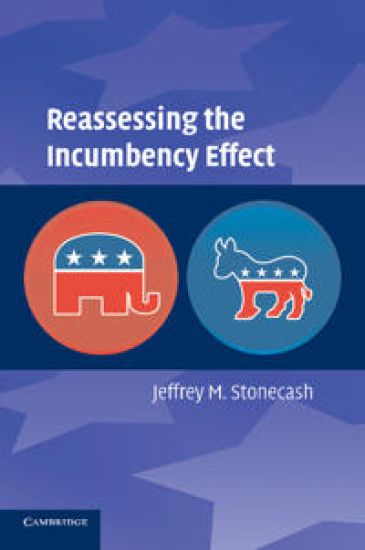
Reassessing the Incumbency Effect

Reassessing the Incumbency Effect

Jeffrey M. Stonecash

Cambridge University Press
2008
pokkari
Incumbents in the US House of Representatives have increased their vote percentages in recent decades, raising questions about the efficacy of elections in making members responsive. The evidence, however, indicates there has been no improvement in the electoral fortunes of incumbents in the last 50 years. Only Republicans have improved their electoral fortunes as a result of realignment. This valuable book provides a very different interpretation of how incumbents have fared in recent decades, and the interpretation is supported by non-technical data analysis and presentation.
Reassessing the Incumbency Effect

Reassessing the Incumbency Effect

Jeffrey M. Stonecash

Cambridge University Press
2008
sidottu
Incumbents in the US House of Representatives have increased their vote percentages in recent decades, raising questions about the efficacy of elections in making members responsive. The evidence, however, indicates there has been no improvement in the electoral fortunes of incumbents in the last 50 years. Only Republicans have improved their electoral fortunes as a result of realignment. This valuable book provides a very different interpretation of how incumbents have fared in recent decades, and the interpretation is supported by non-technical data analysis and presentation.
Political Polling

Political Polling

Jeffrey M. Stonecash

Rowman Littlefield Publishers
2008
sidottu
Information is crucial for candidates in political campaigns. This book, written by someone who has polled for 23 years, first focuses on the process of acquiring information during a campaign through polling. The book describes how to write questions, draw samples of voters, and conduct calling. The second major concern of the book is how to analyze results, and then interpret and present results in a way that will contribute to forming a strategy for a campaign. The book deals with the issues of biased questions and results, and why it is of no value to candidates to engage in such practices.
Political Polling

Political Polling

Jeffrey M. Stonecash

Rowman Littlefield Publishers
2008
nidottu
Information is crucial for candidates in political campaigns. This book, written by someone who has polled for 23 years, first focuses on the process of acquiring information during a campaign through polling. The book describes how to write questions, draw samples of voters, and conduct calling. The second major concern of the book is how to analyze results, and then interpret and present results in a way that will contribute to forming a strategy for a campaign. The book deals with the issues of biased questions and results, and why it is of no value to candidates to engage in such practices.
Split

Split

Mark Brewer; Jeffrey M. Stonecash

CQ Press
2006
nidottu
Talk of politics in the United States today is abuzz with warring red and blue factions. The message is that Americans are split due to deeply-held beliefs—over abortion, gay marriage, stem-cell research, prayer in public schools. Is this cultural divide a myth, the product of elite partisans? Or is the split real?Yes, argue authors Mark Brewer and Jeffrey Stonecash—the cultural divisions are real. Yet they tell only half the story. Differences in income and economic opportunity also fuel division—a split along class lines. Cultural issues have not displaced class issues, as many believe. Split shows that both divisions coexist meaning that levels of taxation and the quality of healthcare matter just as much as the debate over the right to life versus the right to choose.The authors offer balanced, objective analysis, complete with a wealth of data-rich figures and tables, to explain the social trends underlying these class and cultural divides and then explore the response of the parties and voters. Offering solid empirical evidence, the authors show that how politicians, the media, and interest groups perceive citizen preferences—be they cultural or class based—determines whether or not the public gets what it wants. Simply put, each set of issues creates political conflict and debate that produce very different policies and laws. With a lively and highly readable narrative, students at every level will appreciate the brevity and punch of Split and come away with a more nuanced understanding of the divisions that drive the current American polity.
Diverging Parties

Diverging Parties

Jeffrey M. Stonecash; Mark D. Brewer; Mack Mariani

Westview Press Inc
2002
nidottu
Party polarization in the House of Representatives has increased recently. Explaining this development has been difficult given current interpretations of American elections. The dominant framework for interpreting elections has been to see them as candidate-centered or individualistic. This book explains the emergence of party polarization by focusing on how the constituencies of House districts affect partisan outcomes and the subsequent voting behavior of House members. The analysis is premised on the simple argument that members are elected from districts, and an explanation of polarization must begin with districts. The origins of polarization lie in the realignment of the electoral bases of the parties, and the shifting demographic composition of America. The analysis will focus primarily on changes since the 1960s.