Kirjojen hintavertailu. Mukana 12 523 767 kirjaa ja 12 kauppaa.

Kirjailija

Jeffrey O. G. Ogbar

Kirjat ja teokset yhdessä paikassa: 3 kirjaa, julkaisuja vuosilta 2007-2023, suosituimpien joukossa Black Power. Vertaile teosten hintoja ja tarkista saatavuus suomalaisista kirjakaupoista.

Mukana myös kirjoitusasut: Jeffrey O.G. Ogbar

3 kirjaa

Kirjojen julkaisuhaarukka 2007-2023.

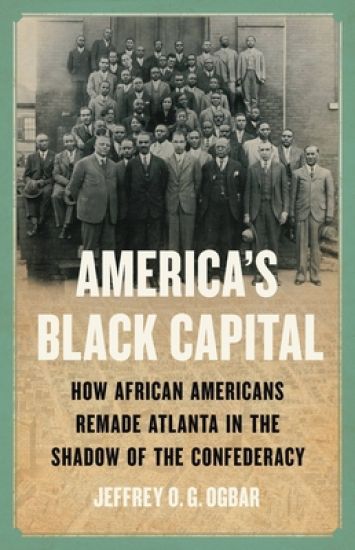
America's Black Capital

America's Black Capital

Jeffrey O. G. Ogbar

BASIC BOOKS
2023
sidottu
The remarkable story of how African Americans transformed Atlanta, the former heart of the Confederacy, into today's Black mecca Atlanta is home to some of America's most prominent Black politicians, artists, businesses, and HBCUs. Yet, in 1861, Atlanta was a final contender to be the capital of the Confederacy. Sixty years later, long after the Civil War, it was the Ku Klux Klan's sacred "Imperial City." America's Black Capital chronicles how a center of Black excellence emerged amid virulent expressions of white nationalism, as African Americans pushed back against Confederate ideology to create an extraordinary locus of achievement. What drove them, historian Jeffrey O. G. Ogbar shows, was the belief that Black uplift would be best advanced by forging Black institutions. America's Black Capital is an inspiring story of Black achievement against all odds, with effects that reached far beyond Georgia, shaping the nation's popular culture, public policy, and politics.
Black Power

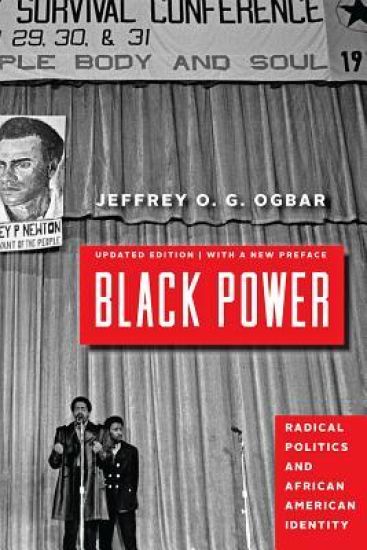
Black Power

Jeffrey O. G. Ogbar

Johns Hopkins University Press
2019
pokkari
Exploring the profound impact of the Black Power movement on African Americans.Outstanding Academic Title, ChoiceIn the 1960s and 70s, the two most important black nationalist organizations, the Nation of Islam and the Black Panther Party, gave voice and agency to the most economically and politically isolated members of black communities outside the South. Though vilified as fringe and extremist, these movements proved to be formidable agents of influence during the civil rights era, ultimately giving birth to the Black Power movement.Drawing on deep archival research and interviews with key participants, Jeffrey O. G. Ogbar reconsiders the commingled stories of—and popular reactions to—the Nation of Islam, Black Panthers, and mainstream civil rights leaders. Ogbar finds that many African Americans embraced the seemingly contradictory political agenda of desegregation and nationalism. Indeed, black nationalism, he demonstrates, was far more favorably received among African Americans than historians have previously acknowledged. It engendered minority pride and influenced the political, cultural, and religious spheres of mainstream African American life for the decades to come.This updated edition of Ogbar's classic work contains a new preface that describes the book's genesis and links the Black Power movement to the Black Lives Matter movement. A thoroughly updated essay on sources contains a comprehensive review of Black Power–related scholarship. Ultimately, Black Power reveals a black freedom movement in which the ideals of desegregation through nonviolence and black nationalism marched side by side.
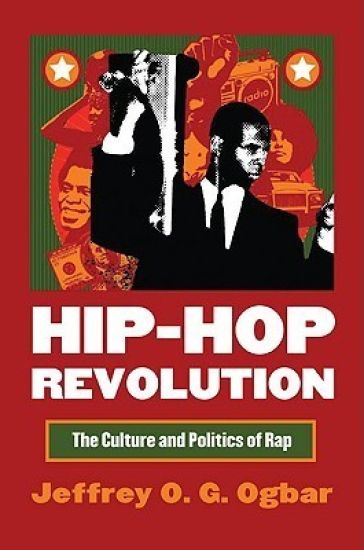
Hip-hop Revolution

Hip-hop Revolution

Jeffrey O.G. Ogbar

University Press of Kansas
2007
nidottu
In the world of hip-hop, “keeping it real” has always been a primary goal—and realness takes on special meaning as rappers mold their images for street cred and increasingly measure authenticity by ghetto-centric notions of “Who’s badder?” In this groundbreaking book, Jeffrey O. G. Ogbar celebrates hip-hop and confronts the cult of authenticity that defines its essential character—that dictates how performers walk, talk, and express themselves artistically and also influences the consumer market. Hip-Hop Revolution is a balanced cultural history that looks past negative stereotypes of hip-hop as a monolith of hedonistic, unthinking noise to reveal its evolving positive role within American society. A writer who’s personally encountered many of hip-hop’s icons, Ogbar traces hip-hop’s rise as a cultural juggernaut, focusing on how it negotiates its own sense of identity. He especially explores the lyrical world of rap as artists struggle to define what realness means in an art where class, race, and gender are central to expressions of authenticity—and how this realness is articulated in a society dominated by gendered and racialized stereotypes. Ogbar also explores problematic black images, including minstrelsy, hip-hop’s social milieu, and the artists’ own historical and political awareness. Ranging across the rap spectrum from the conscious hip-hop of Mos Def to the gangsta rap of 50 Cent to the “underground” sounds of Jurassic 5 and the Roots, he tracks the ongoing quest for a unique and credible voice to show how complex, contested, and malleable these codes of authenticity are. Most important, Ogbar persuasively challenges widely held notions that hip-hop is socially dangerous—to black youths in particular—by addressing the ways in which rappers critically view the popularity of crime-focused lyrics, the antisocial messages of their peers, and the volatile politics of the word “nigga.”