Kirjojen hintavertailu. Mukana 12 595 353 kirjaa ja 12 kauppaa.

Kirjailija

Jeffrey Rosen

Kirjat ja teokset yhdessä paikassa: 15 kirjaa, julkaisuja vuosilta 2005-2026, suosituimpien joukossa The Pursuit of Liberty: How Hamilton vs. Jefferson Ignited the Lasting Battle Over Power in America. Vertaile teosten hintoja ja tarkista saatavuus suomalaisista kirjakaupoista.

15 kirjaa

Kirjojen julkaisuhaarukka 2005-2026.

The Pursuit of Liberty: How Hamilton vs. Jefferson Ignited the Lasting Battle Over Power in America
The bestselling author of The Pursuit of Happiness shows how the opposing constitutional visions of Thomas Jefferson and Alexander Hamilton have defined our country for 250 years, influenced presidents from Washington to Trump, and continue to drive the debate over the power of government today. In The Pursuit of Liberty, bestselling author and president of the National Constitution Center Jeffrey Rosen explores the clashing visions of Hamilton and Jefferson about how to balance liberty and power in a debate that continues to define--and divide--our country: Jefferson championed states' rights and individual liberties, while Hamilton pushed for a strong Federal government and a powerful executive. This ongoing tug-of-war has shaped all the pivotal moments in American history, including Abraham Lincoln's fight against slavery and southern secession, the expansion of federal power under Franklin Roosevelt's New Deal, and Ronald Reagan's and Donald Trump's conservative push to shrink the size of the federal government. Rosen also shows how Hamilton and Jefferson's disagreement over how to read the Constitution has shaped landmark debates in Congress and the Supreme Court about executive power, from John Marshall's early battles with Andrew Jackson to the current divisions among the justices on issues from presidential immunity to control over the administrative state. More than ever, the clash between Hamiltonian and Jeffersonian ideals resonates today in our most urgent national debates over the question of whether modern presidents are consolidating power and subverting the Constitution--the very threat to American democracy that both Hamilton and Jefferson were determined to avoid. The Pursuit of Liberty is a compelling history of the opposing forces that have shaped our country since its founding, and the ongoing struggle to define the balance between liberty and power.
The Pursuit of Happiness: How Classical Writers on Virtue Inspired the Lives of the Founders and Defined America
A New York Times bestseller and an "enriching...brilliant" (David W. Blight, Pulitzer Prize-winning author of Frederick Douglass) examination of what "the pursuit of happiness" meant to our nation's Founders and how that famous phrase defined their lives and became the foundation of our democracy. The Declaration of Independence identified "the pursuit of happiness" as one of our unalienable rights, along with life and liberty. Jeffrey Rosen, the president of the National Constitution Center, profiles six of the most influential founders--Benjamin Franklin, George Washington, John Adams, Thomas Jefferson, James Madison, and Alexander Hamilton--to show what pursuing happiness meant in their lives, and to give us the "best and most readable introduction to the ideas of the Founders that we have" (Gordon Wood, author of Power and Liberty). By reading the classical Greek and Roman moral philosophers who inspired the Founders, Rosen shows us how they understood the pursuit of happiness as a quest for being good, not feeling good--the pursuit of lifelong virtue, not short-term pleasure. Among those virtues were the habits of industry, temperance, moderation, and sincerity, which the Founders viewed as part of a daily struggle for self-improvement, character development, and calm self-mastery. They believed that political self-government required personal self-government. For all six Founders, the pursuit of virtue was incompatible with enslavement of African Americans, although the Virginians betrayed their own principles. "Immensely readable and thoughtful" (Ken Burns), The Pursuit of Happiness is more than an elucidation of the Declaration's famous phrase; it is a revelatory journey into the minds of the Founders, and a deep, rich, and fresh understanding of the foundation of our democracy.
The Pursuit of Happiness: How Classical Writers on Virtue Inspired the Lives of the Founders and Defined America
A New York Times bestseller and an "enriching...brilliant" (David W. Blight, Pulitzer Prize-winning author of Frederick Douglass) examination of what "the pursuit of happiness" meant to our nation's Founders and how that famous phrase defined their lives and became the foundation of our democracy. The Declaration of Independence identified "the pursuit of happiness" as one of our unalienable rights, along with life and liberty. Jeffrey Rosen, the president of the National Constitution Center, profiles six of the most influential founders--Benjamin Franklin, George Washington, John Adams, Thomas Jefferson, James Madison, and Alexander Hamilton--to show what pursuing happiness meant in their lives, and to give us the "best and most readable introduction to the ideas of the Founders that we have" (Gordon Wood, author of Power and Liberty). By reading the classical Greek and Roman moral philosophers who inspired the Founders, Rosen shows us how they understood the pursuit of happiness as a quest for being good, not feeling good--the pursuit of lifelong virtue, not short-term pleasure. Among those virtues were the habits of industry, temperance, moderation, and sincerity, which the Founders viewed as part of a daily struggle for self-improvement, character development, and calm self-mastery. They believed that political self-government required personal self-government. For all six Founders, the pursuit of virtue was incompatible with enslavement of African Americans, although the Virginians betrayed their own principles. "Immensely readable and thoughtful" (Ken Burns), The Pursuit of Happiness is more than an elucidation of the Declaration's famous phrase; it is a revelatory journey into the minds of the Founders, and a deep, rich, and fresh understanding of the foundation of our democracy.
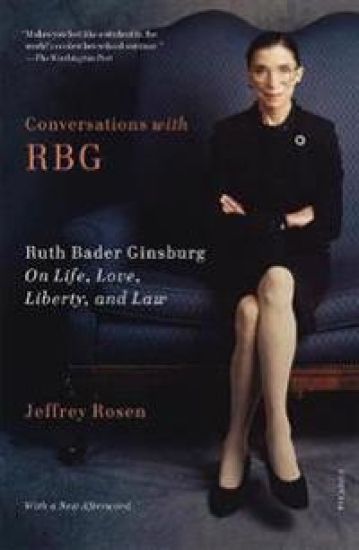
Conversations with RBG

Conversations with RBG

Jeffrey Rosen

Picador USA
2020
nidottu
This remarkable book presents a unique portrait of Ruth Bader Ginsburg, drawing on more than twenty years of conversations with Jeffrey Rosen, starting in the 1990s and continuing through the Trump era. Rosen, a veteran legal journalist, scholar, and president of the National Constitution Center, shares with us the justice’s observations on a variety of topics, and her intellect, compassion, sense of humor, and humanity shine through. The affection they have for each other as friends is evident in their banter and in their shared love for the Constitution - and for opera. · With a new afterword by the author In Conversations with RBG, Justice Ginsburg discusses the future of Roe v. Wade, her favourite dissents, the cases she would most like to see overruled, the #MeToo movement, how to be a good listener, and how to lead a productive, compassionate life, and of course the future of the Supreme Court itself. These frank exchanges illuminate the steely determination, self-mastery, and wit that have inspired Americans of all ages to embrace the woman known to all as “Notorious RBG.” Justice Ginsburg always has something interesting - and often surprising - to say. And while few of us will ever have the opportunity to chat with her face-to-face, Jeffrey Rosen brings us by her side as never before. Conversations with RBG is a deeply felt portrait of an American hero.
Conversations with Rbg: Ruth Bader Ginsburg on Life, Love, Liberty, and Law
In her own words, Ruth Bader Ginsburg offers an intimate look at her life and career, through an extraordinary series of conversations with the head of the National Constitution Center. This remarkable book presents a unique portrait of Justice Ruth Bader Ginsburg, drawing on more than twenty years of conversations with Jeffrey Rosen, starting in the 1990s and continuing through the Trump era. Rosen, a veteran legal journalist, scholar, and president of the National Constitution Center, shares with us the justice's observations on a variety of topics, and her intellect, compassion, sense of humor, and humanity shine through. The affection they have for each other as friends is apparent in their banter and in their shared love for the Constitution--and for opera. In Conversations with RBG, Justice Ginsburg discusses the future of Roe v. Wade, her favorite dissents, the cases she would most like to see overruled, the #MeToo movement, how to be a good listener, how to lead a productive and compassionate life, and of course the future of the Supreme Court itself. These frank exchanges illuminate the steely determination, self-mastery, and wit that have inspired Americans of all ages to embrace the woman known to all as "Notorious RBG." Whatever the topic, Justice Ginsburg always has something interesting--and often surprising--to say. And while few of us will ever have the opportunity to chat with her face-to-face, Jeffrey Rosen brings us by her side as never before. Conversations with RBG is a deeply felt portrait of an American hero.
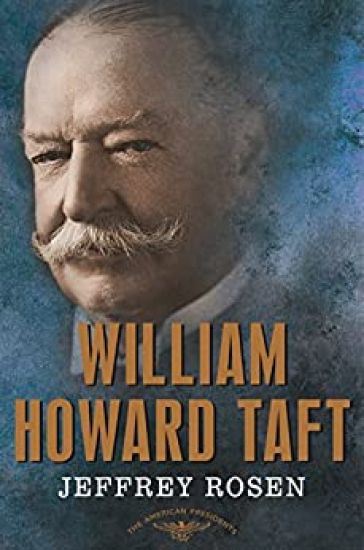
William Howard Taft

William Howard Taft

Jeffrey Rosen

St. Martins Press-3PL
2018
sidottu
The only man to serve as president and chief justice, who approached every decision in constitutional terms, defending the Founders' vision against new populist threats to American democracy William Howard Taft never wanted to be president and yearned instead to serve as chief justice of the United States. But despite his ambivalence about politics, the former federal judge found success in the executive branch as governor of the Philippines and secretary of war, and he won a resounding victory in the presidential election of 1908 as Theodore Roosevelt's handpicked successor. In this provocative assessment, Jeffrey Rosen reveals Taft's crucial role in shaping how America balances populism against the rule of law. Taft approached each decision as president by asking whether it comported with the Constitution, seeking to put Roosevelt's activist executive orders on firm legal grounds. But unlike Roosevelt, who thought the president could do anything the Constitution didn't forbid, Taft insisted he could do only what the Constitution explicitly allowed. This led to a dramatic breach with Roosevelt in the historic election of 1912, which Taft viewed as a crusade to defend the Constitution against the demagogic populism of Roosevelt and Woodrow Wilson. Nine years later, Taft achieved his lifelong dream when President Warren Harding appointed him chief justice, and during his years on the Court he promoted consensus among the justices and transformed the judiciary into a modern, fully equal branch. Though he had chafed in the White House as a judicial president, he thrived as a presidential chief justice.
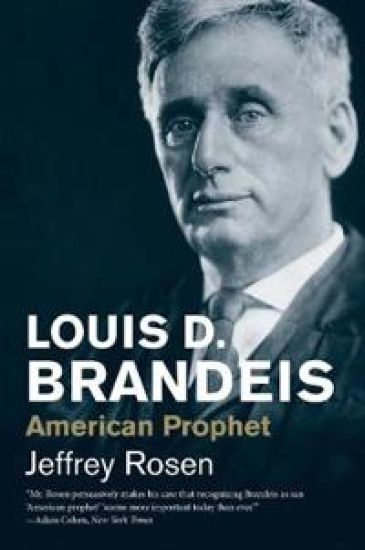
Louis D. Brandeis

Louis D. Brandeis

Jeffrey Rosen

Yale University Press
2017
pokkari
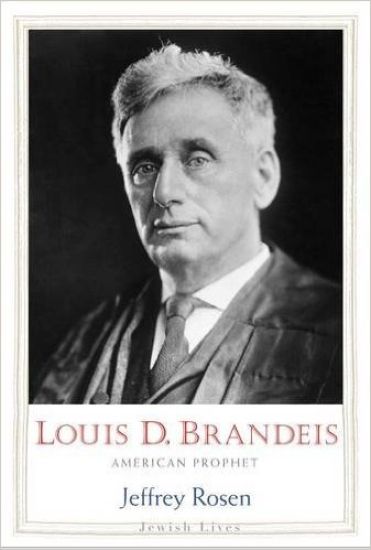
A riveting new examination of the leading progressive justice of his era, published in the centennial year of his confirmation to the U.S. Supreme Court According to Jeffrey Rosen, Louis D. Brandeis was “the Jewish Jefferson,” the greatest critic of what he called “the curse of bigness,” in business and government, since the author of the Declaration of Independence. Published to commemorate the hundredth anniversary of his Supreme Court confirmation on June 1, 1916, Louis D. Brandeis: American Prophet argues that Brandeis was the most farseeing constitutional philosopher of the twentieth century. In addition to writing the most famous article on the right to privacy, he also wrote the most important Supreme Court opinions about free speech, freedom from government surveillance, and freedom of thought and opinion. And as the leader of the American Zionist movement, he convinced Woodrow Wilson and the British government to recognize a Jewish homeland in Palestine. Combining narrative biography with a passionate argument for why Brandeis matters today, Rosen explores what Brandeis, the Jeffersonian prophet, can teach us about historic and contemporary questions involving the Constitution, monopoly, corporate and federal power, technology, privacy, free speech, and Zionism.
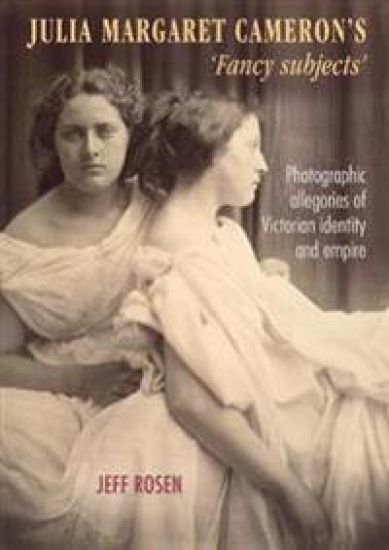
Julia Margaret Cameron’s ‘Fancy Subjects’

Julia Margaret Cameron’s ‘Fancy Subjects’

Jeffrey Rosen

Manchester University Press
2017
nidottu
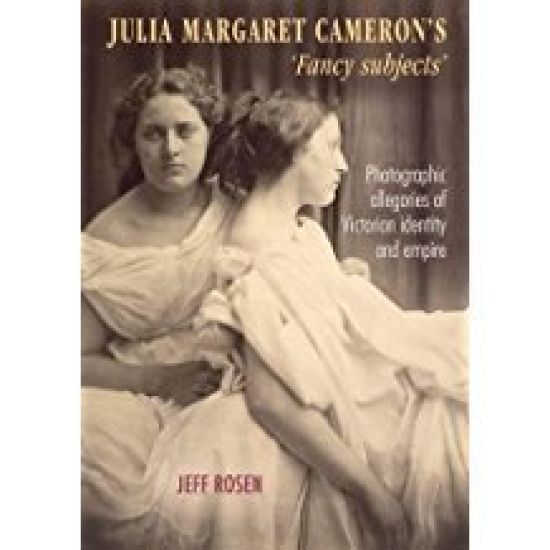
Nominated for the William MB Berger Prize for British Art History 2017.The Victorians admired Julia Margaret Cameron for her evocative photographic portraits of eminent men like Tennyson, Carlyle and Darwin. However, Cameron also made numerous photographs that she called 'Fancy subjects', depicting scenes from literature, personifications from classical mythology, and Biblical parables from the Old and New Testament. This book is the first comprehensive study of these works, examining Cameron's use of historical allegories and popular iconography to embed moral, intellectual and political narratives in her photographs. A work of cultural history as much as art history, this book examines cartoons from Punch and line drawings from the Illustrated London News, cabinet photographs and autotype prints, textiles and wall paper, book illustrations and lithographs from period folios, all as a way to contextualise the allegorical subjects that Cameron represented, revealing connections between her 'Fancy subjects' and popular debates about such topics as Biblical interpretation, democratic government and colonial expansion.
Louis D. Brandeis

Louis D. Brandeis

Jeffrey Rosen

Yale University Press
2016
sidottu
From the prizewinning Jewish Lives series, a riveting new examination of Supreme Court Justice Louis D. Brandeis, the leading progressive justice of his era "Concise and sympathetic. . . . Mr. Rosen persuasively makes his case that recognizing Brandeis as an 'American prophet' . . . 'seems more important today than ever.'"—Adam Cohen, New York Times "An ideal introduction to Brandeis’ life for general readers."—Booklist (starred review) According to Jeffrey Rosen, Louis D. Brandeis was “the Jewish Jefferson,” the greatest critic of what he called “the curse of bigness,” in business and government, since the author of the Declaration of Independence. Published to commemorate the hundredth anniversary of his Supreme Court confirmation on June 1, 1916, Louis D. Brandeis: American Prophet argues that Brandeis was the most farseeing constitutional philosopher of the twentieth century. In addition to writing the most famous article on the right to privacy, he also wrote the most important Supreme Court opinions about free speech, freedom from government surveillance, and freedom of thought and opinion. And as the leader of the American Zionist movement, he convinced Woodrow Wilson and the British government to recognize a Jewish homeland in Palestine. Combining narrative biography with a passionate argument for why Brandeis matters today, Rosen explores what Brandeis, the Jeffersonian prophet, can teach us about historic and contemporary questions involving the Constitution, monopoly, corporate and federal power, technology, privacy, free speech, and Zionism. About Jewish Lives: Jewish Lives is a prizewinning series of interpretative biography designed to explore the many facets of Jewish identity. Individual volumes illuminate the imprint of Jewish figures upon literature, religion, philosophy, politics, cultural and economic life, and the arts and sciences. Subjects are paired with authors to elicit lively, deeply informed books that explore the range and depth of the Jewish experience from antiquity to the present. In 2014, the Jewish Book Council named Jewish Lives the winner of its Jewish Book of the Year Award, the first series ever to receive this award. More praise for Jewish Lives: "Excellent" –New York Times "Exemplary" –Wall Street Journal "Distinguished" –New Yorker "Superb" –The Guardian
Julia Margaret Cameron’s ‘Fancy Subjects’

Julia Margaret Cameron’s ‘Fancy Subjects’

Jeffrey Rosen

Manchester University Press
2016
sidottu
Julia Margaret Cameron's 'fancy subjects' is the first study of Cameron's allegorical photographs and the first to examine the intellectual connections of this imagery to British culture and politics of the 1860s and 1870s. In these photographs, Cameron depicted passages from classical mythology, the Old and New Testament, and historical and contemporary literature. She costumed her friends, domestic help, and village children in dramatic poses, turning them into goddesses and nymphs, biblical kings and medieval knights; she photographed young women in the style of the Elgin marbles, making sculpture come alive, and re-imagined scenes depicted in the poetry of Byron and Tennyson. Cameron chose allegory as her primary artistic device because it allowed her to use popular iconography to convey a latent or secondary meaning. In her photographs, a primary meaning is first conveyed by the title of the image; then, social and political ideas that the artist implanted in the image begin to emerge, contributing to and commenting on the contemporary cultural, religious and political debates of the time. Cameron used the term 'fancy subjects' to embed these moral, intellectual and political narratives in her photographs. This book reconnects her to the prominent minds in her circle who influenced her thinking, including Benjamin Jowett, George Grote and Henry Taylor, and demonstrates her awareness and responsiveness to popular graphic art, including textiles and wall paper, book illustrations and engravings from period folios, cartoons from Punch and line drawings from the Illustrated London News, cabinet photographs and autotype prints.
Microsoft PowerShell, VBScript and JScript Bible

Microsoft PowerShell, VBScript and JScript Bible

William R. Stanek; James O'Neill; Jeffrey Rosen

John Wiley Sons Inc
2009
nidottu
Packed with more than 300 sample scripts and an extensive collection of library functions, this essential scripting book is the most thorough guide to Windows scripting and PowerShell on the market. You’ll examine how Windows scripting is changing the face of system and network administration by giving everyday users, developers, and administrators the ability to automate repetitive tasks. Plus, this is the first time that VBScript, Jscript, and Powershell are all covered in a single resource.
The Supreme Court

The Supreme Court

Jeffrey Rosen

Holt Paperback
2007
pokkari
A compelling character-driven history of the Supreme Court traces its evolution from the perspective of the personal, philosophical, political, and judicial rivalries on the bench that transformed the law--from the conflict between Chief Justice John Marshall and Thomas Jefferson, to present-day tensions between conservatives William H. Rehnquist and Antonin Scalia. Reprint. 50,000 first printing.
The Most Democratic Branch

The Most Democratic Branch

Jeffrey Rosen

Oxford University Press Inc
2006
sidottu
A penetrating look at some of the most important Supreme Court cases in history is provided in this provocative argument that illustrates that the Supreme Court is most successful when it defers to the constitutional views of the American people.