Kirjojen hintavertailu. Mukana 12 595 353 kirjaa ja 12 kauppaa.

Kirjailija

Jeffrey Wilhelm

Kirjat ja teokset yhdessä paikassa: 2 kirjaa, julkaisuja vuosilta 2002-2013, suosituimpien joukossa Reading Don't Fix No Chevys. Vertaile teosten hintoja ja tarkista saatavuus suomalaisista kirjakaupoista.

2 kirjaa

Kirjojen julkaisuhaarukka 2002-2013.

Deepening Comprehension with Action Strategies: Role Plays, Text-Structure Tableaux, Talking Statues, and Other Enactment Techniques That Engage Stude
- Before reading, hand out lines of a poem and invite students to build an idea of what the poem will be about... - invite two students to play good angel/bad angel for a book character - have students perform a vocabulary statue depicting the meaning of terms such as global warming or deforestation. You'll find that these motivating ideas and many others energize students before, during, and after reading and can be done individually, or through pair work or groups This updated and revised resource will show you how to deepen reading strategies such as activating prior knowledge, inferring, visualizing, making connections, and more. Aligned with Common Core State Standards, you will also find video footage that demonstrates action strategies at work in classrooms
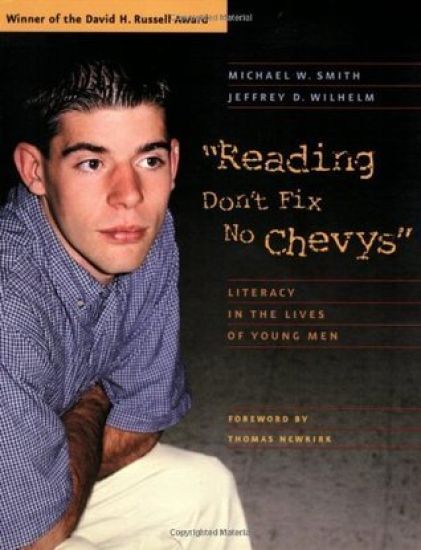
Reading Don't Fix No Chevys

Reading Don't Fix No Chevys

Jeffrey Wilhelm; Michael Smith

Boynton/Cook Publishers Inc US
2002
nidottu
The problems of boys in schools, especially in reading and writing, have been the focus of statistical data, but rarely does research point out how literacy educators can combat those problems. That situation has changed. Michael Smith and Jeff Wilhelm, two of the most respected names in English education and in the teaching of reading, worked with a very diverse group of young men to understand how they use literacy and what conditions promote it. In this book they share what they have learned. Through a variety of creative research methods and an extended series of interviews with 49 young men in middle and high school who differ in class, race, academic achievement, kind of school, and geography, the authors identified the factors that motivated these young men to become accomplished in the activities they most enjoyed - factors that marked the boys' literate activities outside of school, but were largely absent from their literate lives in school. Their study questions the way reading and literature are typically taught and suggests powerful alternatives to traditional instruction.Building their findings on their understanding of the powerful and engaging experiences boys had outside of school, Smith and Wilhelm discuss why boys embrace or reject certain ways of being literate, how boys read and engage with different kinds of texts, and what qualities of texts appeal to boys. Throughout, the authors highlight the importance of choice, the boys' need to be shown how to read, the cost of the traditional teaching of difficult canonical texts, and the crucial place of meaningful social activity. The authors' data-driven findings are provocative, explaining why boys reject much of school literacy and how progressive curricula and instruction might help boys engage with literacy and all learning in more productive ways. Providing both challenges and practical advice for overcoming those challenges, Smith and Wilhelm have produced a book that will appeal to teachers, teacher educators, and parents alike.