Kirjojen hintavertailu. Mukana 12 390 323 kirjaa ja 12 kauppaa.

Kirjailija

Jenni Ramone

Kirjat ja teokset yhdessä paikassa: 8 kirjaa, julkaisuja vuosilta 2011-2024, suosituimpien joukossa Salman Rushdie and Translation. Vertaile teosten hintoja ja tarkista saatavuus suomalaisista kirjakaupoista.

8 kirjaa

Kirjojen julkaisuhaarukka 2011-2024.

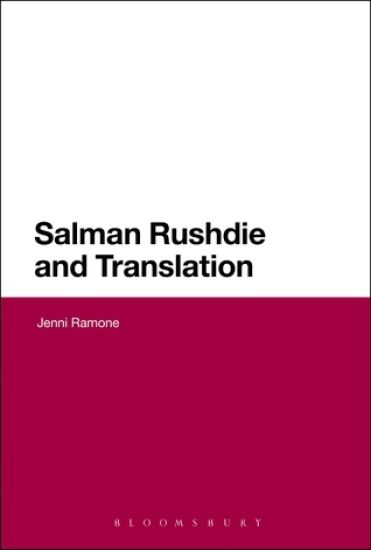
Salman Rushdie and Translation

Salman Rushdie and Translation

Jenni Ramone

Bloomsbury Academic
2015
nidottu
Salman Rushdie's writing is engaged with translation in many ways: translator-figures tell and retell stories in his novels, while acts of translation are catalysts for climactic events. Covering his major novels as well as his often-neglected short stories and writing for children, Salman Rushdie and Translation explores the role of translation in Rushdie's work. In this book, Jenni Ramone draws on contemporary translation theory to analyse the part translation plays in Rushdie's appropriation of historical and contemporary Indian narratives of independence and migration.
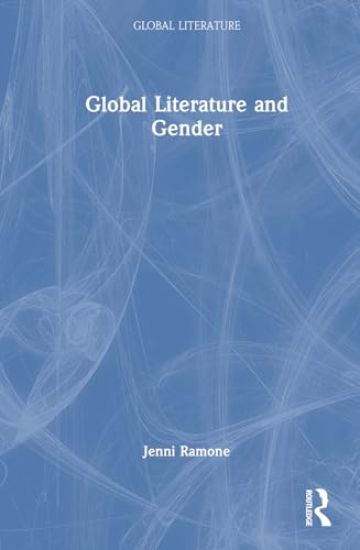
Global Literature and Gender

Global Literature and Gender

Jenni Ramone

TAYLOR FRANCIS LTD
2024
sidottu
Offering a thorough introduction to notions of gender in contemporary global literature, Global Literature and Gender uses postcolonial theories alongside theories of space and place, theories of globalization, and reference to the Posthuman and the Anthropocene as competing narratives of the contemporary.This book argues for the ongoing but very current significance of gender as an organizing category, while also revealing the fluidity and boundary defying nature of gender in twenty-first-century literature. Divided into three sections, looking at femininity, masculinity, and transgender, Jenni Ramone:Examines globalization’s uneasy relationship with theories which foreground gender and considers gender as a challenge to globalization;Analyses embodied labour, global travel, trade, and tourism;Discusses the ways in which globalization and masculinity are likewise at odds;Considers a diverse range of themes and genres, including pearl-diving, taxi driving, space travel, authorship, surrogacy, modern-day slavery, Afrofuturism, Objectophilia, Stigma, Dehumanisation, Passing, and romance tourism;Engages with a vast range of innovative contemporary works, including those by Akwaeke Emezi, Alain Mabanckou, Mieko Kawakami, Meera Syal, Helen Heath, Kei Miller, Deji Bryce Olukotun, jaye simpson, Hideki Noda, Dany Laferrière, Zadie Smith, Hanan Al-Shaykh, Teju Cole, Sherley Anne Williams, Helen Oyeyemi, and Arundhati Roy.Global Literature and Gender is an essential intervention for researchers and students of globalization, twenty-first-century literature, and gender.
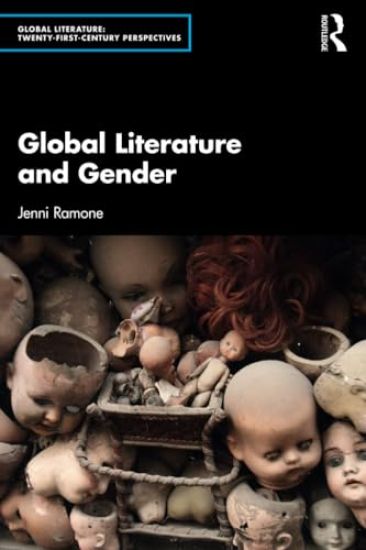
Global Literature and Gender

Global Literature and Gender

Jenni Ramone

TAYLOR FRANCIS LTD
2024
nidottu
Offering a thorough introduction to notions of gender in contemporary global literature, Global Literature and Gender uses postcolonial theories alongside theories of space and place, theories of globalization, and reference to the Posthuman and the Anthropocene as competing narratives of the contemporary.This book argues for the ongoing but very current significance of gender as an organizing category, while also revealing the fluidity and boundary defying nature of gender in twenty-first-century literature. Divided into three sections, looking at femininity, masculinity, and transgender, Jenni Ramone:Examines globalization’s uneasy relationship with theories which foreground gender and considers gender as a challenge to globalization;Analyses embodied labour, global travel, trade, and tourism;Discusses the ways in which globalization and masculinity are likewise at odds;Considers a diverse range of themes and genres, including pearl-diving, taxi driving, space travel, authorship, surrogacy, modern-day slavery, Afrofuturism, Objectophilia, Stigma, Dehumanisation, Passing, and romance tourism;Engages with a vast range of innovative contemporary works, including those by Akwaeke Emezi, Alain Mabanckou, Mieko Kawakami, Meera Syal, Helen Heath, Kei Miller, Deji Bryce Olukotun, jaye simpson, Hideki Noda, Dany Laferrière, Zadie Smith, Hanan Al-Shaykh, Teju Cole, Sherley Anne Williams, Helen Oyeyemi, and Arundhati Roy.Global Literature and Gender is an essential intervention for researchers and students of globalization, twenty-first-century literature, and gender.
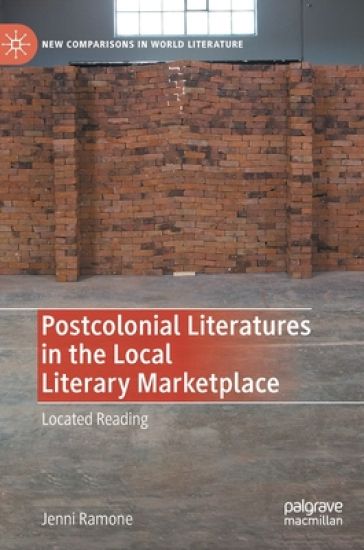
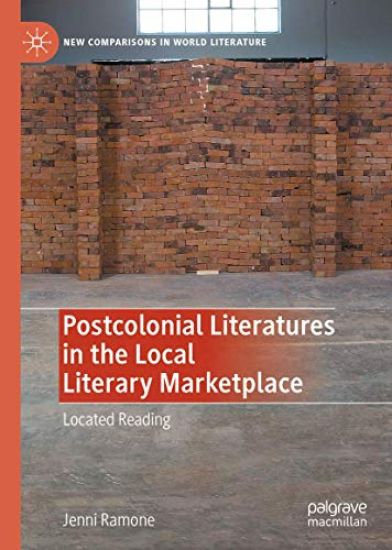
Postcolonial Literatures in the Local Literary Marketplace
This book asks what reading means in India, Nigeria, the UK, and Cuba, through close readings of literary texts from postcolonial, spatial, architectural, cartographic, materialist, trauma, and gender perspectives. It contextualises these close readings through new interpretations of local literary marketplaces to assert the significance of local, not global meanings. The book offers longer case studies on novels that stage important reading moments: Alejo Carpentier’s The Lost Steps (1953), Leonardo Padura’s Adios, Hemingway (2001), Tabish Khair’s Filming (2007), Chibundhu Onuzo’s Welcome to Lagos (2017), and Zadie Smith’s Swing Time (2016). Chapters argue that while India’s literary market was disrupted by Partition, literature offers a means of moving beyond trauma; in post-Revolutionary Cuba, the Special Period led to exploitation of Cuban literary culture, resulting in texts that foreground reading spaces; in Nigeria, the market hosts meeting, negotiation, reflection, and trade, including the writer’s trade; while Black consciousness bookshops and writing in Britain operated to challenge the UK literary market, a project still underway. This book is a vindication of reading, and of the resistant power and creative potential of local literary marketplaces. It insists on ‘located reading’, enabling close reading of world literatures sited in their local materialities.
Salman Rushdie and Translation

Salman Rushdie and Translation

Jenni Ramone

Bloomsbury Academic USA
2013
sidottu
Salman Rushdie's writing is engaged with translation in many ways: translator-figures tell and retell stories in his novels, while acts of translation are catalysts for climactic events. Covering his major novels as well as his often-neglected short stories and writing for children, Salman Rushdie and Translation explores the role of translation in Rushdie's work. In this book, Jenni Ramone draws on contemporary translation theory to analyse the part translation plays in Rushdie's appropriation of historical and contemporary Indian narratives of independence and migration.
Postcolonial Theories

Postcolonial Theories

Jenni Ramone

Red Globe Press
2011
nidottu
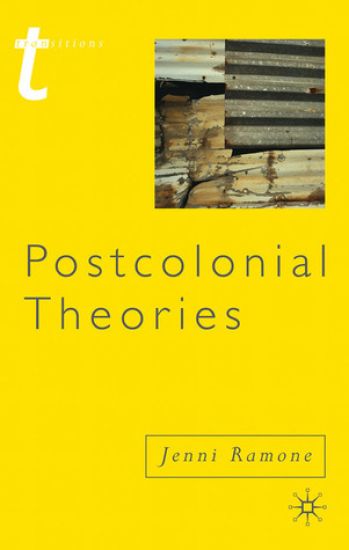
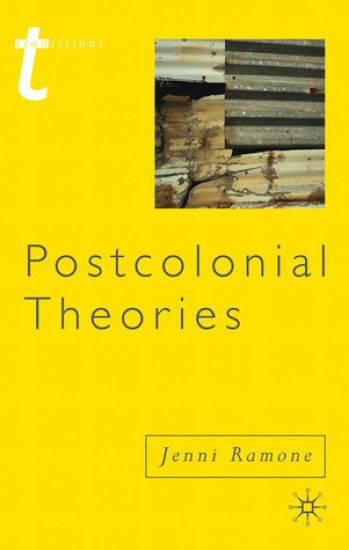
Postcolonial Theories is a lively introduction to postcolonial theories, contexts and literatures which presents both the theory and practice to students in approachable and attractive ways. Jenni Ramone includes discussion of a wide range of influential theorists such as Frantz Fanon, Homi Bhabha, Rey Chow, Edward Said, Ngugi wa Thiong'o, Paul Gilroy and Trinh T. Minh-ha. She also demonstrates postcolonial ideas through compelling readings of a wide range of exciting literary texts, including:- Nawal El Saadawi's God Dies by the Nile- Aravind Adiga's The White Tiger- Shyam Selvadurai's Funny Boy- Jamaica Kincaid's My Brother.Covering a diverse array of geographical locations, and featuring a helpful timeline and annotated bibliography, this is essential reading for anyone with an interest in postcolonial theories and how they have continued to adapt in the wake of globalization, digital technology and neo-colonialism.
Postcolonial Theories

Postcolonial Theories

Jenni Ramone

Red Globe Press
2011
sidottu
Postcolonial Theories is a lively introduction to postcolonial theories, contexts and literatures which presents both the theory and practice to students in approachable and attractive ways. Jenni Ramone includes discussion of a wide range of influential theorists such as Frantz Fanon, Homi Bhabha, Rey Chow, Edward Said, Ngugi wa Thiong'o, Paul Gilroy and Trinh T. Minh-ha. She also demonstrates postcolonial ideas through compelling readings of a wide range of exciting literary texts, including:- Nawal El Saadawi's God Dies by the Nile- Aravind Adiga's The White Tiger- Shyam Selvadurai's Funny Boy- Jamaica Kincaid's My Brother.Covering a diverse array of geographical locations, and featuring a helpful timeline and annotated bibliography, this is essential reading for anyone with an interest in postcolonial theories and how they have continued to adapt in the wake of globalization, digital technology and neo-colonialism.
Postcolonial Literatures in the Local Literary Marketplace
This book asks what reading means in India, Nigeria, the UK, and Cuba, through close readings of literary texts from postcolonial, spatial, architectural, cartographic, materialist, trauma, and gender perspectives. It contextualises these close readings through new interpretations of local literary marketplaces to assert the significance of local, not global meanings. The book offers longer case studies on novels that stage important reading moments: Alejo Carpentier’s The Lost Steps (1953), Leonardo Padura’s Adios, Hemingway (2001), Tabish Khair’s Filming (2007), Chibundhu Onuzo’s Welcome to Lagos (2017), and Zadie Smith’s Swing Time (2016). Chapters argue that while India’s literary market was disrupted by Partition, literature offers a means of moving beyond trauma; in post-Revolutionary Cuba, the Special Period led to exploitation of Cuban literary culture, resulting in texts that foreground reading spaces; in Nigeria, the market hosts meeting, negotiation, reflection, and trade, including the writer’s trade; while Black consciousness bookshops and writing in Britain operated to challenge the UK literary market, a project still underway. This book is a vindication of reading, and of the resistant power and creative potential of local literary marketplaces. It insists on ‘located reading’, enabling close reading of world literatures sited in their local materialities.