Kirjojen hintavertailu. Mukana 12 459 402 kirjaa ja 12 kauppaa.

Kirjailija

Jennifer Nez Denetdale

Kirjat ja teokset yhdessä paikassa: 4 kirjaa, julkaisuja vuosilta 2017-2021, suosituimpien joukossa Red Nation Rising. Vertaile teosten hintoja ja tarkista saatavuus suomalaisista kirjakaupoista.

4 kirjaa

Kirjojen julkaisuhaarukka 2017-2021.

Red Nation Rising

Red Nation Rising

Nick Estes; Melanie Yazzie; Jennifer Nez Denetdale

PM Press
2021
sidottu
Red Nation Rising is the first book ever to investigate and explain the violent dynamics of bordertowns. Bordertowns are white-dominated towns and cities that operate according to the same political and spatial logics as all other American towns and cities. The difference is that these settlements get their name from their location at the borders of current-day reservation boundaries, which separates the territory of sovereign Native nations from lands claimed by the United States. Bordertowns came into existence when the first US military forts and trading posts were strategically placed along expanding imperial frontiers to extinguish indigenous resistance and incorporate captured indigenous territories into the burgeoning nation-state. To this day, the US settler state continues to wage violence on Native life and land in these spaces out of desperation to eliminate the threat of Native presence and complete its vision of national consolidation "from sea to shining sea." This explains why some of the most important Native-led rebellions in US history originated in bordertowns and why they are zones of ongoing confrontation between Native nations and their colonial occupier, the United States. Despite this rich and important history of political and material struggle, little has been written about bordertowns. Red Nation Rising marks the first effort to tell these entangled histories and inspire a new generation of Native freedom fighters to return to bordertowns as key front lines in the long struggle for Native liberation from US colonial control. This book is a manual for navigating the extreme violence that Native people experience in reservation bordertowns and a manifesto for indigenous liberation that builds on long traditions of Native resistance to bordertown violence.
Red Nation Rising

Red Nation Rising

Nick Estes; Melanie Yazzie; Jennifer Nez Denetdale

PM Press
2021
nidottu
Red Nation Rising is the first book ever to investigate and explain the violent dynamics of bordertowns. Bordertowns are white-dominated towns and cities that operate according to the same political and spatial logics as all other American towns and cities. The difference is that these settlements get their name from their location at the borders of current-day reservation boundaries, which separates the territory of sovereign Native nations from lands claimed by the United States. Bordertowns came into existence when the first US military forts and trading posts were strategically placed along expanding imperial frontiers to extinguish indigenous resistance and incorporate captured indigenous territories into the burgeoning nation-state. To this day, the US settler state continues to wage violence on Native life and land in these spaces out of desperation to eliminate the threat of Native presence and complete its vision of national consolidation "from sea to shining sea." This explains why some of the most important Native-led rebellions in US history originated in bordertowns and why they are zones of ongoing confrontation between Native nations and their colonial occupier, the
Hardship, Greed, and Sorrow

Hardship, Greed, and Sorrow

Devorah Romanek; Jennifer Nez Denetdale

University of Oklahoma Press
2019
nidottu
In the aftermath of the Civil War, New Mexico Territory endured painful years of hardship and ongoing strife. During this turbulent period, a U.S. military officer stationed in the territory assembled an album of photographs, a series of still shots taken by one or more anonymous photographers. Now, some 150 years later, Hardship, Greed, and Sorrow reproduces the anonymous officer's ""souvenir album"" in its totality. Offering an important glimpse of the American Southwest in the mid-1860s, the book opens with a thoughtful foreword by Jennifer Nez Denetdale, who considers the varied and lingering effects that settlement, conquest, and nineteenth-century photography had on the Apaches and Navajos. In her insightful introduction accompanying the photographs, curator and scholar Devorah Romanek places the photographs in historical context and explains their unusual provenance. As she points out, the 1866 album integrates a number of important themes in connection to the Civil War and Reconstruction periods, including the French intervention in New Mexico and the internment of Navajos at the Bosque Redondo Indian Reservation. The story of the album's provenance reads like a mystery: some loose ends remain untied and some questions remain unanswered. In addition to containing what may be the earliest extant photographs of Navajo Indians, the album features both studio and field images of U.S. Army officers, Mexican politicians, and various sites throughout New Mexico. According to Romanek, a number of the album's photographs have appeared in other publications but with scant attention to their original context or purpose. This compelling book reveals what we know about the collection, its compiler, and the photographer - or photographers - who captured such a fraught and complex moment in the history of the American Southwest.
Navajo Sovereignty

Navajo Sovereignty

Jennifer Nez Denetdale

University of Arizona Press
2017
nidottu
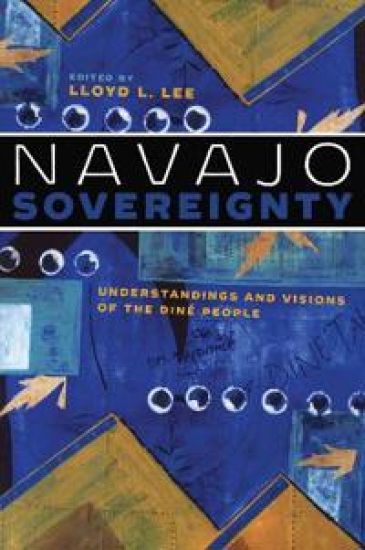
The last few decades have given rise to an electrifying movement of Native American activism, scholarship, and creative work challenging five hundred years of U.S. colonization of Native lands. Indigenous communities are envisioning and building their nations and are making decolonial strides toward regaining power from colonial forces.The Navajo Nation is among the many Native nations in the United States pushing back. In this new book, Diné author Lloyd L. Lee asks fellow Navajo scholars, writers, and community members to envision sovereignty for the Navajo Nation. He asks, (1) what is Navajo sovereignty, (2) how do various Navajo institutions exercise sovereignty, (3) what challenges does Navajo sovereignty face in the coming generations, and (4) how did individual Diné envision sovereignty?Contributors expand from the questions Lee lays before them to touch on how Navajo sovereignty is understood in Western law, how various institutions of the Navajo Nation exercise sovereignty, what challenges it faces in coming generations, and how individual Diné envision power, authority, and autonomy for the people.A companion to Diné Perspectives: Revitalizing and Reclaiming Navajo Thought, each chapter offers the contributors’ individual perspectives. The book, which is organized into four parts, discusses Western law’s view of Diné sovereignty, research, activism, creativity, and community, and Navajo sovereignty in traditional education. Above all, Lee and the contributing scholars and community members call for the rethinking of Navajo sovereignty in a way more rooted in Navajo beliefs, culture, and values. Contributors: Raymond D. Austin, Bidtah N. Becker, Manley A. Begay, Jr,Avery Denny, Larry W. Emerson, Colleen Gorman, Michelle L. Hale, Michael Lerma, Leola Tsinnajinnie.