Kirjojen hintavertailu. Mukana 12 595 353 kirjaa ja 12 kauppaa.

Kirjailija

Jennifer P. Mathews

Kirjat ja teokset yhdessä paikassa: 4 kirjaa, julkaisuja vuosilta 2005-2020, suosituimpien joukossa Chicle. Vertaile teosten hintoja ja tarkista saatavuus suomalaisista kirjakaupoista.

4 kirjaa

Kirjojen julkaisuhaarukka 2005-2020.

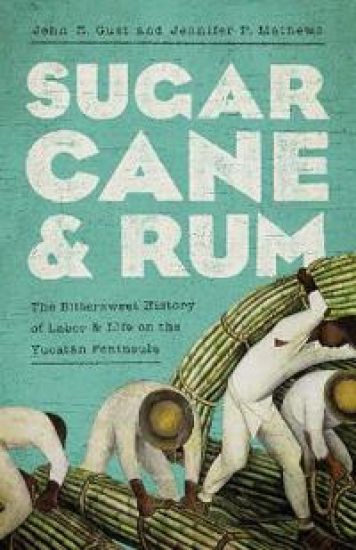
Sugarcane and Rum

Sugarcane and Rum

John Robert Gust; Jennifer P. Mathews

University of Arizona Press
2020
nidottu
While the Yucatán Peninsula of Mexico may conjure up images of vacation getaways and cocktails by the sea, these easy stereotypes hide a story filled with sweat and toil. The story of sugarcane and rum production in the Caribbean has been told many times. But few know the bittersweet story of sugar and rum in the jungles of the Yucatán Peninsula during the nineteenth century. This is much more than a history of coveted commodities. The unique story that unfolds in John R. Gust and Jennifer P. Mathews's new history Sugarcane and Rum is told through the lens of Maya labourers who worked under brutal conditions on small haciendas to harvest sugarcane and produce rum.Gust and Mathews weave together ethnographic interviews and historical archives with archaeological evidence to bring the daily lives of Maya workers into focus. They lived in a cycle of debt, forced to buy all of their supplies from the company store and take loans from the hacienda owners. And yet they had a certain autonomy because the owners were so dependent on their labour at harvest time. We also see how the rise of cantinas and distilled alcohol in the nineteenth century affected traditional Maya culture and that the economies of Cancún and the Mérida area are predicated on the rum-influenced local social systems of the past. Sugarcane and Rum brings this bittersweet story to the present and explains how rum continues to impact the Yucatán and the people who have lived there for millennia.
Chicle

Chicle

Jennifer P. Mathews

University of Arizona Press
2009
nidottu
Although Juicy Fruit(R) gum was introduced to North Americans in 1893, Native Americans in Mesoamerica were chewing gum thousands of years earlier. And although in the last decade biographies have been devoted to salt, spices, chocolate, coffee, and other staples of modern life, until now there has never been a full history of chewing gum.Chicle is a history in four acts, all of them focused on the sticky white substance that seeps from the sapodilla tree when its bark is cut. First, Jennifer Mathews recounts the story of chicle and its earliest-known adherents, the Maya and Aztecs. Second, with the assistance of botanist Gillian Schultz, Mathews examines the sapodilla tree itself, an extraordinarily hardy plant that is native only to Mesoamerica and the Caribbean. Third, Mathews presents the fascinating story of the chicle and chewing gum industry over the last hundred plus years, a tale (like so many twentieth-century tales) of greed, growth, and collapse. In closing, Mathews considers the plight of the chicleros, the extractors who often work by themselves tapping trees deep in the forests, and how they have emerged as icons of local pop cultureportrayed as fearless, hard-drinking brawlers, people to be respected as well as feared.Before Dentyne(R) and Chiclets(R), before bubble gum comic strips and the Doublemint(R) twins, there was gum, oozing from jungle trees like melting candle wax under the slash of a machete. Chicle tells us everything that happened next. It is a spellbinding story.
Lifeways in the Northern Maya Lowlands

Lifeways in the Northern Maya Lowlands

Jennifer P. Mathews; Bethany A. Morrison

University of Arizona Press
2006
sidottu
The flat, dry reaches of the northern Yucatan Peninsula have been largely ignored by archaeologists drawn to the more illustrious sites of the south. This book is the first volume to focus entirely on the northern Maya lowlands, presenting a broad cross-section of current research projects in the region by both established and up-and-coming scholars. To address the heretofore unrecognized importance of the northern lowlands in Maya prehistory, the contributors cover key topics relevant to Maya studies: the environmental and historical significance of the region, the archaeology of both large and small sites, the development of agriculture, resource management, ancient politics, and long-distance interaction among sites. As a volume in the series Native Peoples of the Americas, it adds a human dimension to archaeological findings by incorporating modern ethnographic data. By exploring various social and political levels of Maya society through a broad expanse of time, Lifeways in the Northern Maya Lowlands not only reconstructs a little-known past, it also suggests the broad implications of archaeology for related studies of tourism, household economies, and ethno-archaeology.It is a benchmark work that pointedly demonstrates the need for researchers in both north and south to ignore modern geographic boundaries in their search for new ideas to further their understanding of the ancient Maya.
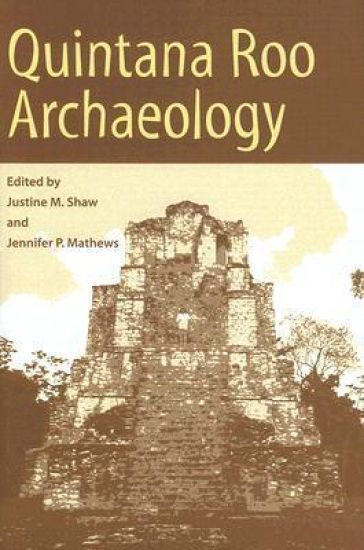
Quintana Roo Archaeology

Quintana Roo Archaeology

Justine M. Shaw; Jennifer P. Mathews

University of Arizona Press
2005
sidottu
Mexico's southern state of Quintana Roo is often perceived by archaeologists as a blank spot on the map of the Maya world, a region generally assumed to hold little of interest thanks to its relative isolation from the rest of Mexico. But salvage archaeology required by recent development along the ?Maya Riviera, along with a suite of other ongoing and recent research projects, have shown that the region was critical in connecting coastal and inland zones, and it is now viewed as an important area in its own right from Preclassic through post-contact times. The first volume devoted to the archaeology of Quintana Roo, this book reveals a long tradition of exploration and discovery in the region and an increasingly rich recent history of study. Covering a time span from the Formative period through the early twentieth century, it offers a sampling of recent and ongoing research by Mexican, North American, and European archaeologists. Each of the chapters helps to integrate sites within and beyond the borders of the modern state, inviting readers to consider Quintana Roo as part of an interacting Maya world whose boundaries were entirely different from today's. In taking in the range of the region, the authors consider studies in the northern part of the state resulting from modern development around Cancun; the mid-state sites of Muyil and Yookop, both of which witnessed continual occupations from the Middle Preclassic through the Postclassic; and new data from such southern sites as Cerros, Lagartera, and Chichmuul. The contributions consider such subjects as ceramic controversies, settlement shifts, site planning strategies, epigraphic and iconographic materials, the impact of recent coastal development, and the interplay between ancient, historic, and modern use of the region. Many of the chapters confirm the region as a cultural corridor between Coba and the southern lowland centers and address demographic shifts of the Terminal Classic through Postclassic periods, while others help elucidate some of Peter Harrison's Uaymil Survey work of the 1970s. Quintana Roo Archaeology unfolds a rich archaeological record spanning 2,500 years, depicting the depth and breadth of modern archaeological studies within the state. It is an important touchstone for Maya and Mesoamerican archaeologists, demonstrating the shifting web of connections between Quintanarooense sites and their neighbors, and confirming the need to integrate this region into a broader understanding of the ancient Maya.