Kirjojen hintavertailu. Mukana 12 152 606 kirjaa ja 12 kauppaa.

Kirjailija

Jennifer Quick

Kirjat ja teokset yhdessä paikassa: 3 kirjaa, julkaisuja vuosilta 2004-2022, suosituimpien joukossa Analog Culture. Vertaile teosten hintoja ja tarkista saatavuus suomalaisista kirjakaupoista.

3 kirjaa

Kirjojen julkaisuhaarukka 2004-2022.

Analog Culture

Analog Culture

Jennifer Quick; Robin Kelsey; Jessica Williams; Deborah Bell; James Casebere; Robert Gober; John Schnabel; Gary Schneider; Robert G. Erdmann; Lorna Simpson

Yale University Press
2018
sidottu
Providing an expansive and revelatory look at the collaborative artistic relationship between photographers and printers, this book focuses on the work and practice of Schneider/Erdman, Inc., a Manhattan-based printing business owned by Gary Schneider and John Erdman from 1981 to 2001. Well-known within the booming New York photography scene, Schneider and Erdman printed works by artists such as Richard Avedon, Matthew Barney, and Nan Goldin. In addition to a thorough overview of Schneider and Erdman’s technical mastery of printing methods and materials, Analog Culture also sheds light on the importance of the close personal relationship between photographers and printers within the art-making process. The striking works reproduced in the volume are enhanced by exclusive interviews with Schneider, Erdman, and their collaborators, offering an unparalleled behind-the-scenes view of New York’s photographic culture in the late 20th century. Distributed for the Harvard Art MuseumsExhibition Schedule:Harvard Art Museums (05/19/18–08/12/18)

Back to the Drawing Board

Back to the Drawing Board

Jennifer Quick

YALE UNIVERSITY PRESS
2022
sidottu
The first book to consider the importance of commercial art and design for Ed Ruscha’s work Ed Ruscha (b. 1937) emerged onto the Los Angeles art scene with paintings that incorporated consumer products, such as Spam and Sun-Maid raisins. In this revelatory book, Jennifer Quick looks at and beyond the consumer imagery in Ruscha’s work, examining it through the tools, techniques, and habits of mind of commercial art and design. Quick shows how his training and early work as a commercial artist helped him become an incisive commentator on the presence and role of design in the modern world. Back to the Drawing Board explores how Ruscha mobilized commercial design techniques of scale, paste-up layout, and perspective as he developed his singular artistic style. Beginning with his formative design education and focusing on the first decade of his career, Quick analyzes previously unseen works from the Ruscha archives alongside his celebrated paintings, prints, and books, demonstrating how Ruscha’s engagement with commercial art has been foundational to his practice. Through this insightful lens, Quick affirms Ruscha as a powerful and witty observer of the vast network of imagery that permeates visual culture and offers new perspectives on Pop and conceptual art.
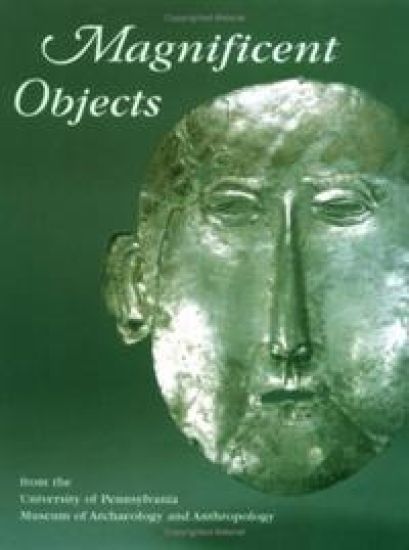
Magnificent Objects from the University of Pennsylvania Museum of Archaeology and Anthropology

Magnificent Objects from the University of Pennsylvania Museum of Archaeology and Anthropology

Jennifer Quick; Deborah I. Olszewski

University of Pennsylvania Museum of Archaeology Anthropology
2004
sidottu
Since the late nineteenth century hundreds of people, on behalf of the University of Pennsylvania Museum of Archaeology and Anthropology, have searched for what it means to be human, studying the infinite variety of human cultures. The Museum's extensive collections provide vital clues in this quest. For the first time curators and Museum staff present more than 220 of the most intriguing and beautiful objects from such sites as Nippur, Thebes, the Amazon, Sitio Conte, Ur of the Chaldees, Borneo-all resonating with an eloquence that recalls the curiosity that drove the Museum and its founders and continues to drive its contemporary researchers after more than 350 international expeditions. The objects selected-from African to American to Asian, from Babylonian and Near Eastern to Egyptian, Oceanian, and Mediterranean-are important even beyond their immediate, individual aesthetic. The depth of information recovered when they are examined in their original contexts allows experts and lay readers to reconstruct the many stories, large and small, that constitute the shared lives and heritage of humanity.