

Kirjailija
Jens Brockmeier
Kirjat ja teokset yhdessä paikassa: 4 kirjaa, julkaisuja vuosilta 1998-2026, suosituimpien joukossa Es dauert nicht lange. Vertaile teosten hintoja ja tarkista saatavuus suomalaisista kirjakaupoista.
4 kirjaa
Kirjojen julkaisuhaarukka 1998-2026.
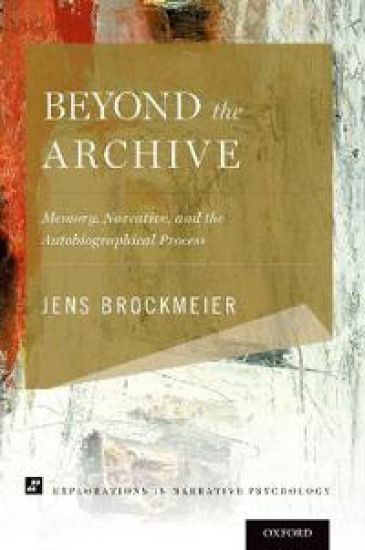
Our longstanding view of memory and remembering is in the midst of a profound transformation. This transformation does not only affect our concept of memory or a particular idea of how we remember and forget; it is a wider cultural process. In order to understand it, one must step back and consider what is meant when we say memory. Brockmeier's far-ranging studies offer such a perspective, synthesizing understandings of remembering from the neurosciences, humanities, social studies, and in key works of autobiographical literature and life-writing. His conclusions force us to radically rethink our very notion of memory as an archive of the past, one that suggests the natural existence of a distinctive human capacity (or a set of neuronal systems) enabling us to "encode," "store," and "recall" past experiences. Now, propelled by new scientific insights and digital technologies, a new picture is emerging. It shows that there are many cultural forms of remembering and forgetting, embedded in a broad spectrum of human activities and artifacts. This picture is more complex than any notion of memory as storage of the past would allow. Indeed it comes with a number of alternatives to the archival memory, one of which Brockmeier describes as the narrative approach. The narrative approach not only permits us to explore the storied weave of our most personal form of remembering--that is, the autobiographical--it also sheds new light on the interrelations among memory, self, and culture.

Our longstanding view of memory and remembering is in the midst of a profound transformation. This transformation does not only affect our concept of memory or a particular idea of how we remember and forget; it is a wider cultural process. In order to understand it, one must step back and consider what is meant when we say memory. Brockmeier's far-ranging studies offer such a perspective, synthesizing understandings of remembering from the neurosciences, humanities, social studies, and in key works of autobiographical literature and life-writing. His conclusions force us to radically rethink our very notion of memory as an archive of the past, one that suggests the natural existence of a distinctive human capacity (or a set of neuronal systems) enabling us to "encode," "store," and "recall" past experiences. Now, propelled by new scientific insights and digital technologies, a new picture is emerging. It shows that there are many cultural forms of remembering and forgetting, embedded in a broad spectrum of human activities and artifacts. This picture is more complex than any notion of memory as storage of the past would allow. Indeed it comes with a number of alternatives to the archival memory, one of which Brockmeier describes as the narrative approach. The narrative approach not only permits us to explore the storied weave of our most personal form of remembering--that is, the autobiographical--it also sheds new light on the interrelations among memory, self, and culture.

In this remarkably interdisciplinary examination of the discourse of environmentalism, the authors explore the linguistic, philosophical, psychological and cultural-historical aspects of environmental discourse; rather than environmental phenomena themselves. This volume is not advocacy on environmentalism, rather, it is an analysis of the means of persuasion and the techniques of advocacy used by both sides of the environmental debate between ôconservationistsö and ôconservatives.ö Based on studies conducted between 1992 and 1996, the book includes an analysis of the concepts of time and space in their linguistic manifestations. Another theme is the interdependencies of the natural world with political and economic institutions. Ultimately, it is a call to action, as the authors see in the increasing ôgreeningö of English and other Western languages, a kind of linguistic way of replacing or postponing action with talk alone. A groundbreaking volume, Greanspeak will promote dialogue among professionals and students in the fields of environmental issues, linguistics, discourse, psychology, and public policy.