Kirjojen hintavertailu. Mukana 12 390 323 kirjaa ja 12 kauppaa.
Kirjailija
Jerald T. Milanich
Kirjat ja teokset yhdessä paikassa: 36 kirjaa, julkaisuja vuosilta 1992-2020, suosituimpien joukossa The Archaeology and History of the Native Georgia Tribes. Vertaile teosten hintoja ja tarkista saatavuus suomalaisista kirjakaupoista.
Bringing together 19 Caribbean specialists, this text examines the people of the Caribbean, their social organization, religion, language, lifeways, and contribution to the culture of their modern descendants - to provide a comprehensive reader on Caribbean archaeology, ethnohistory, and ethnology.
Bringing together 19 Caribbean specialists, this text examines the people of the Caribbean, their social organization, religion, language, lifeways, and contribution to the culture of their modern descendants - to provide a comprehensive reader on Caribbean archaelogy, ethnohistory, and ethnology.
This text describes how natural features transformed and how cultural traditions of native people, as well as Spanish, English, and American colonists, developed in response to opportunities and constraints of the environment, using the example of northeast Florida.
This volume documents the coalescence of the Creek Indians out of the remnants of the many separate societies that dominated Alabama and Georgia in the early colonial period (pre-1700). The author provides basic ethnographic and historical information on the Creeks and their neighbours.
Integrating archaeological and historical information, this text tells the story of the native Indian societies that have lived in Florida for twelve millennia, from the early hunters at the end of the Ice Age to the modern Seminole, Miccosukee and Creeks.
Space and Time Perspective is one of the first volumes to present the culture, history, chronology, and character of archaeological remains for an entire region of the Southeast, including artifact definitions and descriptions of sites long destroyed by construction and agricultural projects. A magnificent compilation of data, it also includes information collected from museums around the United States. John Goggin was a pioneer in recognizing the significance of the environment in the interpretation of archaeological remains. His discussion of changing sea level and its effects on the suitability of coastal areas for supporting large populations has informed most subsequent interpretations of northeast Florida archaeology.
When the conquistadors arrived in Florida as many as 350,000 native Americans lived there. Two and a half centuries later, Florida's Indians were gone. This text focuses on these native peoples and their lives, and attempts to explain what happened to them.
Ancient moundbuilders and ceremonial sites of prehistoric Amerindians are two explanations for pre-Columbian earthen enclosures refuted by this collection of essays by leading archaeologists. In doing so, the difficulties in interpreting such sites and their diversity of usage are illuminated.
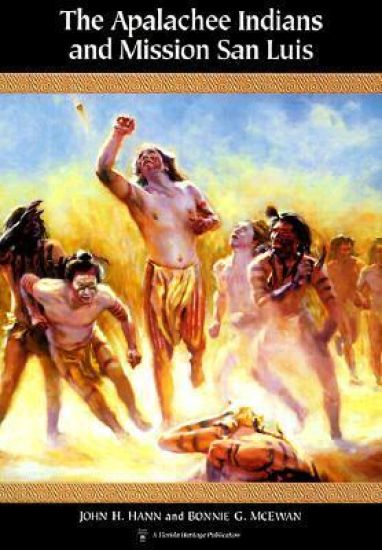
This text offers a combination of archaeology and history to tell the story of the Apalachee Indians of northwest Florida and their Spanish conquerors. The book portrays the dwellings, daily life, religious practices, social structures and recreation activities of the mission.
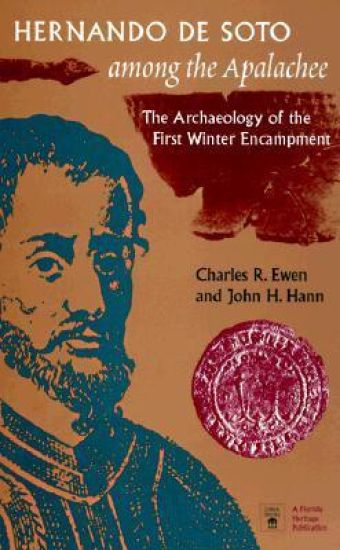
Chronicles the discovery and excavation of the only known campsite of Hernando de Soto's ten-state odyssey in La Florida in the 16th century. The book has three parts: historical background; archaeological excavations at the site; and a retranslation of the narratives relating to the winter camp.
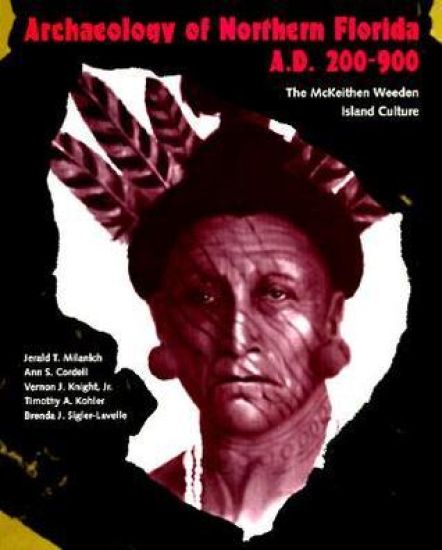
Focusing on the pre-Columbian south east of the United States, the authors draw on north Florida archaeological excavations and site surveys to reveal the Weeden Island culture and its ceramics. The McKeithen site, a multi-mound village site, provides information on native society culture.
From the foreword: "With this important volume, the editors serve notice that old characterizations of the cultures of the Archaic period have been buried under the back dirt of new excavations and new interpretations. . . . It places the Archaic cultures squarely at the forefront of archaeological theory."This volume summarizes our archaeological knowledge of natives who inhabited the American Southeast from 8,000 to 3,000 years ago and examines evidence of many of the native cultural expressions observed by early European explorers, including long-distance exchange, plant domestication, mound building, social ranking, and warfare. ContentsSection I. Mid-Holocene Environments1. Geoarchaeology and the Mid-Holocene Landscape History of the Greater Southeast, by Joseph Schuldenrein2. Mid-Holocene Forest History of Florida and the Coastal Plain of Georgia and South Carolina, by William A. Watts, Eric C. Grimm, and T. C. HusseySection II. Technology3. Changing Strategies of Lithic Technological Organization, by Daniel S. Amick and Philip J. Carr4. Technological Innovations in Economic and Social Contexts, by Kenneth E. Sassaman5. Middle and Late Archaic Architecture, by Kenneth E. Sassaman and R. Jerald LedbetterSection III. Subsistence and Health6. The Paleoethnobotanical Record for the Mid-Holocene Southeast, by Kristen J. Gremillion7. Mid-Holocene Faunal Exploitation in the Southeastern United States, by Bonnie W. Styles and Walter E. Klippel8. Biocultural Inquiry into Archaic Period Populations of the Southeast: Trauma and Occupational Stress, by Maria O. SmithSection IV. Regional Settlement Variation9. Approaches to Modeling Regional Settlement in the Archaic Period Southeast, by David G. Anderson10. Southeastern Mid-Holocene Coastal Settlements, by Michael Russo11. Accounting for Submerged Mid-Holocene Archaeological Sites in the Southeast: A Case Study from the Chesapeake Bay Estuary, Virginia, by Dennis B. BlantonSection V. Regional Integration and Organization12. The Emergence of Long-Distance Exchange Networks in the Southeastern United States, by Richard W. Jefferies13. A Consideration of the Social Organization of the Shell Mound Archaic, by Cheryl P. Claassen14. Southeastern Archaic Mounds, by Michael Russo15. Poverty Point and Greater Southeastern Prehistory: The Culture That Did Not Fit, by Jon L. GibsonKenneth E. Sassaman is archaeologist with the Savannah River Archaeological Research Program, South Carolina Institute of Archaeology and Anthropology, and instructor in the Department of History and Anthropology at Augusta College, Augusta, Georgia. He is the author of Early Pottery in the Southeast: Tradition and Innovation in Cooking Technology. David G. Anderson is archaeologist with the Southeast Archaeological Center, National Park Service, Tallahassee, Florida. He is the author of The Savannah River Chiefdoms: Political Change in the Late Prehistoric Southeast. They are coeditors of The Paleoindian and Early Archaic Southeast.
Relying on previously unused documents, this is a history of the Timucua Indians of Florida, from the first contact with Europeans, to their exile in Cuba in 1763 and their final eradication. It examines their culture, language, political structures, and the meanings of their placenames and titles.
This record of pre-Columbian Florida relates the 12,000-year story of the native peoples who inhabited the state. Using information gathered by archaeological investigations, many carried out since 1980, Jerald Milanich describes the indigenous cultures and explains why they developed as they did. Milanich introduces the material heritage of the first This record of pre-Columbian Florida relates the 12,000-year story of the native peoples who inhabited the state. Using information gathered by archaeological investigations, many carried out since 1980, Jerald Milanich describes the indigenous cultures and explains why they developed as they did. Milanich introduces the material heritage of the first Floridians through the interpretation of artifacts and archaeological sites. Weaving together discoveries from such sites as the Lake Jackson mounds near Tallahassee, Crystal River on the Gulf Coast and Granada on the Miami River, he relates the long histories of the native groups whose descendents were decimated during the European conquest of the 16th and 17th centuries. Milanich begins with an overview of the history of archaeology in Florida. He then describes the earliest aboriginal cultures: the Paleoindians and the people of the Archaic period. The later, regional cultures (Weeden Island, Fort Walton, Glades, Caloosahatchee and many others are correlated with geographical and environmental regions and then compared to provide insights about the nature of chiefdom societies, the effects of wetlands on pre-Columbian settlement systems and the environmental history of the state. Maps and illustrations document this history of archaeological research in Florida and of the sites and artifacts (including Weeden Island pottery vessels and Belle Glade wooden carvings) left behind by the pre-Columbian people.
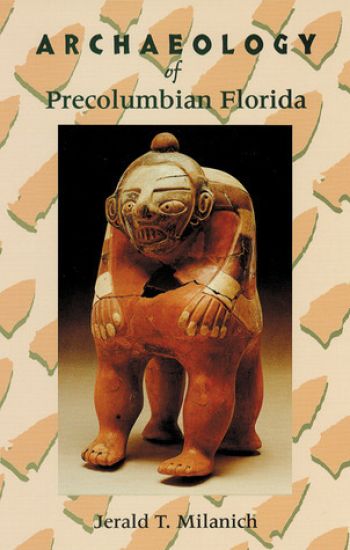
This record of pre-Columbian Florida relates the 12,000-year story of the native peoples who inhabited the state. Using information gathered by archaeological investigations, many carried out since 1980, Jerald Milanich describes the indigenous cultures and explains why they developed as they did. Milanich introduces the material heritage of the first This record of pre-Columbian Florida relates the 12,000-year story of the native peoples who inhabited the state. Using information gathered by archaeological investigations, many carried out since 1980, Jerald Milanich describes the indigenous cultures and explains why they developed as they did. Milanich introduces the material heritage of the first Floridi ans through the interpretation of artifacts and archaeological sites. Weaving together discoveries from such sites as the Lake Jackson mounds near Tallahassee, Crystal River on the Gulf Coast and Granada on the Miami River, he relates the long histories of the native groups whose descendents were decimated during the European conquest of the 16th and 17th centuries. Milanich begins with an overview of the history of archaeology in Florida. He then describes the earliest aboriginal cultures: the Paleoindians and the people of the Archaic period. The later, regional cultures (Weeden Island, Fort Walton, Glades, Caloosahatchee and many others are correlated with geographical and environmental regions and then compared to provide insights about the nature of chiefdom societies, the effects of wetlands on pre-Columbian settlement systems and the environmental history of the state. Maps and illustrations document this history of archaeological research in Florida and of the sites and artifacts (including Weeden Island pottery vessels and Belle Glade wooden carvings) left behind by the pre-Columbian people.
Hernando de Soto, the Spanish conquistador, is legendary in the United States today: counties, cars, caverns, shopping malls and bridges all bear his name. This work explains the historical importance of his expedition, a journey that began at Tampa Bay in 1539 and ended in Arkansas in 1543. De Soto's explorations, the first European penetration of eastern North America, preceded a demographic disaster for the aboriginal peoples in the region. Old World diseases, perhaps introduced by the de Soto expedition and certainly by other Europeans in the 16th and 17th centuries, killed many thousands of Indians. By the middle of the 18th century only a few remained alive. The de Soto narratives provide the first European account of many of these Indian societies as they were at the time of European contact. This work interprets these and other 16th-century accounts in the light of new archaeological information, resulting in a more comprehensive view of the native peoples. Matching de Soto's camps to sites where artifacts from the de Soto era have been found, the authors reconstruct his route in Florida and at the same time clarify questions about the social geography and political relationships of the Florida Indians. They link names once known only from documents (for example, the Uzita, who occupied territory at the de Soto landing site, and the Aguacaleyquen of north peninsular Florida) to actual archaeological remains and sites.