Kirjojen hintavertailu. Mukana 12 595 353 kirjaa ja 12 kauppaa.

Kirjailija

Jere Van Dyk

Kirjat ja teokset yhdessä paikassa: 3 kirjaa, julkaisuja vuosilta 2002-2022, suosituimpien joukossa Without Borders. Vertaile teosten hintoja ja tarkista saatavuus suomalaisista kirjakaupoista.

3 kirjaa

Kirjojen julkaisuhaarukka 2002-2022.

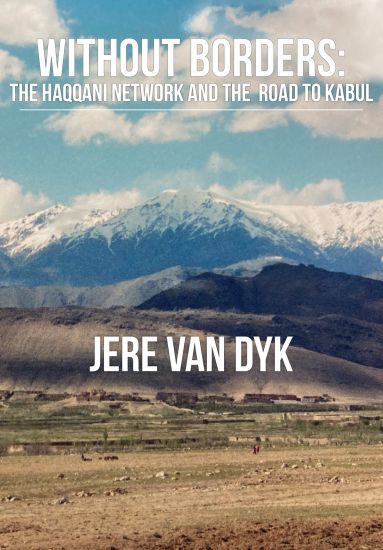
Without Borders

Without Borders

Jere Van Dyk

ACADEMICA PRESS
2022
sidottu
Without Borders: The Haqqani Network and the Road to Kabul is the untold story of the origins, political awakening, and rise of what the United States and its allies call the Haqqani Network, and what the Haqqani family calls the Haqqani Mujahideen. The author lived with the Haqqanis as a young reporter for the New York Times in the 1980s, in the mountains of eastern Afghanistan, when they were America's allies in the Afghan-Soviet war. After 9/11, the network became America's enemy. This book tells the exciting story of how the author began to try to find the Haqqanis again, and, later, his quest to understand their influence in the greater Middle East. This is the story of the rise of an ideology and movement born in the Mongol conquest of Baghdad in 1258, which resurfaced in Arabia and India in the 18th Century, lived on in the anti-Christian, anti-British, anti-European, and anti-Russian colonial movements of the 19th and 20th centuries, and in modern times evolved, with American help, into the Haqqani Mujahideen and their allies and followers around the world.
The Trade

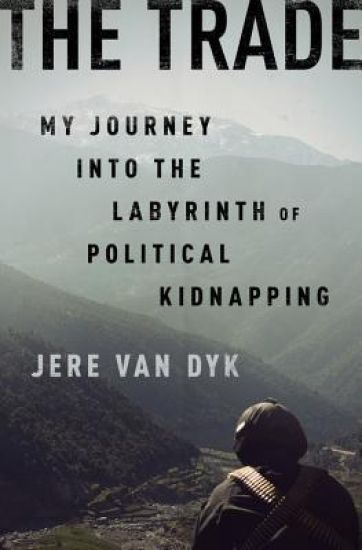
The Trade

Jere van Dyk

PublicAffairs,U.S.
2017
sidottu
In 2008, American journalist Jere Van Dyk was kidnapped and held for 45 days. At the time, he had no idea who his kidnappers were. They demanded a ransom and the release of three of their comrades from Guantanamo, yet they hinted at their ties to Pakistan and to the Haqqani network, a uniquely powerful group that now holds the balance of power in large parts of Afghanistan and the tribal areas of Pakistan. After his release, Van Dyk wrote a book about his capture and what it took to survive in this most hostile of circumstances. Yet he never answered the fundamental questions that his kidnapping raised: Why was he taken? Why was he released? And who saved his life?Every kidnapping is a labyrinth in which the certainties of good and bad, light and dark are merged in the quiet dialogues and secret handshakes that accompany a release or a brutal fatality. In The Trade, Jere Van Dyk uses the sinuous path of his own kidnapping to explain the recent rise in the taking of Western hostages across the greater Middle East. He discovers that he was probably not taken by the anonymous "Taliban," as he thought, but by the very people who helped arrange his trip and then bargained for his release. It was not a matter of chance: CBS, Van Dyk's employer at the time, launched a secret rescue and, he learned later, paid an undisclosed ransom to a tribal chief who controlled the area in which he was kidnapped and who delivered him and his guide safely to a US Army base. In 2013, Van Dyk returned to the Middle East to unravel the links among jihadist groups, specifically that of the Haqqani network. His investigation finally paid off in 2015, when Van Dyk was taken to a discreet room in a guesthouse in Islamabad where he met Ibrahim Haqqani, part of the leadership of the Haqqani network who has been seen by very few outsiders since 9/11. There, Van Dyk learned of the Haqqanis' links to Pakistan, Saudi Arabia, the ISI, and the CIA and their involvement in the kidnapping of Bowe Bergdahl and many others. Back in the United States, Van Dyk saw the other side of the kidnapping labyrinth as he became involved with other former hostages and the families of recent kidnapping victims murdered by the Islamic State. Van Dyk's investigation shows how America's foreign policy strategy, the terrible cynicism of the kidnappers, and a world of shadowy interlocutors who play both sides of many bargains combine to create a brutal business out of the exchange of individual human lives for vast sums of money.
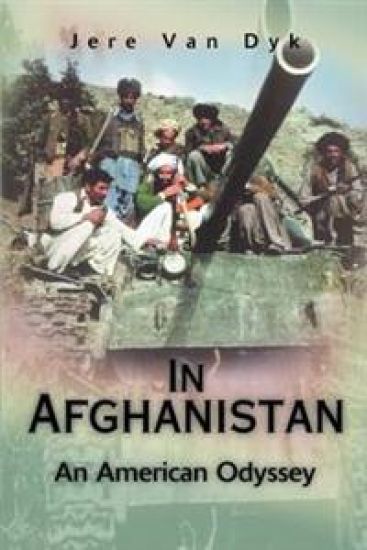
In Afghanistan

In Afghanistan

Jere Van Dyk

iUniverse
2002
pokkari
In Afghanistan is the story of a young man, searching for adventure and self-discovery in war-torn Afghanistan during the time of the Soviet invasion. It is also a portrait of an exotic land and people desperately struggling for survival during that war, as they are today. In 1981, with a letter and some financial backing from The New York Times, Van Dyk, bearded and dressed as an Afghan, sneaked into Afghanistan , then off-limits to foreigners, and lived in the ruggedly-beautiful mountains and desert of this country with the Mujahideen, the men then fighting the Soviet Union. “My spine tingled like a boy’s. I felt the sensation of adventure…The Turbans of ten laughing young men, armed to the teeth, flapped in the wind…I would not have traded this moment for all the money in the world. It was suicidal, magnificent, and I knew we’d be all right.” But it was close. He lived through Soviet ground and helicopter attacks, saw death and suffering, but also laughter. He had much to learn about Islam, tribal traditions and the holy war the guerrillas were waging. He was accused of being a Soviet spy, but ultimately won the trust of his Afghan guides. He saw a strong, courageous, often frightened people fighting to protect the only thing they knew--their homes, their families, their way of life. The author, a former runner, a fledgling politician and writer, who grew up in a fundamentalist Christian family in a small town in the Northwest, also went looking for something deep among these men who shouted “God is Great” and went into battle against the Red Army. His story is about the people he met and his journey.