Kirjojen hintavertailu. Mukana 12 595 353 kirjaa ja 12 kauppaa.

Kirjailija

Jeremiah Barker

Kirjat ja teokset yhdessä paikassa: 4 kirjaa, julkaisuja vuosilta 2023-2024, suosituimpien joukossa Called to Community. Vertaile teosten hintoja ja tarkista saatavuus suomalaisista kirjakaupoista.

4 kirjaa

Kirjojen julkaisuhaarukka 2023-2024.

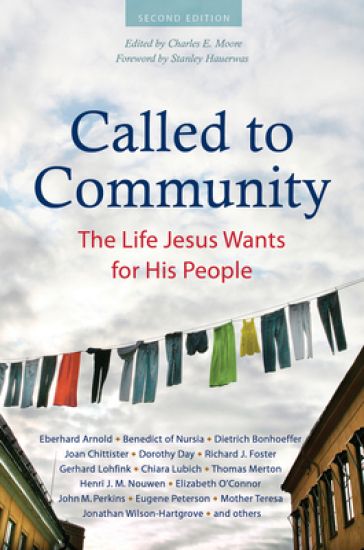
Called to Community

Called to Community

Eberhard Arnold; Dietrich Bonhoeffer; Joan Chittister; Dorothy Day; Fyodor Dostoyevsky; Richard J. Foster; Jonathan Wilson-Hartgrove; David Janzen; Søren Kierkegaard; C. S. Lewis; Chiara Lubich; Thomas Merton; Henri J. M. Nouwen; John M. Perkins; Eugene H. Peterson; Christine D. Pohl; Howard A. Snyder; Mother Teresa; Saint Benedict; Jeremiah Barker; Amy Carmichael; Hans Denck; Andreas Ehrenpreis; Thomas R Kelly; Penelope Lawson; Juan Mateos; Kathleen Norris; Thomas E Powers; Peter Riedemann; Christopher C Smith; Ulrich Stadler

PLOUGH PUBLISHING HOUSE
2024
pokkari
Fifty-two readings on living in intentional Christian community to spark group discussion.Gold Medal Winner, 2017 Illumination Book Awards, Christian LivingSilver Medal Winner, 2017 Benjamin Franklin Award in Religion, Independent Book Publishers AssociationWhy, in an age of connectivity, are our lives more isolated and fragmented than ever? And what can be done about it? The answer lies in the hands of God’s people. Increasingly, today’s Christians want to be the church, to follow Christ together in daily life. From every corner of society, they are daring to step away from the status quo and respond to Christ’s call to share their lives more fully with one another and with others. As they take the plunge, they are discovering the rich, meaningful life that Jesus has in mind for all people, and pointing the church back to its original calling: to be a gathered, united community that demonstrates the transforming love of God.Of course, such a life together with others isn’t easy. The selections in this volume are, by and large, written by practitioners—people who have pioneered life in intentional community and have discovered in the nitty-gritty of daily life what it takes to establish, nurture, and sustain a Christian community over the long haul.Whether you have just begun thinking about communal living, are already embarking on sharing life with others, or have been part of a community for many years, the pieces in this collection will encourage, challenge, and strengthen you. The book’s fifty-two chapters can be read one a week to ignite meaningful group discussion.Contributors include: John F. Alexander, Eberhard Arnold, J. Heinrich Arnold, Johann Christoph Arnold, Alden Bass, Benedict of Nursia, Christoph Friedrich Blumhardt, Leonardo Boff, Dietrich Bonhoeffer, Joan Chittister, Stephen B. Clark, Andy Crouch, Dorothy Day, Anthony de Mello, Elizabeth Dede, Catherine de Hueck Doherty, Fyodor Dostoyevsky, Jenny Duckworth, Friedrich Foerster, Richard J. Foster, Jodi Garbison, Arthur G. Gish, Helmut Gollwitzer, Adele J Gonzalez, Stanley Hauerwas, Joseph H. Hellerman, Roy Hession, David Janzen, Rufus Jones, Emmanuel Katongole, Arthur Katz, Søren Kierkegaard, C. Norman Kraus, C.S. Lewis, Gerhard Lohfink, Ed Loring, Chiara Lubich, George MacDonald, Thomas Merton, Hal Miller, José P. Miranda, Jürgen Moltmann, Charles E. Moore, Henri J. M. Nouwen, Elizabeth O’Connor, John M. Perkins, Eugene H.Peterson, Christine D. Pohl, Chris Rice, Basilea Schlink, Howard A. Snyder, Mother Teresa, Thomas à Kempis, Elton Trueblood, and Jonathan Wilson-Hartgrove.
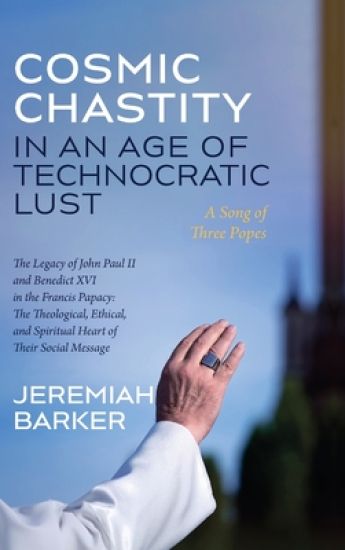
Cosmic Chastity in an Age of Technocratic Lust

Cosmic Chastity in an Age of Technocratic Lust

Jeremiah Barker

JAMES CLARKE CO LTD
2024
nidottu
Pope Francis, Jeremiah Barker argues, shares the theological, ethical, and spiritual core of John Paul II and Benedict XVI's social teaching. Barker reappropriates R.R. Reno's call for theologians to apply themselves to the elements of a cogent argument in Francis' work, and draws out the underlying rationale of Francis' message, which he argues is the same as the two previous popes. Inspired by Francis' call and teaching, Barker's compelling argument is an opportunity to reconsider the legacies of John Paul II and Benedict XVI in the light of contemporary Catholic debates and challenges. A unique and refreshing analysis, Barker's argument is relevant for any Catholic seeking to make sense of these popes' messages.
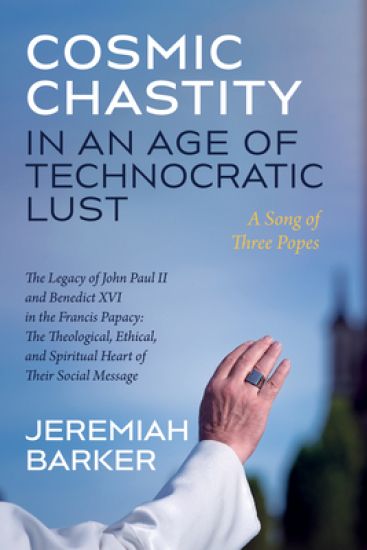
Cosmic Chastity in an Age of Technocratic Lust: A Song of Three Popes
This book arises from the conviction that the ways in which John Paul II and Benedict XVI were confused as allies with American conservativism is as misleading, unclear, and confusing as any misapprehension of Francis's genuine orthodoxy. As the author does not have a stake in reacting against a liberal Catholicism that he sees dying out anyway, the bigger threat, in his view, sociologically, for the North American church, is falling into a right-wing tribalism--and Francis resists precisely that. First Things editor R. R. Reno, highly critical of Francis, has called for a redemption of hints and suggestions of a cogent argument in the Francis message. Jeremiah Barker reappropriates Reno's call as a call to draw out or highlight what he takes to be the underlying rationale of the Francis message. That underlying rationale, he compellingly argues, is strikingly identical to that of the two previous popes. Barker, who has learned much from Reno, is in fact inspired by Francis's call and teaching, and it is the aim of this book to draw out what inspires him and to identify what he hopes Reno and fellow 'John Paul II Catholics' don't miss in the Francis message: the theological, ethical, and spiritual core of his social teaching, which Francis shares with that of John Paul II and Benedict XVI.
Cosmic Chastity in an Age of Technocratic Lust: A Song of Three Popes
This book arises from the conviction that the ways in which John Paul II and Benedict XVI were confused as allies with American conservativism is as misleading, unclear, and confusing as any misapprehension of Francis's genuine orthodoxy. As the author does not have a stake in reacting against a liberal Catholicism that he sees dying out anyway, the bigger threat, in his view, sociologically, for the North American church, is falling into a right-wing tribalism--and Francis resists precisely that. First Things editor R. R. Reno, highly critical of Francis, has called for a redemption of hints and suggestions of a cogent argument in the Francis message. Jeremiah Barker reappropriates Reno's call as a call to draw out or highlight what he takes to be the underlying rationale of the Francis message. That underlying rationale, he compellingly argues, is strikingly identical to that of the two previous popes. Barker, who has learned much from Reno, is in fact inspired by Francis's call and teaching, and it is the aim of this book to draw out what inspires him and to identify what he hopes Reno and fellow 'John Paul II Catholics' don't miss in the Francis message: the theological, ethical, and spiritual core of his social teaching, which Francis shares with that of John Paul II and Benedict XVI.