Kirjojen hintavertailu. Mukana 12 445 574 kirjaa ja 12 kauppaa.

Kirjailija

Jeremy Black

Kirjat ja teokset yhdessä paikassa: 252 kirjaa, julkaisuja vuosilta 1992-2027, suosituimpien joukossa Geopolitikens återkomst : striden om framtidens historia. Vertaile teosten hintoja ja tarkista saatavuus suomalaisista kirjakaupoista.

252 kirjaa

Kirjojen julkaisuhaarukka 1992-2027.

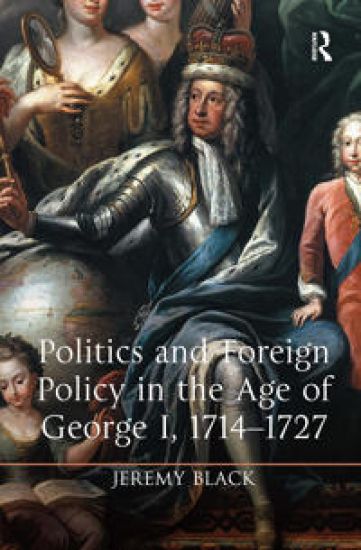
Politics and Foreign Policy in the Age of George I, 1714-1727
Through its focus on the relationship between foreign and domestic politics, this book provides a new perspective on the often fractious and tangled events of George I’s reign (1714-27). This was a period of transition for Britain, as royal authority gave way to cabinet government, and as the country began to exercise increased influence upon the world stage. It was a reign that witnessed the trauma of the 1715 Jacobite Rebellion, saw Britain fighting Spain as part of the Quadruple Alliance, and in which Britain confronted the rise of Russia under Peter the Great. There has been relatively little new detailed work on this subject since Hatton’s biography of George I appeared in 1978, and that book, while impressive, devoted relatively little attention to the domestic political dimension of foreign policy. In contrast, Black links diplomacy to domestic politics to show that foreign policy was a key aspect of government as well as the leading battleground both for domestic politics and for ministerial rivalries. As a result he demonstrates how party identities in foreign policy were not marginal, to either policy or party, but, instead, central to both. The research is based upon a wealth of both British and foreign archive material, including State Papers Domestic, Scotland, Ireland and Regencies, as well as Foreign. Extensive use is also made of parliamentary and ministerial papers, as well as the private papers of numerous diplomats. Foreign archives consulted include papers from Hanover, Osnabrück, Darmstadt, Marburg, Munich, Paris, The Hague, Vienna and Turin. By drawing upon such a wide ranging array of sources, this book offers a rich and nuanced view of politics and foreign policy under George I.

British Politics and Foreign Policy, 1744-57

British Politics and Foreign Policy, 1744-57

Jeremy Black

TAYLOR FRANCIS LTD
2024
nidottu
The years between 1744 and 1757 were a testing time for the British government as political unrest at home exploded into armed rebellion, whilst on the continent French armies were repeatedly victorious. Providing an analytical narrative, supported by thematic chapters, this book examines the relationship between Britain’s politics and foreign policy in a period not hitherto treated as a unit. Building upon methods employed in the preceding two books (’Politics and Foreign Policy in the Age of George I, 1714-1727’ and ’Politics and Foreign Policy, 1727-44’), this volume charts the significant political changes of 1744-57. It shows how ministerial change and political fortunes were closely linked to foreign policy, with foreign policy affecting, and being affected by, political developments. In particular, it asks important questions about the politics and foreign policy of these years and thus reconsiders the context of imperial growth, economic development and political stability. Far from being simply a study of individual episodes, the book outlines the structural aspects of the relationship between foreign policy and politics, examining issues of political stability, motivation and effectiveness. In particular, the role of monarch, Court and ministers are considered alongside those of Parliament, parliamentary politics, and the public sphere of discussion, notably, but not only, the press. The book therefore offers a guided narrative that both uses and builds on the analysis offered by contemporary commentators, and provides an informed assessment of the significance of the ideas, terms and language employed in eighteenth-century Britain to discuss foreign policy and politics.
British Politics and Foreign Policy, 1727-44

British Politics and Foreign Policy, 1727-44

Jeremy Black

TAYLOR FRANCIS LTD
2024
nidottu
Covering the period from the end of the Anglo-French alliance in 1731 to the declaration of war between the two powers in 1744, this book charts a turbulent period in British politics that witnessed the last decade of the Walpole ministry, the attempt to replace it by a Patriot government, and the return of the Old Corps Whigs to a process of dominance. In particular it reveals how ministerial change and political fortunes were closely linked to foreign policy, with foreign policy both affecting, and being affected by, political developments. The book draws upon a great range of foreign and domestic sources, but makes particular use of foreign diplomatic records. These are important as many negotiations were handled, at least in part, through envoys in London. Moreover, these diplomats regularly spoke with George II and his ministers, and some were personal friends of envoys and could be used for secret negotiations outside normal channels. The range of sources consulted ensures that the book offers more than any previous book to cover the period as a whole, whilst not simply becoming a detailed study of a number of episodes. Instead it retains the strong structural aspects of the relationship between foreign policy and politics necessary to examine questions about political stability, motivation and effectiveness. Following on from Jeremy Black’s previous studies on eighteenth-century foreign policy, ’Politics and Foreign Policy under George I’ (covering the period 1714-27) this new book takes the story up to 1744 and continues to illuminate the complex and often opaque workings of the British state at a turbulent period of European history.
A History of Railways in 100 Maps

A History of Railways in 100 Maps

Jeremy Black

British Library Publishing
2024
sidottu
Continuing the thematic strand of the successful and proven British Library ‘100 Maps’ series, this new volume traces the fully international history of railways from their beginnings in the north-west of England through to the inter-continental lines of today.Arranged chronologically, and with some 140 newly photographed maps and ephemera from the British Library’s cartographic holdings, A History of Railways in 100 Maps explores both the progress of the railways and railway infrastructure across the globe, and through mountains, deserts, cities and even under oceans. The volume also charts the development of how railways were surveyed and presented in two- and three-dimensional forms for the purposes of engineering and construction, politics, economics and indeed war.A dedicated chapter looks at fantasy and literary railway maps, while the book concludes with a presentation of recent breakthroughs in railway infrastructure, design and mapping and also looks ahead to future developments in this most lasting of transport inventions.
Introduction to Global Military History

Introduction to Global Military History

Jeremy Black

TAYLOR FRANCIS LTD
2024
nidottu
Now in its fourth edition, Introduction to Global Military History is an accessible, up-to-date account of modern warfare from the eighteenth century to the present.The book engages with the social, cultural, political and economic contexts of war, examining the causes and consequences of conflict beyond national and chronological boundaries. It challenges the dominant Western-centric, technologically focused view of military history and instead emphasises the ranges of circumstances faced by both Western and non-Western powers and the absence of any one direction of development. The chapters present integrated discussions of land, naval and air conflicts, addressing continuities and the ways in which common experiences affected different spheres. This edition revises the text throughout, has increased focus on the developments of the 2000s and 2010s, and adds a new chapter on the 2020s.Supported by a variety of illustrations, maps and case studies, this study is a valuable resource for students of military history and general readers alike.
Introduction to Global Military History

Introduction to Global Military History

Jeremy Black

TAYLOR FRANCIS LTD
2024
sidottu
Now in its fourth edition, Introduction to Global Military History is an accessible, up-to-date account of modern warfare from the eighteenth century to the present.The book engages with the social, cultural, political and economic contexts of war, examining the causes and consequences of conflict beyond national and chronological boundaries. It challenges the dominant Western-centric, technologically focused view of military history and instead emphasises the ranges of circumstances faced by both Western and non-Western powers and the absence of any one direction of development. The chapters present integrated discussions of land, naval and air conflicts, addressing continuities and the ways in which common experiences affected different spheres. This edition revises the text throughout, has increased focus on the developments of the 2000s and 2010s, and adds a new chapter on the 2020s.Supported by a variety of illustrations, maps and case studies, this study is a valuable resource for students of military history and general readers alike.
Rethinking Geopolitics

Rethinking Geopolitics

Jeremy Black

INDIANA UNIVERSITY PRESS
2024
sidottu
Amid the bloody Russian invasion of Ukraine in 2021 and the escalating tensions across the Taiwan Strait, the geopolitical balance of power has changed significantly in a very short period. If current trends continue, we may be witnessing a tectonic realignment unseen in more than a century. In 1904, Halford Mackinder delivered a seminal lecture entitled "The Geographical Pivot of History" to a packed house at the Royal Geographical Society in London about the historic changes then taking place on the world stage. Britain was the great power of that historical moment, but its political, military, and economic primacy was under serious challenge from the United States, Germany, and Russia. Mackinder predicted that the "heartland" of Eastern Europe held the key to global hegemony and that the struggle for control over this region would be the next great conflict. Ten years later, when an assassin's bullet in Sarajevo launched the world into a calamitous war, Mackinder's analysis proved prescient. As esteemed historian Jeremy Black argues in this timely new volume, the 2020s may be history's next great pivot point. The continued volatility of the global system in the wake of a deadly pandemic exacerbates these pressures. At the same time, the American public remains divided by the question of engagement with the outside world, testing the limits of US postwar hegemony. The time has come for a reconsideration of the 120 years from Mackinder's lecture to now, as well as geopolitics of the present and of the future.
Histories of War

Histories of War

Jeremy Black

PEN SWORD BOOKS LTD
2024
sidottu
A global account of histories of war, from Antiquity to the present day, this thoughtful book shows how the varied modes of representation record political, cultural and social developments as well as military events. Covers all forms of discussion and commemoration from statuary to scholarship, films to novels. Important not only to those interested in the history of war but also to those concerned with culture and history in general. This erudite volume on the theory and practice of military history will interest a wide readership including both professional historians of war and those concerned with its broader philosophical dimension. The author - a well established authority in European history - has provided an informed, rigorous analysis of a difficult topic. It will delight those who seek enlightenment of the historian's craft, military or otherwise.
Defoe`s Britain

Defoe`s Britain

Jeremy Black

ST AUGUSTINE'S PRESS
2024
sidottu
The Weight of Words Series continues with Daniel Defoe, as historian Jeremy Black uses this writer to interpret Britain in the late 1600s, and likewise looks to the times to interpret the fiction. As seen in previous studies on Christie, Smollett, Fielding, and the Gothic novelists, Black tells the story of the story-teller, and presents the picture of British nationalism that "was the product, history, and record of struggle––collective and individual––as well as its defence. Defoe provides particular accounts of this struggle, both in foreign seas and lands, and at home. This struggle had a moral character that is difficult to capture today." Defoe was an outsider, a man of many interests whom Black asserts evades too precise a portrait or coherent description of character and career. But he is a traveler, in the literal and imaginative senses, and in his engagement with life and its issues and willingness to associate with 'low-life' prefigures later literary giants like Smollett and Fielding. More than the establishment of genre, Defoe created the writer "whose business is observation." Black's account of this parcel of the British past is impeccable because it is in fact an account that the past, in Defoe, gives of itself. "As a writer, Defoe brought together a reality usually presented as, and endorsed by, history, with the imaginative focus of storytelling, and the direction of, variously, propaganda, analysis, and exemplary tale."
Defoe`s Britain

Defoe`s Britain

Jeremy Black

ST AUGUSTINE'S PRESS
2024
nidottu
The Weight of Words Series continues with Daniel Defoe, as historian Jeremy Black uses this writer to interpret Britain in the late 1600s, and likewise looks to the times to interpret the fiction. As seen in previous studies on Christie, Smollett, Fielding, and the Gothic novelists, Black tells the story of the story-teller, and presents the picture of British nationalism that "was the product, history, and record of struggle––collective and individual––as well as its defence. Defoe provides particular accounts of this struggle, both in foreign seas and lands, and at home. This struggle had a moral character that is difficult to capture today." Defoe was an outsider, a man of many interests whom Black asserts evades too precise a portrait or coherent description of character and career. But he is a traveler, in the literal and imaginative senses, and in his engagement with life and its issues and willingness to associate with 'low-life' prefigures later literary giants like Smollett and Fielding. More than the establishment of genre, Defoe created the writer "whose business is observation." Black's account of this parcel of the British past is impeccable because it is in fact an account that the past, in Defoe, gives of itself. "As a writer, Defoe brought together a reality usually presented as, and endorsed by, history, with the imaginative focus of storytelling, and the direction of, variously, propaganda, analysis, and exemplary tale."
A History of the Second World War in 100 Maps

A History of the Second World War in 100 Maps

Jeremy Black

British Library Publishing
2024
nidottu
Whilst the First World War had seen an exceptional growth in the use and production of military cartography, the global conflict that followed employed maps, charts, reconnaissance, radar, sonar and the systematic recording and processing of geographical and topographical information on an unprecedented scale. It is impossible to understand the events and outcomes of the Second World War without deep reference to mapping at all levels. Maps themselves became the weapons and had a decisive impact. In this highly original work Jeremy Black, one of world's leading military and cartographic historians, shows how fundamental maps were to the conflict as he charts its historical sweep across each of the major theatres. The book's thematic arrangement -- exploring the conflict's maps through strategic, operational, tactical, reportage and propaganda means -- provides a truly ground-breaking perspective. The story is told through 100 key maps, many photographed for the very first time, from the unrivalled collections of the British Library and other major cartographic holdings.
In Fielding`s Wake

In Fielding`s Wake

Jeremy Black

ST AUGUSTINE'S PRESS
2024
sidottu
In the second volume of The Weight of Words Series, Jeremy Black continues his efforts to present and preserve Britain's literary genius. Its intelligence and enduring influence is in large part reliant on the underlining conservatism that has motivated authors such as Agatha Christie (Black's earlier subject) and Henry Fielding alike. Fielding's epic comic novel, Tom Jones, is unforgettable for many reasons, but the author must be credited with an aptitude for documenting contemporary cultural history and his contribution to a new species of writing. Black's treatment of Fielding draws to the fore a man who was of his time but not confined to it. "Philosophy in practice encompassed his stance as a man of action as well as a reflective writer of genius." Fielding is shown to provide across the breadth of his work extensive and invaluable commentary on issues as diverse as law and order, marriage, women, and the interplay of urban and rural life. Black, an historian, is here a student of storytelling and recovers Fielding's rich descriptions of the human heart and call to defy the vices with which circumstances might taunt it. Black has done a service along many fronts at once: the science of the novel and genre, the history of a people and the figure of a memorable writer.
In Fielding's Wake

In Fielding's Wake

Jeremy Black

ST AUGUSTINE'S PRESS
2024
nidottu
In the second volume of The Weight of Words Series, Jeremy Black continues his efforts to present and preserve Britain's literary genius. Its intelligence and enduring influence is in large part reliant on the underlining conservatism that has motivated authors such as Agatha Christie (Black's earlier subject) and Henry Fielding alike. Fielding's epic comic novel, Tom Jones, is unforgettable for many reasons, but the author must be credited with an aptitude for documenting contemporary cultural history and his contribution to a new species of writing. Black's treatment of Fielding draws to the fore a man who was of his time but not confined to it. "Philosophy in practice encompassed his stance as a man of action as well as a reflective writer of genius." Fielding is shown to provide across the breadth of his work extensive and invaluable commentary on issues as diverse as law and order, marriage, women, and the interplay of urban and rural life. Black, an historian, is here a student of storytelling and recovers Fielding's rich descriptions of the human heart and call to defy the vices with which circumstances might taunt it. Black has done a service along many fronts at once: the science of the novel and genre, the history of a people and the figure of a memorable writer.
Paris: A Short History

Paris: A Short History

Jeremy Black

THAMES HUDSON LTD
2024
sidottu
A concise history of Paris and the great events and personalities, from prehistory to the present, that have shaped its unique cultural legacy. Once described as ‘that metropolis of dress and debauchery’ by the Scottish poet David Mallet, then as now Paris had a reputation for a peculiar joie de vivre, from style to sex, cookery to couture, captivating minds and imaginations across the Continent and beyond. In Paris: A Short History, Jeremy Black explores the unique cultural circumstances that made Paris the vibrant capital it is today. Black explores how Paris has been shaped through the centuries from the first century BCE, when the city was founded by the Parisii. From a small Gallic capital conquered by the Romans, Paris transformed into a flourishing medieval city full of spectacular palaces and cathedrals, including Sainte-Chapelle and Notre-Dame de Paris. During the illustrious reigns of Louis XIV and XV Paris became one of the most beautiful and cosmopolitan capitals in the world, before the Revolution tore French society apart, changing the city forever. The Belle Époque brought new ideas and architecture to the city, including the iconic Eiffel Tower, before the destruction of the First and Second World Wars launched a massive regeneration project. Black completes his history by exploring present-day Paris and its role as the seat of a leading power on the world stage. Black deftly demonstrates that the history of Paris is about more than a city: it is the history of a culture, a society and a state that has impacted the rest of the world through centuries of changing fortunes.
A Brief History of America

A Brief History of America

Jeremy Black

Little, Brown Book Group
2024
nidottu
The next in this series of admirably concise yet nevertheless comprehensive titles looks at the history of all Americans as well as America; its environmental history and its linkage to economic history; the political shaping of America; and America in the world, from being a colony to post-Cold War America.Black examines the environmental history of America and its linkage to economic history, crucially, the clearing of forests; the spread of agriculture; mineral, coal and iron extraction; industrialisation; urbanisation; and current and growing climate-crisis concerns.He explores the political shaping of America: indigenous American polities; free European and unfree African settlements; the creation of an American State, and its successes and failures from 1783 to 1861; Civil War; democratisation; the rise of the federal Government from the 1930s; the Civil Rights movement from the 1950s onwards, and tensions in more recent governance. The book considers America in the World: as a pre-colonial and colonised space; as a newly-independent power, then a rising international one, the Cold War and the USA as the sole superpower in the post-Cold-War world. These key themes are tackled chronologically for the sake of clarity, beginning with the geological creation of North America, human settlement and native American cultures to 1500; the arrival of Europeans and enslaved Africans to 1770 - the Spanish and French in the Gulf of Mexico and Florida, the English and French, and the Dutch and Swedes further north.The focus then shifts to settler conflicts with native Americans and between European powers leading to a British-dominated North America by 1770. Then the end of European rule and the foundation of an American trans-continental state. The section dealing with the years from 1848 to 1880 looks at the Civil War between North and South, reconstruction and the creation of a new society.Between 1880 and 1920, the United States became an industrial powerhouse and an international power, also a colonial power - the Philippines, Hawaii, Puerto Rico - and a participant in the First World War.The interwar years, 1921 to 1945, brought turmoil: the Roaring Twenties; the growth of Hollywood; Prohibition; jazz; the Great Depression and the New Deal; finally the Second World War. 1945 to 1968 was the American Age, brimming with confidence and success as the world's leading power, but also the ongoing struggle for civil rights. Subsequent years to 1992 brought crisis and recovery: Watergate, the Reagan years and the USA as the sole world superpower.In bringing the book right up to the present day, Black looks at factors that divide American society and economy, though it remains a country of tremendous energy.
A Brief History of the British Monarchy

A Brief History of the British Monarchy

Jeremy Black

Little, Brown Book Group
2024
nidottu
The British monarchy is at a turning point. Concise and engaging, this book charts the very beginnings of British reign through to the longest serving monarch, Queen Elizabeth II - and looks forward to the reign of King Charles III.Much more than a linear history, this is the intertwined story of royalty and state, of divisions, invasions, rivalries, death and glory; the story of nation fates deeply tied with the personal endeavours of monarchs through the ages. Black expertly weaves together thematic chapters from the origins of monarchy, medieval times and sixteenth-century developments, to the crises of the seventeenth-century, settlement and imperialism, and the challenges of the modern age. Exploring the House of Wessex, the Norman Conquest, Henry VIII and the Tudors, Victorianism and key events such as abdication of Edward VIII, this book is a necessary and comprehensive guide to the British Monarchy and how it has shaped history - and our lives today.
A History of Britain

A History of Britain

Jeremy Black

INDIANA UNIVERSITY PRESS
2024
pokkari
The British vote to leave the European Union stunned everyone 2016, but was it really a surprise? In this revised and updated edition of A History of Britain: 1945 Through Brexit, award-winning historian Jeremy Black expands his reexamination of modern British history to include the Brexit process, the tumultuous administrations of Theresa May and Boris Johnson, the spectacular failure of Liz Truss, and the early days of Rishi Sunak's premiership. This sweeping and engaging book traces Britain's path through the destruction left behind by World War II, Thatcherism, the threats of the IRA, the Scottish referendum, and on to the impact of waves of immigration from the European Union. A History of Britain: 1945 Through Brexit overturns many conventional interpretations of significant historical events, provides context for current developments, and encourages the reader to question why we think the way we do about Britain's past.
The Atlantic Slave Trade in World History

The Atlantic Slave Trade in World History

Jeremy Black

TAYLOR FRANCIS LTD
2024
sidottu
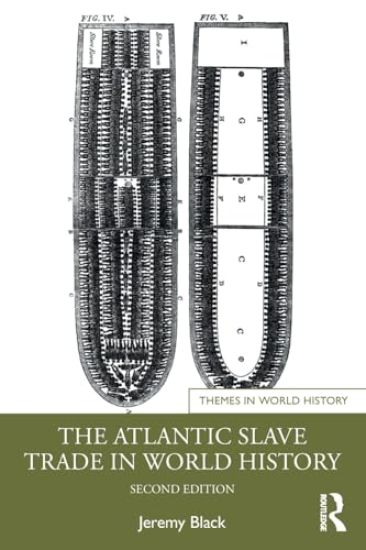
Now in its second edition, The Atlantic Slave Trade in World History has been updated to include recent scholarship, and an analysis of how debates have changed in light of recent key events such as the Black Lives Matter movement.Primarily focused on the Atlantic Slave Trade, this study places slavery within a broader world context and includes significant detailed coverage of Africa. With a chronological approach, it guides students through the origins of the Atlantic Slave Trade to its expansion and eventual abolition. Its final chapters explore the legacy of the Atlantic Slave Trade by comparing it to other systems of slavery outside of the Atlantic region, and analyze the persistence of modern-day slavery. As well as offering an analysis of historiography, the updated bibliography and conclusion, which considers the recent Black Lives Matter protests and their aftermath, provide a fresh account of how slavery has shaped our understanding of the modern world.Unmatched in its breadth of information, chronological sweep, and geographical coverage, The Atlantic Slave Trade in World History is the most useful introductory resource for all students who study the Atlantic Slave Trade in a world context.
The Atlantic Slave Trade in World History

The Atlantic Slave Trade in World History

Jeremy Black

TAYLOR FRANCIS LTD
2024
nidottu
Now in its second edition, The Atlantic Slave Trade in World History has been updated to include recent scholarship, and an analysis of how debates have changed in light of recent key events such as the Black Lives Matter movement.Primarily focused on the Atlantic Slave Trade, this study places slavery within a broader world context and includes significant detailed coverage of Africa. With a chronological approach, it guides students through the origins of the Atlantic Slave Trade to its expansion and eventual abolition. Its final chapters explore the legacy of the Atlantic Slave Trade by comparing it to other systems of slavery outside of the Atlantic region, and analyze the persistence of modern-day slavery. As well as offering an analysis of historiography, the updated bibliography and conclusion, which considers the recent Black Lives Matter protests and their aftermath, provide a fresh account of how slavery has shaped our understanding of the modern world.Unmatched in its breadth of information, chronological sweep, and geographical coverage, The Atlantic Slave Trade in World History is the most useful introductory resource for all students who study the Atlantic Slave Trade in a world context.
The Age of Nightmare

The Age of Nightmare

Jeremy Black

ST AUGUSTINE'S PRESS
2024
sidottu
Historian Jeremy Black is comprehensive, as ever, but in his treatment of the British Gothic novel his greatest service is the preservation of the detail––namely, the human impetus behind art that is often undervalued. Gothic novelists were purposeful, thoughtful, and engaged questions and feelings that ultimately shaped a century of culture. Black notes that the Gothic novel is also very much about "morality and deploying history accordingly." The true interest of the Gothic novel is more remarkable than it is grisly: the featured darkness and macabre are not meant to usurp heroism and purity, but will fall hard under the over-ruling hand of Providence and certainty of retribution. Black's understanding of the Gothic writer is a remarkable contribution to the legacy of British literature and the novel at large. Once again, in Black thoroughness meets fidelity and the reader is overcome with his own insights into the period on the merit of Black's efforts. In The Weight of Words Series, Black is devoted to the preservation of the memory of British literary genius, and in so doing he is carving out a niche for himself. As in the Gothic novel where landscapes give quarter to influences that seem to interact with the human fates that freely wander in, reading Black is an experience of suddenly finding oneself in possession of an education, and his allure takes a cue from the horrific Gothic tempt.